Complimentary US shipping on all jewelry
November: meet the artists behind the work.Read more
Readers see holiday prices first, November 19.Join the letters
Order by Friday, December 18 for Christmas.Shipping
Gift cards arrive by email, in minutes.Send one
Christmas Eve: gift cards arrive in minutes.Send one
Merry Christmas from the gallery in Sedona.Gift cards
Open daily, 10 am to 6 pm
Est. 1977 · 89A & Jordan Rd, Uptown Sedona

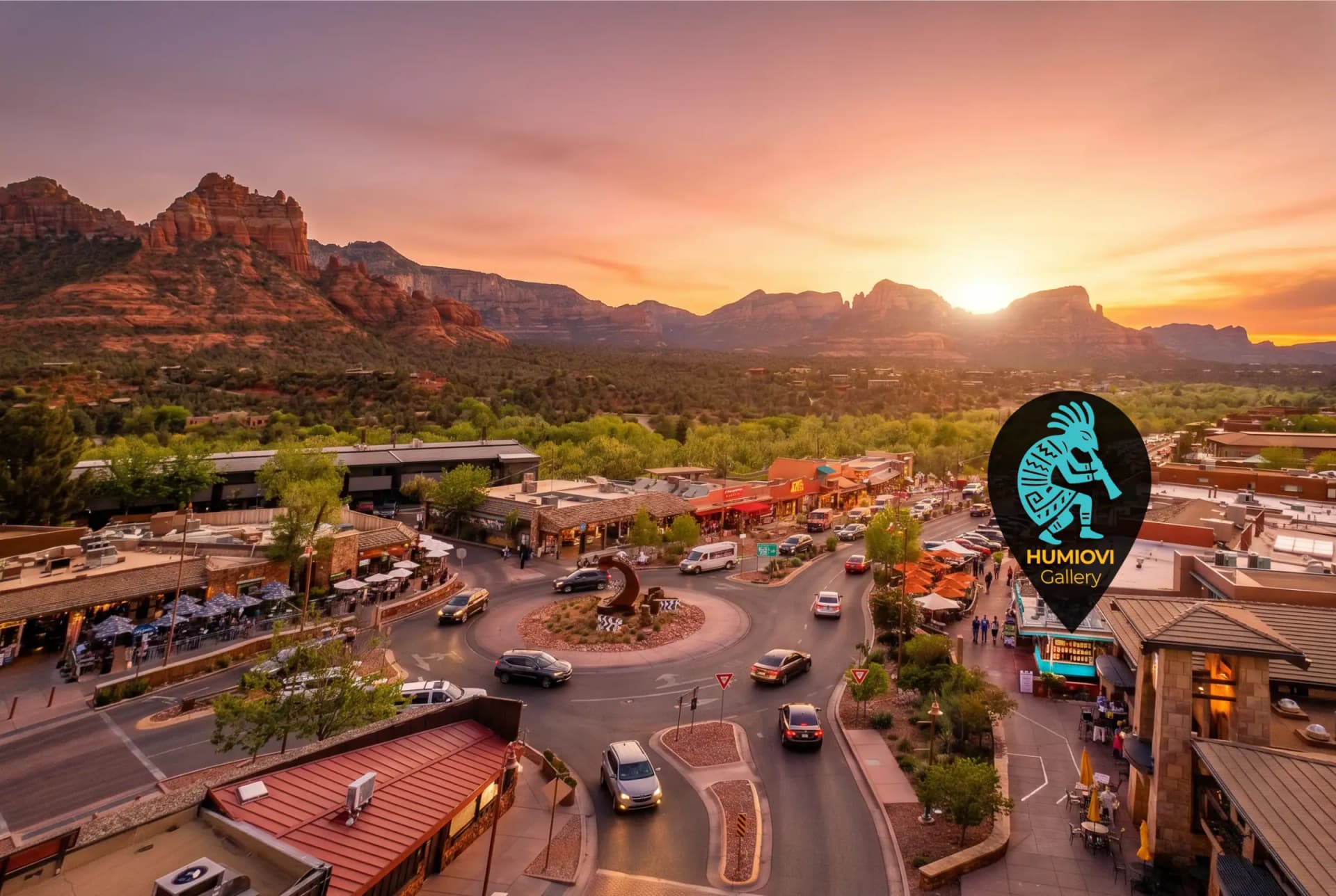
The gallery is just over the hill.
Cathedral Rock, Bell Rock, Courthouse Butte, Coffee Pot Rock and Thunder Mountain
Est. 1977 · Uptown Sedona
A Hopi name. A building modeled on a mesa-top village. Hollywood on Main Street. Three families. One corner of Uptown Sedona.

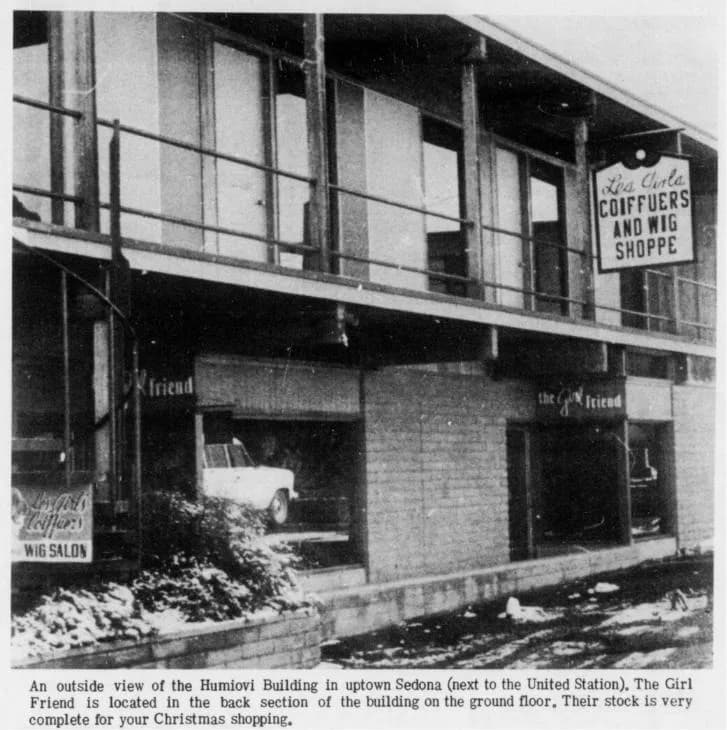
The Humiovi Building, December 1972.
The balcony, the spiral stair, snow on the walk: the building in its ninth winter.
Red Rock News, Dec. 21, 1972. Courtesy Sedona Red Rock News
In 1935 the Hopi carver Jimmy Kewanwytewa blessed the new Museum of Northern Arizona, in Flagstaff, in the Hopi way, and gave it a name: Humiovi.
He later gave the same name to his own house, behind the museum.
“The word is Hopi and means ‘the little seed that sprouts or germinates.’”
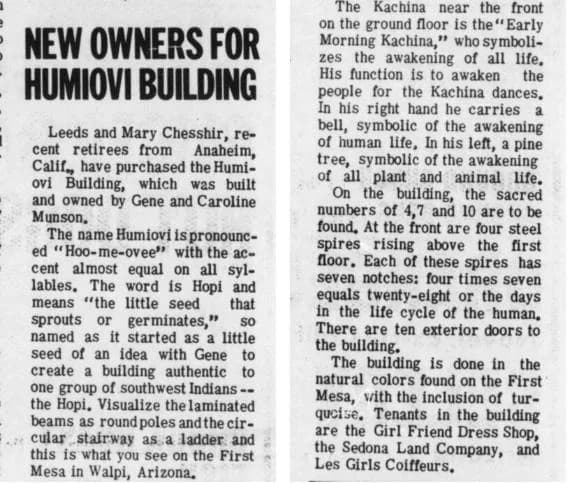
In 1964 Gene and Caroline Munson built the Humiovi Building at 89A and Jordan Road, modeled on Walpi, on First Mesa. Laminated beams stood in for round poles; a spiral stair, for the pueblo ladder.
From the Red Rock News, January 18, 1973. The walls took First Mesa's colors, with touches of turquoise.

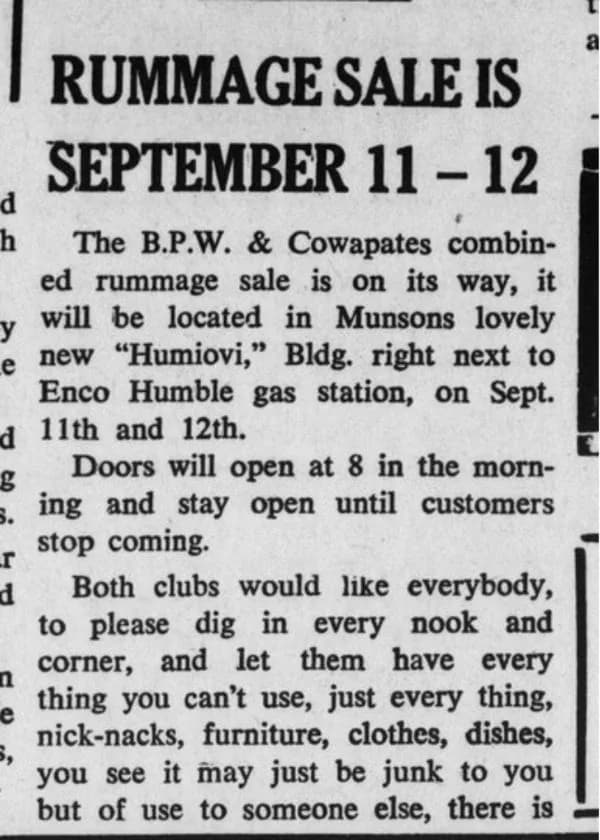
“Lovely new Humiovi Bldg.”, August 1964.
A rummage sale “right next to Enco Humble gas station”. The building carried its name from its first summer.
Red Rock News, Aug. 27, 1964. Courtesy Sedona Red Rock News

The Hopi design explained, January 1973.
Red Rock News, Jan. 18, 1973. Courtesy Sedona Red Rock News

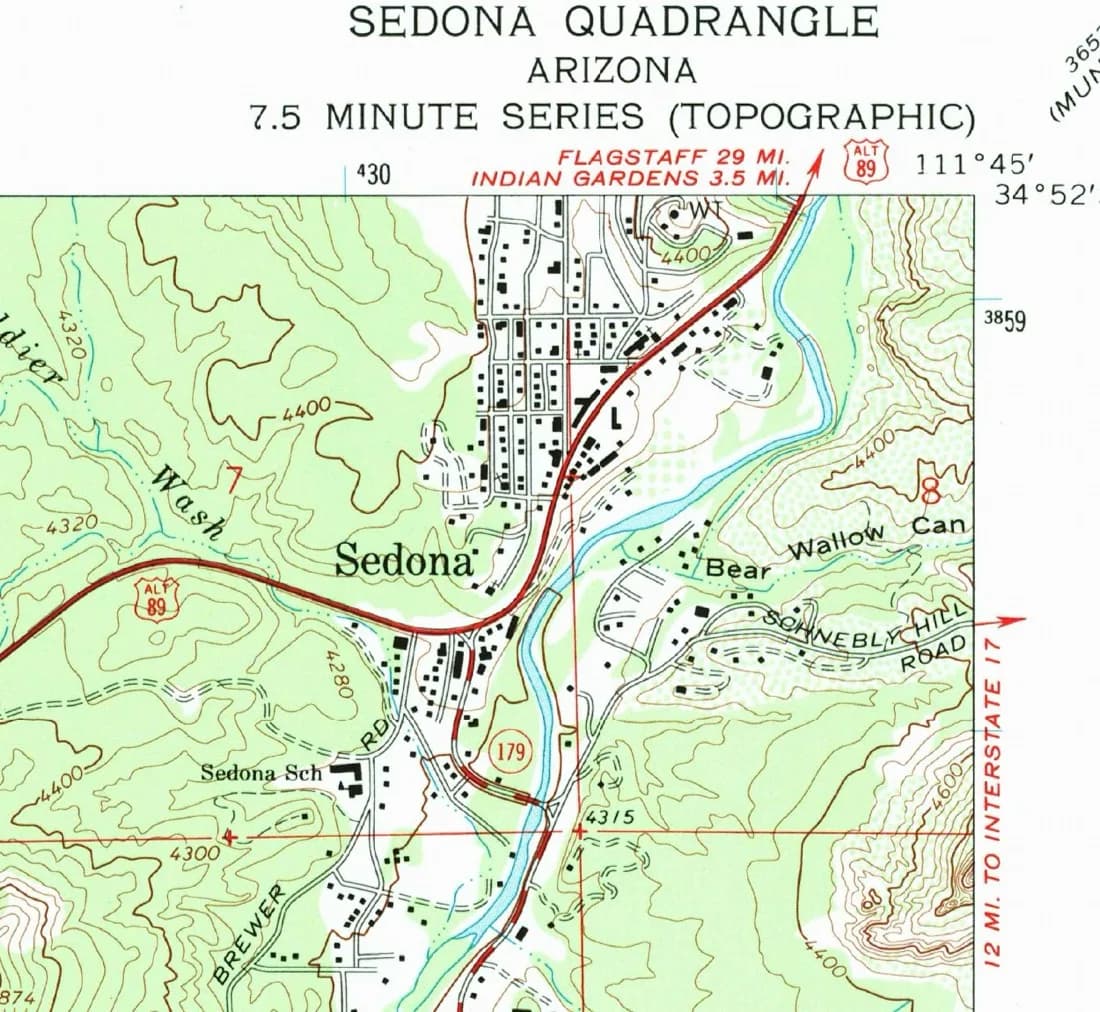
Uptown on the federal map, 1969.
Every building is a small black square. The map names none of them.
U.S. Geological Survey, Sedona Quadrangle, 1969

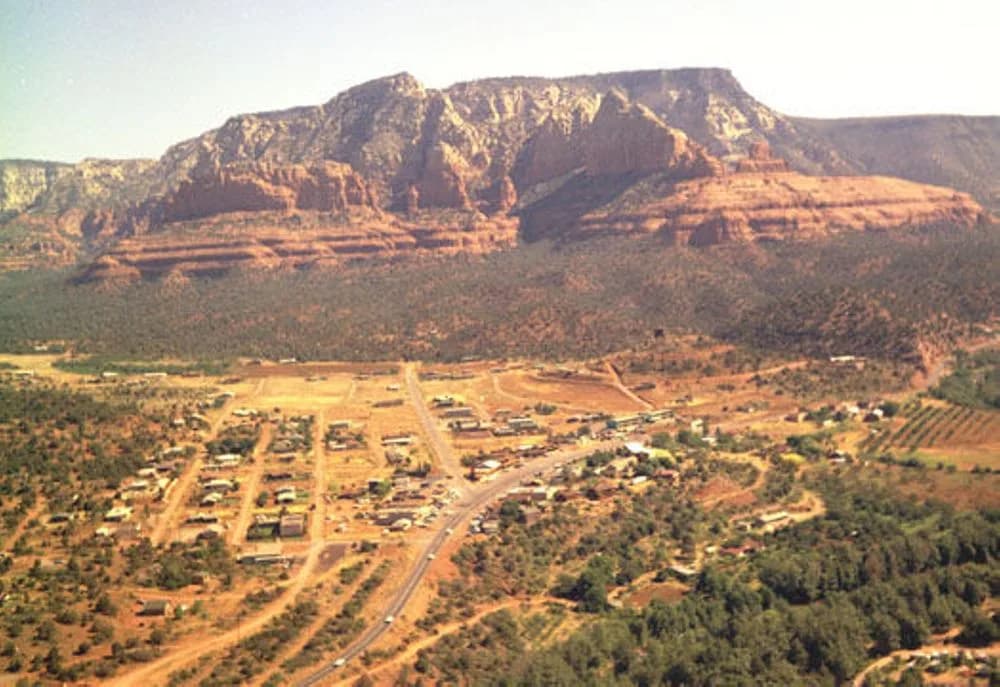
Jordan Road and 89A from the air, 1970.
Fronske Studio. Courtesy NAU Cline Library Special Collections
MGM brought Glenn Ford and Henry Fonda to Uptown for “The Rounders” and filmed a full parade on its main street. Sedona kept the parade. It became Western Days.
14A
Cesar Romero, filming “Viva Cisco Kid”, 1940.
Film crews of the day stayed at Mayhew’s Lodge.
Courtesy Sedona Historical Society
15A
Sedona Lodge and its sound stage, 1940s.
Built to win John Wayne’s “Angel and the Badman” (1946).
Bob Bradshaw. Courtesy Sedona Historical Society
16A
“Motion Pictures Filmed at Sedona”, 1962.
A roll call of the Westerns made among the red rocks, studio by studio.
Edmund L. Mitchell Collection, Boston Public Library
17A
“The Rounders” comes to Uptown, May 1964.
MGM filmed a full parade on Uptown’s main street. Sedona kept it: Western Days.
Red Rock News, May 14, 1964; photo by Bob Bradshaw for MGM. Courtesy Sedona Historical Society
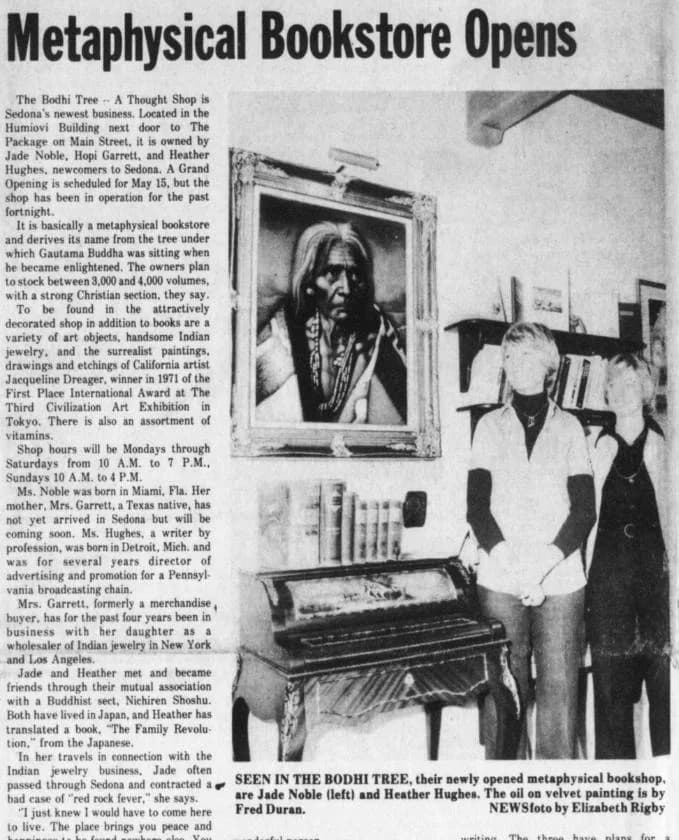
A dress shop, a wig salon on the upper deck, a land office, a barber, a men's store. Then, in May 1975, a bookshop that also sold “handsome Indian jewelry”: Native jewelry inside these walls, two years before the store.
Next door, at the Oak Creek Tavern, the Cowboy Artists of America were founded on June 23, 1965.

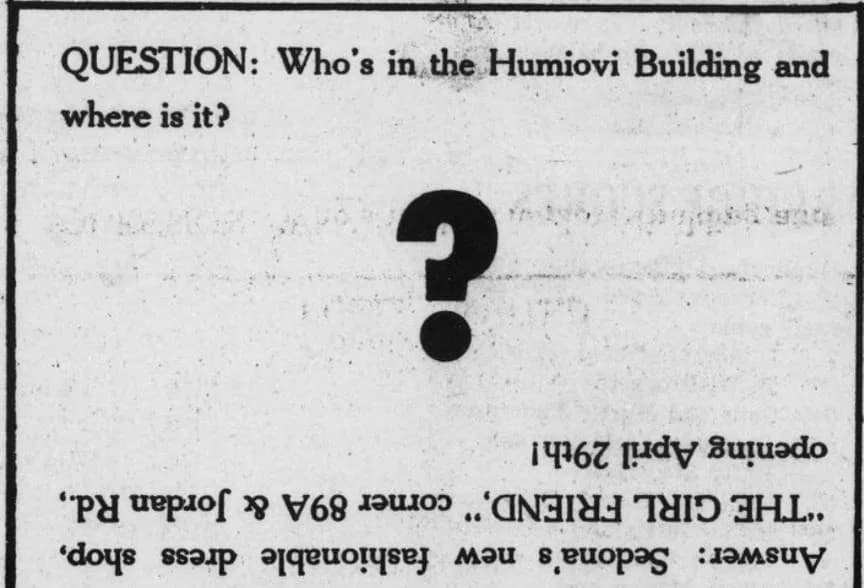
The teaser, April 1966.
The answer, printed upside down: a new dress shop, “corner 89A & Jordan Rd.”
Red Rock News, Apr. 21, 1966. Courtesy Sedona Red Rock News

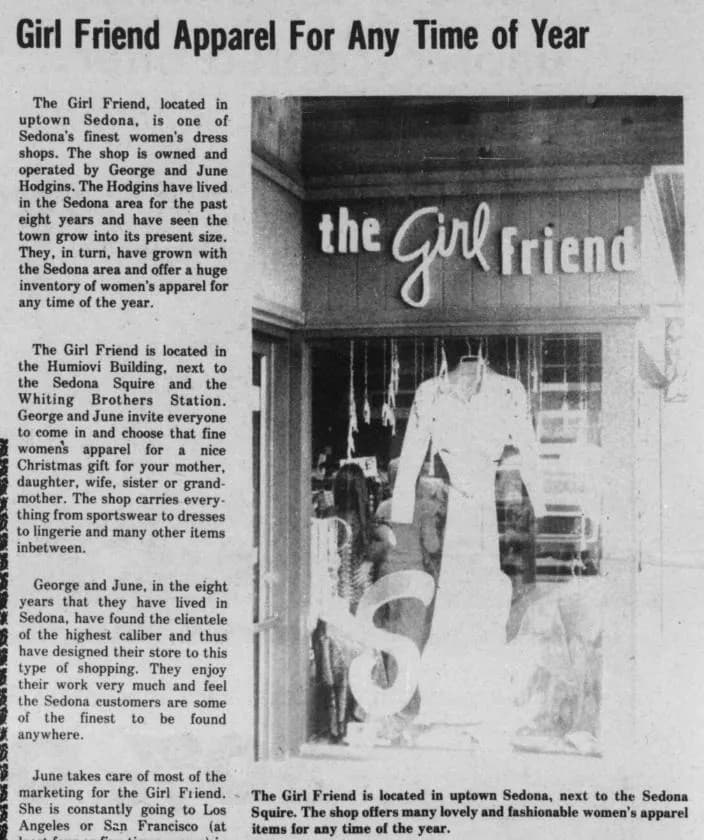
The Girl Friend’s window, Christmas 1973.
Red Rock News, Dec. 13, 1973. Courtesy Sedona Red Rock News

A land office moves downstairs, April 1971.
Red Rock News, Apr. 15, 1971. Courtesy Sedona Red Rock News
“No, this is not the beauty parlor; it is next door.”

A bookshop opens in the building, May 1975.
Among its books it sold “handsome Indian jewelry”.
Red Rock News, May 8, 1975; photo by Elizabeth Rigby. Courtesy Sedona Red Rock News

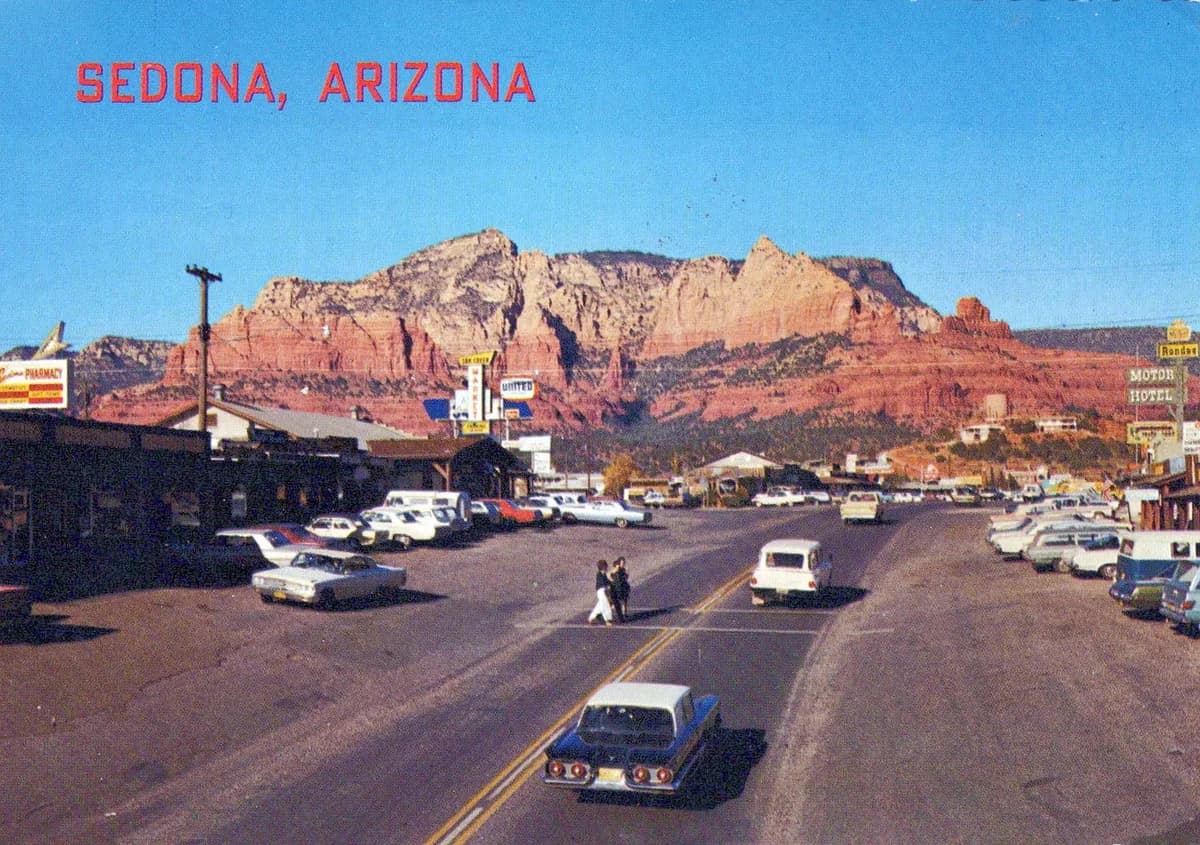
Uptown’s main street, early 1970s.
In 1972 the paper placed the building “next to the United Station”. Its sign stands on the left.
Postcard
In 1977 a jewelry store opened inside the building and took its name: The Humiovi.
By 1983 a group of visiting Soviet professors had “popped in” three times, and the store gave a charity auction a Diné (Navajo) silver bracelet set with 21 turquoise stones.

Lot 194, September 1983.
Red Rock News, Sept. 14, 1983, Kiwanis Club of Sedona radio auction. Courtesy Sedona Red Rock News
The Humiovi has changed hands. It has never changed its purpose. Three families have kept it, each under its own mark.
The store’s own earlier history records that Bob and Ann Robinson bought it in 1994.

The sunburst Kokopelli.

The blue Kokopelli.
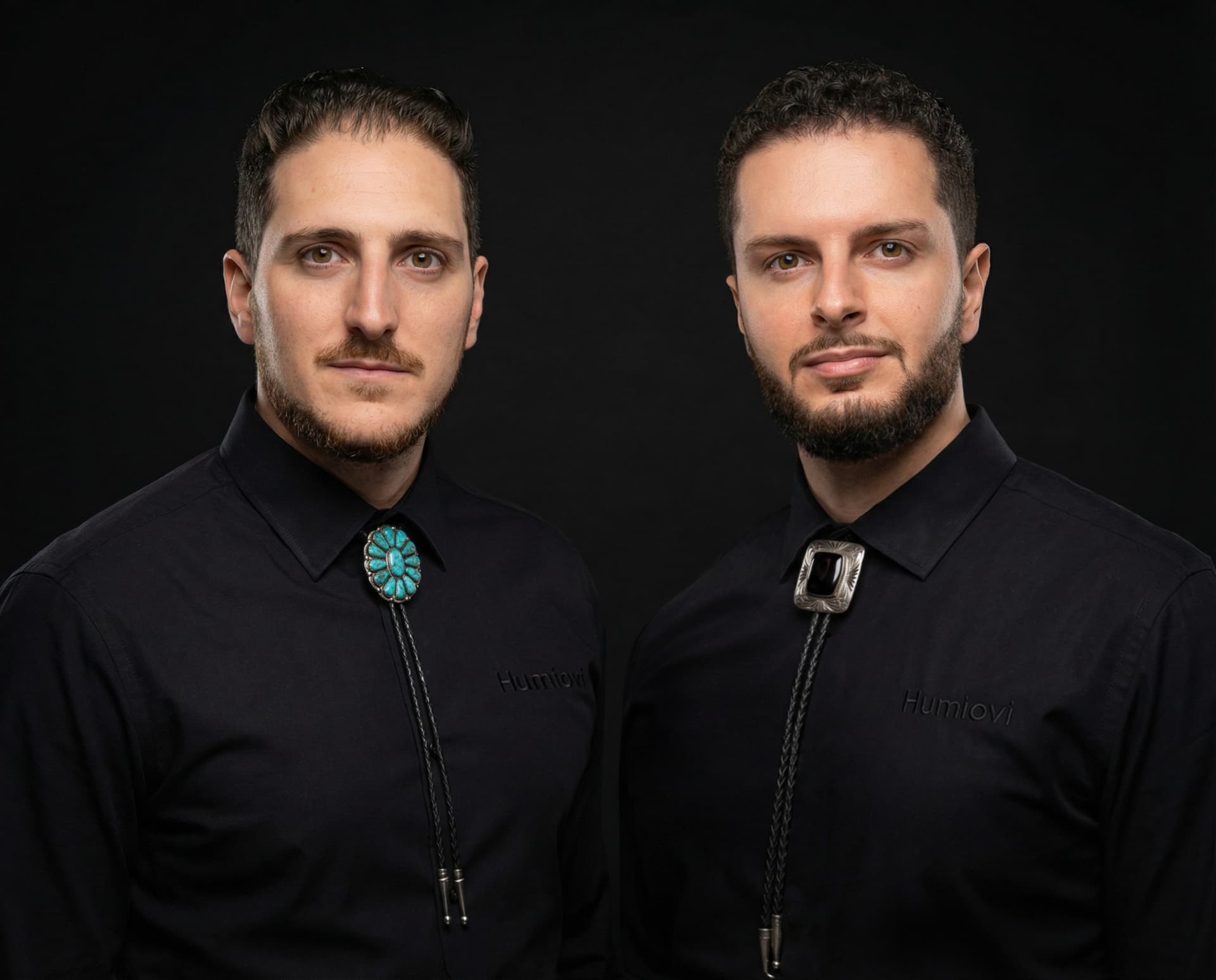
Abe and Feras Dalia. Today’s mark.
Before the gallery
Abe Dalia Sr., grandfather of Abe and Feras, began trading with Native American artisans in the early 1930s, selling jeans, jewelry and rugs along the highways.
Today Abe and Feras Dalia keep The Humiovi, one of Uptown Sedona's longest-standing Native American jewelry galleries. In the case: the work of more than 300 Native American artists.


Visit · Uptown Sedona
247 AZ-89ASedona, Arizona 86336
Open daily · 10 am to 6 pm
Uptown Sedona, drawn from OpenStreetMap data. From the Y, take 89A north into Uptown: the gallery is on your left at the first roundabout, on the north-west corner of Jordan Road.
In the gallery
Turquoise, silver and gold, chosen one piece at a time. Where a maker is known, we will tell you who.
Ask about a stone, a maker or a mark. Take your time and try things on; there is never any pressure to buy. Allow an unhurried hour.