

Makers & marks
295 makers · 6 nations · 2,075 pieces in the case · 1,530 hallmarks
Look up a Native American artist, a hallmark stamped on silver, or a signature under a bowl, and see the work by that hand that is in the case today.
Try
- 2,075
- pieces in the case today
- 295
- makers with work here
- 1,530
- published hallmarks and signatures
- 470
- stamps photographed to browse
- Every mark labelled Documented or Possible
- A maker is named only where the record supports it
- Certificate of authenticity with every piece we represent as Native American-made
Full index
Navajo, Zuni, Hopi & Pueblo Silversmith Hallmarks and Pottery Signatures A–Z
Maker's marks of Southwest silversmiths and potters, with the nation as recorded. Entries come from published sources we credit below, Humiovi gallery records and our own research. Choose a letter below, or search by name, initials, symbol or the text of the mark with the search box above.
How to read a mark
Find the stamp
Inside a ring band or cuff, on the back of a pendant, bolo or buckle, or on the base of a pot. Hold a phone light low and to the side.
Read what is there
Initials, a name or a small symbol, often beside “Sterling”. Type the letters as struck, without dots. On a pot, usually a signature and the pueblo.
Check the record
Each entry gives the nation as recorded. An entry marked Possible resembles a recorded mark but is not confirmed.
See the maker’s work
Where we can name the maker, the entry shows their pieces in the case, or lets you hear when one arrives.
1530 entries, 470 with a photograph of the stamp, across 33 nations as recorded. Some makers do not stamp their work; we then name the nation and never guess a maker. New to reading marks? Start with our guide to reading hallmarks, browse pottery signatures, or see where these entries come from.
The marks in the case
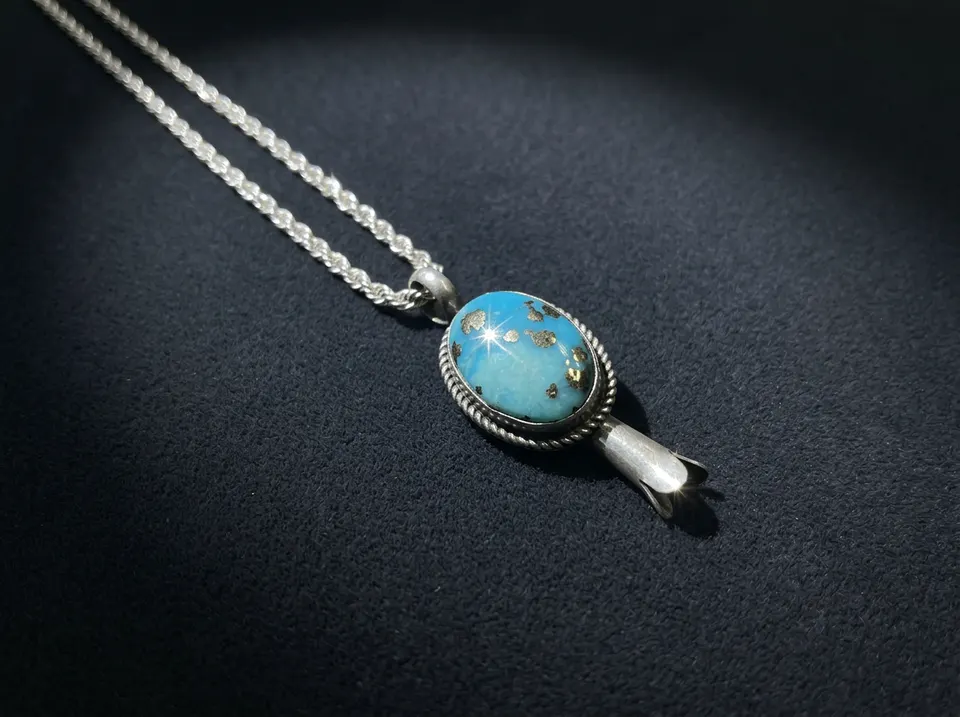
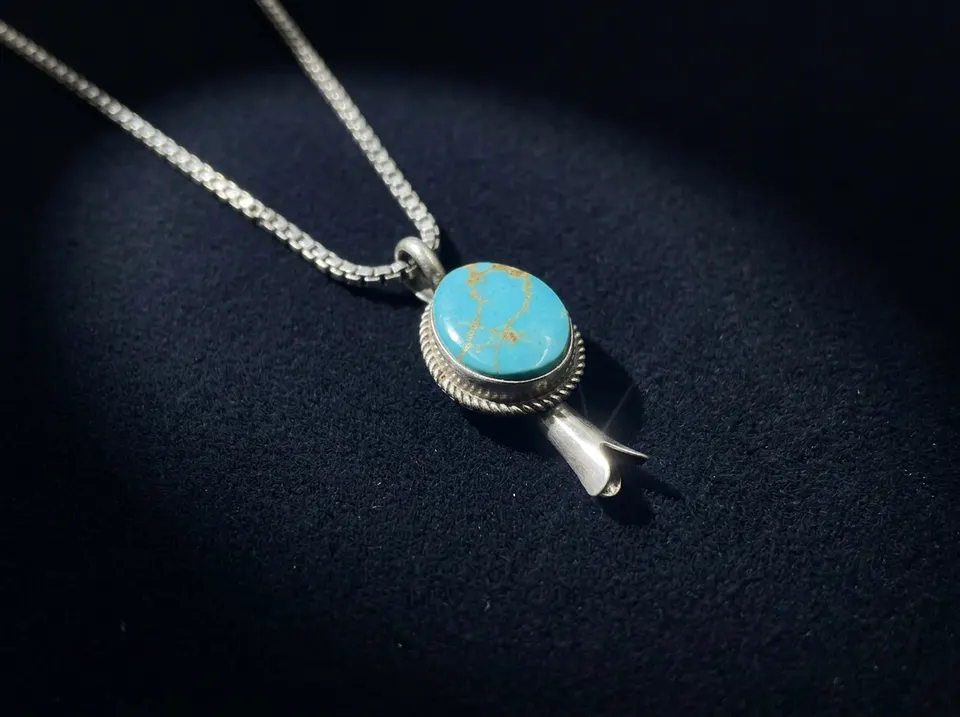
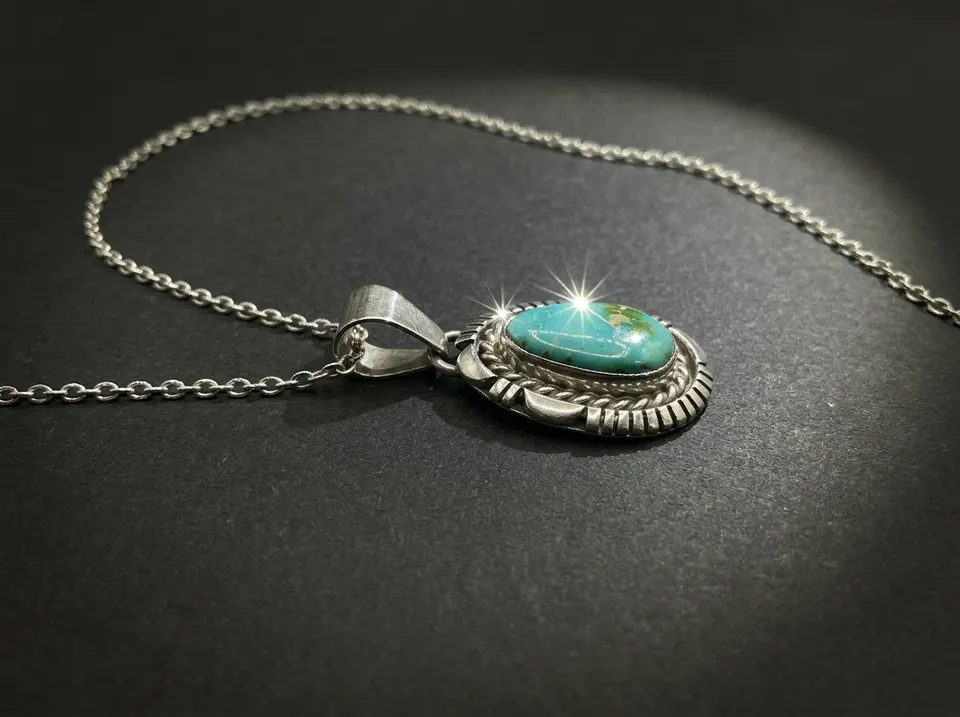
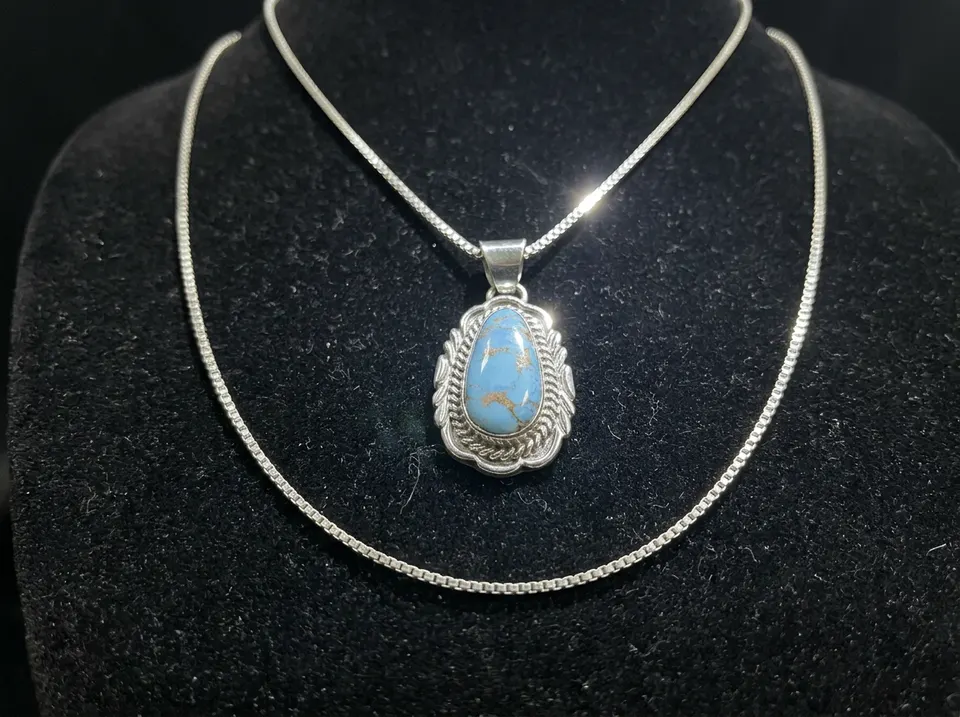
Choose a mark to see the pieces it signs.
Pieces by these makers
Recorded in our catalogue against each mark.
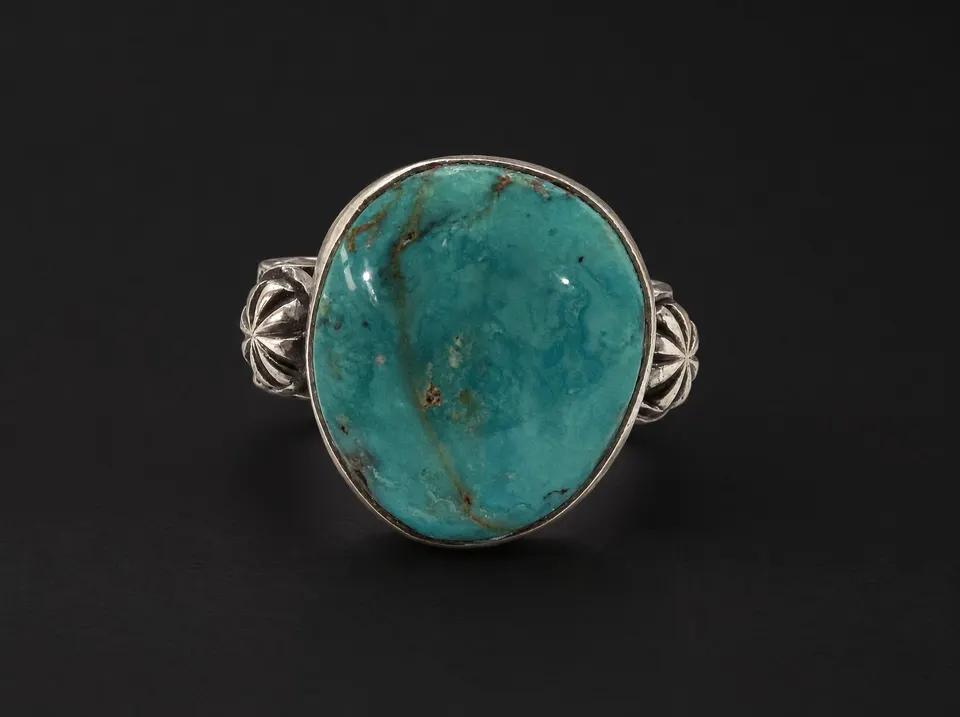
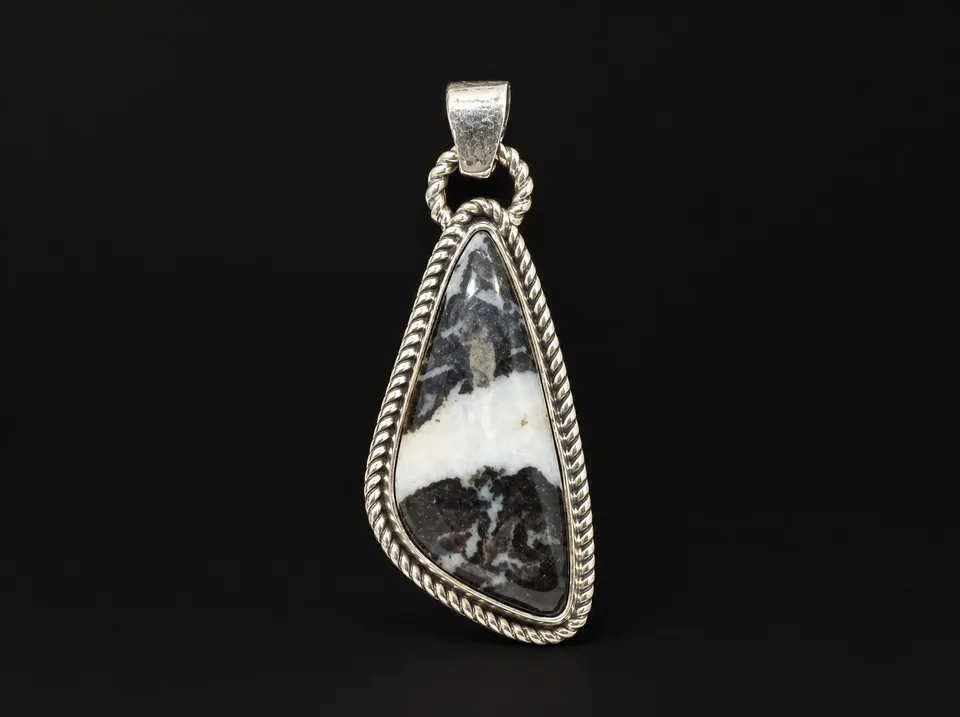
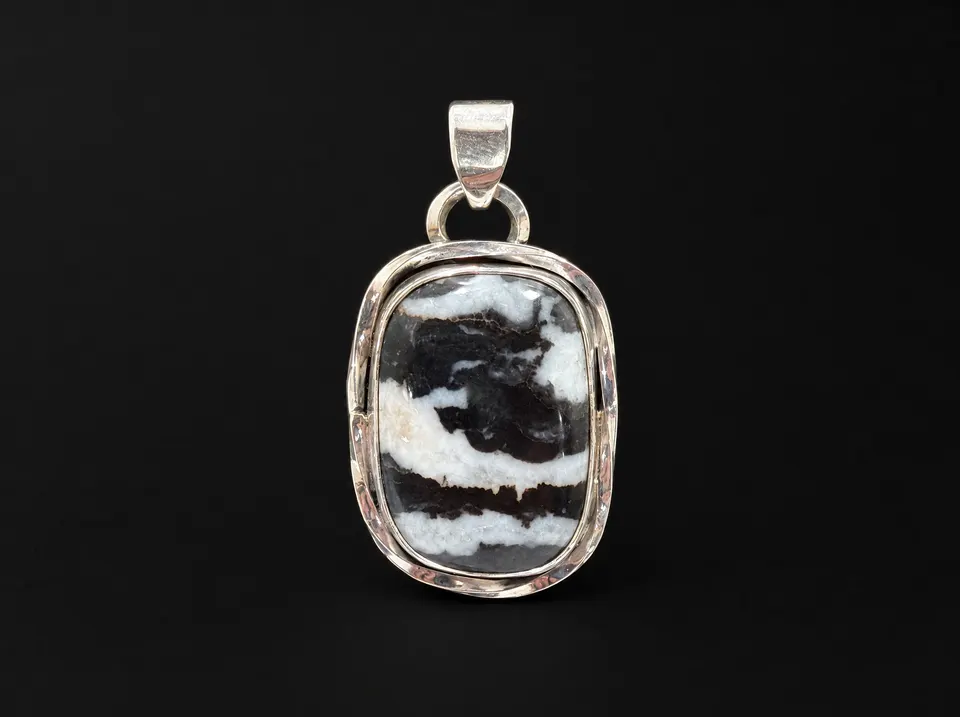
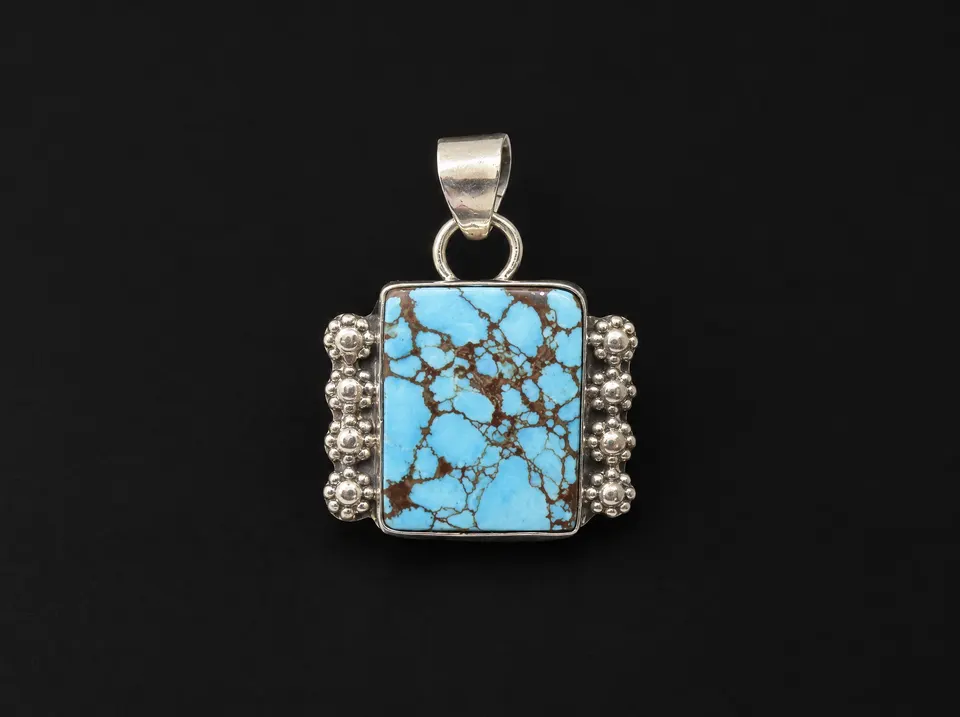
405 pieces
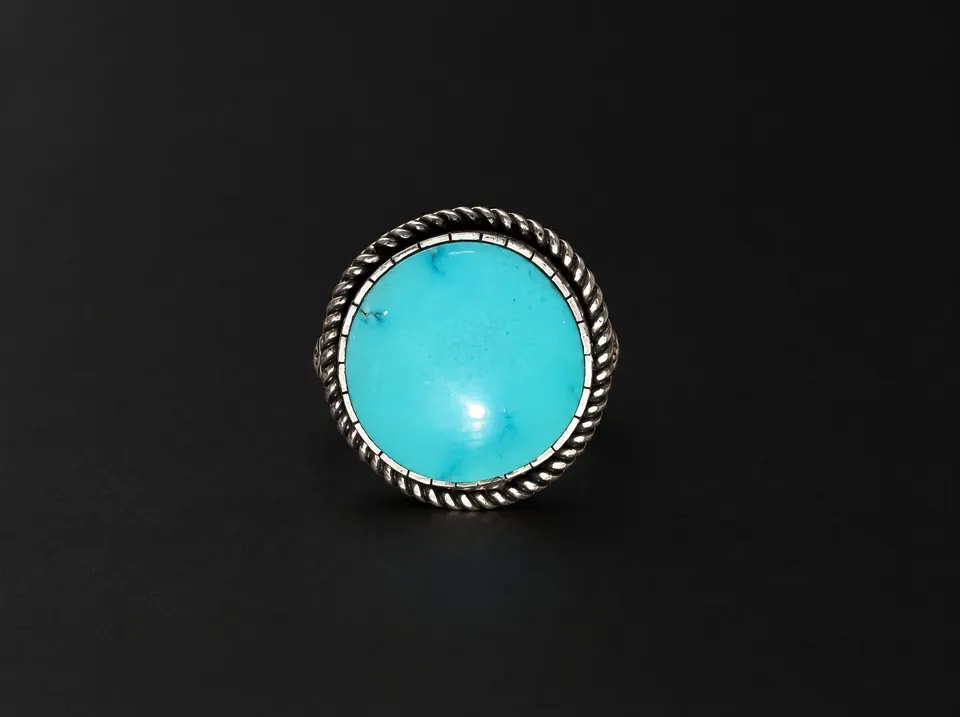
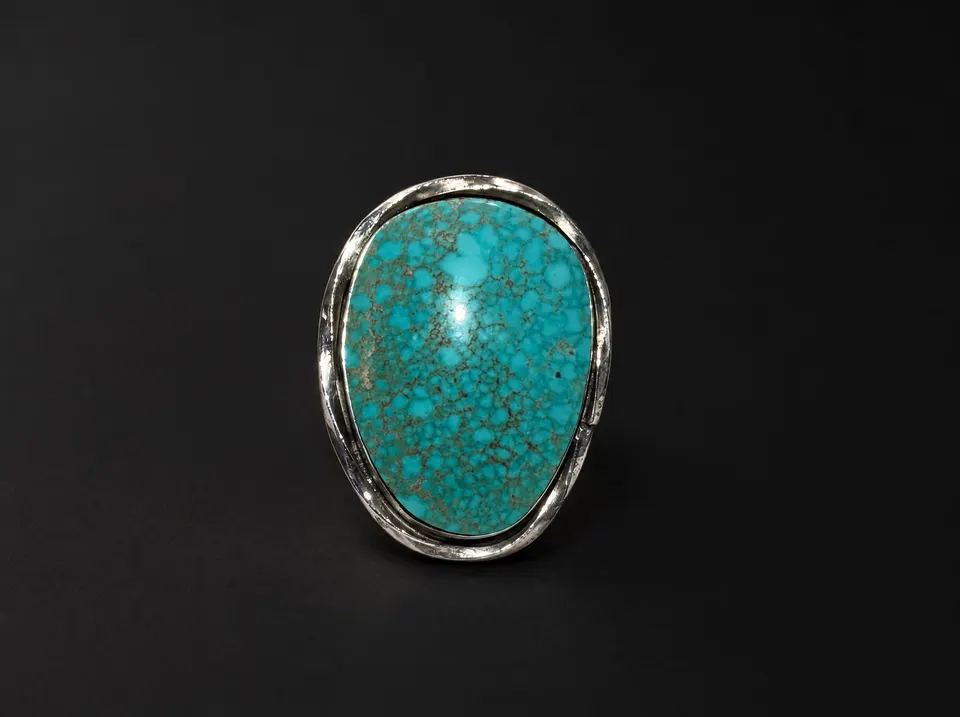

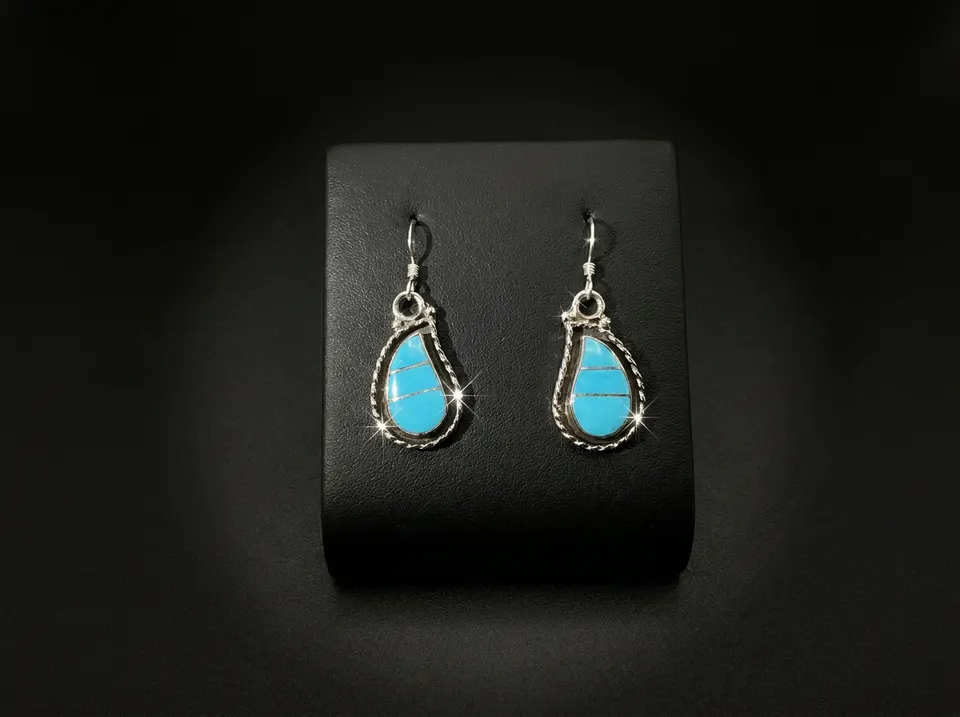
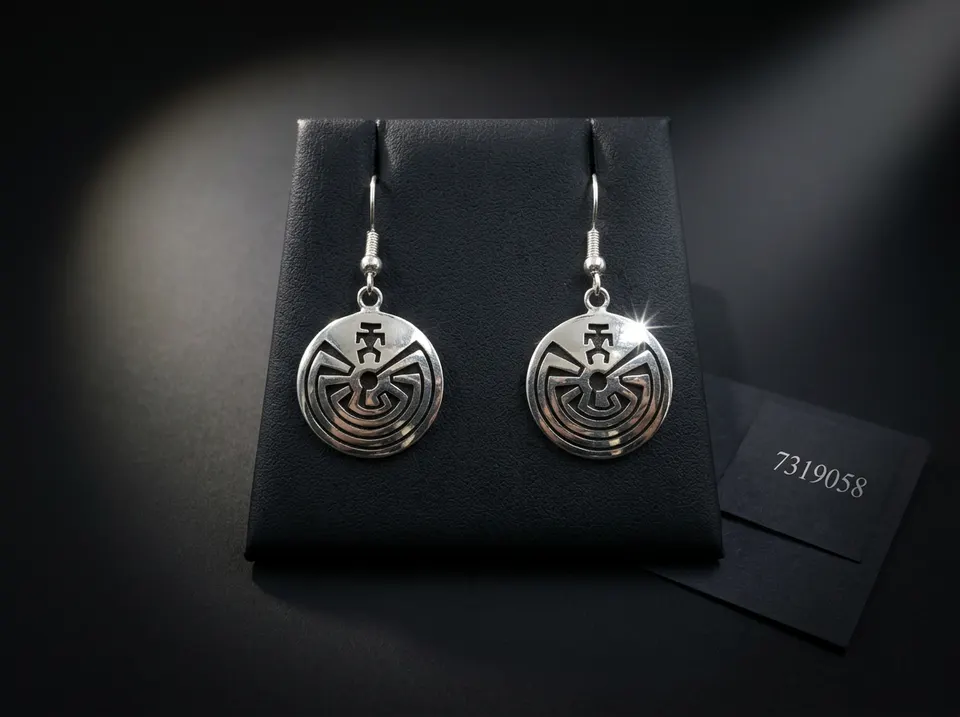

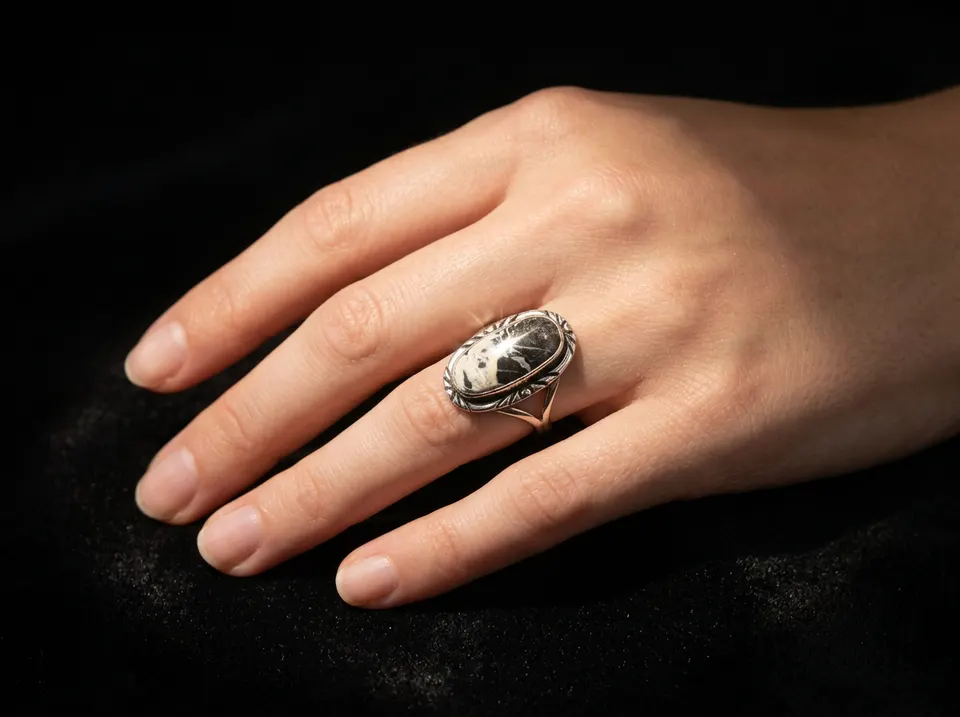
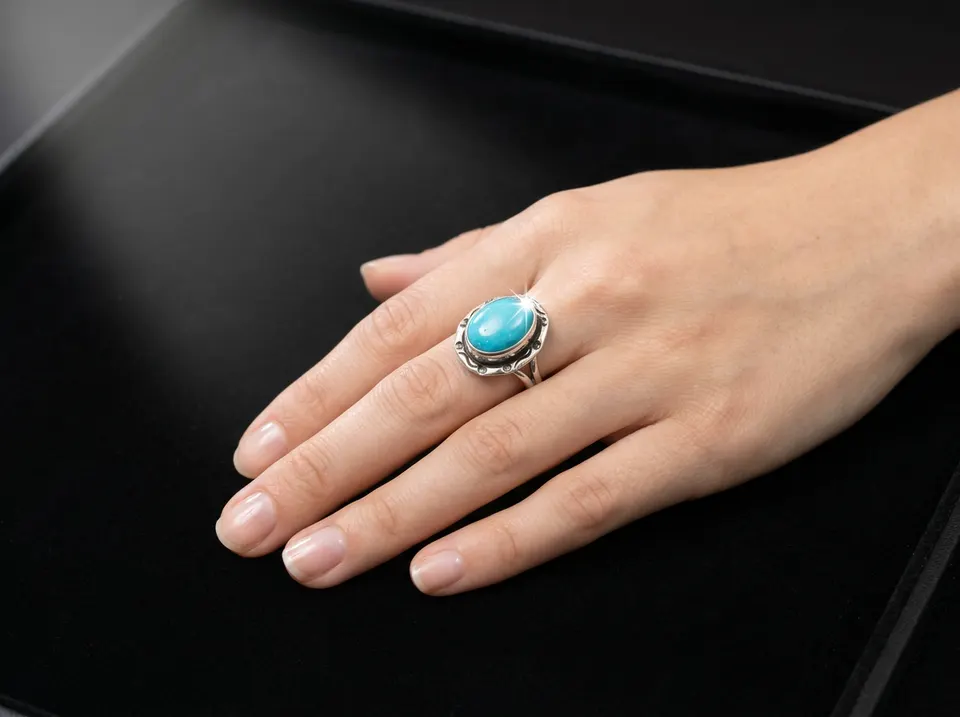
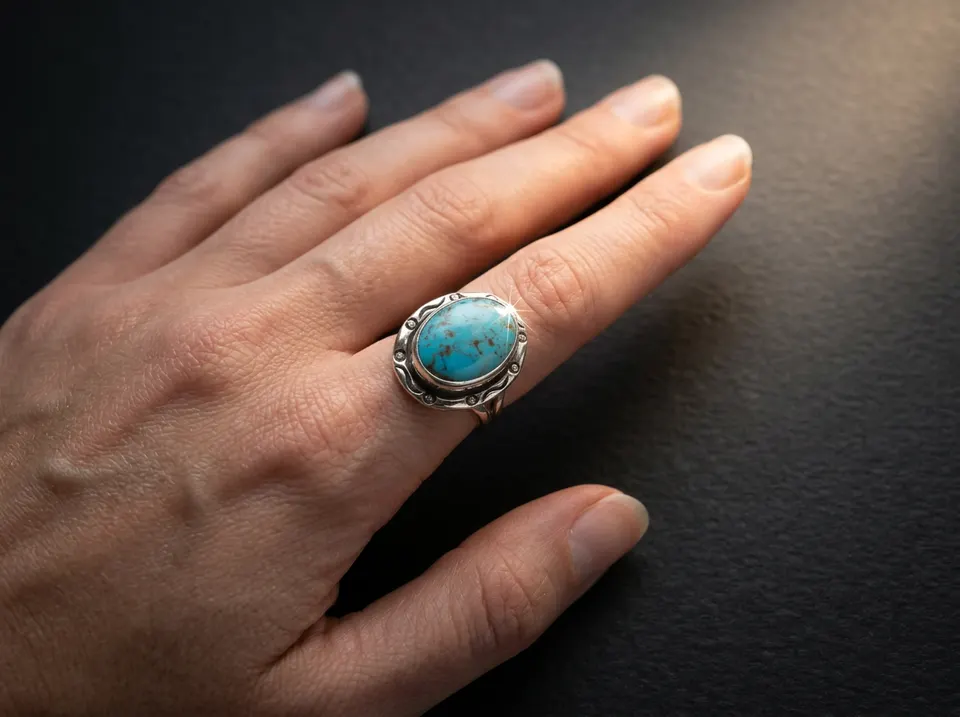
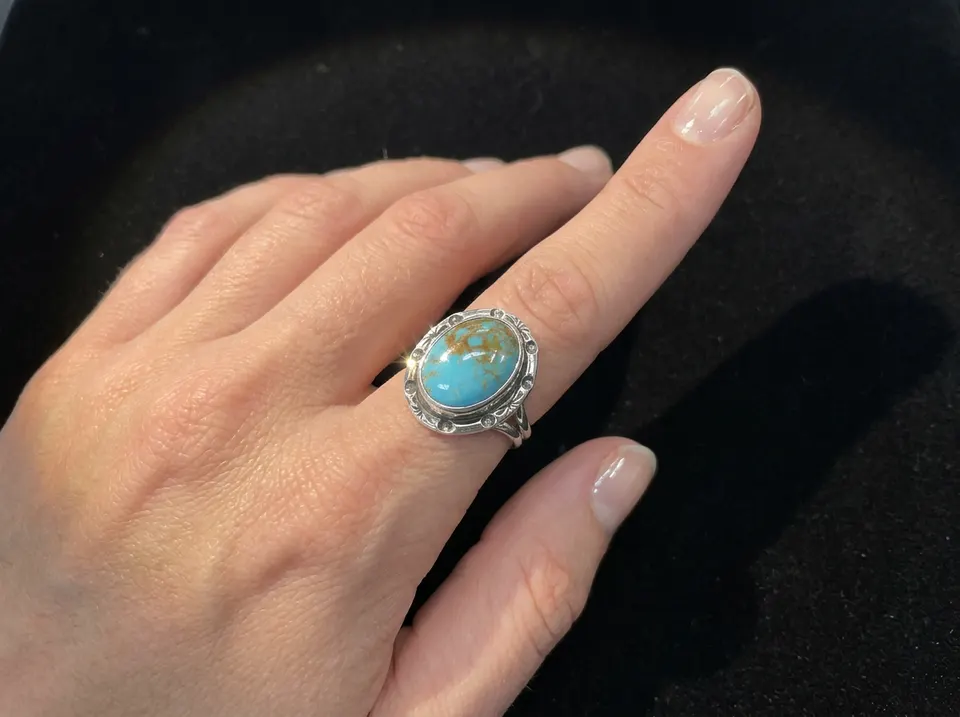


The index
Can't read the letters? Identify a mark by its shapeSun, bear paw, feather, figure, pottery signature and more.Start identifying
Use this reference to put a name to a mark: a mark is a lead to a maker, not proof of who made a piece. This reference is informational only. We do not offer an authentication service for hallmarks or for pieces bought elsewhere; we authenticate only the items we sell. The Humiovi is not affiliated with the artists listed.
About this reference
- What an entry contains
- The reference holds 1530 entries. An entry names the maker or makers as published and the nation as recorded. 1266 carry the text of the mark as it reads, 295 a recorded symbol, and 470 a photograph of the stamp. Where the source gave only a name, the entry shows only a name. 266 entries are potters' signatures, listed by pueblo or nation in the pottery signatures section. Where we hold no cleared photograph, an entry shows our own drawing of the mark, labelled as an illustration, or the signature text as recorded, set in type.
- What “as recorded” means
- Names and nations are repeated as the source gives them, including where it notes that a maker self-identified. We have not verified them, and a nation listed here says nothing about any piece. The reference records 33 nations; 17 entries list two.
- What “possible attribution” means
- 274 entries are marked possible attribution: the source describes the mark with hedged or unconfirmed language, so treat the name as a lead rather than a conclusion.
- Where the entries come from
- The Humiovi compiled 409 entries from the published silversmith pages of Turquoise Skies (tskies.com), some of which cite published hallmark reference books. Those pages are also the source of the stamp photographs. 231 entries come from Humiovi gallery records, reference sheets kept at the gallery. 890 entries come from Humiovi research records, notes the gallery compiled from published references, such as gallery and museum records (the individual sources are not named); each entry page names its credit. Where no photograph is cleared for use, an entry shows our own drawing of the mark, labelled as an illustration, or the mark text as recorded, set in type and labelled as not a picture of the mark.
- How to report a correction
- If you made a piece listed here, are family of a maker, or have a clearer photo of a mark, write to info@humiovisedona.com or use our contact page. Include the entry's name and a photo of the mark.
Questions about reading hallmarks
How do I identify a hallmark on silver jewelry?
Find the maker's mark and read it apart from any quality stamp. A maker's mark is usually initials, a name or a symbol; a word such as STERLING beside it describes the metal, not the maker. Not every stamped design is a mark: Navajo smiths made stamps from iron tools, and stamping became the main way of decorating silver. Search this reference by the letters or symbol you can read, leave out STERLING and .925, and narrow by nation if you know it.
Sources: Heard Museum, Southwest Silverwork, 1850–1940; FTC Jewelry Guides, 16 CFR § 23.5
What do STERLING, .925 and COIN mean on silver jewelry?
They state the silver content, not who made the piece. Under the FTC Jewelry Guides, “sterling”, “sterling silver” or “ster.” may be used only for silver at least 925/1,000 pure, and “coin” or “coin silver” only for silver at least 900/1,000 pure. The FTC also notes that German or nickel silver does not qualify as silver.
Sources: FTC Jewelry Guides, 16 CFR § 23.5; FTC, Buying American Indian Arts and Crafts
Does a hallmark prove who made a piece?
No. A mark tells you who it is recorded for; it is not a certificate. In this reference alone, 115 mark texts are recorded for more than one entry, and 274 entries are recorded only as a possible attribution. Federal law looks at how a piece is sold: it is unlawful to offer or sell a good “in a manner that falsely suggests it is Indian produced”. The FTC advises buyers to get written proof of any claims a seller makes about the authenticity or origin of an item.
Sources: 18 U.S.C. § 1159; FTC, Buying American Indian Arts and Crafts
Where does the information in this reference come from?
The Humiovi compiled the original silversmith entries from Turquoise Skies' published silversmith pages, some of which cite published hallmark reference books; the stamp photographs come from the same pages. Later entries, including the pottery marks, come from Humiovi gallery records and our own research. Nations are given as each source records them; we have not verified them.
Source: Turquoise Skies, published silversmith pages (tskies.com)