Behind every piece of Native American jewelry lies a story — of sacred stones pulled from the earth, of techniques passed through generations, of artisans whose hands carry centuries of knowledge. These stories are the soul of what we offer, and they deserve to be told with the same care and reverence as the pieces themselves.
27 articles across 6 collections
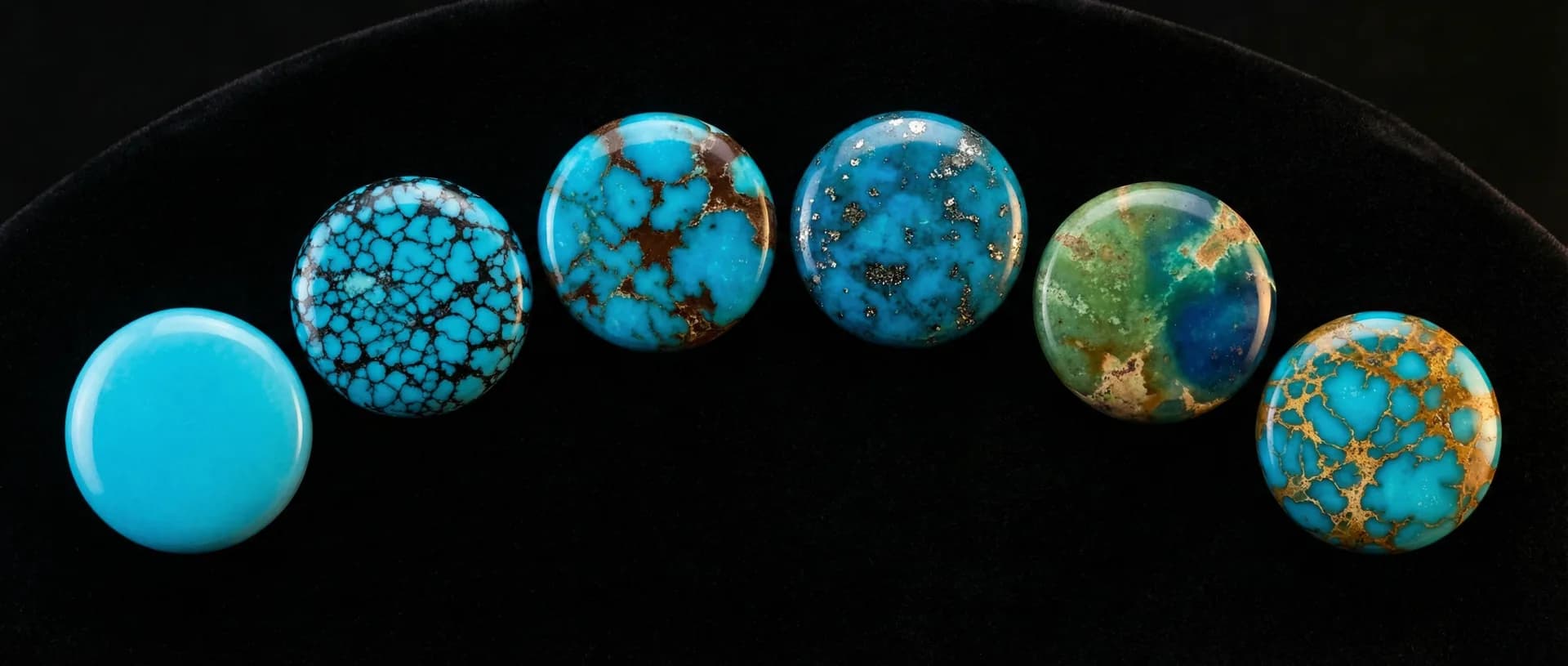
The geological origins, spiritual significance, and cultural importance of the stones used in Native American jewelry.
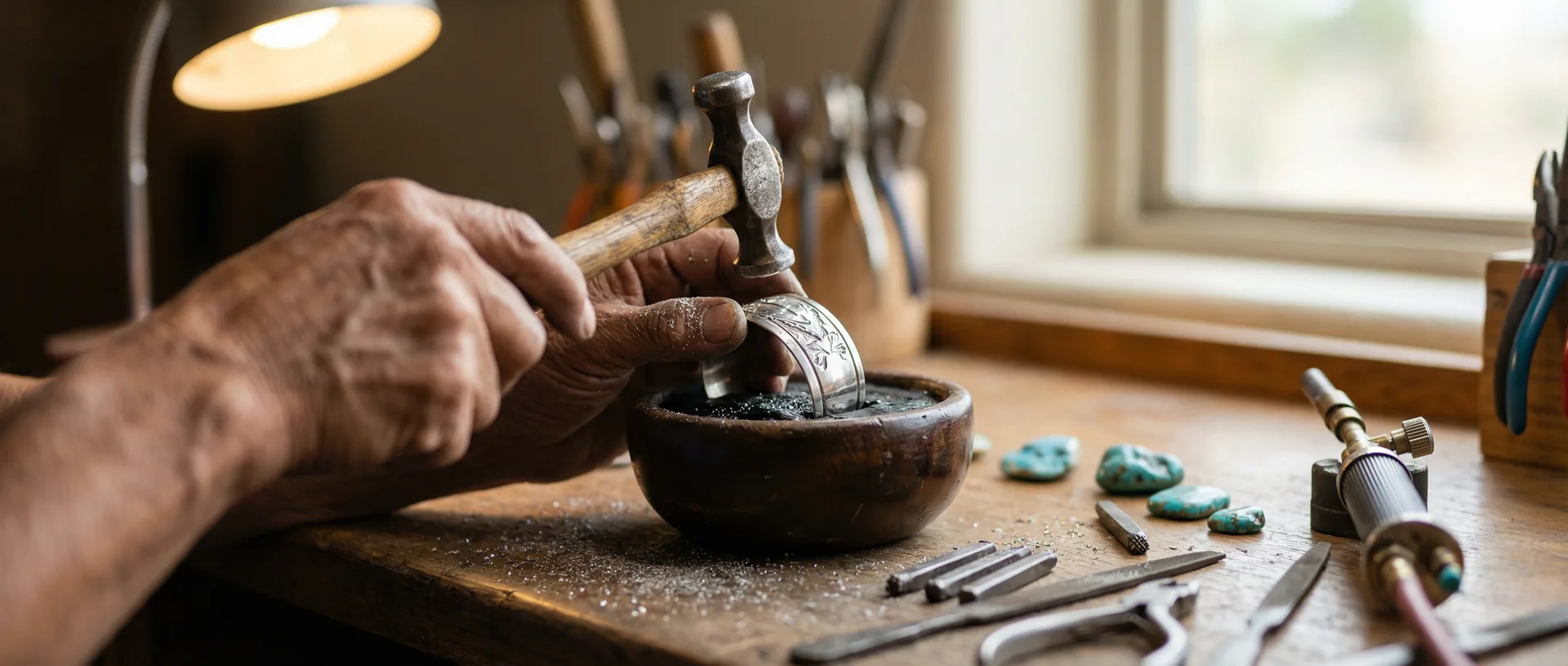
Centuries-old techniques and cultural practices that continue to shape Native American artistry today.
Profiles of Native American artists and the generations of knowledge behind their work.
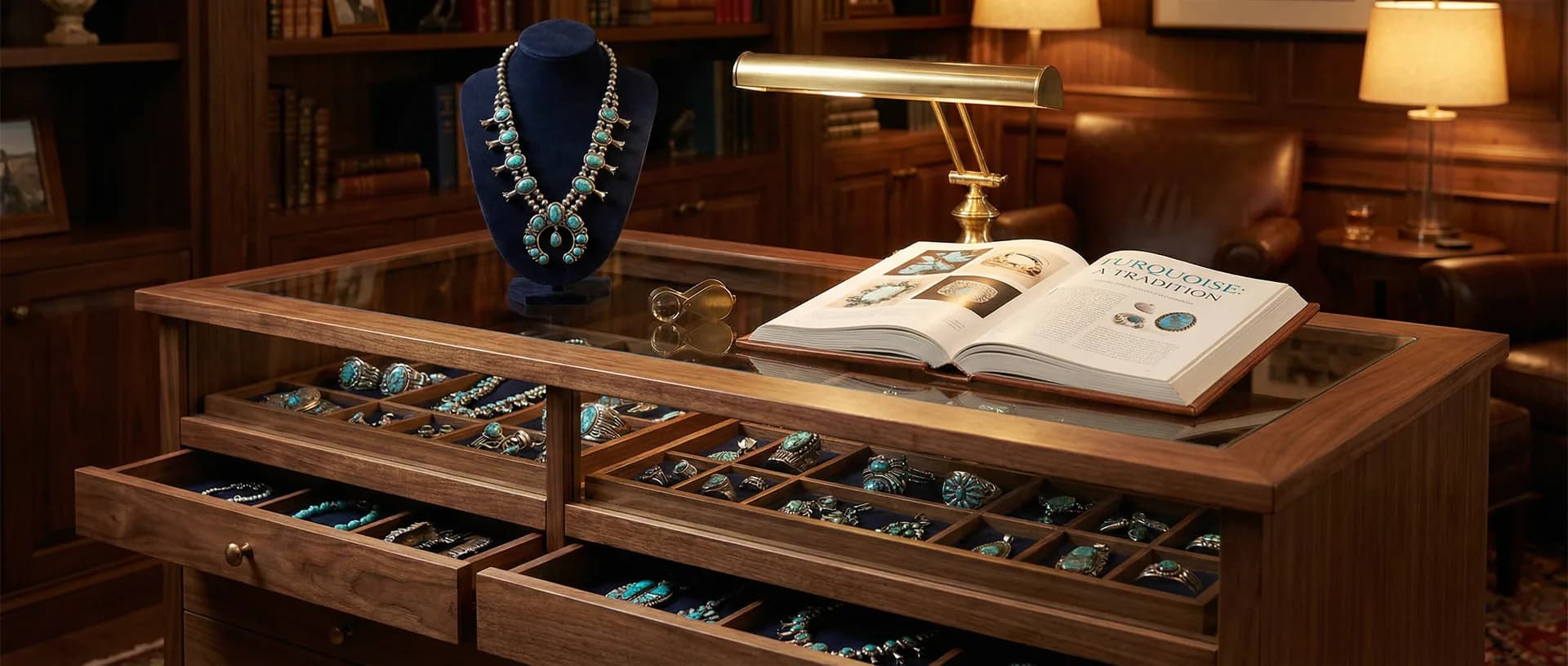
Guidance for discerning collectors on authenticity, value, and the art of building a meaningful collection.
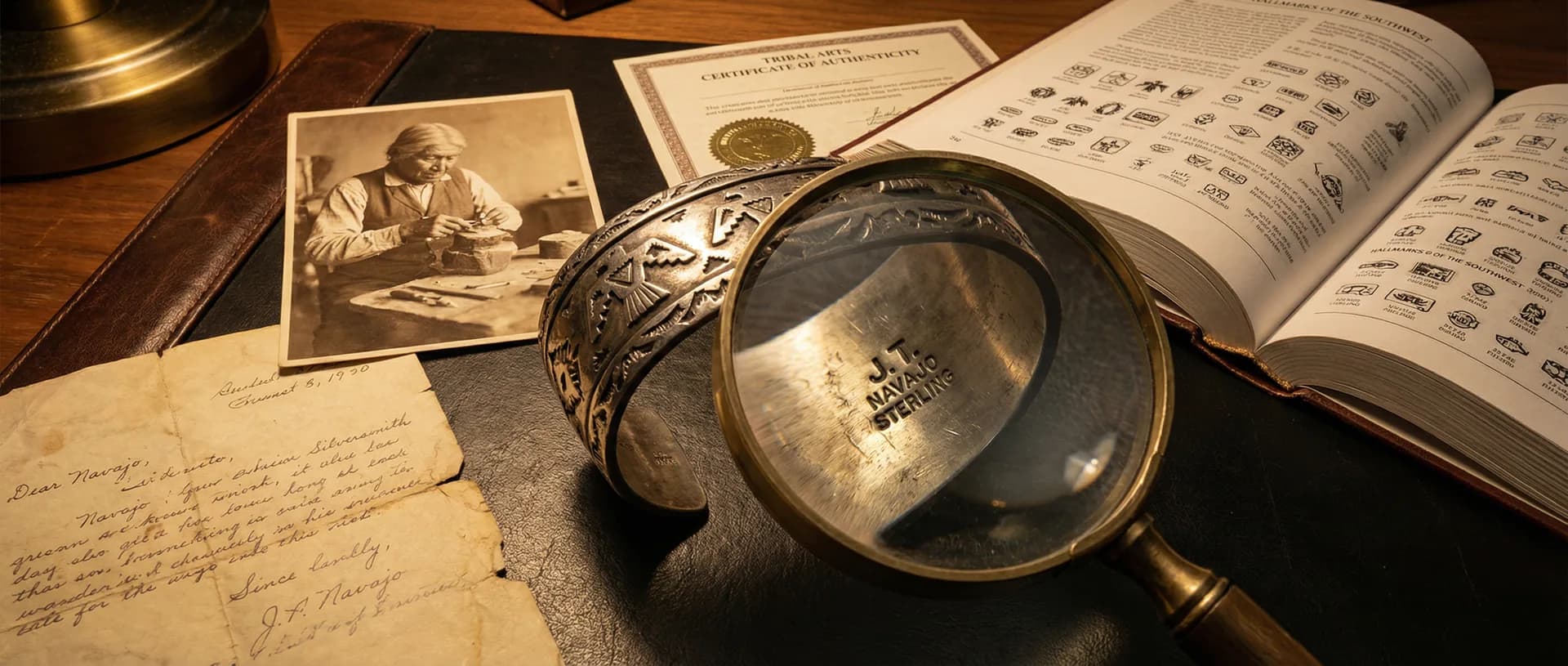
Understanding the journey of each piece from raw material to finished art, and why provenance matters.
Exceptional works that represent the pinnacle of Native American jewelry artistry across generations.
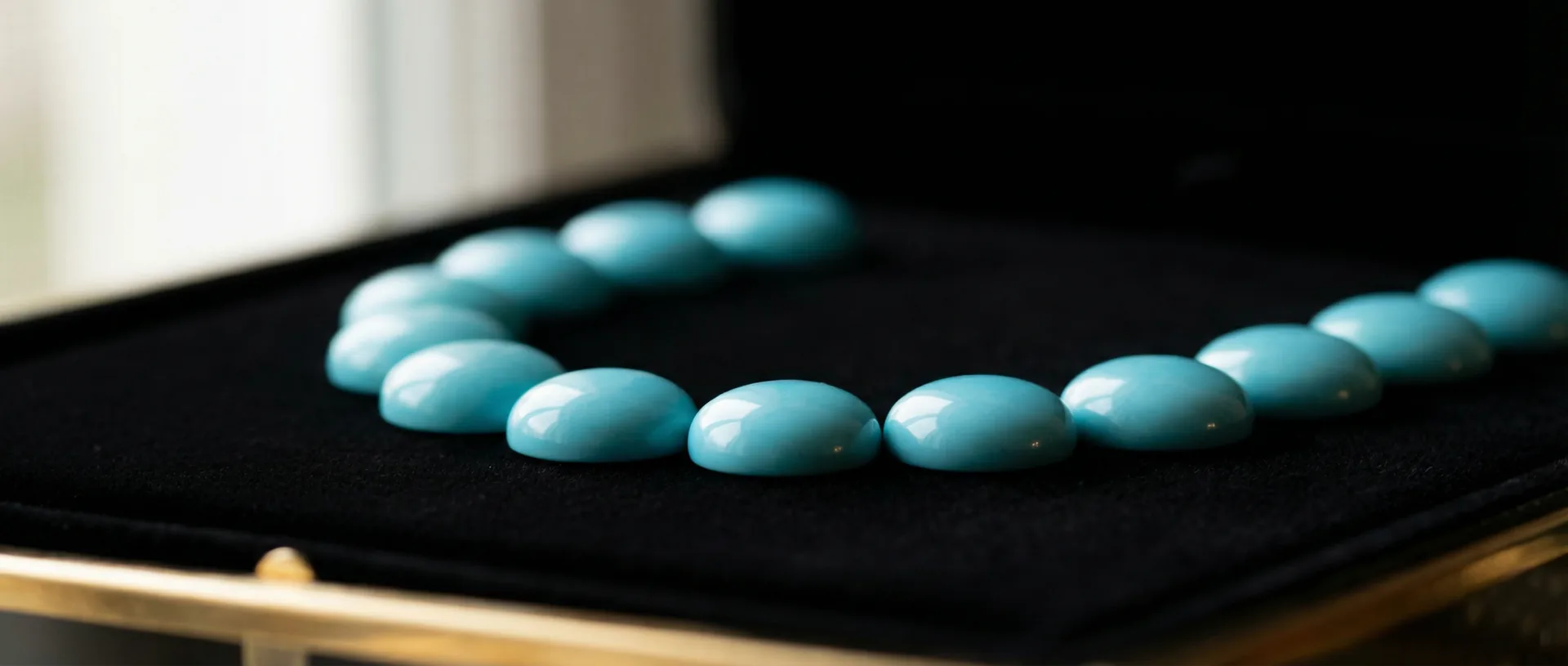
Globe, Arizona's Finite Treasure and the Stone That Redefined American Turquoise
From its discovery in the copper-rich hills near Globe, Arizona in the 1920s to the mine's permanent closure in 2012, Sleeping Beauty turquoise has undergone a transformation from abundant commercial stone to one of the most coveted minerals in the gemological world, with no new material produced since the final extraction.
Read Article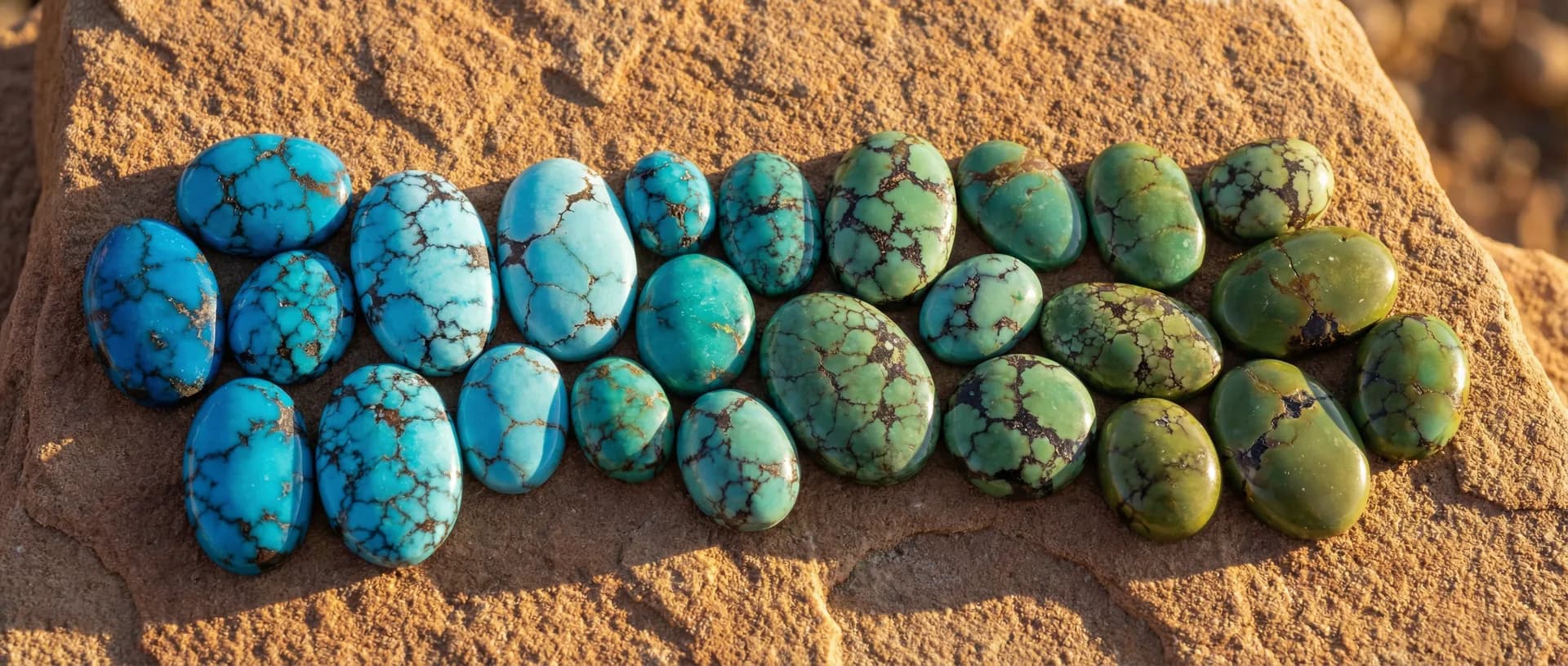
America's Oldest Continuously Mined Turquoise Deposit
The Kingman mine in Mohave County, Arizona has operated continuously since the late nineteenth century, producing turquoise in a remarkable color range from sky blue to deep blue-green, with its spider-web matrix specimens ranking among the most valued turquoise in the world.
Read Article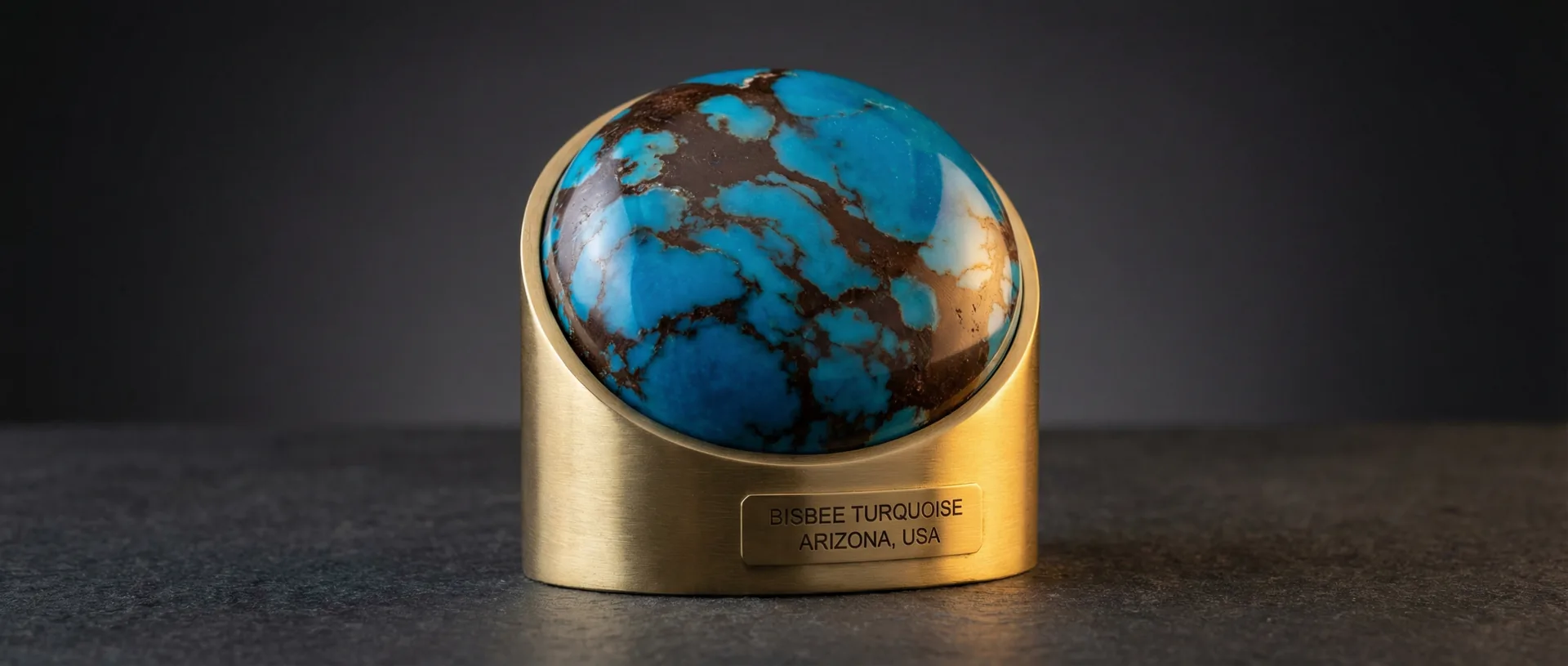
The Lavender Pit's Vanished Treasure
Since the Lavender Pit copper mine in Bisbee, Arizona ceased operations in 1975, not a single new carat of Bisbee turquoise has entered the market. Distinguished by its signature chocolate brown matrix against vivid blue, Bisbee commands prices of $50 to over $200 per carat and stands as one of the most collectible American turquoise varieties ever produced.
Read Article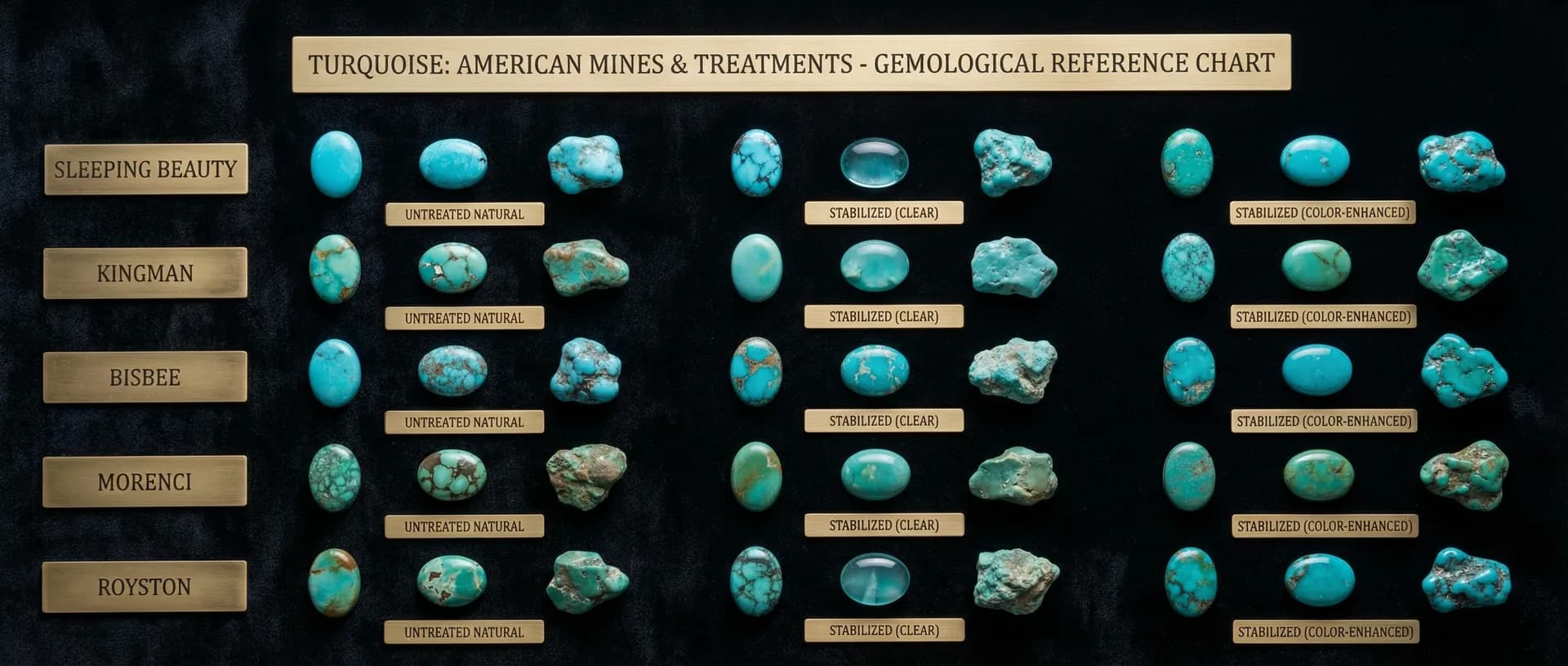
Natural, Stabilized, and Treated: Understanding What You Are Purchasing
Approximately 10% of turquoise on the market is natural and untreated, 80% is stabilized through legitimate enhancement processes, and the remainder includes dyed, reconstituted, or synthetic material. This guide provides the gemological framework to identify each category and make informed purchasing decisions.
Read Article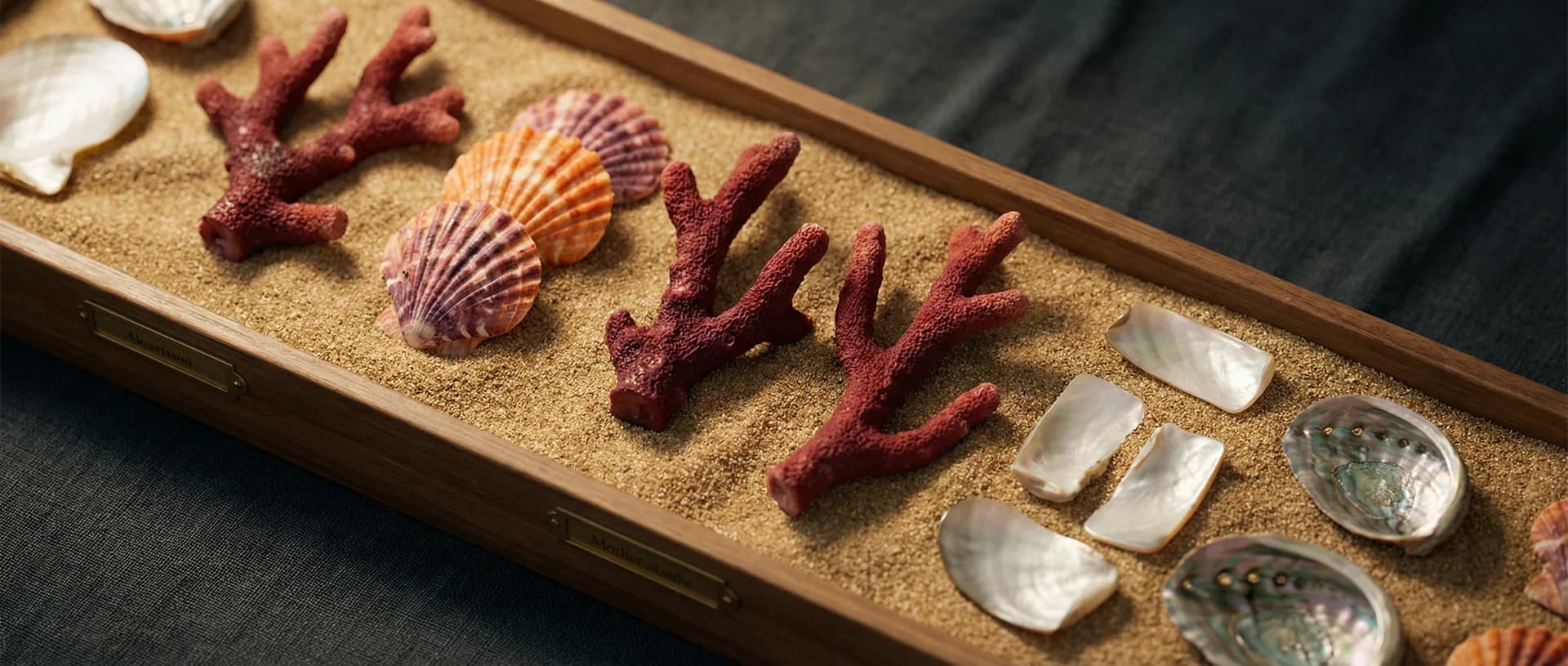
Mediterranean Coral, Spiny Oyster, and Mother of Pearl in Native American Jewelry
The ocean has supplied Native American jewelers with some of their most culturally significant materials. Mediterranean red coral, harvested from depths of 30 to 300 meters in the Tyrrhenian and Adriatic seas, arrived in the Southwest through Spanish colonial trade routes. Spiny oyster shell from the Sea of Cortez has been traded northward for over a thousand years. Mother of pearl, abalone, and other marine shells complete a palette of organic materials whose cultural importance rivals turquoise itself.
Read Article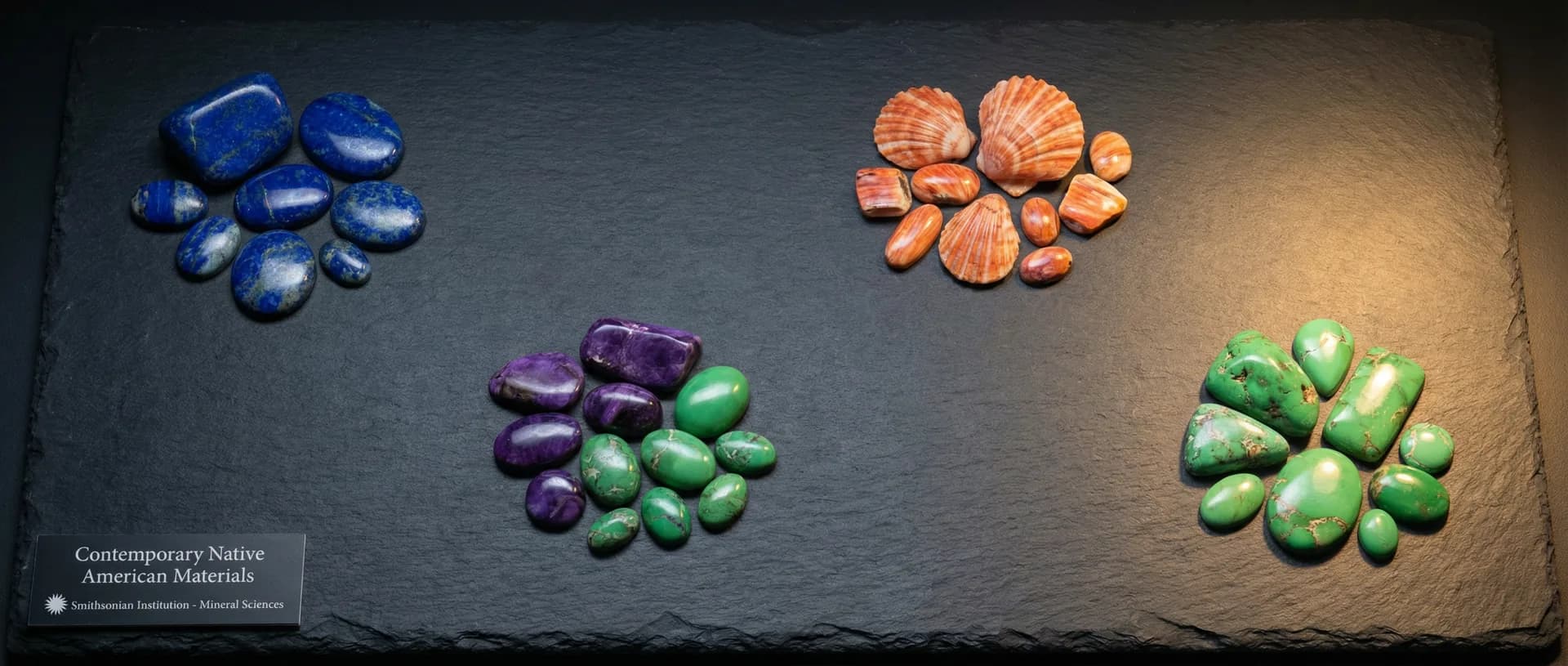
The Secondary Stones That Complete the Southwestern Palette
Beyond turquoise and coral, Native American jewelers draw upon a remarkable palette of secondary stones — Afghan lapis lazuli traded across 6,000 years of human commerce, spiny oyster shell graded from fiery orange to royal purple, gaspeite, sugilite, charoite, and other rare materials that expand the chromatic possibilities of indigenous jewelry to extraordinary effect.
Read Article