An Icon of Southwestern Jewelry
By The Humiovi Editorial Desk — Sedona, Arizona · est. 1972
·
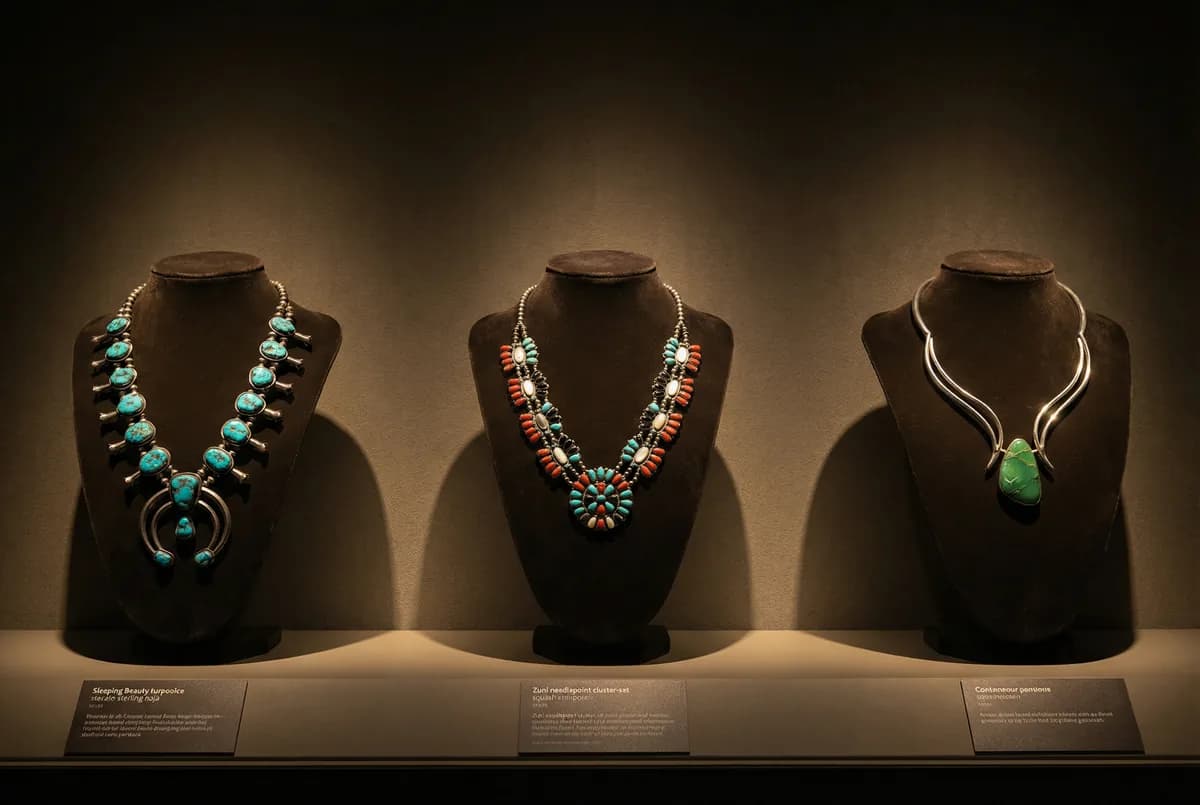
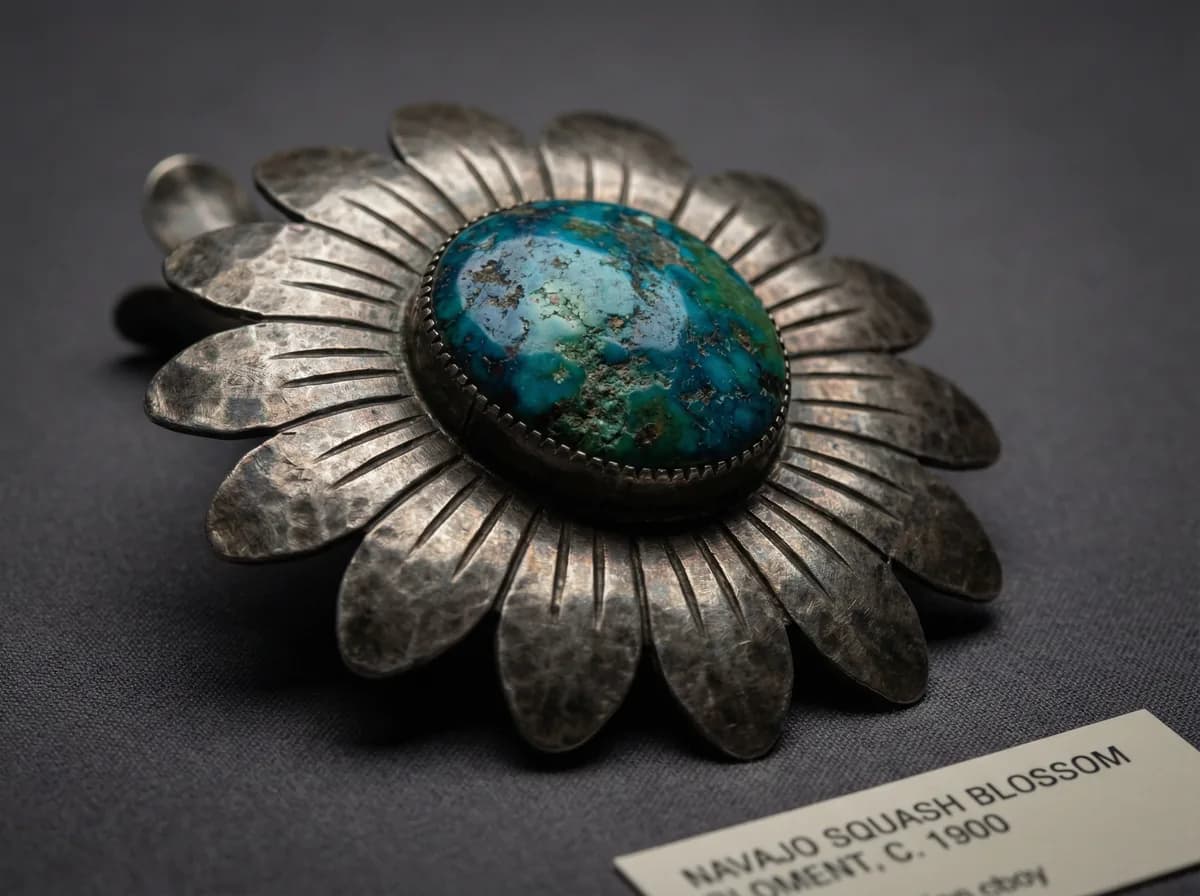
The squash blossom necklace has multicultural origins. Its crescent-shaped naja pendant has roots in Moorish and Spanish horse tack ornamentation, while the blossom-shaped silver beads were adapted from Mexican and Spanish clothing ornaments. Navajo silversmiths synthesized these influences into a new form that, by the early 20th century, became synonymous with the Southwest.
The squash blossom necklace is perhaps the most iconic form in Native American jewelry, yet its origins are surprisingly multicultural. The crescent-shaped naja pendant at the center has roots in Moorish and Spanish horse tack ornamentation, while the blossom-shaped silver beads were adapted from Mexican and Spanish trouser and jacket ornaments.
Navajo silversmiths synthesized these diverse influences into something entirely new — a form that became synonymous with the American Southwest. By the early 20th century, the squash blossom necklace had evolved from utilitarian horse gear into one of the most prestigious jewelry forms in indigenous art.
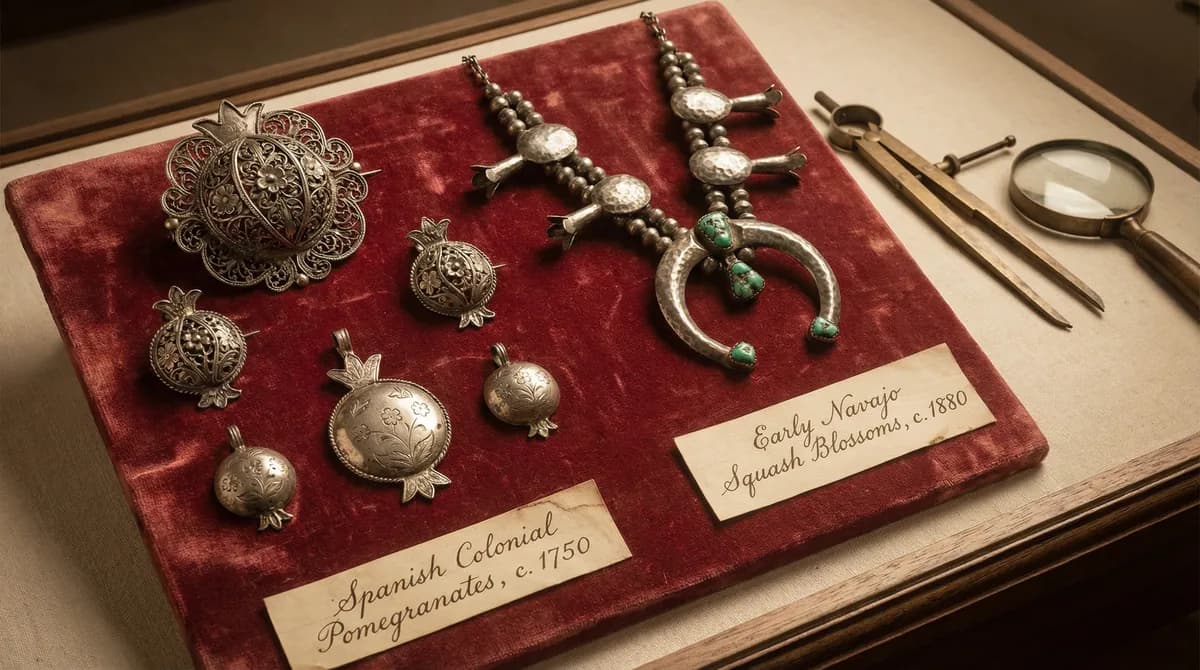
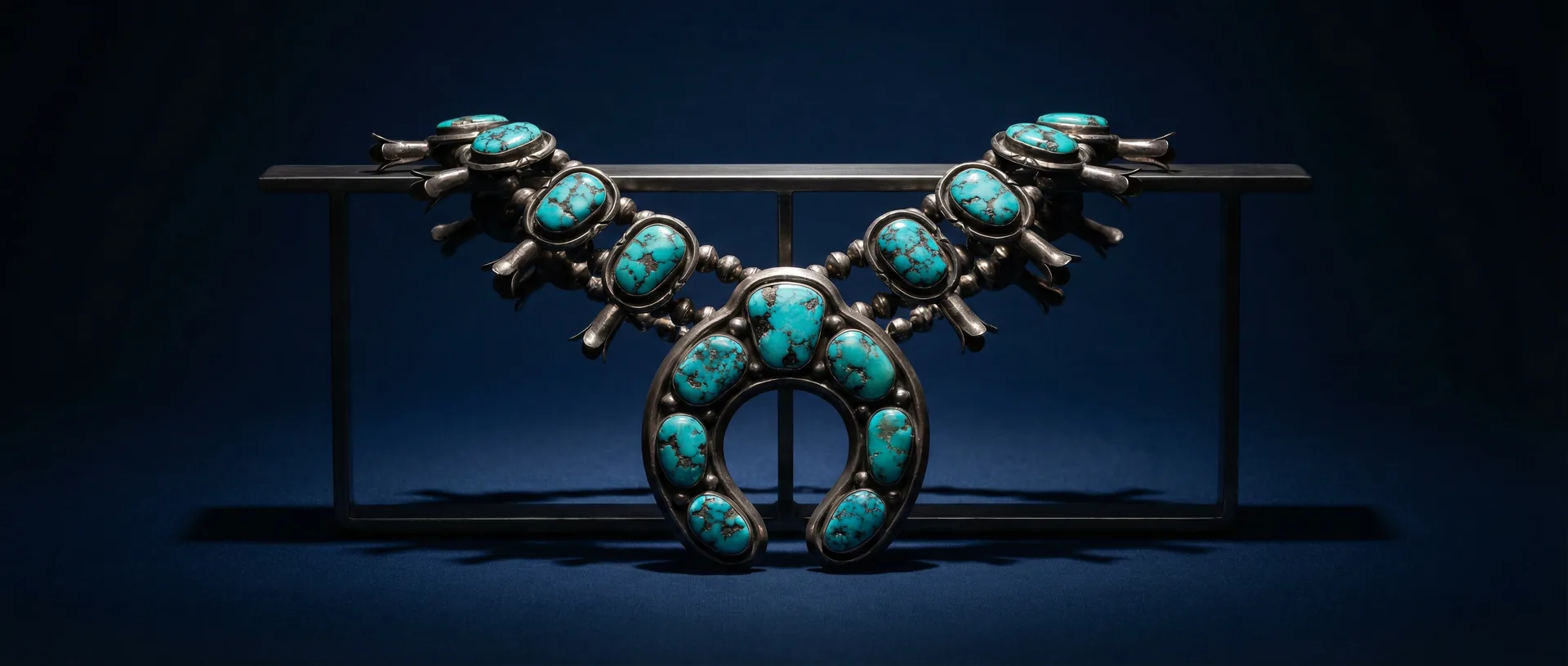
A fine squash blossom necklace consists of round silver beads interspersed with blossom-shaped beads, usually 6 to 12, terminating in a central naja pendant that may feature turquoise or coral. Each blossom is individually formed, soldered, and finished, and the best examples show perfect symmetry, consistent sizing, and clean solder joints.
A fine squash blossom necklace is a feat of engineering as much as artistry. The necklace typically consists of round silver beads interspersed with blossom-shaped beads (usually 6-12), terminating in a central naja pendant. Each blossom is individually formed, soldered, and finished. The naja may feature turquoise, coral, or other stones.
The best examples demonstrate perfect symmetry, consistent bead sizing, clean solder joints, and stones that are well-matched in color and cut. A museum-quality squash blossom necklace represents hundreds of hours of skilled labor.
“The squash blossom necklace carries the DNA of three continents, transformed by Navajo genius into something the world had never seen.”
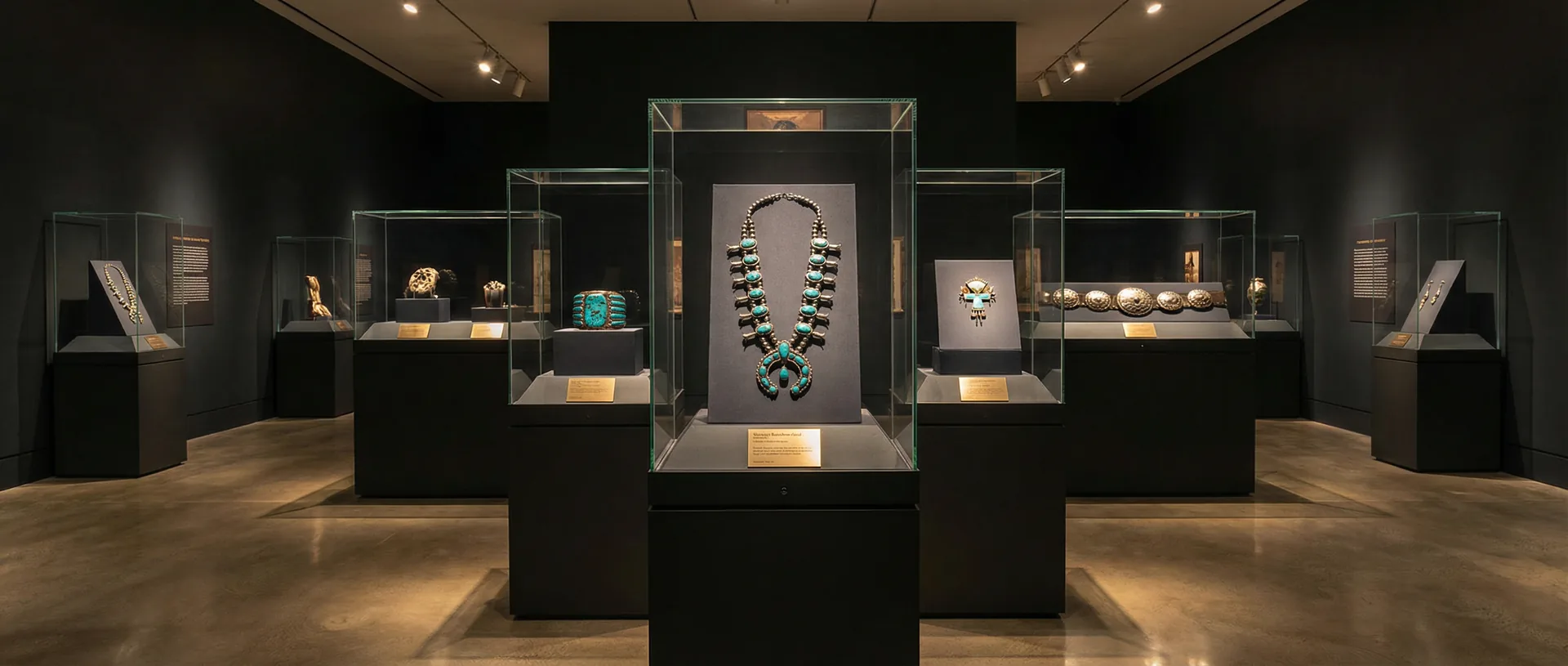
Collect and wear a squash blossom necklace as wearable art. Vintage examples, especially those with rare turquoise or documented provenance, command significant auction prices. A well-made piece should drape comfortably, with beads that move freely and a naja that hangs true, so understanding the hallmarks of quality is essential.
Today, the squash blossom necklace occupies a unique position — simultaneously a wearable art form, a cultural statement, and a collected form. Vintage examples from the early and mid-20th century command significant prices at auction, particularly those with rare turquoise varieties or documented provenance to notable artists.
For contemporary collectors, understanding the hallmarks of quality remains essential. A well-made squash blossom necklace should drape comfortably, with beads that move freely and a naja that hangs true. The best modern examples honor the form's heritage while reflecting the individual artisan's creative voice — a living tradition that continues to evolve with each generation of makers.