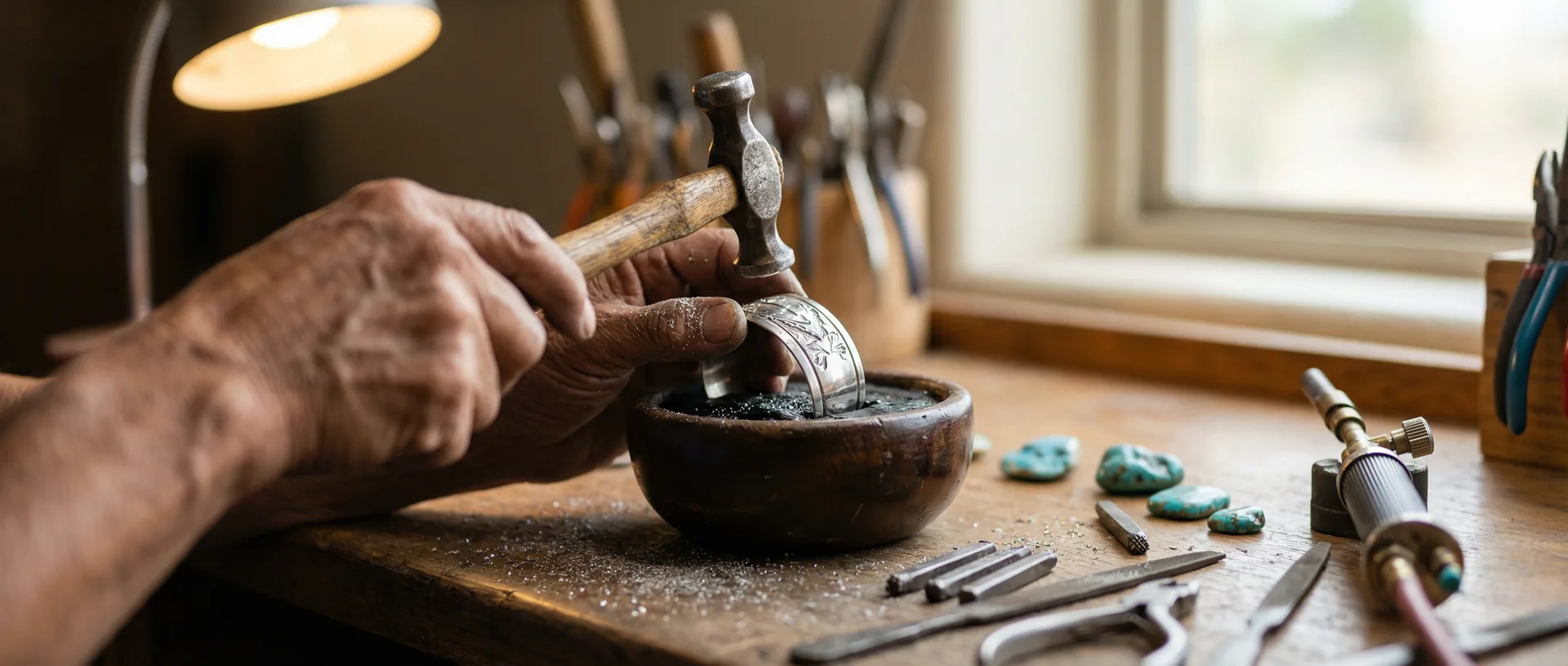
Centuries-old techniques and cultural practices that continue to shape Native American artistry today.
5 articles
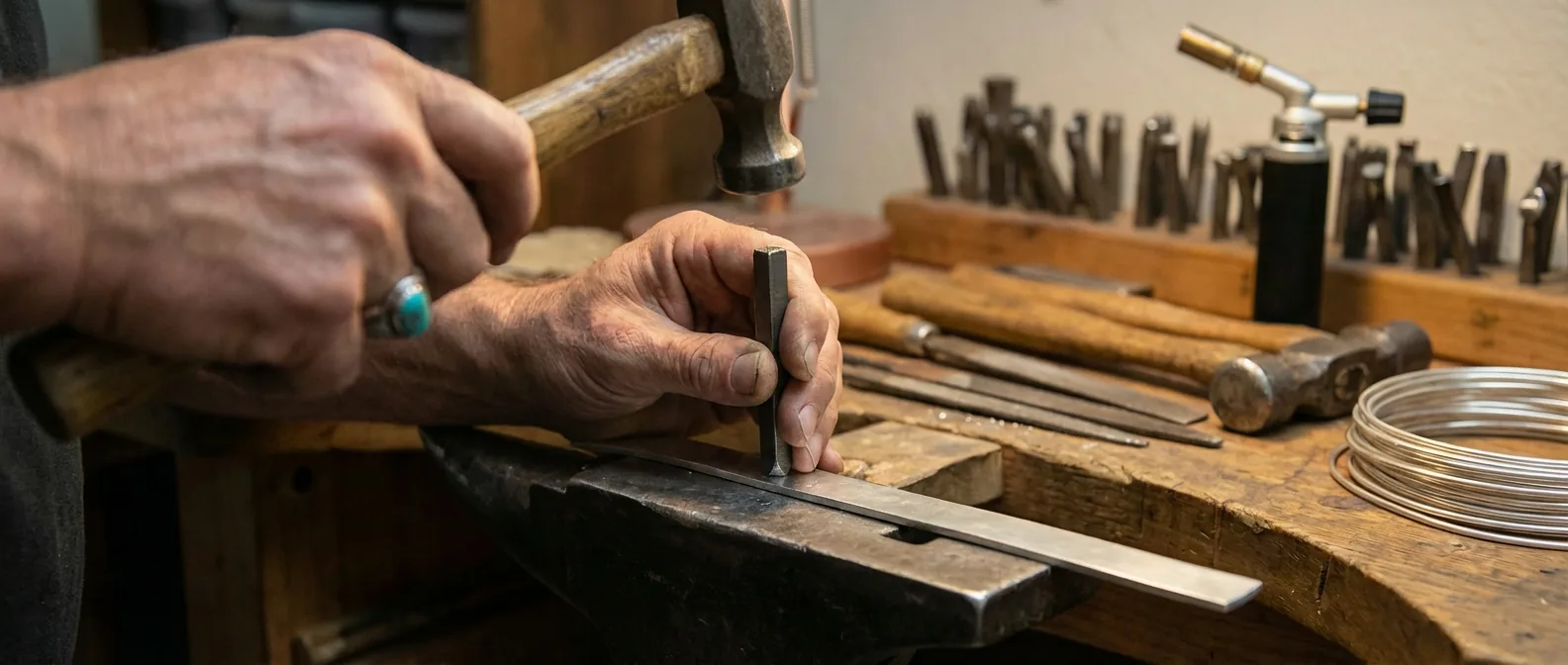
From Atsidi Sani and the Spanish Plateros to the Silversmiths of the Twenty-First Century
Navajo silversmithing traces its origins to the 1860s and 1870s, when Atsidi Sani and other early practitioners adapted metalworking techniques learned from Spanish and Mexican plateros into a distinctly Dine artistic tradition. Through stamp work, repousse, sand casting, and tufa casting, Navajo silversmiths created an iconic design vocabulary — the squash blossom necklace, the concho belt, the ketoh — that remains the foundation of Southwestern jewelry artistry.
Read Article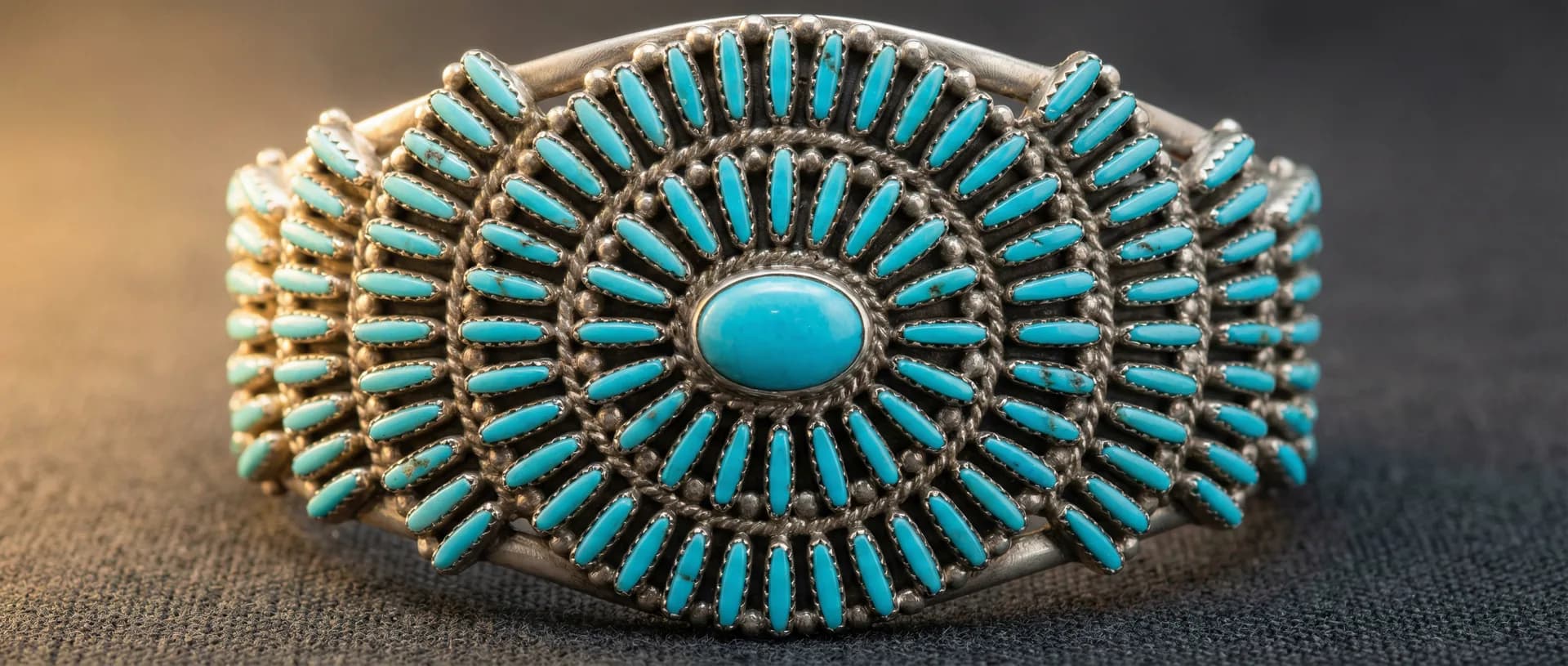
The Precision Art of Long, Thin Stones and Clustered Brilliance from Zuni Pueblo
Zuni Pueblo, New Mexico has produced some of the most technically demanding stonework in the history of world jewelry. Needlepoint — the art of cutting and setting long, thin, pointed turquoise stones — and its companion technique petit point require lapidary precision measured in fractions of a millimeter, passed through families like the Dishta, Quam, and Leekya across multiple generations.
Read Article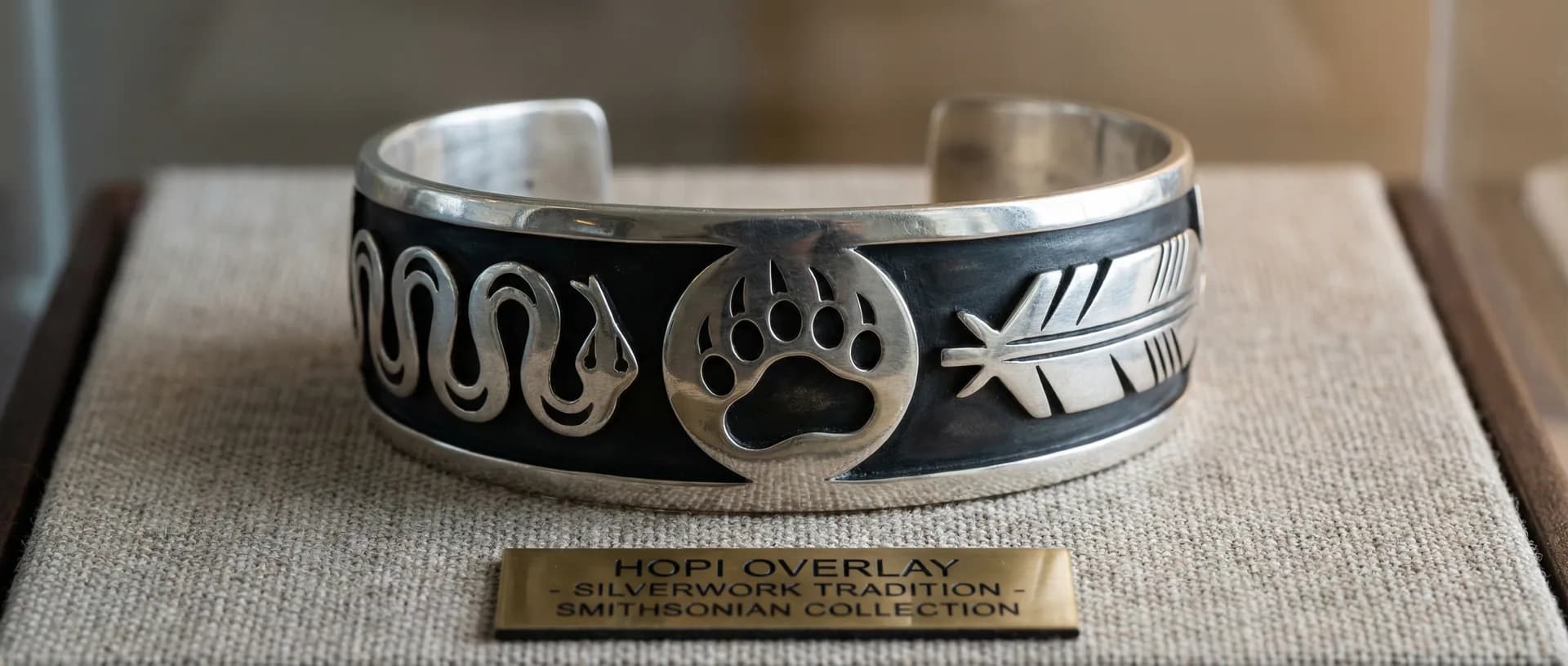
Two Silver Sheets, One Artistic Vision: The Signature Technique of the Hopi Mesas
Hopi overlay — the technique of cutting designs from one silver sheet and soldering it atop a second, oxidized sheet — emerged in the 1940s through the Hopi Silvercraft Cooperative Guild as a deliberate effort to create a Hopi-specific jewelry identity distinct from Navajo silversmithing. Clan symbols including bear paw, rain cloud, and migration spiral encode cultural narratives in silver, with stylistic distinctions between Second Mesa and Third Mesa workshops reflecting the artistic diversity within Hopi culture.
Read Article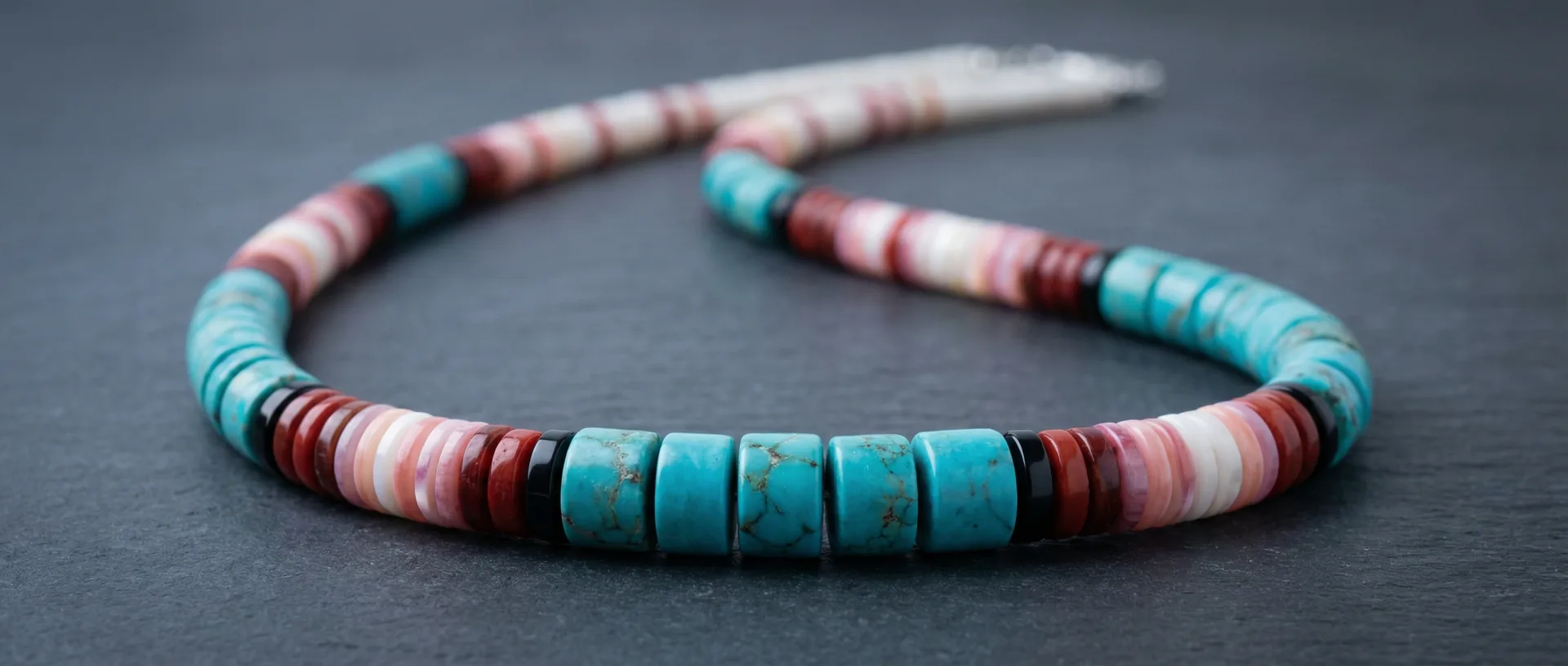
A Thousand Years of Shell Beads from Kewa Pueblo
Heishi — hand-ground shell disc beads — represents one of the oldest continuously practiced jewelry-making traditions in North America. Kewa Pueblo (historically known as Santo Domingo Pueblo), situated along the Rio Grande between Albuquerque and Santa Fe, has been the preeminent center of heishi production for over a thousand years. The process of cutting, drilling, stringing, and grinding shell into perfectly uniform beads remains largely unchanged from its ancient form.
Read Article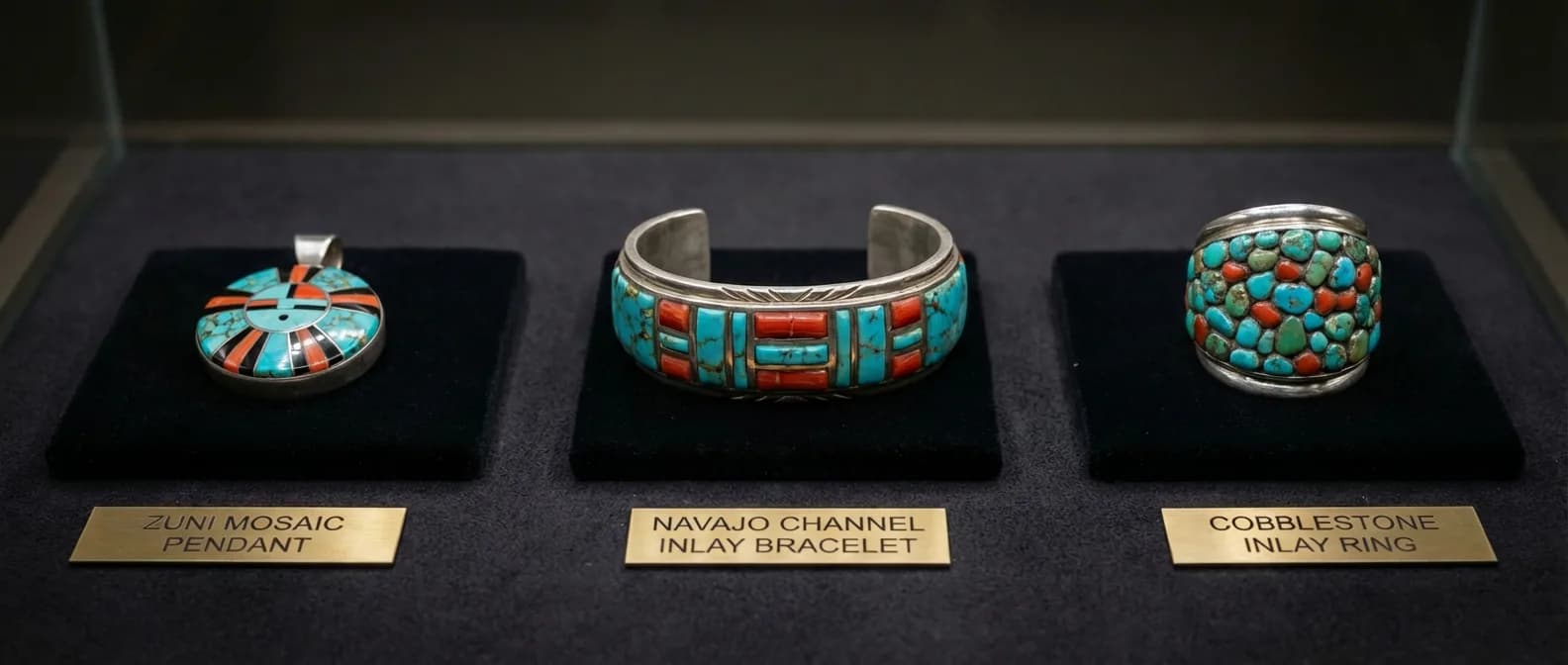
Mosaic, Channel, and Cobblestone: Three Techniques for Setting Stone into Silver
Inlay — the art of setting cut stones flush into a metal surface to create patterns and images — is practiced across multiple Southwestern tribal traditions but reaches its highest expression in Zuni mosaic, Navajo channel work, and the distinctive cobblestone technique that uses irregular stone shapes to produce organic, textured compositions. Each technique imposes different demands on the lapidary and produces fundamentally different visual results.
Read Article