Globe, Arizona's Finite Treasure and the Stone That Redefined American Turquoise
By The Humiovi Editorial Desk — Sedona, Arizona · est. 1972
·
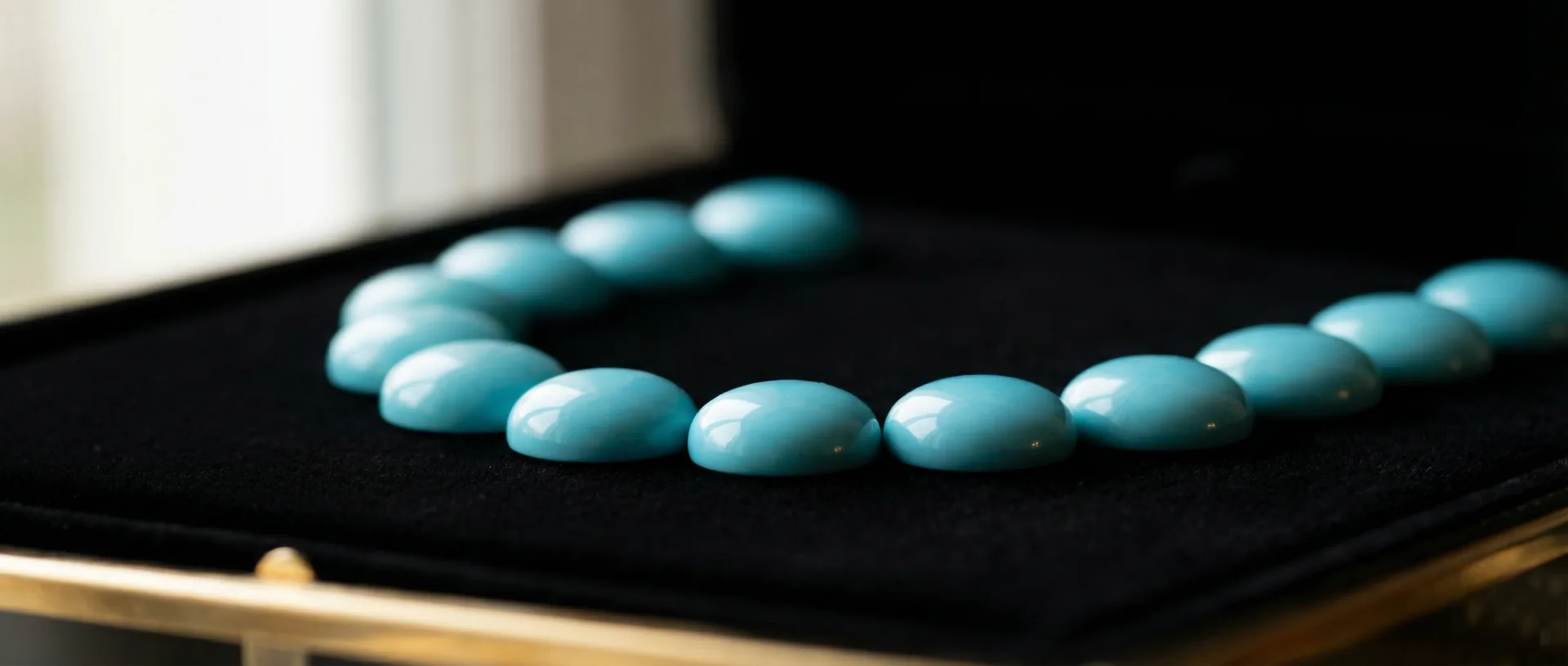
Sleeping Beauty turquoise was discovered in the 1920s within the Globe-Miami mining district of Gila County, Arizona, where it formed as secondary mineralization inside a copper porphyry system. Long treated as an incidental byproduct of large-scale copper extraction, the mine takes its name from a mountain silhouette resembling a reclining figure near the town of Globe.
The Sleeping Beauty mine sits within the Globe-Miami mining district of Gila County, Arizona, a region that has produced copper since the late nineteenth century. The turquoise deposits were first identified in the 1920s as secondary mineralization within the copper porphyry system, where acidic, copper-bearing solutions percolated through aluminum-rich host rock over millions of years. The resulting hydrated copper aluminum phosphate — turquoise by its mineralogical name, CuAl6(PO4)4(OH)8 4H2O — formed in seams, nodules, and fracture fillings throughout the oxidation zone of the deposit.
The mine takes its name from the mountain's silhouette, which resembles a reclining figure when viewed from the town of Globe. For decades, turquoise was treated as an incidental byproduct of large-scale copper extraction. Miners would set aside turquoise specimens encountered during open-pit operations, selling them to regional lapidaries and traders who supplied the growing Southwestern jewelry market. The mine's turquoise gained early recognition for its remarkably consistent color — a pure, medium-toned blue that gemologists would later classify as robin's-egg blue, referencing the precise hue of Turdus migratorius eggshell.
Unlike the Cerrillos mines near Santa Fe, which had been worked by indigenous peoples for over a thousand years, Sleeping Beauty was a twentieth-century discovery that benefited from modern extraction techniques. This allowed for larger quantities of high-quality material to reach the market, initially keeping prices accessible and establishing the stone as a standard in commercial Native American jewelry production throughout the mid-twentieth century.

When the Sleeping Beauty mine permanently ceased turquoise recovery in August 2012 for economic reasons, a renewable supply became a finite inventory: every existing cabochon was extracted before that closure, and no new material has been produced since.
In August 2012, the mine's operator ceased turquoise recovery operations permanently. The decision was driven by economics: copper extraction remained the primary commercial purpose of the mine, and the operational changes required to continue turquoise recovery were no longer justified by the relatively modest revenue turquoise generated compared to copper. The announcement sent immediate shockwaves through the gemstone and jewelry markets.
Every Sleeping Beauty turquoise cabochon in existence today was extracted before August 2012, and no new material will ever be produced from this deposit.
The closure elevated Sleeping Beauty from a well-regarded commercial stone to a collectible mineral with a finite supply. Major auction houses began listing significant Sleeping Beauty pieces in their fine jewelry catalogs alongside diamonds and colored gemstones, a recognition that would have seemed improbable a decade earlier. For Native American jewelers who had built their reputations working with this stone, the closure forced difficult decisions about inventory management, pricing, and whether to transition to alternative turquoise sources.
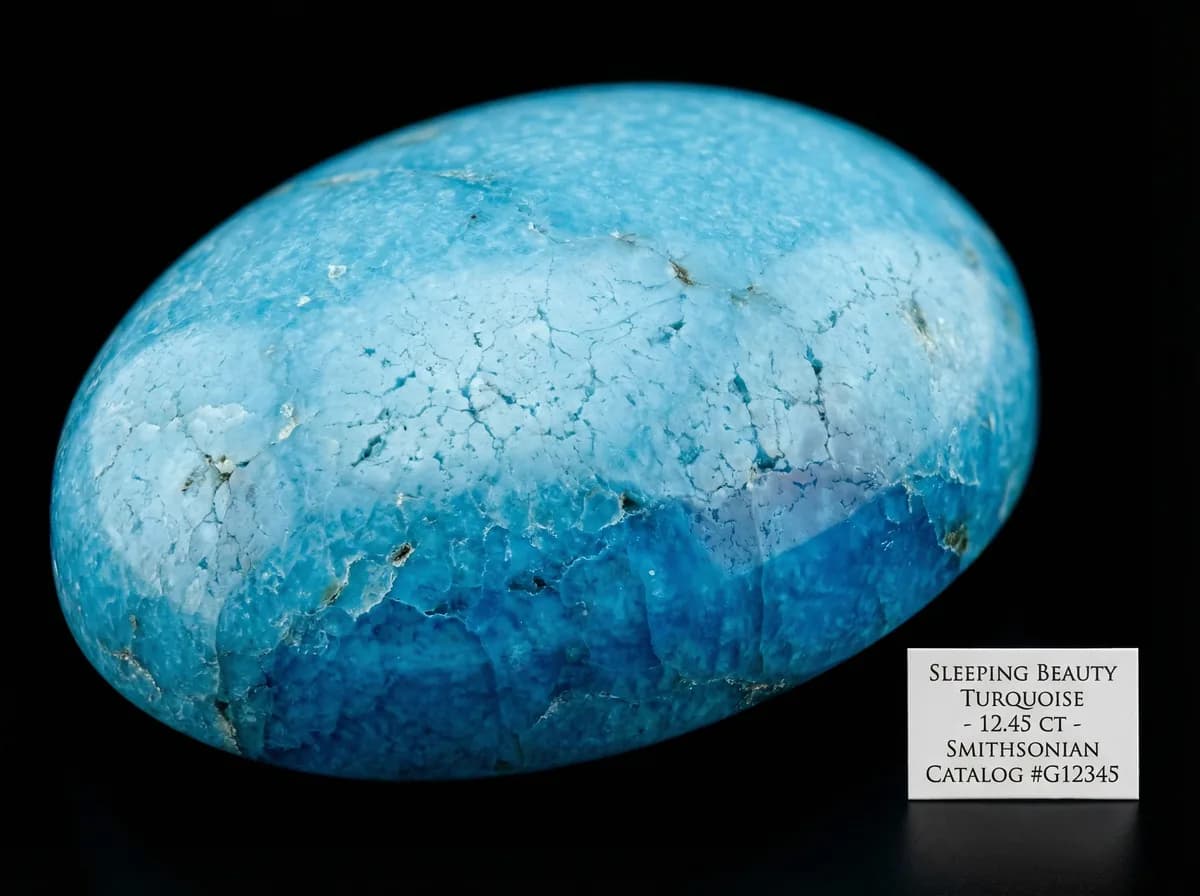
Sleeping Beauty's signature robin's-egg blue — a uniform, medium-saturation blue with minimal green modifier — results from a copper-dominant copper-to-iron ratio in the mineral's structure. Its second defining trait is the near-absence of matrix, yielding clean, uninterrupted fields of blue. Natural, unstabilized stones represent only an estimated 10-15% of total production.
What distinguishes Sleeping Beauty turquoise from the more than sixty recognized turquoise-producing localities in the American Southwest is its color profile. The ideal Sleeping Beauty stone presents a uniform, medium-saturation blue with minimal green modifier — a hue that gemologists describe as robin's-egg blue. This color results from a specific copper-to-iron ratio in the mineral's crystal structure: higher copper content relative to iron produces bluer stones, while increasing iron content shifts the hue toward green.
Sleeping Beauty's geological formation conditions favored copper dominance, yielding stones that sit firmly on the blue end of the turquoise color spectrum. When evaluated against the Munsell color system used in gemological grading, top-grade Sleeping Beauty typically registers in the 5B to 7.5B hue range with a value of 5-6 and chroma of 6-8 — coordinates that define the most desirable turquoise color in the global market.
The absence of matrix — the dark web of host rock inclusions that characterizes many turquoise varieties — is the second defining trait. While mines like Kingman and Number Eight produce stunning spider-web matrix patterns that are prized in their own right, the market consensus holds that matrix-free turquoise commands the highest per-carat prices. A clean Sleeping Beauty cabochon presents an uninterrupted field of blue, allowing the stone's color to speak without visual competition. Grading follows a straightforward hierarchy: no matrix represents the highest grade, light webbing occupies the middle tier, and heavy matrix or color inconsistency marks commercial grade material.
Stabilization — the process of impregnating porous turquoise with clear resin to harden it and enhance color permanence — is applied to a significant percentage of Sleeping Beauty material. Natural, untreated stones that maintain their color and hardness without stabilization represent perhaps 10-15% of total production and command the highest premiums. Stabilized Sleeping Beauty remains a legitimate and desirable material, as the process does not alter the stone's fundamental color but simply ensures it will not degrade over time from exposure to oils, moisture, or ultraviolet light.
“Every cabochon cut from Sleeping Beauty turquoise represents a fragment of geological time that ended permanently in August 2012 — a closed chapter written in copper and aluminum phosphate over sixty million years.”
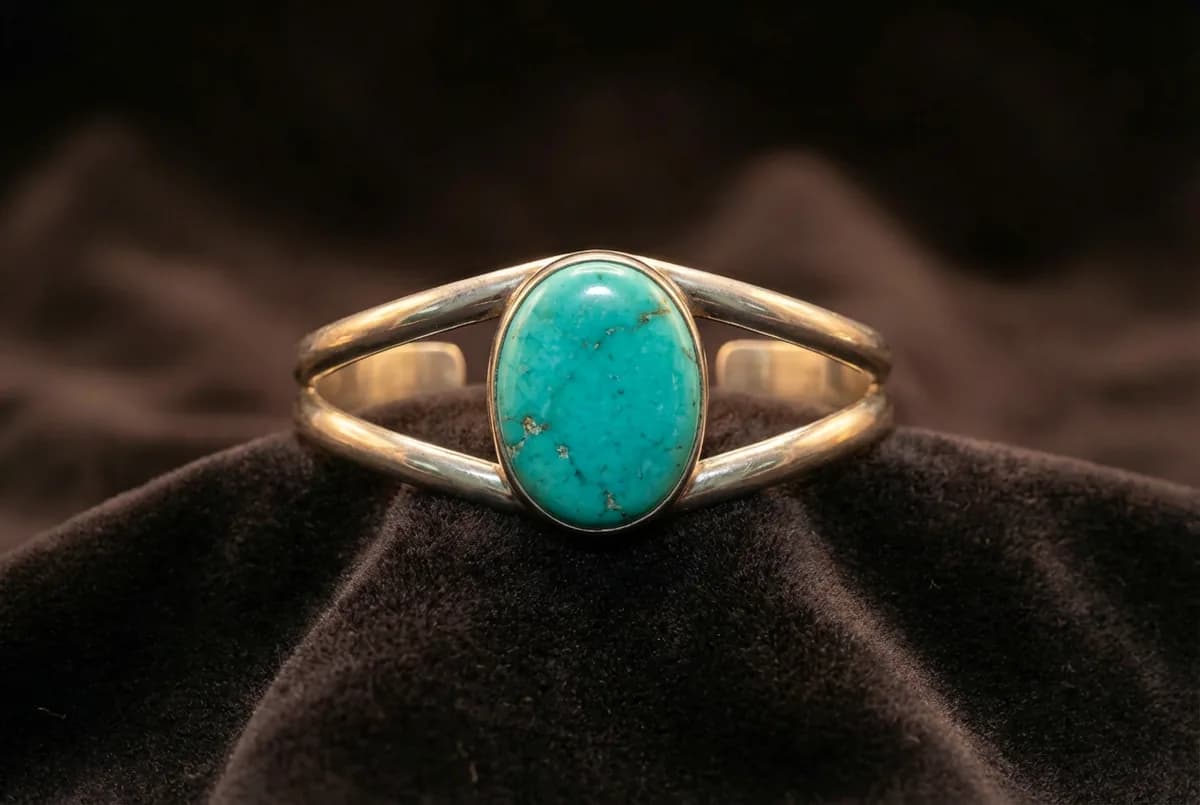
Sleeping Beauty turquoise holds a central place across Southwestern tribes, becoming one of the most widely used varieties in contemporary indigenous jewelry. The Navajo call turquoise dootl'izh, 'blue-green stone of the sky,' and rank it among four sacred stones. Zuni lapidaries favor it for petit point, Santo Domingo for heishi, and Hopi for accent stones.
Turquoise occupies a central position in the spiritual and artistic traditions of virtually every Southwestern Native American people, and Sleeping Beauty turquoise has become one of the most widely used varieties in contemporary indigenous jewelry. The Navajo word for turquoise, dootl'izh, translates roughly as 'blue-green stone of the sky,' reflecting the belief that turquoise connects the earthly and celestial realms. In Navajo cosmology, turquoise is one of the four sacred stones associated with the cardinal directions, representing the south.
Zuni lapidaries have long favored Sleeping Beauty for petit point and needlepoint work — techniques that require stones to be cut into tiny, precisely shaped cabochons, sometimes no larger than a grain of rice. The stone's consistent color ensures that a cluster of twenty or thirty small stones reads as a unified field of blue rather than a patchwork of slightly different hues, which is essential for the visual coherence these intricate settings demand.
Santo Domingo Pueblo (Kewa) artisans incorporate Sleeping Beauty turquoise into heishi necklaces, grinding the stone into thin discs that are strung alongside shell, jet, and coral. The uniformity of color that Sleeping Beauty provides is particularly valued in heishi work, where variations between beads can disrupt the visual rhythm of a strand. Hopi silversmiths, whose overlay technique typically features silver-on-silver designs without prominent stone settings, occasionally select Sleeping Beauty for accent stones precisely because its understated elegance complements rather than competes with the geometric silverwork.
For collectors, Sleeping Beauty turquoise value is determined chiefly by color saturation — pure, strong blue without gray or green — alongside size, treatment status, and provenance. Natural, unstabilized stones command premiums of 200-400% over stabilized equivalents, calibrated cabochons above 15 carats are increasingly scarce, and documented mine origin adds further value.
The post-closure market for Sleeping Beauty turquoise operates under dynamics familiar to collectors of finite natural resources. Existing inventory is held by a relatively small number of dealers, lapidaries, and collectors who acquired material before or shortly after the 2012 closure. As this inventory is used in jewelry production, the available supply contracts.
For collectors evaluating Sleeping Beauty turquoise, several factors determine value. Color saturation is paramount — the most valuable stones exhibit a strong, pure blue without gray or green modifiers. Size matters: calibrated cabochons above 15 carats in top color are increasingly scarce. Treatment status affects pricing significantly, with natural, unstabilized stones commanding premiums of 200-400% over stabilized equivalents of similar color and size. Provenance documentation — evidence linking a specific stone to the Sleeping Beauty mine — adds an additional layer of value, particularly as the market contends with misattributed material from other localities.
Authentication requires expertise. The most reliable indicators include the stone's specific gravity (approximately 2.6-2.8 for natural turquoise), its reaction under ultraviolet light (natural Sleeping Beauty typically shows weak to moderate blue-green fluorescence), and microscopic examination of surface texture (natural stones show a characteristic waxy luster distinct from stabilized material's glassy finish). Reputable dealers provide written guarantees of mine origin and treatment status, and collectors should insist on such documentation for significant purchases.
Sleeping Beauty has become the reference standard against which other blue turquoise is measured — 'Sleeping Beauty color' denotes a pure, medium-toned blue without green undertone or matrix. Despite renewed interest in alternatives like Persian, Chinese Hubei, and Dry Creek turquoise, none has displaced it from the apex of the blue turquoise hierarchy.
Sleeping Beauty turquoise has become the reference standard against which other blue turquoise is measured. When gemologists describe a stone from any locality as having 'Sleeping Beauty color,' they invoke a specific and universally understood benchmark — pure, medium-toned blue without green undertone and without matrix. This standardization reflects the stone's profound influence on market expectations and aesthetic preferences over the past several decades.
Contemporary Native American jewelers working with Sleeping Beauty face a creative tension between the stone's increasing rarity and its continued desirability among collectors. Some artists have responded by using smaller stones more prominently, designing settings that maximize the visual impact of modest-sized cabochons through innovative metalwork. Others have embraced the stone's scarcity as an opportunity to create legacy pieces — substantial works intended to be collected rather than casually worn, priced accordingly, and accompanied by documentation that establishes their place in the finite universe of Sleeping Beauty jewelry.
The stone's closure has also prompted renewed interest in other high-quality blue turquoise sources, including Persian turquoise from the Nishapur mines of Iran, Chinese Hubei province turquoise, and select American varieties from mines like Dry Creek in Nevada. Yet none of these alternatives has displaced Sleeping Beauty from its position at the apex of the blue turquoise hierarchy. The combination of color consistency, historical association with Native American artistry, and verified finite supply has created a category of one — a stone whose cultural and gemological significance will only deepen as the remaining inventory continues to diminish with each passing year.
America's Oldest Continuously Mined Turquoise Deposit
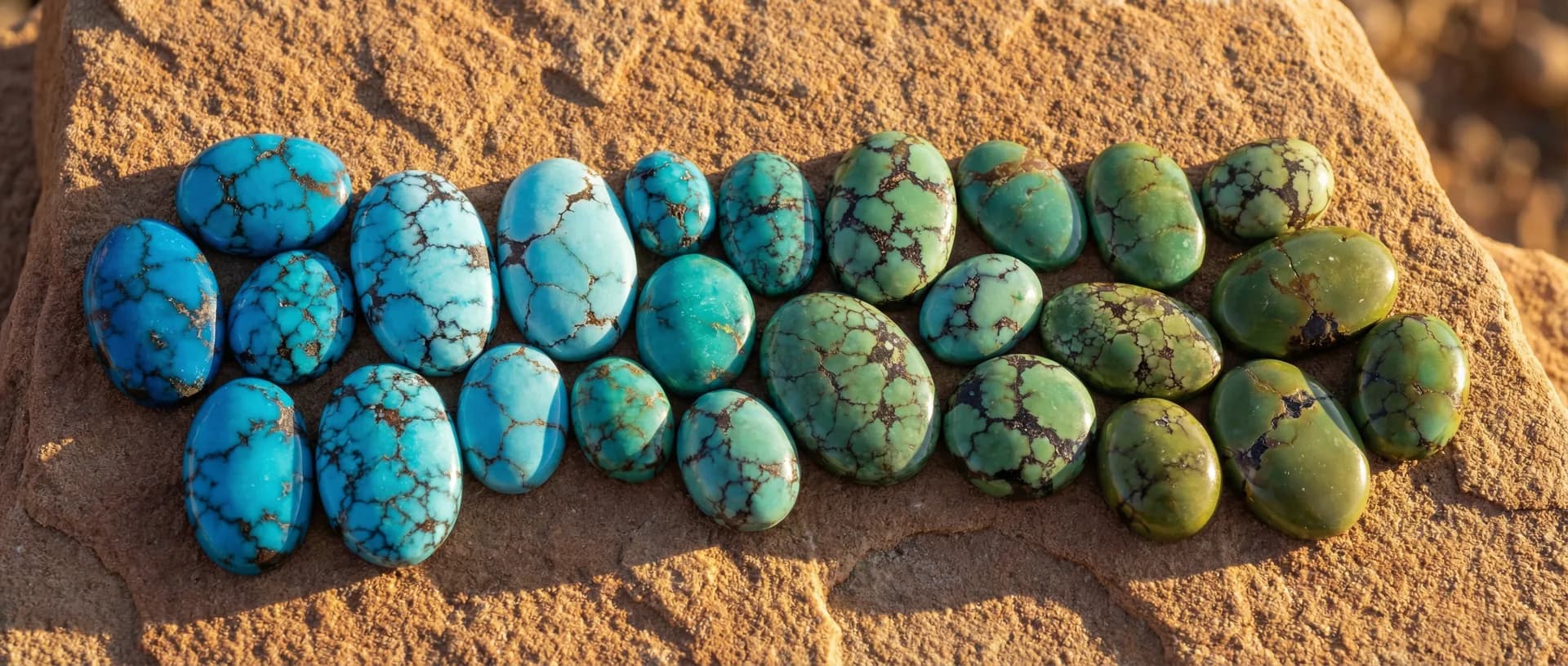
The Kingman mine in Mohave County, Arizona has operated continuously since the late nineteenth century, producing turquoise in a remarkable color range from sky blue to deep blue-green, with its spider-web matrix specimens ranking among the most valued turquoise in the world.
Read Article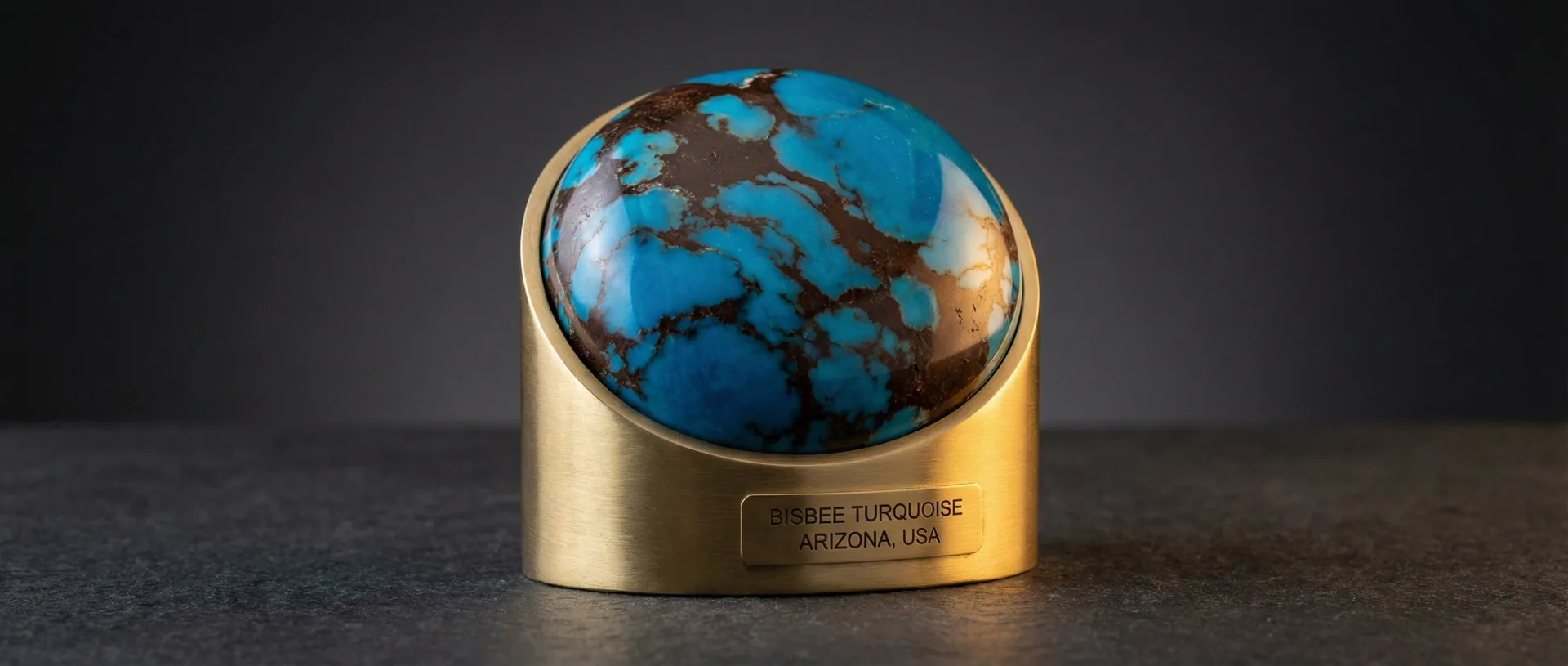
The Lavender Pit's Vanished Treasure
Since the Lavender Pit copper mine in Bisbee, Arizona ceased operations in 1975, not a single new carat of Bisbee turquoise has entered the market. Distinguished by its signature chocolate brown matrix against vivid blue, Bisbee commands prices of $50 to over $200 per carat and stands as one of the most collectible American turquoise varieties ever produced.
Read Article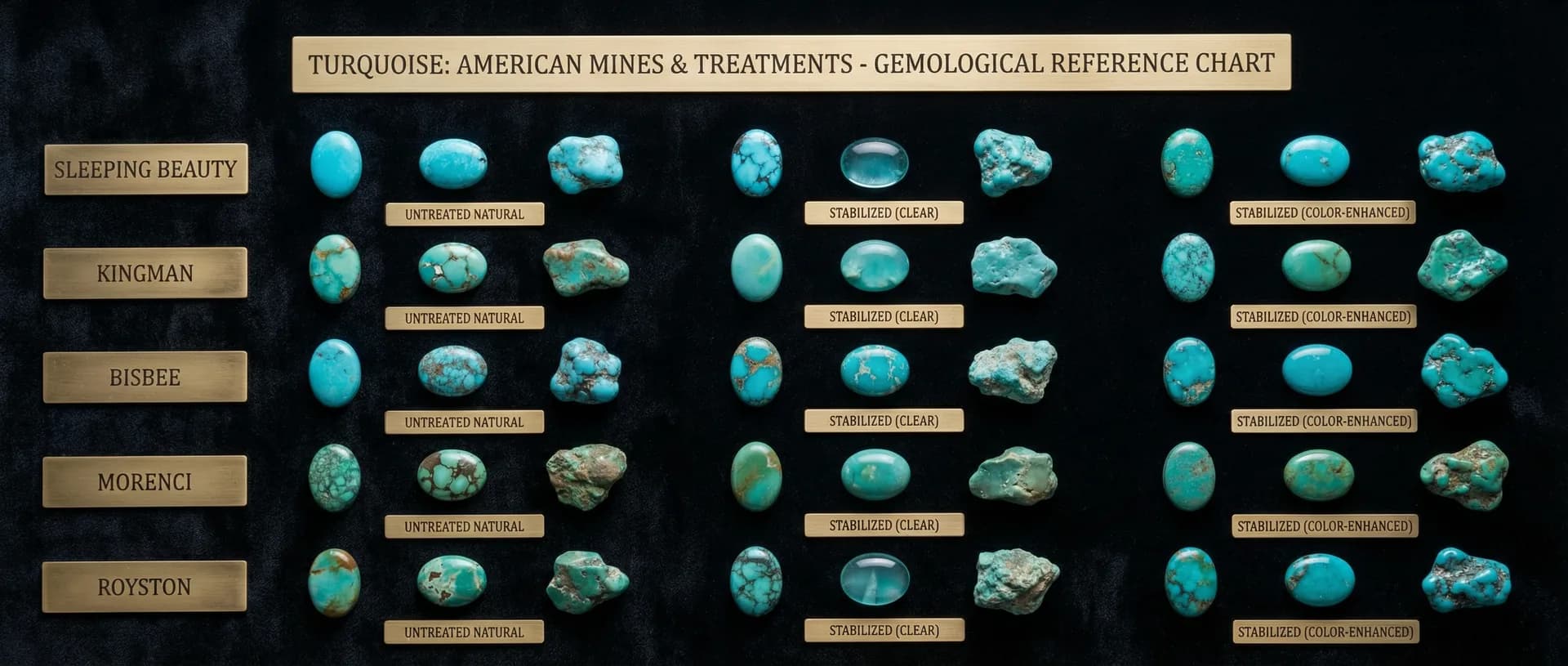
Natural, Stabilized, and Treated: Understanding What You Are Purchasing
Approximately 10% of turquoise on the market is natural and untreated, 80% is stabilized through legitimate enhancement processes, and the remainder includes dyed, reconstituted, or synthetic material. This guide provides the gemological framework to identify each category and make informed purchasing decisions.
Read Article