Natural, Stabilized, and Treated: Understanding What You Are Purchasing
By The Humiovi Editorial Desk — Sedona, Arizona · est. 1972
·
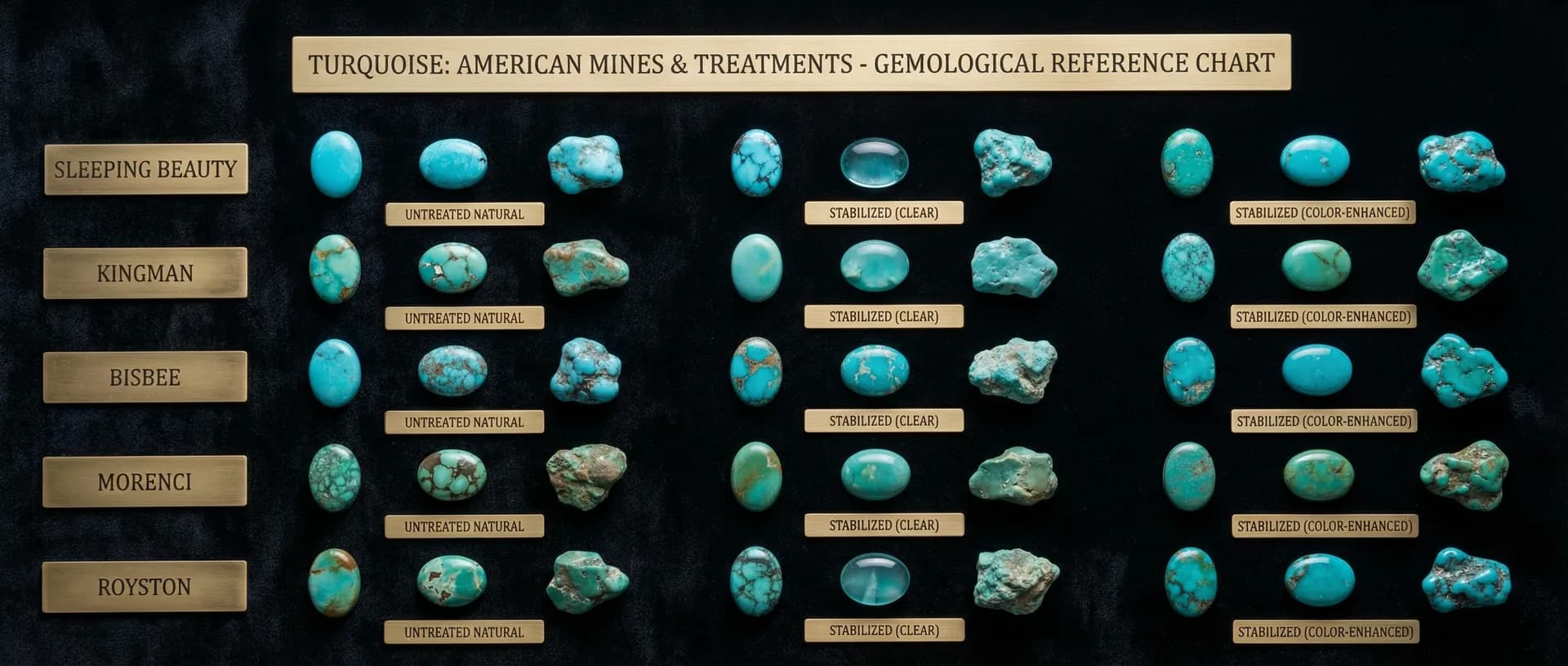
Natural turquoise is material subjected to no stabilization, treatment, or enhancement, making up roughly 10% of turquoise in commercial circulation. It achieves its color and hardness — typically 5 to 6 on the Mohs scale — through geological processes alone, displays a waxy to sub-vitreous luster, and commands three to five times the price of stabilized stones.
Natural turquoise — material that has not been subjected to any stabilization, treatment, or enhancement process — represents the pinnacle of the turquoise market and constitutes approximately 10% of all turquoise in commercial circulation. This figure, while frequently cited by dealers and gemologists, warrants context: the percentage varies significantly by mine, with some deposits producing a higher proportion of gem-grade natural material than others. The Sleeping Beauty mine, for example, yielded an estimated 10-15% natural gem-grade material, while other deposits produced substantially less.
Natural turquoise achieves its color and hardness through geological processes alone. The stone's quality depends on the density and crystallinity of the turquoise mineral itself — tightly packed, well-crystallized turquoise produces harder, more durable stones with richer color and better polish. Natural turquoise of gem quality typically registers 5 to 6 on the Mohs hardness scale, sufficient for use in jewelry without additional treatment. The finest natural stones achieve what gemologists call 'gem-hard' status, meaning they can take and hold a high polish without stabilization.
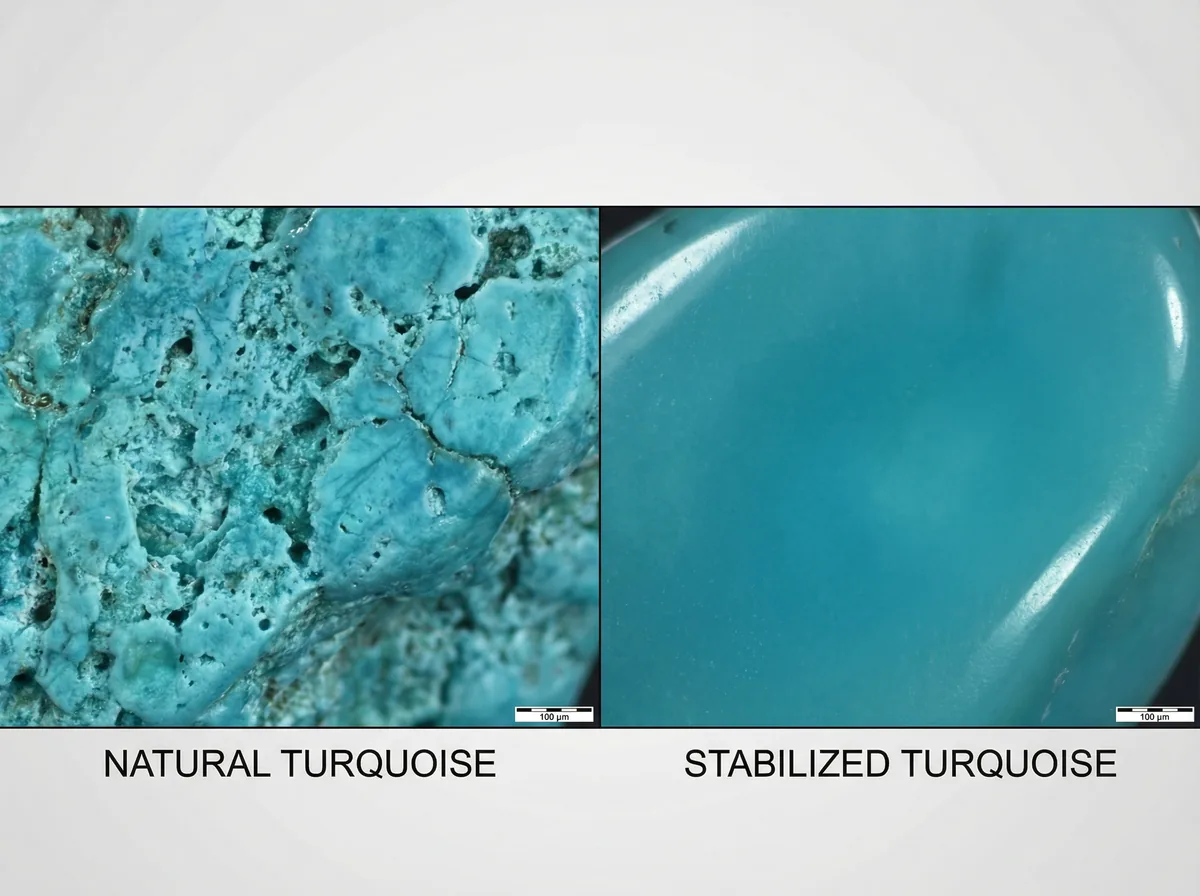
Identifying natural turquoise requires attention to several diagnostic characteristics. The luster of polished natural turquoise is waxy to sub-vitreous — a subtle glow rather than the glassy brilliance that stabilized material often displays. Under magnification, natural turquoise reveals a granular crystalline texture with visible porosity, distinct from the sealed, uniform surface of stabilized stones. The acetone test — placing a drop of acetone on an inconspicuous area — can indicate stabilization, as resin-treated stones may show surface softening or dulling, though this test is destructive and should only be performed on rough material or by qualified gemologists.
Natural turquoise commands premium prices across all mine varieties. A natural Sleeping Beauty cabochon may sell for three to five times the price of an equivalent stabilized stone. For collectors, natural turquoise represents the stone in its purest form — a direct product of geological processes unmediated by human intervention. However, natural turquoise also carries maintenance responsibilities: it can be sensitive to prolonged exposure to sunlight, cosmetics, perspiration, and household chemicals, all of which may affect color over time.
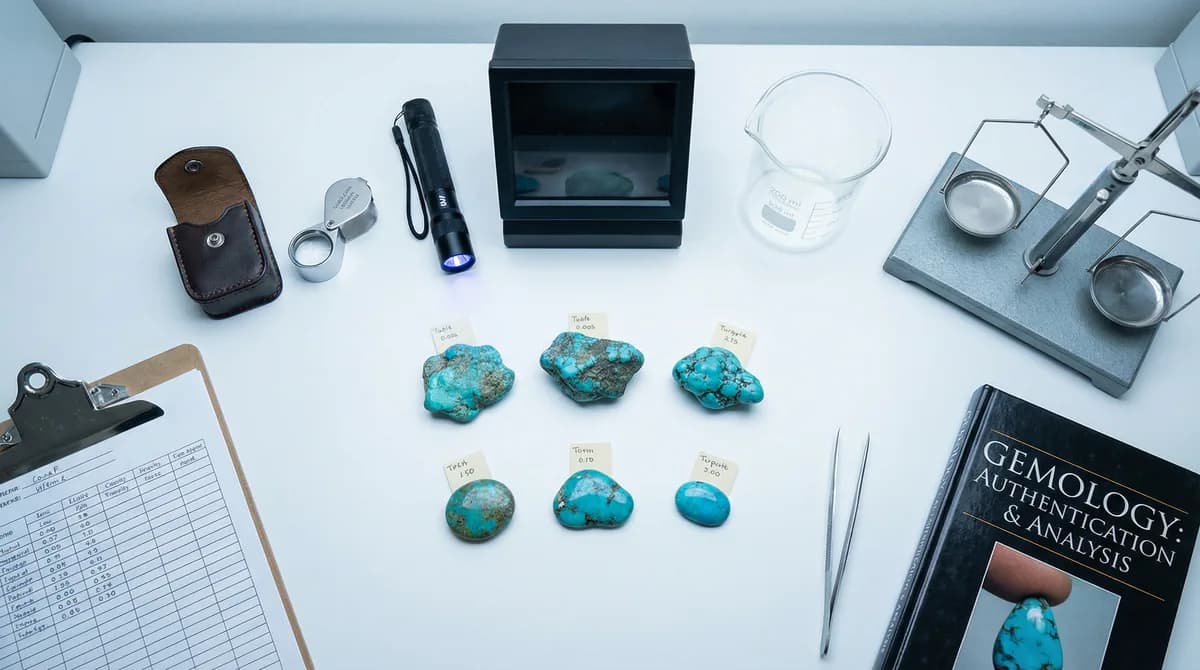
Stabilized turquoise is porous turquoise impregnated under pressure or vacuum with a clear binding agent — typically epoxy resin or sodium silicate — to increase hardness, polish retention, and durability. Comprising roughly 80% of the commercial market, it is a legitimate, disclosed treatment recognized by the IGS, GIA, and AGTA that does not alter the stone's color.
Stabilization is the process of impregnating porous turquoise with a clear, colorless binding agent — typically epoxy resin or sodium silicate — under pressure or vacuum to fill microscopic pore spaces and fractures within the stone. This process increases the stone's hardness, improves its polish retention, and enhances its resistance to environmental degradation. Approximately 80% of all turquoise on the commercial market has been stabilized, making it the industry standard rather than an exception.
The legitimacy of stabilization as a treatment is well-established in the gemological community. The International Gem Society, the Gemological Institute of America, and the American Gem Trade Association all recognize stabilization as an accepted practice, provided it is disclosed to the buyer. The process does not alter the turquoise's fundamental color — it does not add pigment or change the stone's chemistry. Rather, it preserves and enhances the color that the stone possesses naturally by preventing the moisture loss and oil absorption that cause untreated porous turquoise to fade or discolor over time.
The stabilization process itself involves several steps. The rough turquoise is first cleaned and dried to remove surface moisture and contaminants. It is then placed in a vacuum chamber with liquid resin, and the vacuum draws air from the stone's pore spaces. When the vacuum is released, atmospheric pressure forces the resin into the evacuated pores, filling them completely. The stone is then cured — either through heat application or chemical catalysis — to harden the resin within the pore structure. The result is a stone that is harder, more durable, and more resistant to color change than the untreated equivalent.
Quality varies significantly among stabilized turquoise. The best stabilized material starts with turquoise that possesses good natural color and moderate porosity — stones that are already attractive but too soft for reliable jewelry use without treatment. Lower-quality stabilized turquoise may begin with pale, chalky material that the stabilization process darkens somewhat through reduced light scattering, but the resulting color, while improved, never achieves the saturation of stones that possessed strong natural color before treatment. Discerning buyers evaluate stabilized turquoise based on its post-treatment color quality, not merely its treatment status.
For the majority of jewelry applications — everyday wear, fashion accessories, gift purchases, and casual collecting — stabilized turquoise offers an excellent combination of beauty, durability, and value. A well-stabilized Kingman or Sleeping Beauty cabochon provides the visual appeal and cultural authenticity of genuine American turquoise at a fraction of the cost of equivalent natural material, with superior durability for daily wear.
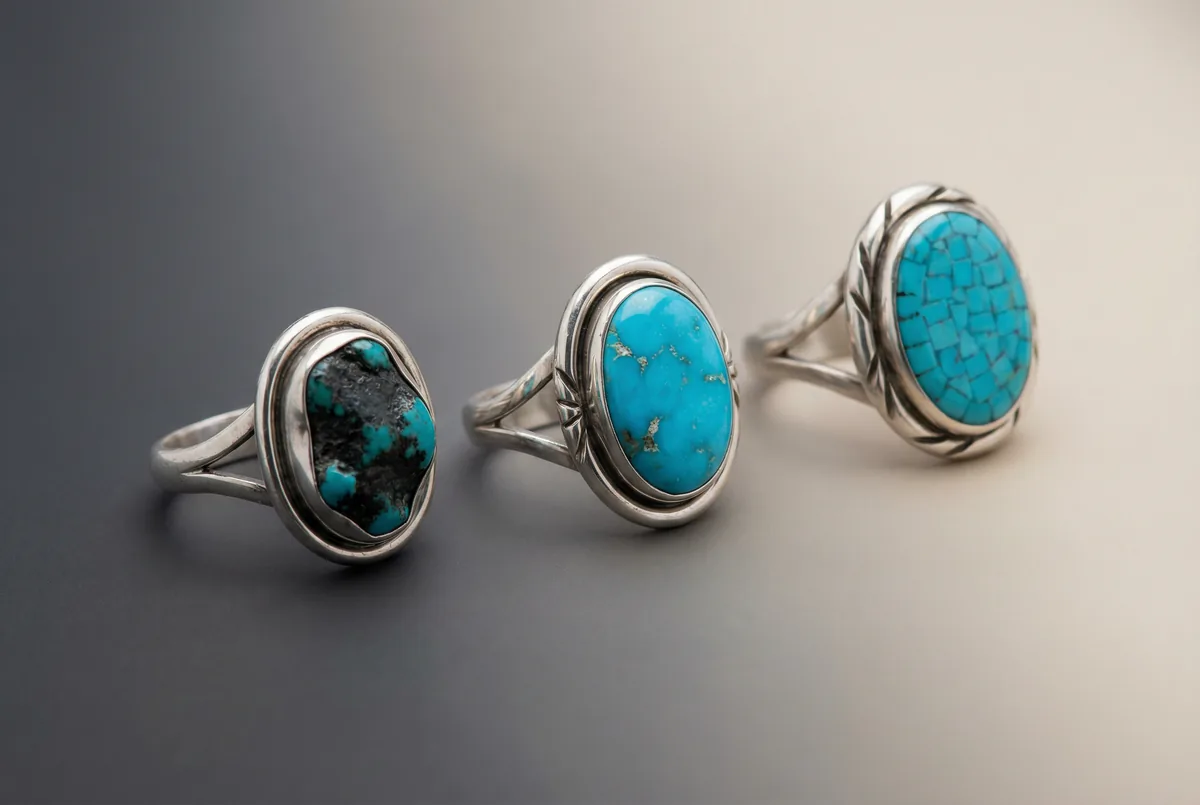
Beyond stabilization, several treatments more significantly alter turquoise and require disclosure: dyeing adds pigment and is fraud when undisclosed; the Zachery treatment introduces potassium; reconstituted turquoise binds ground turquoise powder with resin; and block or simulated 'turquoise' contains no turquoise mineral at all. Each is legitimate only when honestly identified.
Beyond stabilization, turquoise may undergo several additional treatments that more significantly alter the stone's appearance. These treatments range from widely accepted practices to outright misrepresentation, and understanding the spectrum is essential for informed purchasing.
Dyed turquoise involves the addition of pigment — typically blue or green dye — to enhance or alter the stone's color. Dyeing can transform pale, commercially undesirable turquoise into material that superficially resembles high-grade natural stone. The practice is considered legitimate only when fully disclosed, but undisclosed dyeing constitutes fraud. Detection methods include the acetone swab test (dyed stones release color onto a cotton swab moistened with acetone), examination under magnification (dye concentrates in fractures and pore spaces, creating an uneven distribution visible at 10x), and comparison of the stone's color in different lighting conditions (dyed turquoise often shifts color more dramatically than natural or stabilized material).
The Zachery treatment, named for its developer James Zachery, introduces potassium into the turquoise through an electrolytic process. This treatment reduces porosity and can subtly enhance color without adding external pigment. The Zachery process is considered a legitimate enhancement by most gemological authorities, though detection is difficult and the treatment is not always disclosed. Gas chromatography-mass spectrometry and energy-dispersive X-ray spectroscopy can identify Zachery-treated stones through elevated potassium levels, but these tests require laboratory equipment not available to most buyers.
Reconstituted turquoise is manufactured by grinding genuine turquoise into powder, mixing it with binding resin, and molding the mixture into blocks that are then cut and polished as if they were natural stone. The resulting product contains real turquoise mineral but in a form that bears no relation to its natural geological occurrence. Reconstituted material is typically identifiable by its uniform color distribution (natural turquoise always shows some variation), its lack of natural matrix patterns (some reconstituted material has matrix patterns added using dyed resin), and its specific gravity, which often falls below the 2.60 minimum for natural turquoise.
Block turquoise — also known as simulated turquoise — contains no turquoise mineral whatsoever. It is manufactured from dyed resin, ceramic, or plastic and marketed under names like 'turquoise block,' 'neo turquoise,' or misleading proprietary terms. Block turquoise is a legitimate product when sold under its actual identity but becomes fraudulent when represented as genuine turquoise. The material is typically identifiable by its unnaturally perfect color uniformity, its warm feel (plastics feel warm to the touch, while mineral turquoise feels cool), and its low specific gravity.
“Understanding turquoise treatment is not about suspicion — it is about ensuring that the beauty you purchase is honestly represented and appropriately valued.”
Buyers can identify turquoise treatment through visual, tactile, and price-based assessment. Natural turquoise shows a waxy luster and subtle color variation; stabilized appears glassier; dyed material concentrates color in fractures; reconstituted looks suspiciously uniform. Genuine turquoise feels cool while plastic feels warm, and implausibly low prices signal misrepresentation. Documentation and dealer reputation remain the best safeguards.
A practical identification framework for turquoise buyers combines visual assessment, tactile evaluation, and targeted testing. While definitive identification of treatment status requires gemological laboratory analysis, the following field-level observations enable informed preliminary assessments.
Visual indicators provide the first layer of evaluation. Natural turquoise displays a waxy luster and subtle color variations across the stone's surface — no two square millimeters are perfectly identical. Stabilized turquoise typically shows a slightly glassier luster with more uniform color, though high-quality stabilized material can closely approximate the appearance of natural stones. Dyed turquoise often reveals color concentration in surface-reaching fractures, creating darker lines that follow crack patterns rather than matrix patterns. Reconstituted material shows suspicious uniformity, with color and texture that appear manufactured rather than geological.
Tactile assessment contributes useful information. Genuine turquoise — whether natural or stabilized — feels cool to the touch due to its mineral thermal conductivity. Plastic simulants feel warm. Natural turquoise has a characteristic density that experienced handlers recognize as the 'weight of stone,' while reconstituted and block materials often feel unexpectedly light for their size.
The price-quality relationship serves as a practical screening tool. If a stone is being sold as natural Sleeping Beauty turquoise for $5 per carat, something is wrong — the market simply does not support that pricing for genuine natural material. Similarly, large quantities of perfectly matched turquoise at low prices should trigger skepticism, as natural turquoise production rarely yields enough closely matched material for mass-market jewelry at bargain prices.
Documentation and dealer reputation remain the most reliable safeguards for significant purchases. Established dealers stake their business reputation on the accuracy of their representations and typically provide written guarantees of mine origin and treatment status. For purchases above a few hundred dollars, independent gemological certification from a recognized laboratory adds an additional layer of assurance. The investment in proper authentication is modest relative to the cost of discovering that a prized specimen is not what it was represented to be.
Ultimately, the turquoise market rewards educated buyers. Understanding the distinction between natural, stabilized, and treated turquoise is not about establishing a quality hierarchy — stabilized turquoise serves the market beautifully and honestly — but about ensuring that buyers pay prices appropriate to what they are actually receiving. A properly disclosed stabilized Kingman cabochon at $8 per carat delivers genuine beauty and cultural authenticity. The same stone misrepresented as natural Kingman at $35 per carat constitutes a transaction that informed buyers can and should avoid.
The FTC's Jewelry Guides legally require disclosure of treatments that materially affect a gemstone's value, and this applies to turquoise — including stabilization, dyeing, the Zachery treatment, and reconstitution. Enforcement is uneven, leaving tourist and online markets susceptible to misrepresentation, but transparency ultimately benefits dealers, collectors, and a mineral with a 7,000-year history alike.
The turquoise market's treatment landscape raises ethical considerations that extend beyond individual transactions. The Federal Trade Commission's Jewelry Guides require that treatments materially affecting a gemstone's value be disclosed to buyers, and this requirement applies explicitly to turquoise. Stabilization, dyeing, the Zachery treatment, and reconstitution all constitute material treatments that must be disclosed under FTC guidelines.
Despite these requirements, enforcement is uneven, and undisclosed treatment remains common in certain market segments. The tourist jewelry market, online marketplaces, and international trade are particularly susceptible to misrepresentation. Buyers in these channels should apply heightened skepticism and rely more heavily on the identification techniques described above.
The Native American jewelry market has developed its own standards around turquoise treatment disclosure. The Indian Arts and Crafts Act of 1990 prohibits misrepresentation of the indigenous origin of art products, and while this statute addresses artist identity rather than stone treatment specifically, the community norms within the Native American jewelry trade strongly favor honest material disclosure. Reputable Native American jewelers and the galleries that represent them typically provide clear information about the turquoise varieties and treatment status of stones used in their work.
For the broader market's long-term health, transparency benefits all participants. Dealers who disclose treatment build customer trust and repeat business. Collectors who understand treatment make better purchasing decisions and build more valuable collections. And the turquoise itself — a remarkable mineral with a 7,000-year history of human appreciation — is best served by a market that values and rewards honesty about what each stone truly is.
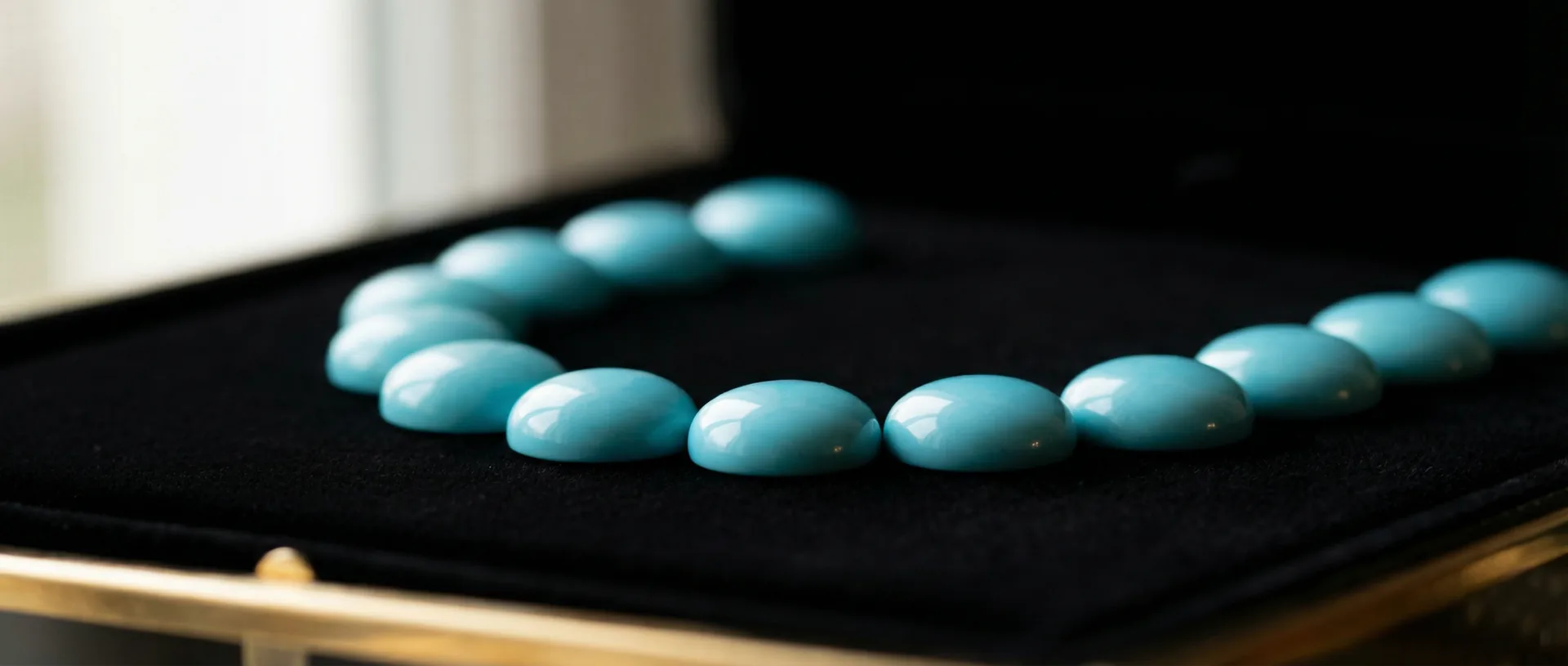
Globe, Arizona's Finite Treasure and the Stone That Redefined American Turquoise
From its discovery in the copper-rich hills near Globe, Arizona in the 1920s to the mine's permanent closure in 2012, Sleeping Beauty turquoise has undergone a transformation from abundant commercial stone to one of the most coveted minerals in the gemological world, with no new material produced since the final extraction.
Read Article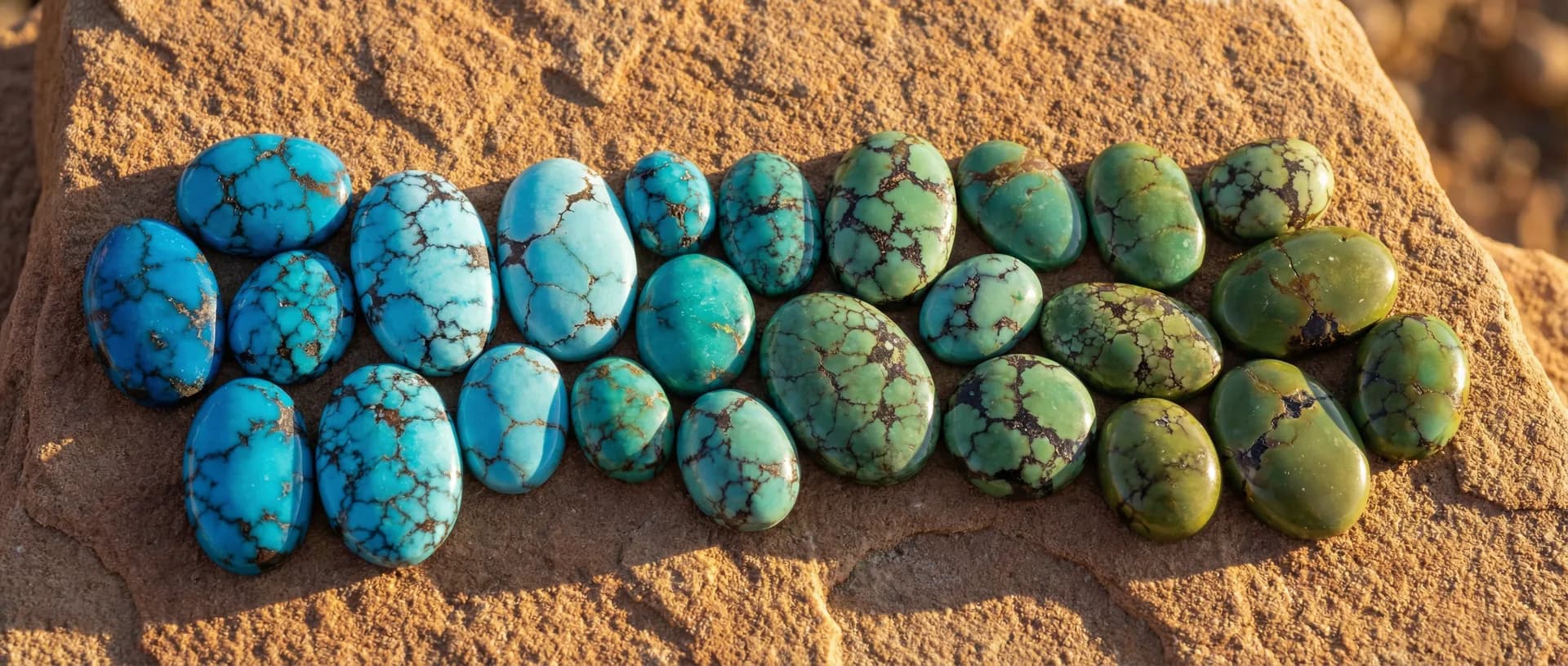
America's Oldest Continuously Mined Turquoise Deposit
The Kingman mine in Mohave County, Arizona has operated continuously since the late nineteenth century, producing turquoise in a remarkable color range from sky blue to deep blue-green, with its spider-web matrix specimens ranking among the most valued turquoise in the world.
Read Article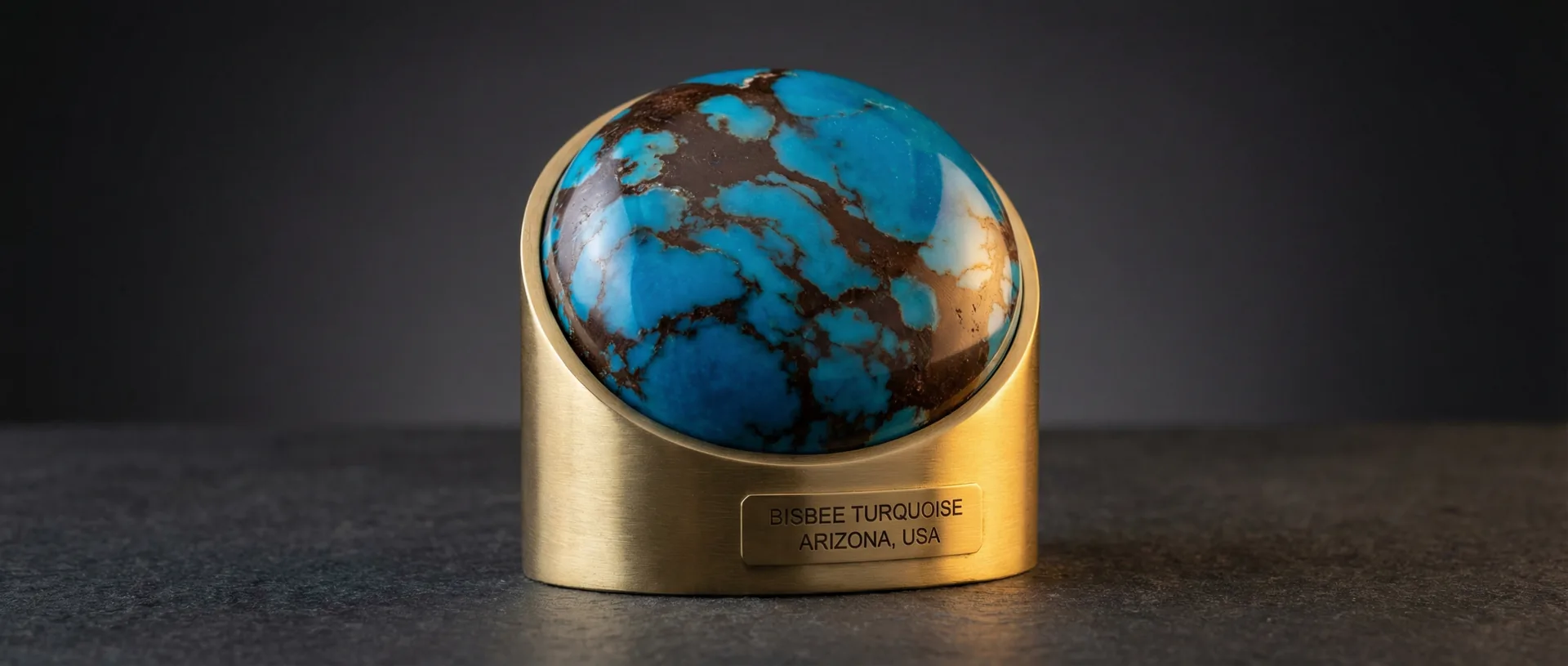
The Lavender Pit's Vanished Treasure
Since the Lavender Pit copper mine in Bisbee, Arizona ceased operations in 1975, not a single new carat of Bisbee turquoise has entered the market. Distinguished by its signature chocolate brown matrix against vivid blue, Bisbee commands prices of $50 to over $200 per carat and stands as one of the most collectible American turquoise varieties ever produced.
Read Article