

Field Notes · The Collector's Eye
Building a Collection
A Thoughtful Approach to Collecting Native American Jewelry
By The Humiovi Editorial Desk — Sedona, Arizona · est. 1977
·
How should you begin collecting Native American jewelry?
Begin collecting Native American jewelry with curiosity, patience, and respect rather than financial speculation. Educate yourself about the major tribal traditions and their distinctive characteristics, learn to recognize quality craftsmanship — clean bezels, even stampwork, well-matched stones, and smooth finishes — and handle pieces whenever possible to feel a well-made one.
Building a meaningful collection of Native American jewelry requires more than financial investment — it demands curiosity, patience, and respect. The most rewarding collections are guided by genuine appreciation for the artistry and cultural heritage behind each piece, rather than speculative value alone.
Begin by educating yourself about the major tribal traditions and their distinctive characteristics. Learn to recognize quality craftsmanship: clean bezels, even stampwork, well-matched stones, and smooth finishes. Handle pieces whenever possible — the weight, balance, and feel of a well-made piece is unmistakable.
How do you develop an eye for quality and authenticity?
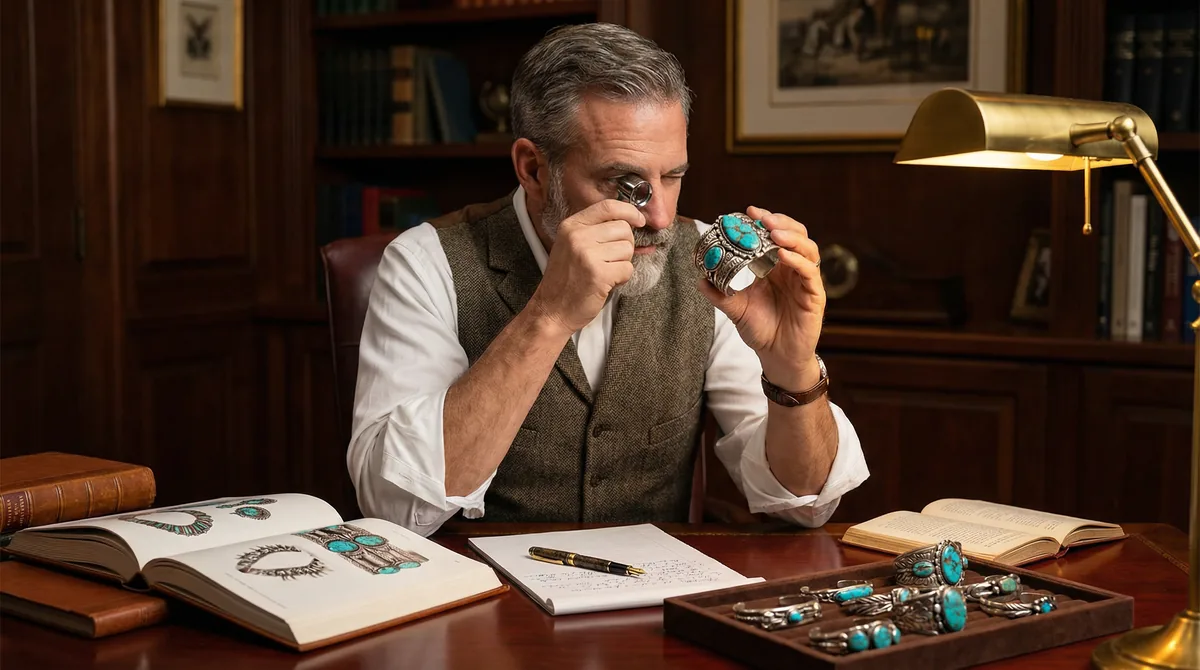
Develop your eye by training yourself to notice the subtle differences between machine-produced and handcrafted work — irregular hand-stamped patterns, warm hand-finished bezels, and the weight of solid sterling silver. Visit museums and galleries regularly, handle pieces, and compare stones side by side until quality becomes an intuitive vocabulary.
As your collection grows, so does your ability to discern quality and authenticity at a glance. Train yourself to notice the subtle differences between machine-produced and handcrafted work — the slight irregularities in hand-stamped patterns, the warmth of hand-finished bezels, the weight of solid sterling silver versus hollow or plated alternatives.
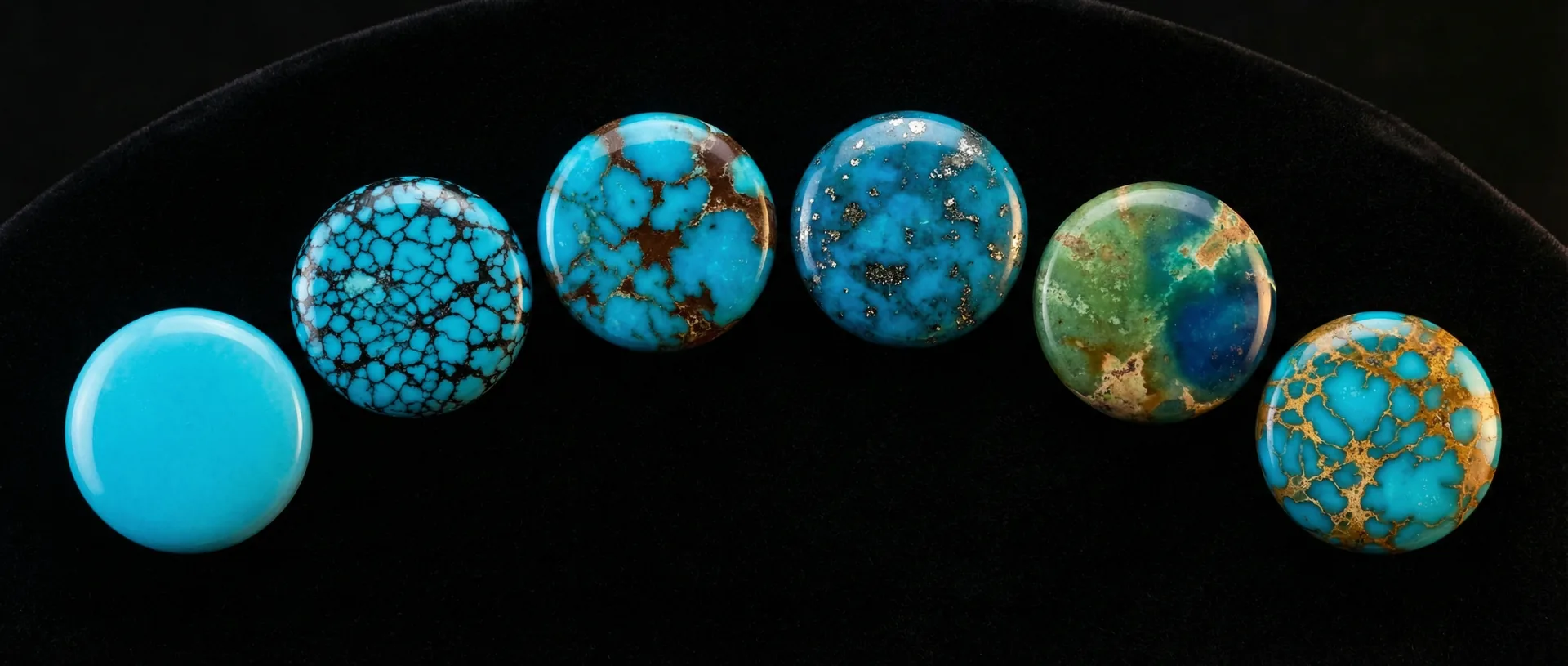
Visit museums and established galleries regularly. Handle pieces whenever dealers permit. Compare stones side by side to develop sensitivity to color saturation, matrix patterns, and cutting quality. Over time, these comparisons build an intuitive vocabulary that no book can fully replicate.
“A great collection tells a story — not of what you could afford, but of what moved you.”
How does provenance build long-term collection value?
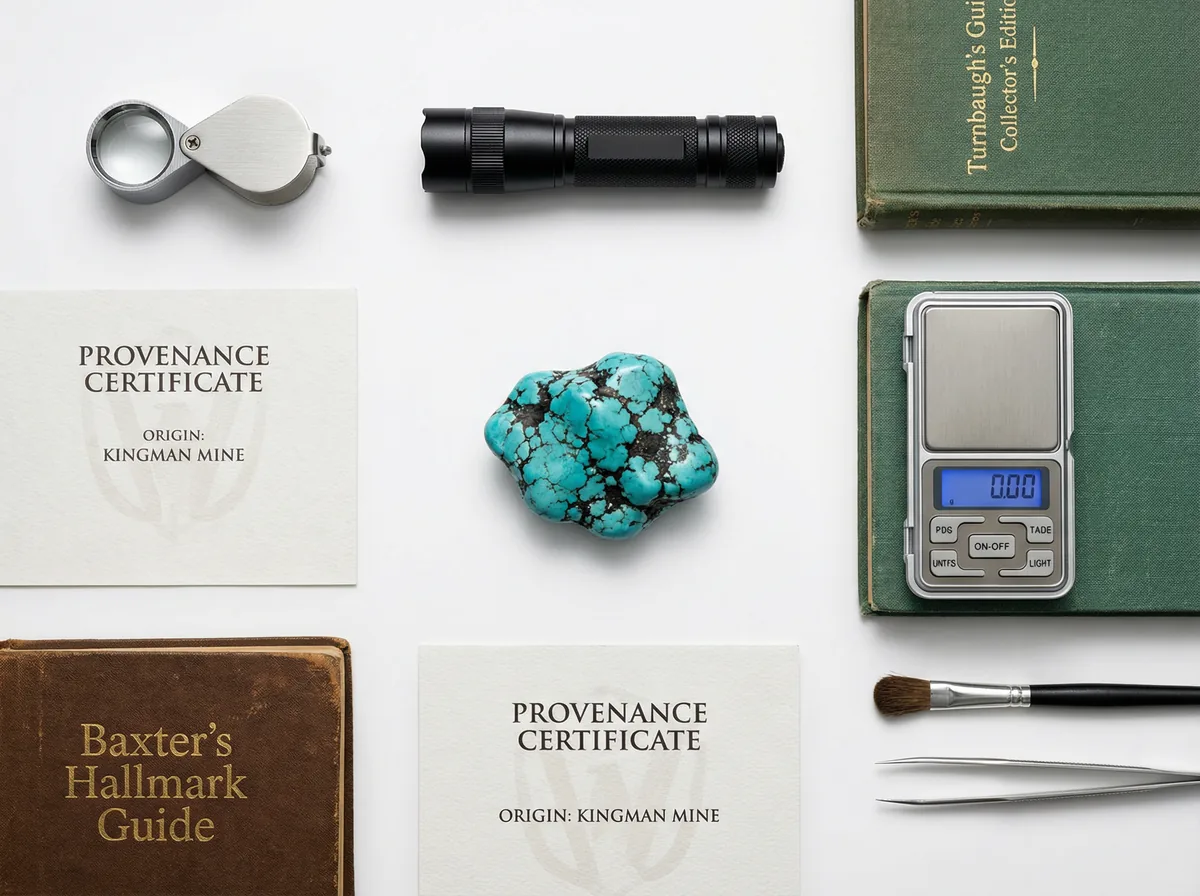
Provenance builds long-term value by documenting every acquisition — the artist's name and tribal affiliation, the source, the date of purchase, and any certificates of authenticity. Focusing on a theme rather than collecting broadly gives a collection coherence and scholarly value, positioning you as a knowledgeable collector.
The most enduring collections are built with provenance in mind. Document every acquisition: the artist's name and tribal affiliation, the gallery or source, the date of purchase, and any certificates of authenticity. This record not only protects your purchase but deepens your connection to each piece's story.
Consider focusing on a theme — a particular tribe, technique, stone type, or era — rather than accumulating broadly. Thematic depth gives a collection coherence and scholarly value, and positions you as a knowledgeable collector whose acquisitions tell a unified story about a specific facet of Native American artistic achievement.
A question about a piece?
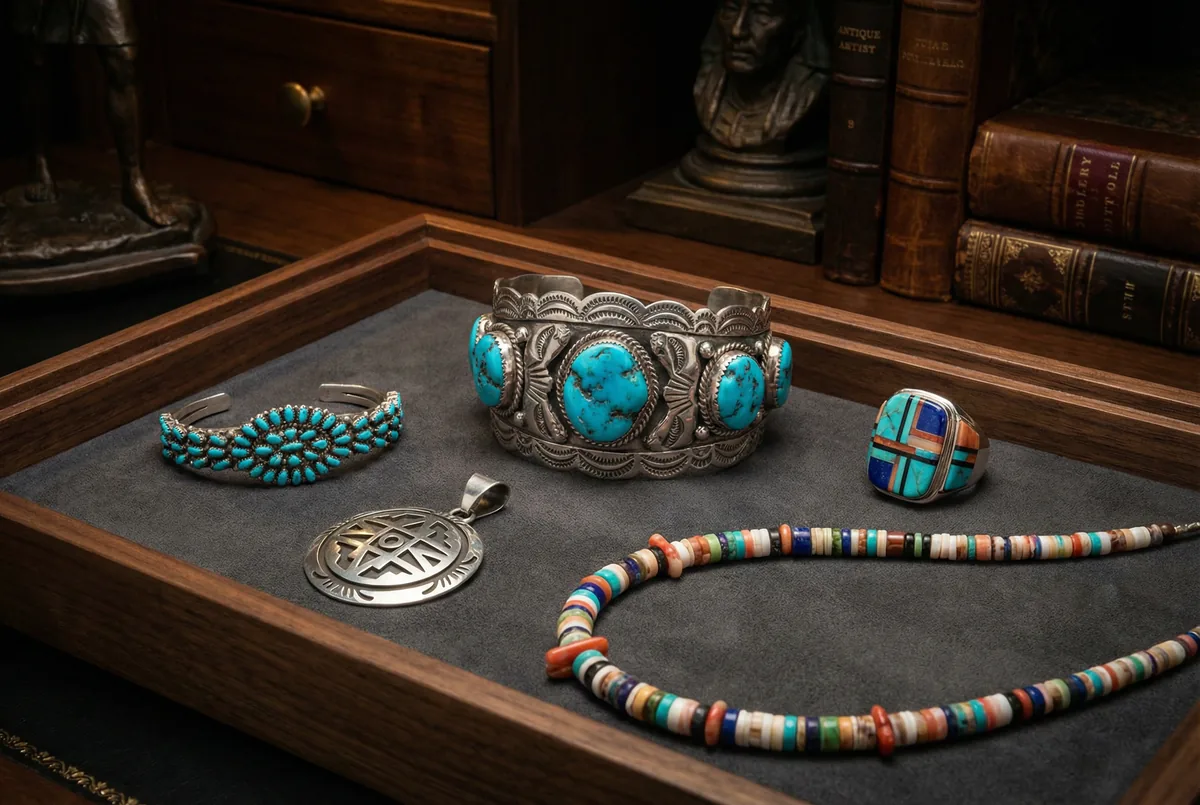
Write to the gallery in Sedona. We are glad to tell you more about any piece: its maker, its stone and how it was made.