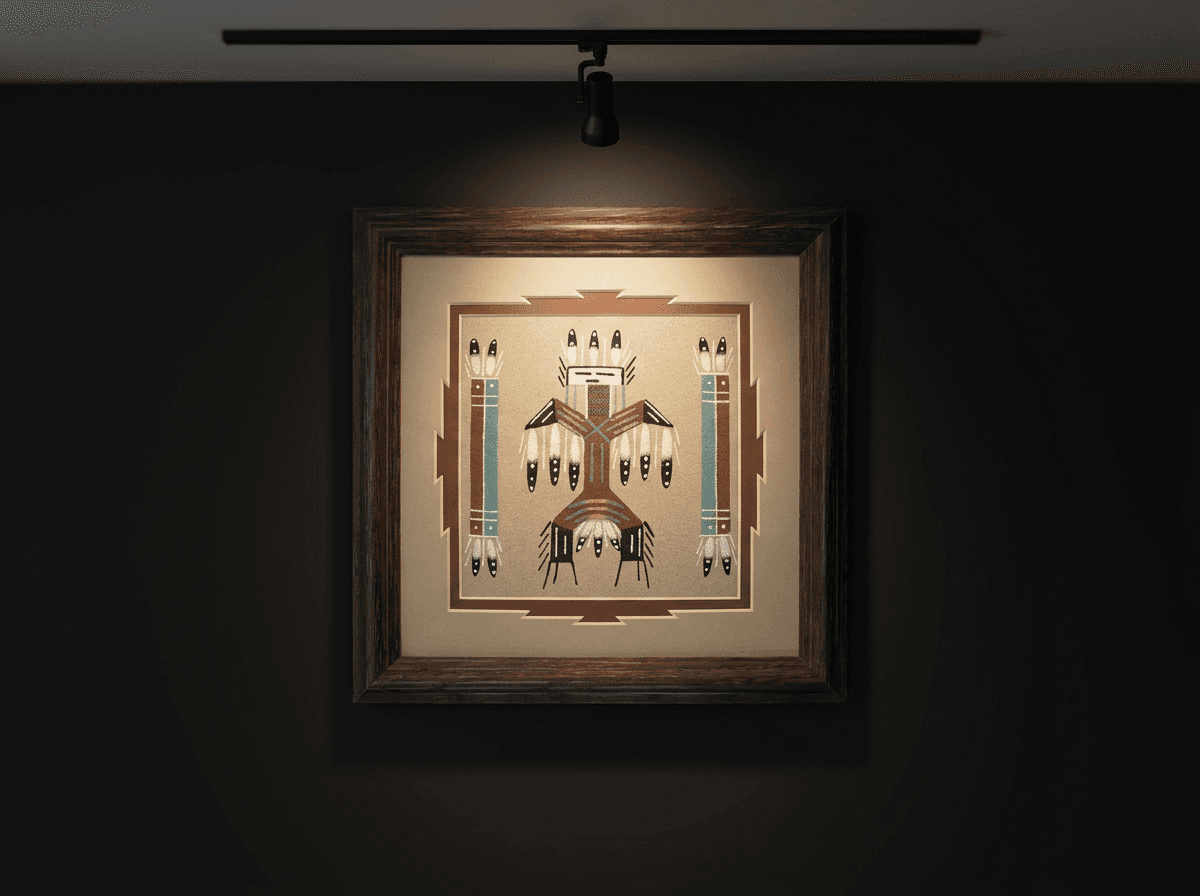
Navajo sand paintings translate a sacred ceremonial art into permanent works — natural colored sands fixed onto board to depict Yei figures, sacred plants, and traditional motifs. The Humiovi has offered sand paintings since 1972, many acquired from Navajo artists. Where a painting's maker is known, its product page names them. Explore framed sand paintings that carry the symbolism of the Diné into your home, each created with respect for the tradition it honors.
Showing 1-16 of 16 pieces

$80.00

$80.00

$54.99

$80.00

$99.00

$80.00

$80.00

$54.99
$80.00

$99.00
$80.00

$80.00
$80.00

$80.00
$80.00
$80.00
In Navajo (Diné) tradition, sand paintings are created and destroyed within healing ceremonies. The commercial art form adapts this practice respectfully: artists trickle naturally colored sands — ground stone, ochre, charcoal — onto an adhesive-coated board to create lasting compositions of Yei figures, the four sacred plants, and other motifs. Out of reverence, artists typically alter sacred designs slightly so ceremonial images are never reproduced exactly.
Many of our sand paintings come to us directly from the Navajo artists who made them. We document the imagery, and the maker wherever known, so collectors understand the work's meaning.
Sand is light- and humidity-sensitive. Hang framed pieces out of direct sunlight, keep them level, and dust the frame rather than the surface to preserve the colors and texture.