Provenance, Mine Lore, and Care — an Editorial Introduction to the Stone
By The Humiovi Editorial Desk — Sedona, Arizona · est. 1972
·
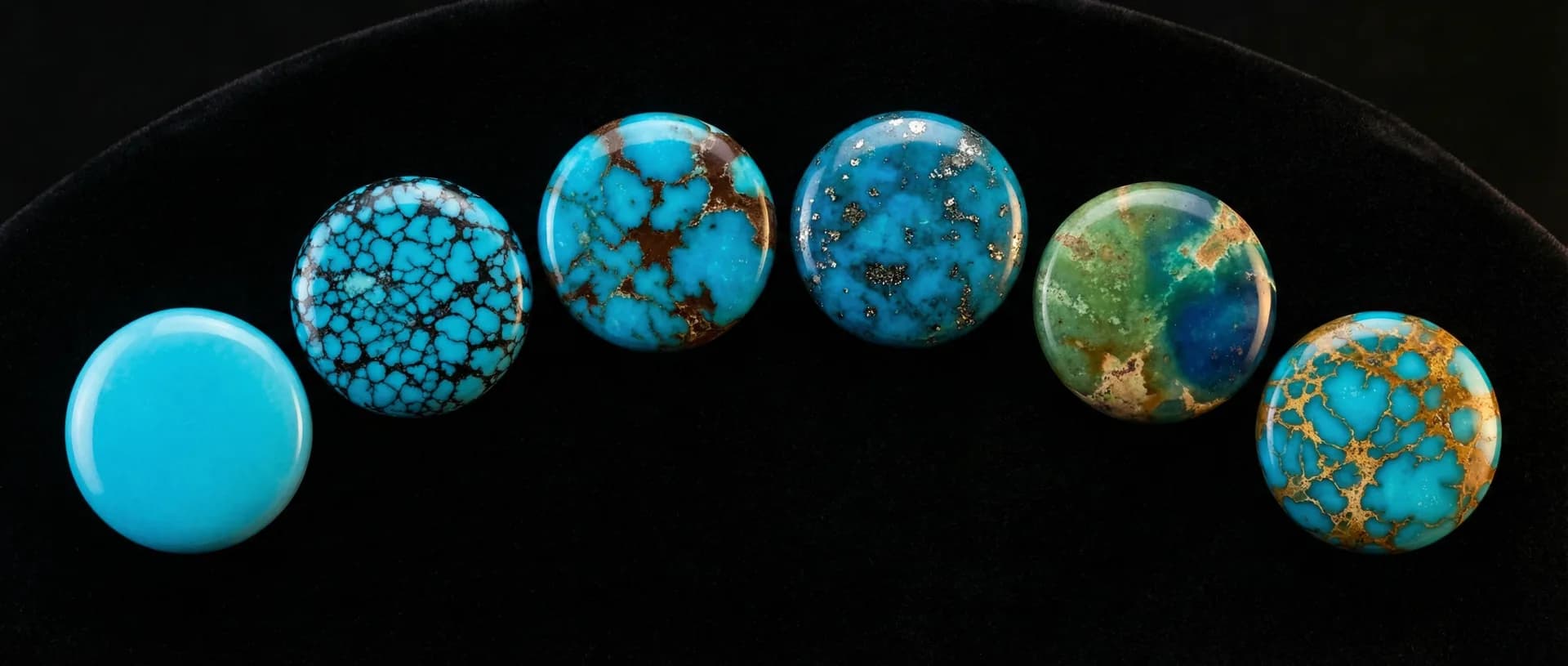
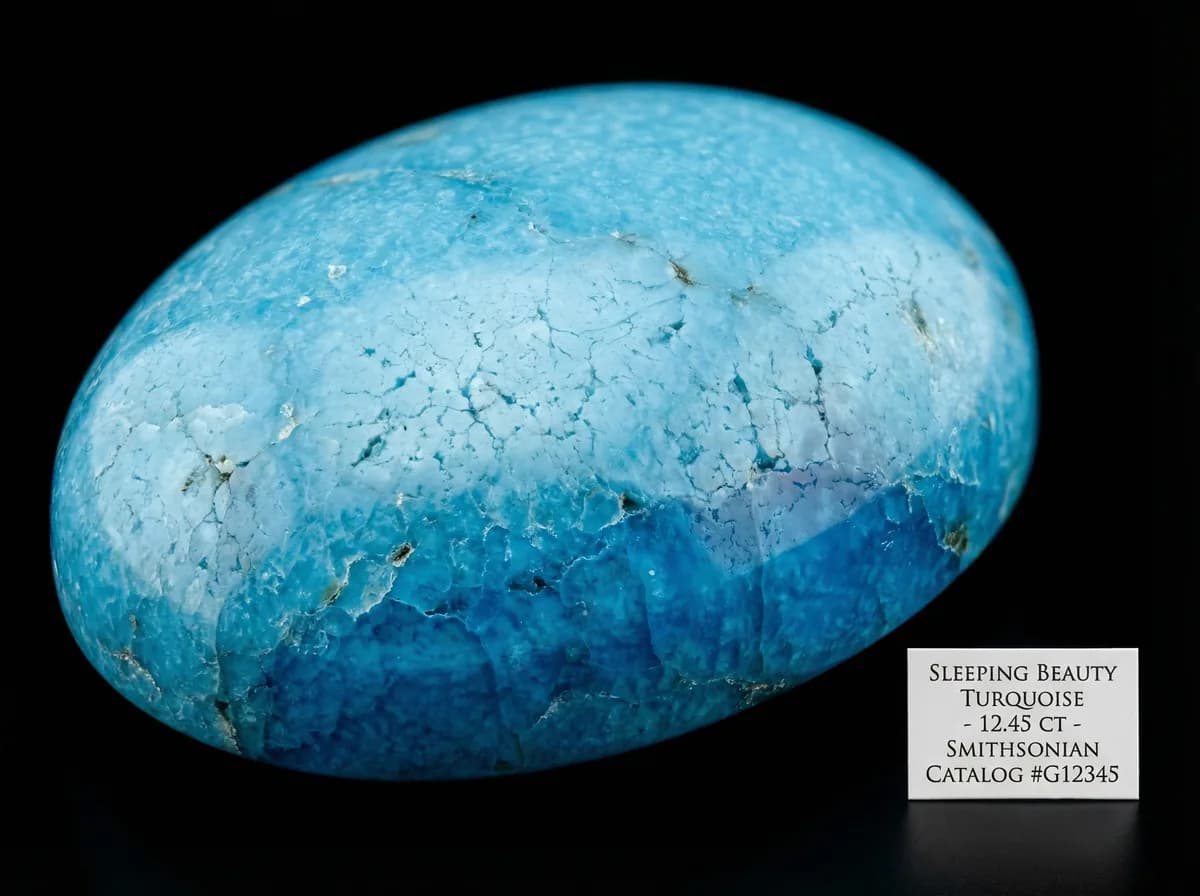
Turquoise reveals its origin because the matrix veining running through a fine American stone is a literal map of the host rock it formed in, and no two claims produce the same signature. A chocolate-brown web says Bisbee; clean robin's-egg blue says Sleeping Beauty; black spider-webbing across blue-green says Kingman.
Most gemstones are graded by how little they show of their origin — clarity, in the trade, means the absence of evidence. Turquoise inverts that entirely. The matrix veining that runs through a fine American stone is a literal map of the host rock it formed in, and collectors prize it precisely because no two claims on earth produce the same signature. A chocolate-brown web says Bisbee. A clean robin's-egg blue with no matrix at all says Sleeping Beauty. Black spider-webbing across blue-green says Kingman.
This is why American turquoise rewards study in a way few materials do. The stone teaches you geography, then history, then the economics of mines that closed decades ago and will never reopen. By the time you can read a cabochon's address at a glance, you are no longer shopping — you are collecting.
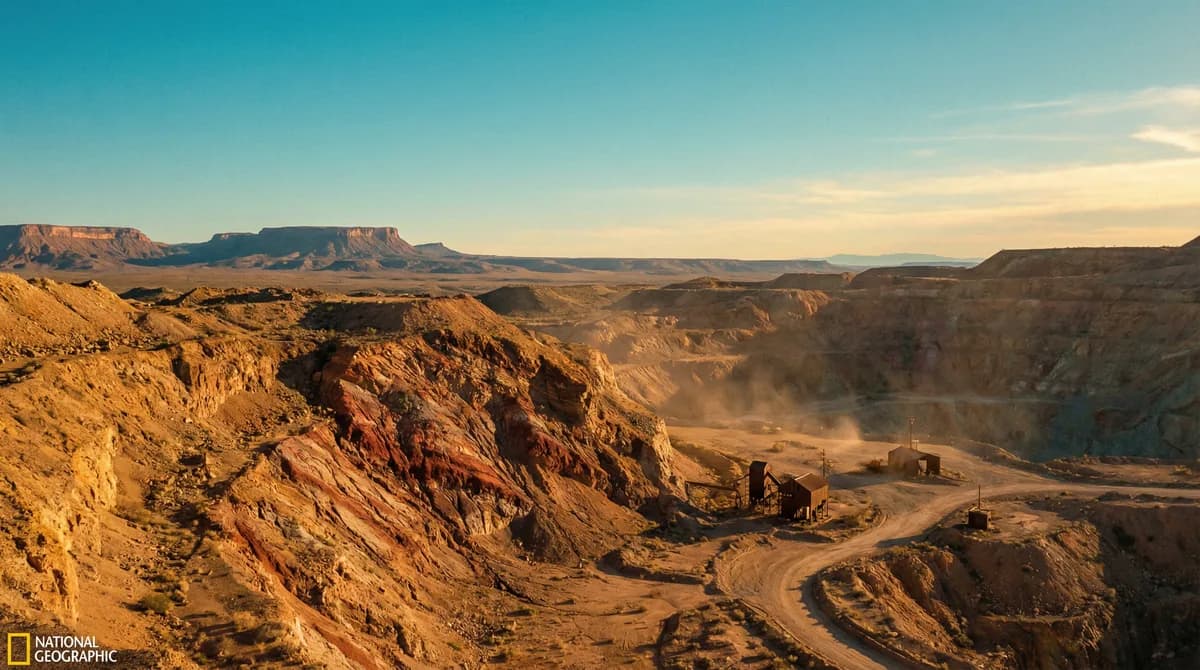
America's great turquoise mines each carry a signature. Kingman, the oldest continuously mined deposit, ranges from sky blue to blue-green with spider-web matrix. Sleeping Beauty produced clean, matrix-free robin's-egg blue until closing in 2012. Bisbee is deep blue with a chocolate-brown matrix, while Nevada claims like Royston and Lander Blue add their own entries.
Kingman, in the Cerbat Mountains of northwestern Arizona, is America's oldest continuously mined turquoise deposit — worked for over a thousand years, first by the ancestral peoples of the region and today as the last major American mine still in commercial production. Its range is enormous, from pale sky blue to deep blue-green, with the celebrated spider-web matrix that made its name.
Sleeping Beauty, near Globe, Arizona, produced the cleanest blue in American history — an even, matrix-free robin's-egg color that became the international standard for 'turquoise blue' — until the mine closed to turquoise production in 2012. Every Sleeping Beauty stone on the market today comes from finite, dwindling stock.
Bisbee, from the famous Lavender Pit copper mine in southern Arizona, is rarer still: deep blue with a hard chocolate-brown matrix, recovered mostly before 1975 and traded today almost entirely between collectors. Royston, Carico Lake, Number Eight, Lander Blue — each Nevada claim adds its own entry to the atlas, some now commanding prices per carat that rival precious gems.
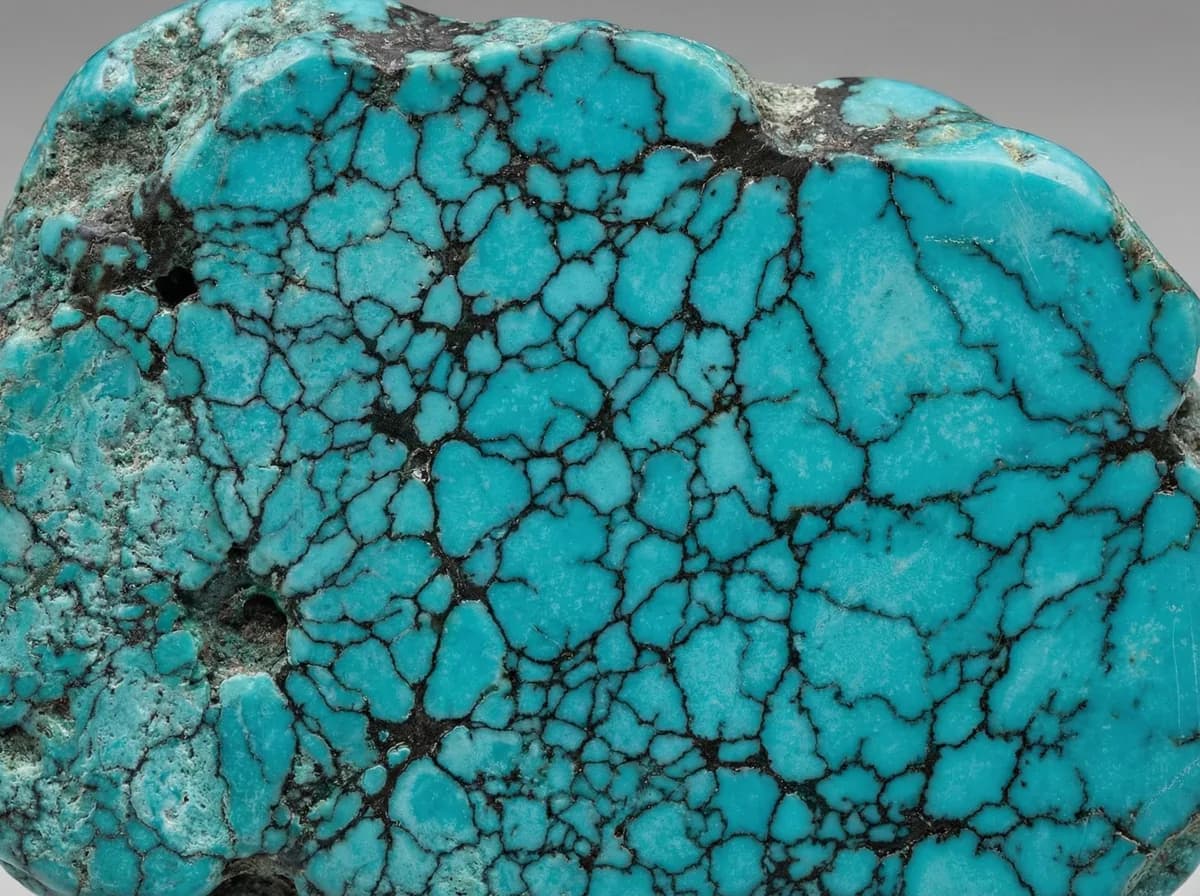
Scarcity drives the turquoise market because nearly every legendary American mine is closed — Bisbee ceased production in the 1970s, Sleeping Beauty's 2012 closure tripled prices, and only old stock, estate pieces, and miner's hoards circulate now. This is why provenance, not polish, drives value and why the market attracts imitation.
Understand one economic fact and the entire market becomes legible: nearly every legendary American turquoise mine is closed. Bisbee ceased meaningful production in the 1970s. Lander Blue produced perhaps a hundred pounds of stone, ever. Sleeping Beauty's closure in 2012 tripled prices for verified stock within a decade. What circulates now is old stock, estate pieces, and the occasional miner's hoard — which is why provenance, not polish, drives value.
This scarcity is also why the market attracts imitation: stabilized stone sold as natural, block compound sold as stone, and foreign material sold under American mine names. None of these are inherently dishonest categories — stabilized turquoise is a legitimate, disclosed practice for everyday jewelry — but the label must match the material. A trustworthy dealer will tell you, unprompted, whether a stone is natural or stabilized and how its mine attribution is supported.
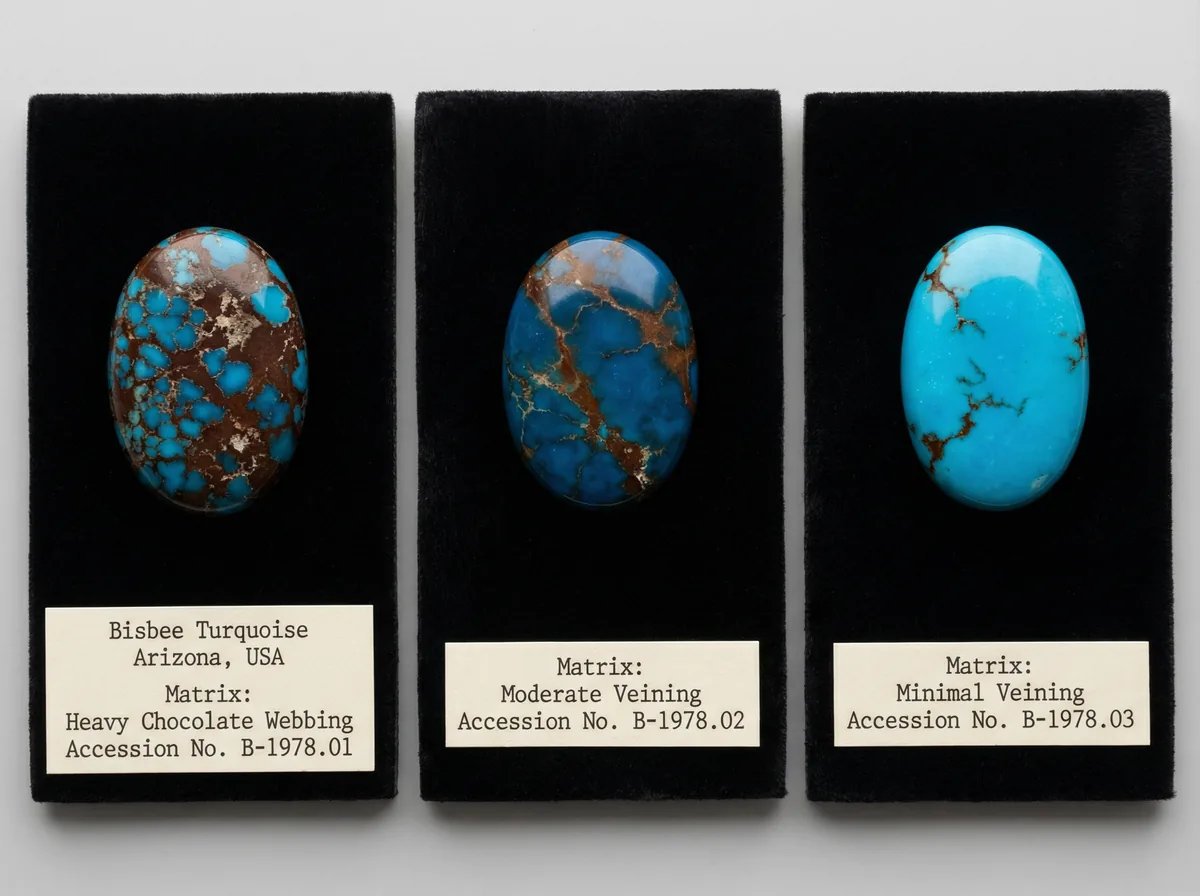
“Turquoise is the only gem that carries its address — every vein of matrix is a map of the ground it came from.”
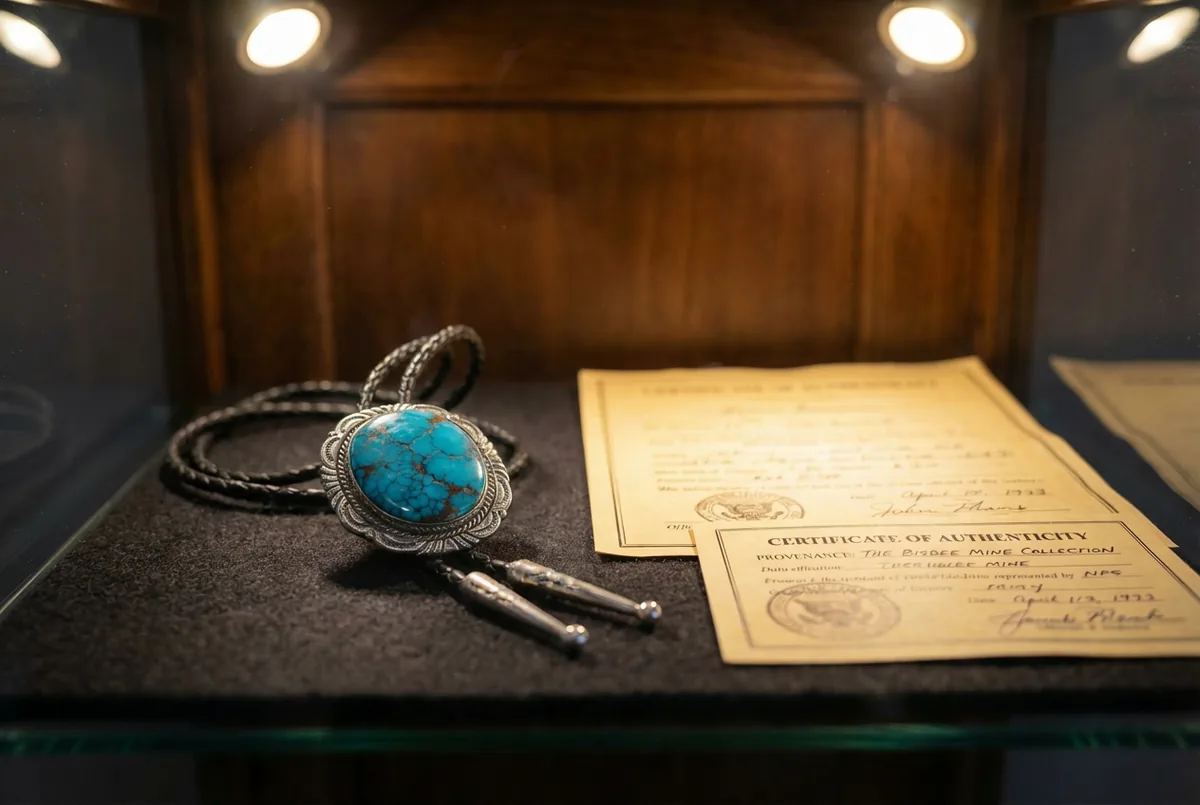
Read provenance in turquoise as a chain of testimony: the mine attribution, the artist who set the stone, the gallery that sold it, and the documentation that travels with it. Start with the seller, ask where the stone is from, and listen for a specific answer naming a mine and an era.
Provenance in turquoise is a chain of testimony: the mine attribution, the artist who set the stone, the gallery that sold it, and the documentation that travels with it. Start with the seller — a gallery that has operated for decades, buys directly from artists, and stakes its name on attribution is doing the verification work that no certificate alone can. Ask where the stone is from and listen for specificity: a confident answer names a mine and an era, not just 'Arizona turquoise.'
Then read the piece itself. Hallmarks identify the silversmith; construction details place a piece in time; and the stone's color, matrix, and cut speak to its claim. Keep every receipt, certificate, and artist biography together — a documented piece is worth meaningfully more than an identical undocumented one, and the file you build becomes part of the piece's story for the collector after you.
Care for turquoise by treating it as a soft, porous stone that absorbs what it touches. Put jewelry on last and take it off first to keep perfume, sunscreen, and hairspray out, and keep it away from household cleaners and chlorine. Never use ultrasonic or steam cleaners; wipe gently with a barely damp cloth.
Turquoise is a hydrated phosphate — a relatively soft, porous mineral that absorbs what it touches. The traditional wisdom that turquoise 'lives with its wearer' is chemically true: skin oils slowly deepen the color of natural stone, which collectors call developing a patina. What you must keep it from absorbing is everything else.
Put your jewelry on last and take it off first: perfume, sunscreen, and hairspray all penetrate the stone. Keep it away from household cleaners and swimming pools — chlorine is particularly unkind. Never use ultrasonic or steam cleaners. To clean, wipe gently with a soft, barely damp cloth and dry immediately. Store pieces individually in soft cloth, away from prolonged direct sunlight, and away from harder stones that can scratch the surface. Treated this way, a turquoise piece outlives its collector — which is, after all, the point.
Begin by buying one piece you love from a source you trust, in the best quality you can comfortably reach — a single fine Kingman cuff teaches more than a drawer of souvenirs. Handle stones whenever a gallery permits, compare natural against stabilized, and let your curiosity, not the market, lead.
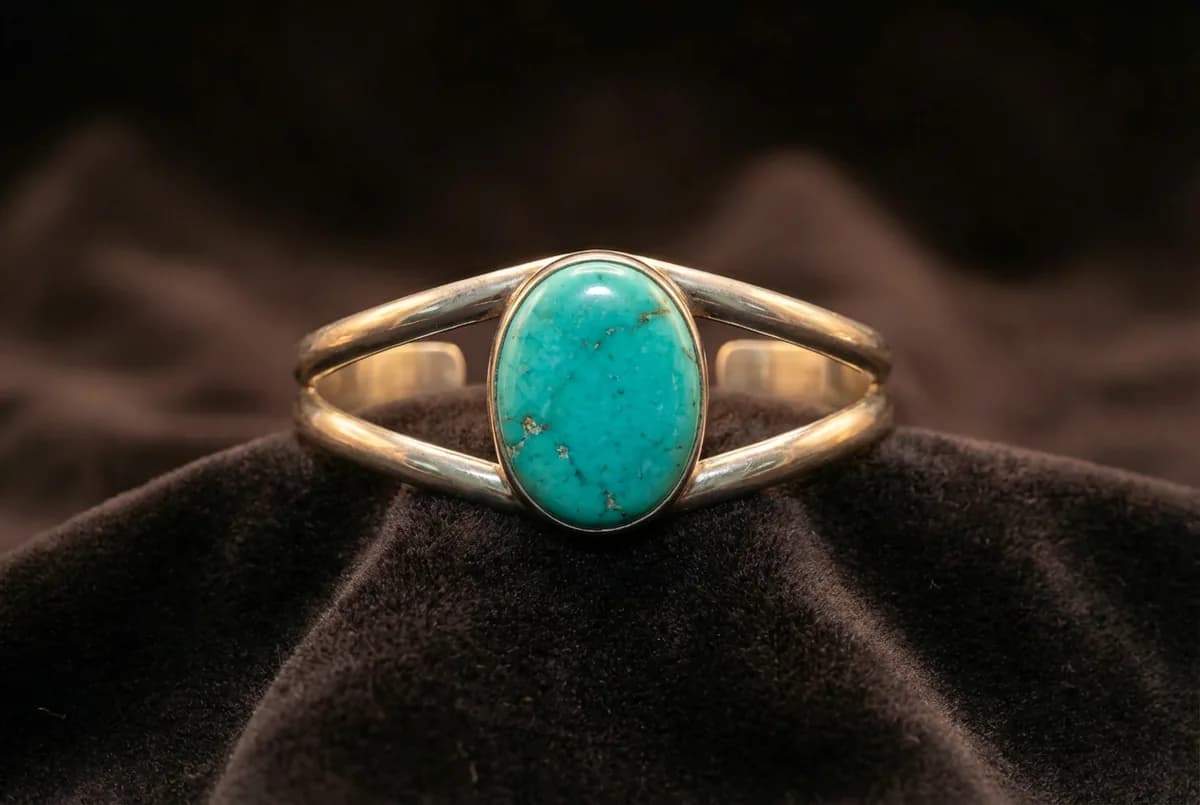
Start with one piece you love from a source you trust, in the best quality you can comfortably reach — a single fine Kingman cuff teaches more than a drawer of souvenirs. Handle stones whenever a gallery permits. Compare a natural stone against a stabilized one, a Sleeping Beauty blue against a Kingman blue-green, until the differences stop being descriptions and become instincts.
And let the collection follow your curiosity rather than the market. The collectors whose cases we most admire at The Humiovi did not set out to assemble portfolios; they followed a stone, then an artist, then a tradition, and looked up years later to find they had built something with coherence and meaning. The stone has been teaching people this patience for a thousand years. It will teach you too.
A Thoughtful Approach to Collecting Native American Jewelry
Essential guidance for collectors who want to acquire authentic pieces with lasting artistic and cultural value.
Read Article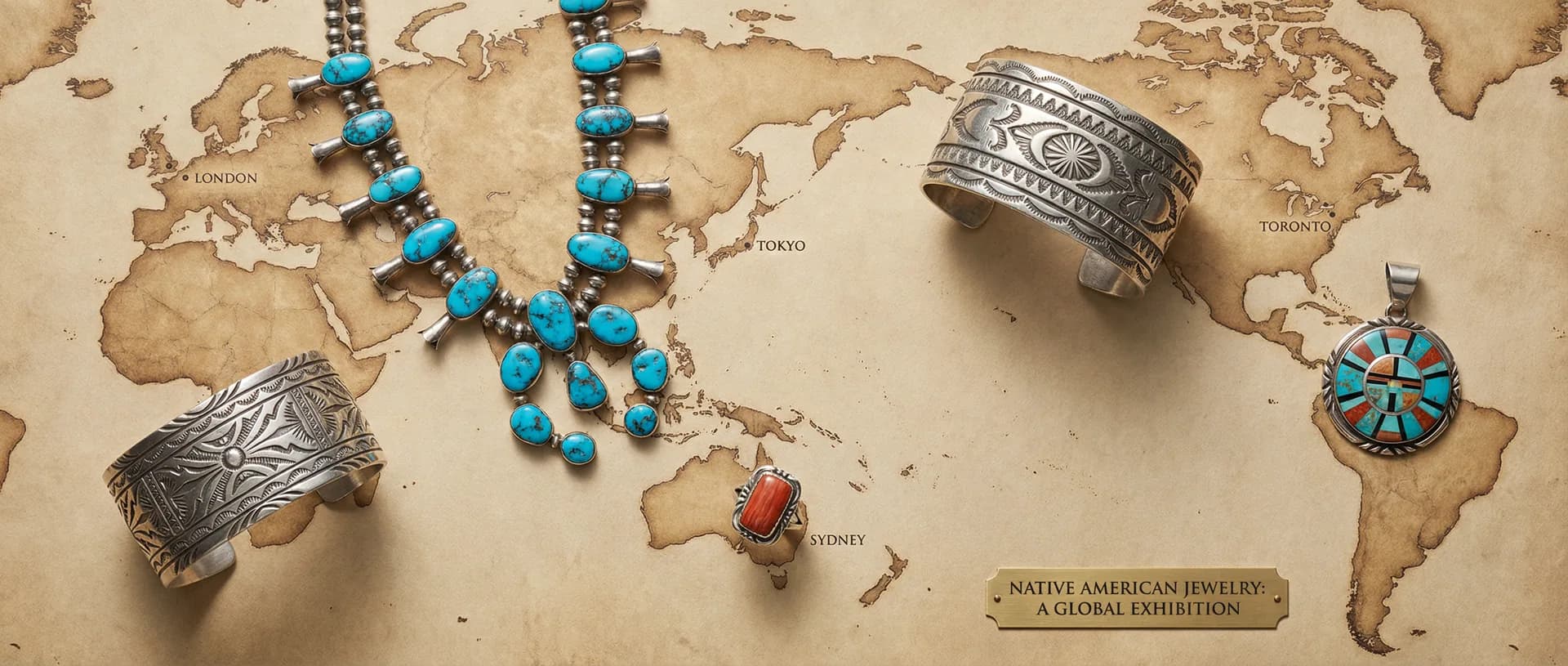
Navigating Authenticity, Import Regulations, and Cultural Stewardship from Abroad
A comprehensive resource for international collectors seeking authentic Native American jewelry — covering the Indian Arts and Crafts Act, cross-border considerations, trusted institutions, and building a collection with integrity from anywhere in the world.
Read Article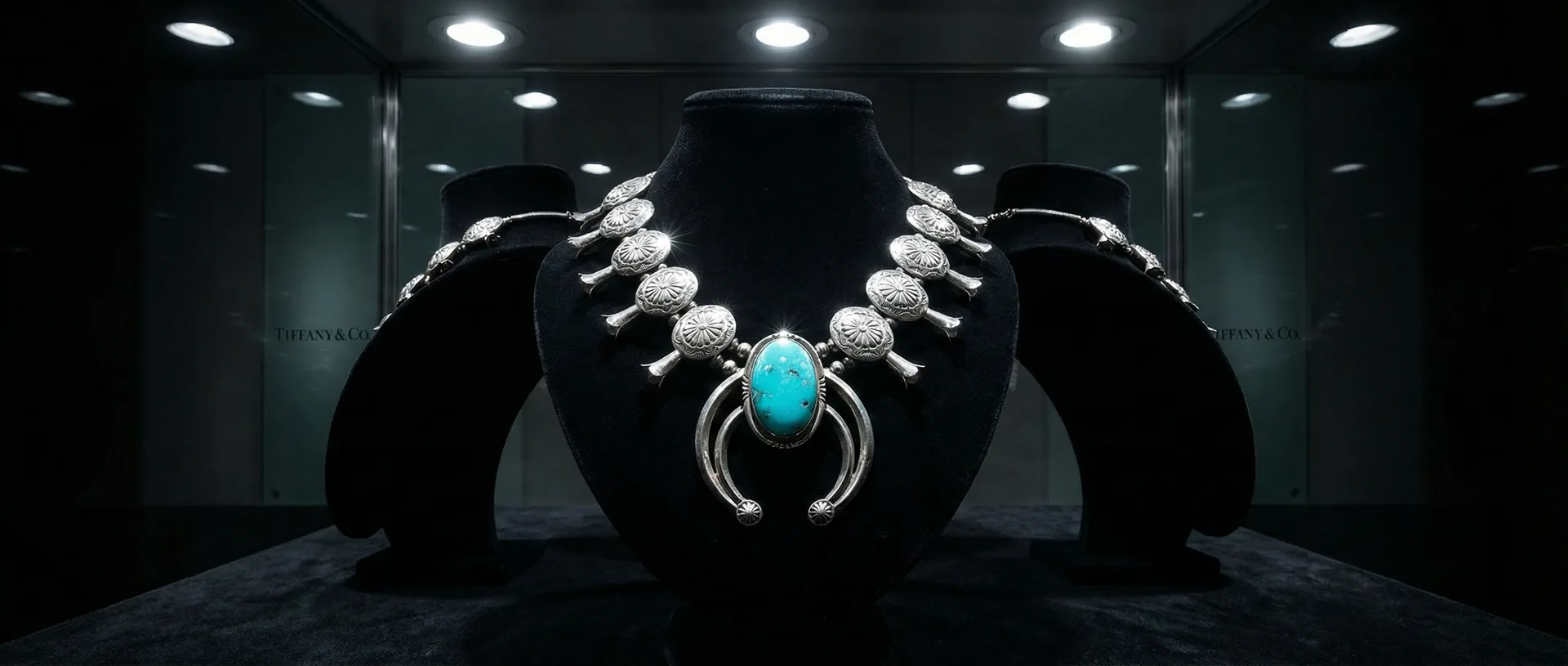
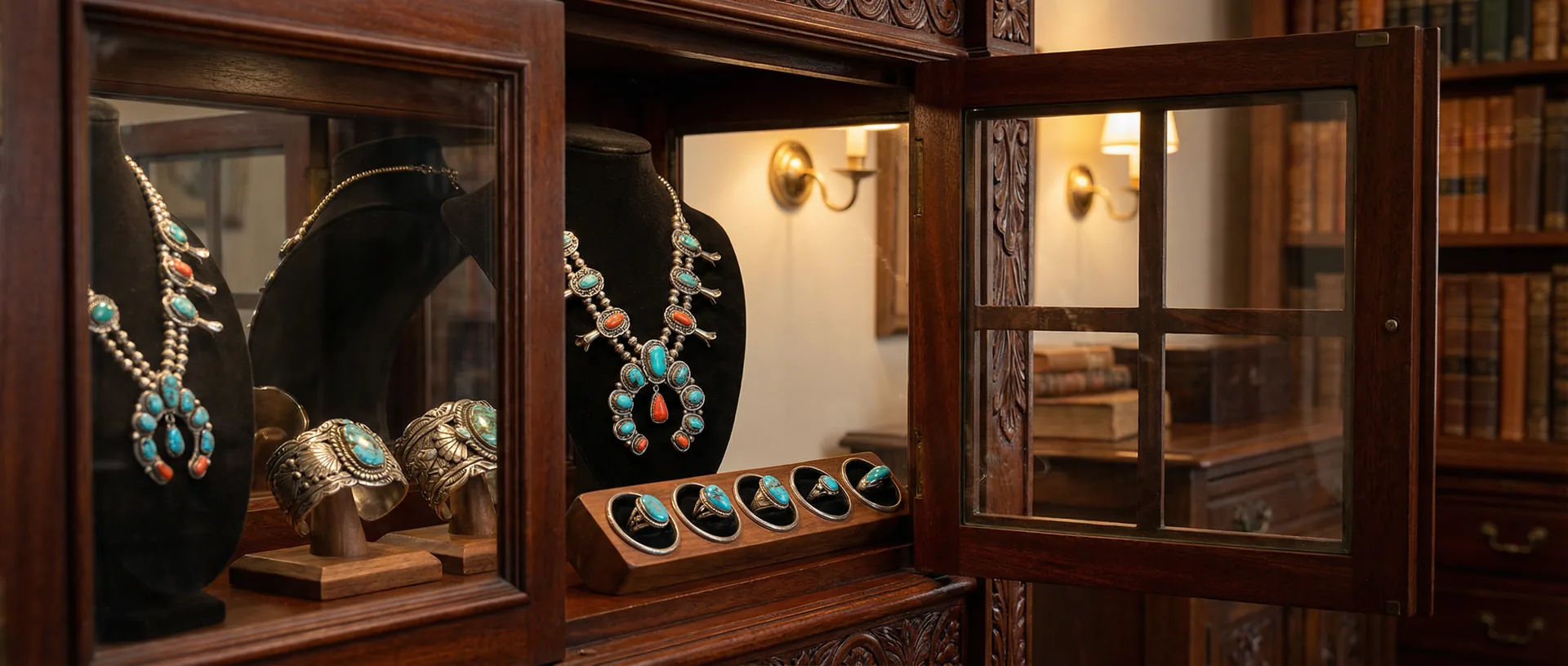
From Spanish Pomegranate to Navajo Icon — History, Anatomy, and Collecting
An authoritative guide to the most iconic form in Native American jewelry — tracing the squash blossom necklace from its multicultural origins through its anatomical components to what today's collectors look for.
Read Article