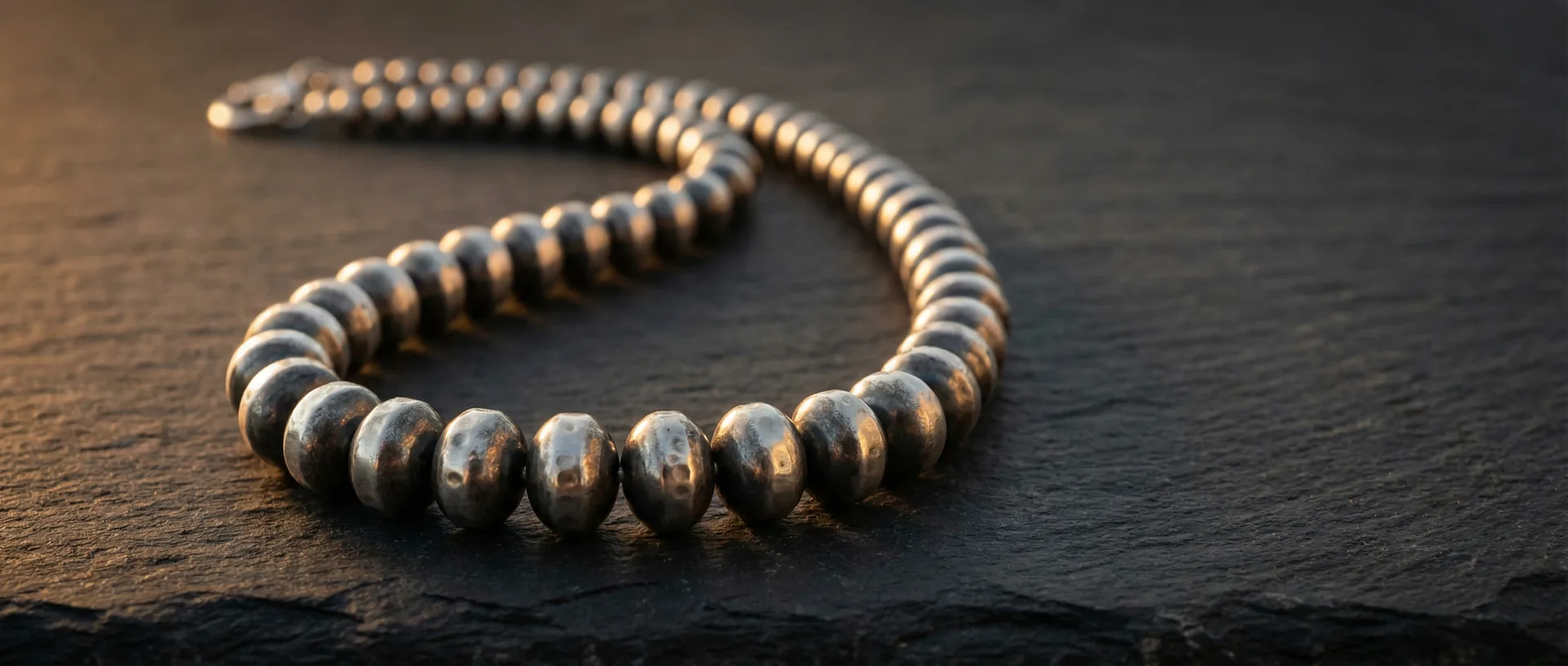
Mercury Dime Origins, Bench vs. Machine, and What Makes a Strand Valuable
By The Humiovi Editorial Desk — Sedona, Arizona · est. 1972
·
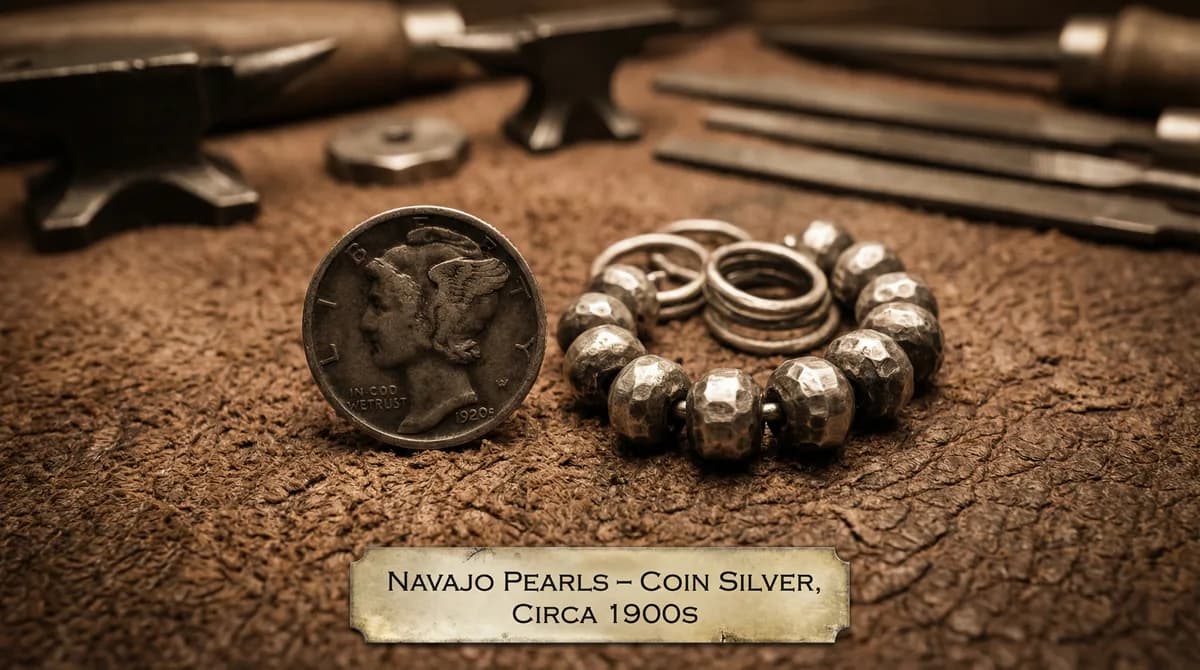
Navajo pearls began when silversmiths, facing inconsistent silver supply in the late 19th and early 20th centuries, melted down U.S. coinage such as Mercury dimes to form round beads. The era's 90% silver coinage yielded beads of exceptional quality, warmth, and luster.
The story of Navajo pearls begins with resourcefulness. In the late 19th and early 20th centuries, when silver supply in the Navajo Nation was inconsistent, silversmiths turned to an abundant source of high-quality silver: United States coinage. Mercury dimes (officially the Winged Liberty Head dime, minted 1916-1945) and other silver coins were melted down and re-formed into the round beads that would become known as Navajo pearls.
This practice was not merely practical — it was transformative. American coinage of the era was 90% silver, a higher purity than much commercially available sterling (92.5%). The result was beads of exceptional quality, with a warmth and luster that distinguished them from machine-made alternatives. The slight compositional difference also gives vintage coin-silver beads a subtly different patina than modern sterling, a characteristic that experienced collectors learn to recognize.
The practice of melting coins for jewelry making was technically illegal — defacement of U.S. currency was prohibited — but the remote geography of the Navajo Nation and the cultural importance of the work meant that enforcement was effectively nonexistent. Today, genuine coin-silver Navajo pearls are among the most prized examples of the form, carrying both material and historical value.
The transition from coin silver to commercially sourced sterling silver occurred gradually through the mid-20th century as silver supply chains improved and trading posts began stocking raw materials. Modern Navajo pearl makers exclusively use commercial sterling silver, but the bench techniques remain fundamentally unchanged from those used by their coin-melting predecessors.
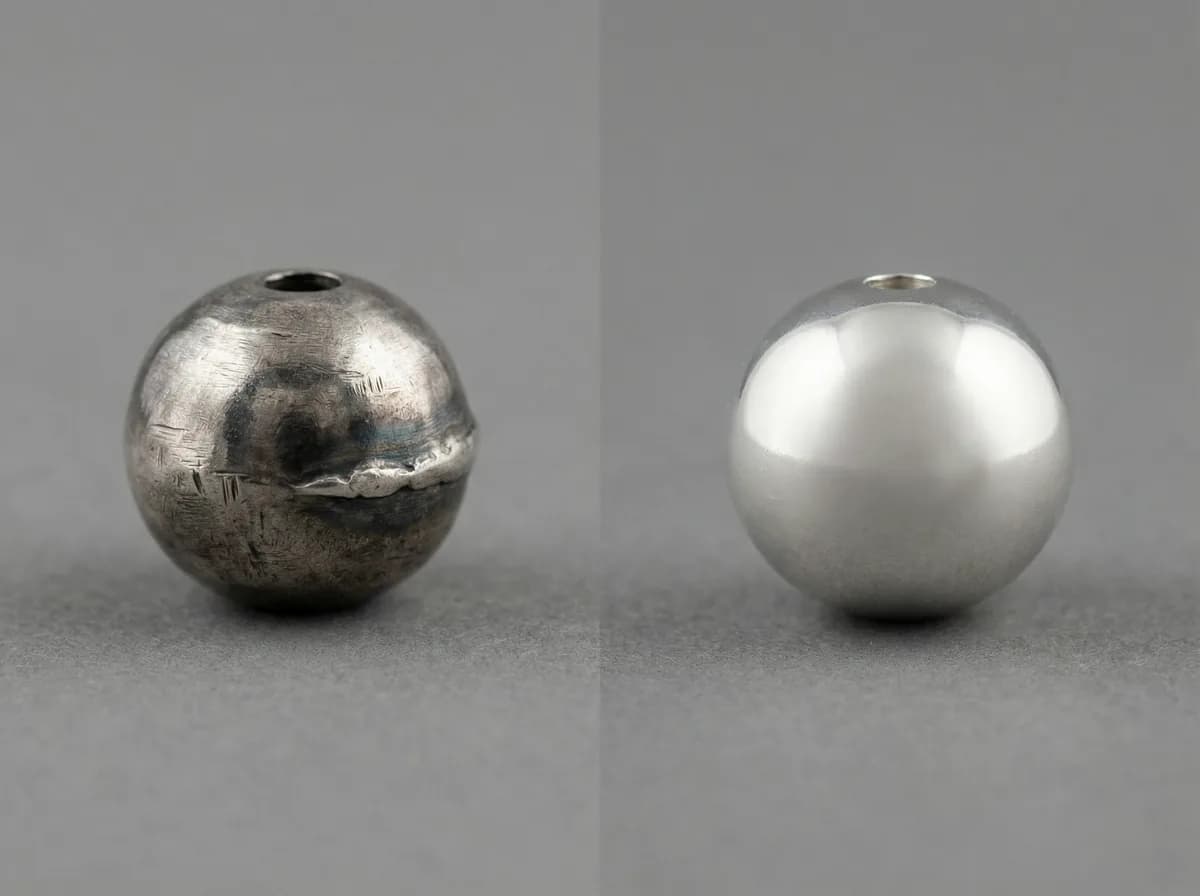
You can distinguish handmade bench beads from machine beads by weight (bench beads are heavier), surface texture (bench beads show filing marks under a loupe), slight shape variation, a faint equatorial solder seam, hand-drilled hole characteristics, and the presence of a maker's hallmark.
The single most important skill for a Navajo pearl collector is the ability to distinguish genuine handmade bench beads from machine-produced alternatives. The price difference can be tenfold, and the craft significance is immeasurable.
Handmade bench beads are produced through a labor-intensive process that has changed little over a century. The silversmith begins by cutting circles from sheet silver, then domes each circle using a dapping block (a steel block with hemispherical depressions) and a matching punch. Two domed halves are fitted together, soldered, and then individually filed and polished smooth. The bead is drilled, and the hole edges are smoothed. A single bead may require 20-30 minutes of skilled labor.
Machine-made beads are produced by mechanical stamping or casting, then tumble-polished in bulk. They can be manufactured in seconds per bead, which accounts for the dramatic price difference.
Here is how to tell them apart:
Weight: Bench beads are typically heavier. Handmade beads are formed from thicker silver sheet, resulting in more substantial walls. Pick up two necklaces of similar bead size — the handmade strand will be noticeably heavier.
Surface texture: Under magnification (a 10x loupe is sufficient), bench beads show subtle filing marks, minor surface irregularities, and a hand-finished quality. Machine-made beads have a perfectly uniform, almost plasticky smoothness. This distinction becomes intuitive with experience.
Shape variation: Examine a strand of bench beads carefully. Each bead will be very slightly different — imperceptibly so at a glance, but noticeable under scrutiny. The diameter may vary by a fraction of a millimeter, and the spherical form may show minimal deviation. Machine beads are identical to each other with mechanical precision.
Solder seam: On bench beads, you can sometimes detect the equatorial solder seam where the two halves were joined. This seam is filed and polished but may remain faintly visible under magnification. On machine-made beads that are stamped from a single piece, there is no seam.
Drill hole: The interior of a bench bead's drill hole typically shows hand-drilled characteristics — a slightly tapered or irregular channel. Machine-drilled holes are perfectly cylindrical and uniform.
Hallmark: Most contemporary Navajo pearl makers hallmark their work, either on a tag bead, the clasp, or on select beads within the strand. The presence of a recognized artist's hallmark is strong evidence of hand fabrication.
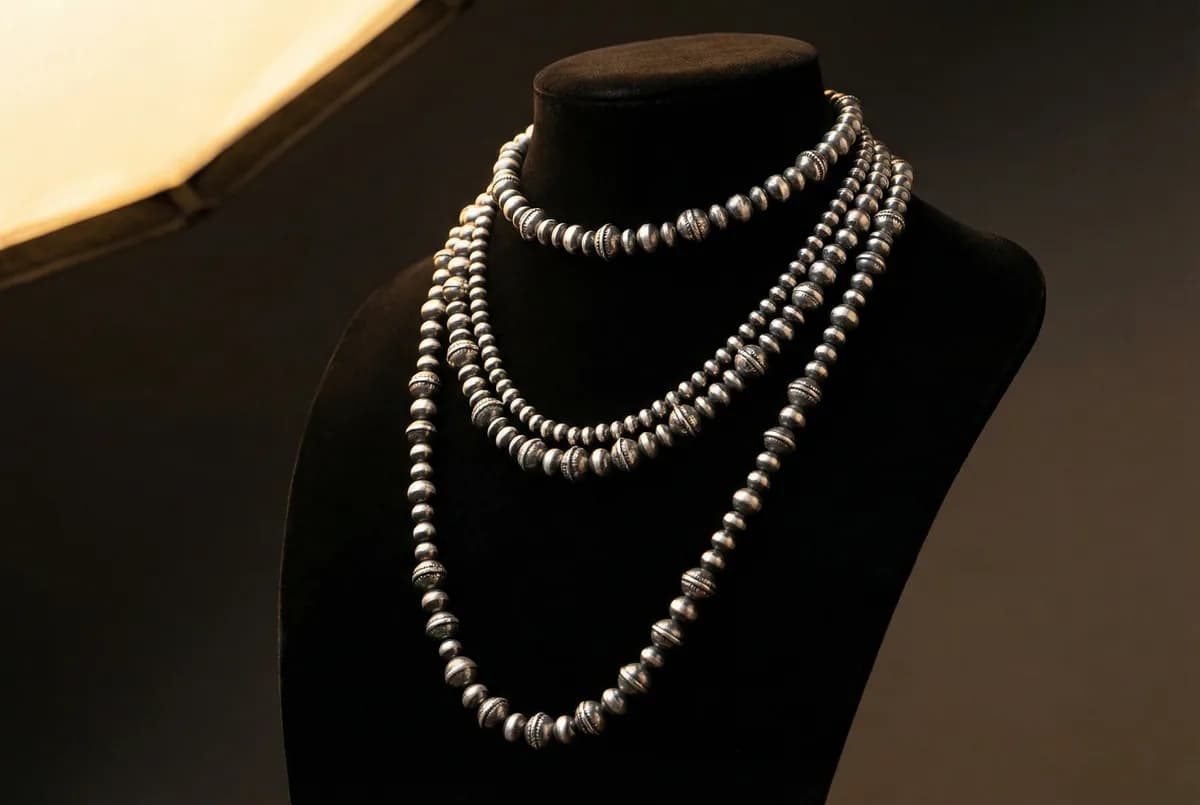
Navajo pearls come in several configurations: graduated strands that progress from smaller beads near the clasp to larger at the center, uniform strands of consistent size, oversized pearls of 14mm and above, and flattened saucer beads. Oxidized finishes are also popular.
Navajo pearls are produced in a variety of configurations, each with its own aesthetic character and market positioning.
Graduated strands are the most traditional and arguably the most elegant configuration. The beads progress from smaller sizes near the clasp (typically 4-6mm) to larger sizes at the center (10-16mm), creating a gentle V-shaped drape. Graduated strands require the most planning and skill, as each bead must be sized to create a smooth visual progression. The finest graduated strands contain 40-60 individual beads, each hand-formed to a specific size within the sequence.
Uniform strands feature beads of consistent size throughout. These are versatile, stackable, and increasingly popular in contemporary fashion. Common uniform sizes range from 5mm (delicate everyday wear) to 10mm (substantial statement pieces). Some collectors build collections of multiple uniform strands in different sizes, which can be worn individually or layered for effect.
Oversized pearls (14mm and above) have become a distinct category in recent years, driven by fashion trends and the dramatic visual impact of large silver beads. Producing oversized bench beads is technically demanding — the larger the bead, the more difficult it is to achieve a true spherical form and clean solder seam. Genuine oversized bench beads command premium prices reflecting this additional difficulty.
Saucer beads (also called disc or rondelle beads) are a related form where the silver shapes are flattened rather than spherical. These create a distinctive visual rhythm and tend to lie flatter against the skin. Saucer bead strands are popular in contemporary designs and are often combined with turquoise or shell heishi.
Desert pearls is a marketing term sometimes applied to machine-made or imported beads. Genuine Navajo artisans and their supporters generally avoid this term, as it obscures the distinction between handmade and manufactured products. Collectors should be cautious when encountering this terminology.
Oxidized finishes have gained popularity as collectors appreciate the contrast between darkened recesses and polished highlights. Some artists intentionally oxidize their beads using liver of sulfur or other patination agents, then selectively polish the high points. This technique highlights the dimensional quality of the beads and gives the strand an aged, distinguished character.
“Every bench bead carries twenty minutes of focused human attention — a meditation in silver that no machine can replicate.”
No one can promise that a Navajo pearl strand will rise in price, and we publish no return figures. What does set one handmade strand apart from another is the labor in it, the scarcity of the makers, how well it is documented, and how well it has been kept.
Labor sets the floor. Silver is only part of a strand's cost: bench beads are formed, soldered and polished one at a time, so the hundreds of hours of skilled work in a quality strand sit far above the value of the metal. That is why a handmade strand and a machine-made strand of the same weight should never be priced alike.
Bench bead makers are fewer than they were. Bench bead making is among the most physically demanding forms of silversmithing — repetitive, exacting work that takes a toll on hands and eyes — and many younger silversmiths gravitate toward more creative, less repetitive forms. A strand made entirely by hand is the thing to look for, and the thing to verify.
A few habits protect a strand over the years. Purchase from recognized artists with established reputations. Retain all documentation — certificates of authenticity, artist information, purchase receipts. Store the strand properly to prevent tarnish and physical damage. And prioritize quality over quantity: a single exceptional strand makes a better collection than several average ones.
The reason to collect Navajo pearls is the artistry and the cultural tradition behind them. Buy a strand because you want to wear it and keep it; what the market pays for it later is outside anyone's control.
Care for Navajo pearls by storing them flat in anti-tarnish pouches away from humidity and rubber, cleaning gently and infrequently with a soft cloth or mild soap (never silver dips), wearing them regularly to maintain luster, restringing every 5-10 years, and keeping insurance updated.
Proper care ensures that Navajo pearls maintain their beauty and value over decades. Sterling silver requires attention, but the rewards of well-maintained pieces are substantial.
Storage is the first line of defense. Store Navajo pearl strands flat or gently draped — never bunched or coiled tightly, which can stress the stringing material. Anti-tarnish cloth bags or flannel pouches are ideal. Keep pieces away from humidity, direct sunlight, and contact with rubber or latex (which accelerate tarnish through sulfur compounds).
Cleaning should be gentle and infrequent. A soft polishing cloth is usually sufficient for maintaining luster between wearings. For deeper cleaning, use warm water with a small amount of mild soap, applied with a soft cloth. Rinse thoroughly and dry completely before storage. Never use commercial silver dips on Navajo pearls — these chemical solutions can penetrate bead interiors through drill holes and cause internal corrosion over time.
Wearing Navajo pearls regularly is actually beneficial. The natural oils from skin contact help maintain luster and prevent tarnish. Many collectors find that their most frequently worn pieces develop the most beautiful patina — a living finish that reflects both the silver's chemistry and the wearer's habits.
Restringing should be performed every 5-10 years, or whenever the cord shows signs of wear, fraying, or stretching. A qualified jeweler experienced with Native American jewelry can restring using appropriate materials while preserving the original bead arrangement. Keep a photograph of the original stringing pattern before sending pieces for restringing.
Insurance coverage for valuable Navajo pearl strands should be updated regularly to reflect current replacement values. Specialized jewelry insurance policies typically offer better coverage than standard homeowner's riders. Maintain an inventory with photographs, measurements, and purchase documentation for each piece.
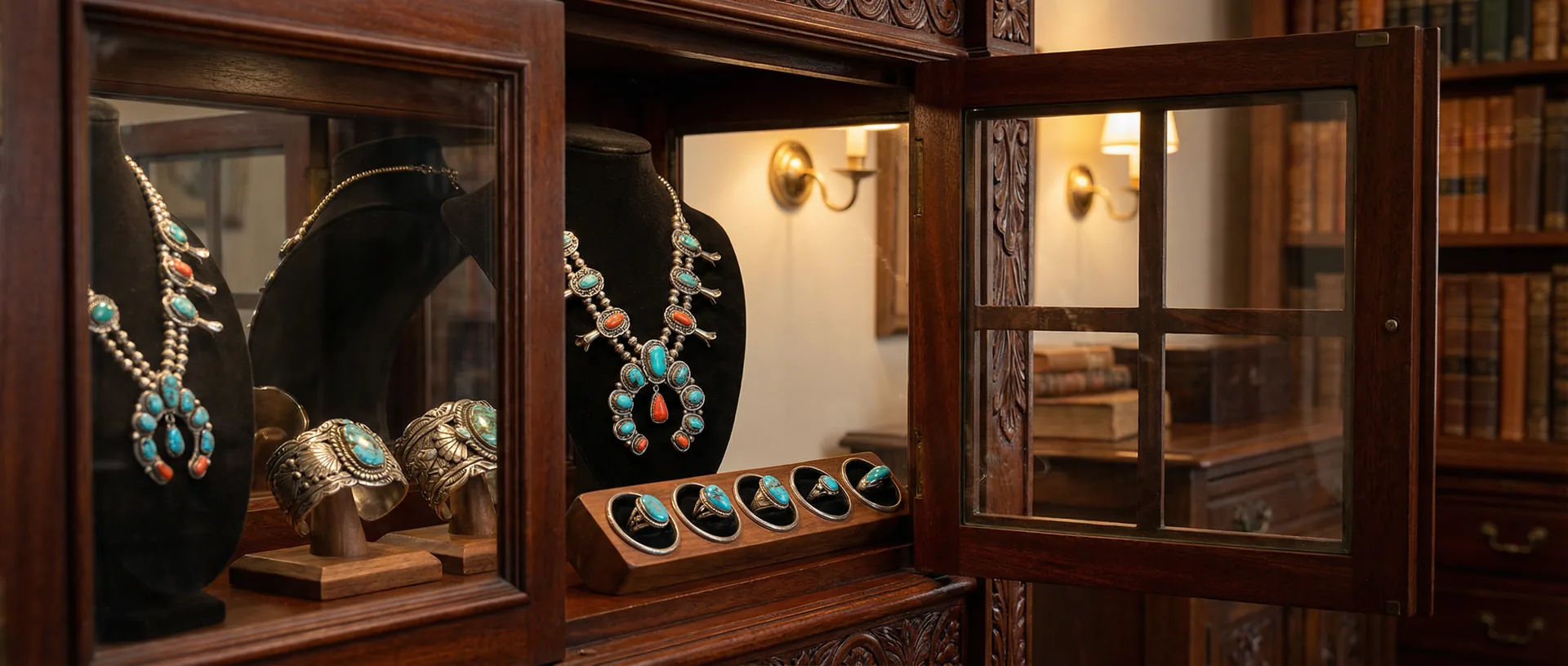
A Thoughtful Approach to Collecting Native American Jewelry
Essential guidance for collectors who want to acquire authentic pieces with lasting artistic and cultural value.
Read Article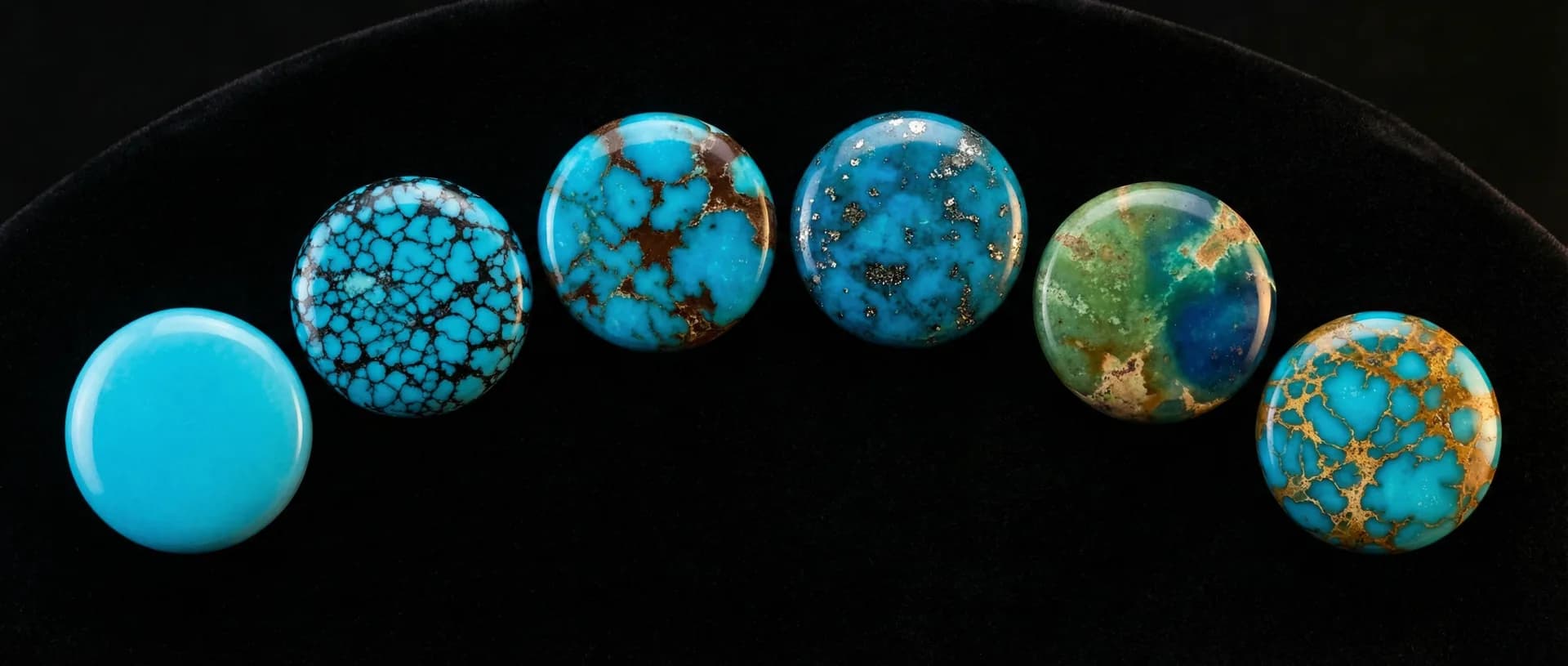
Provenance, Mine Lore, and Care — an Editorial Introduction to the Stone
The Humiovi's editorial introduction to American turquoise: the great mines and their signatures, how provenance is read and documented, and how to care for a stone that lives and breathes.
Read Article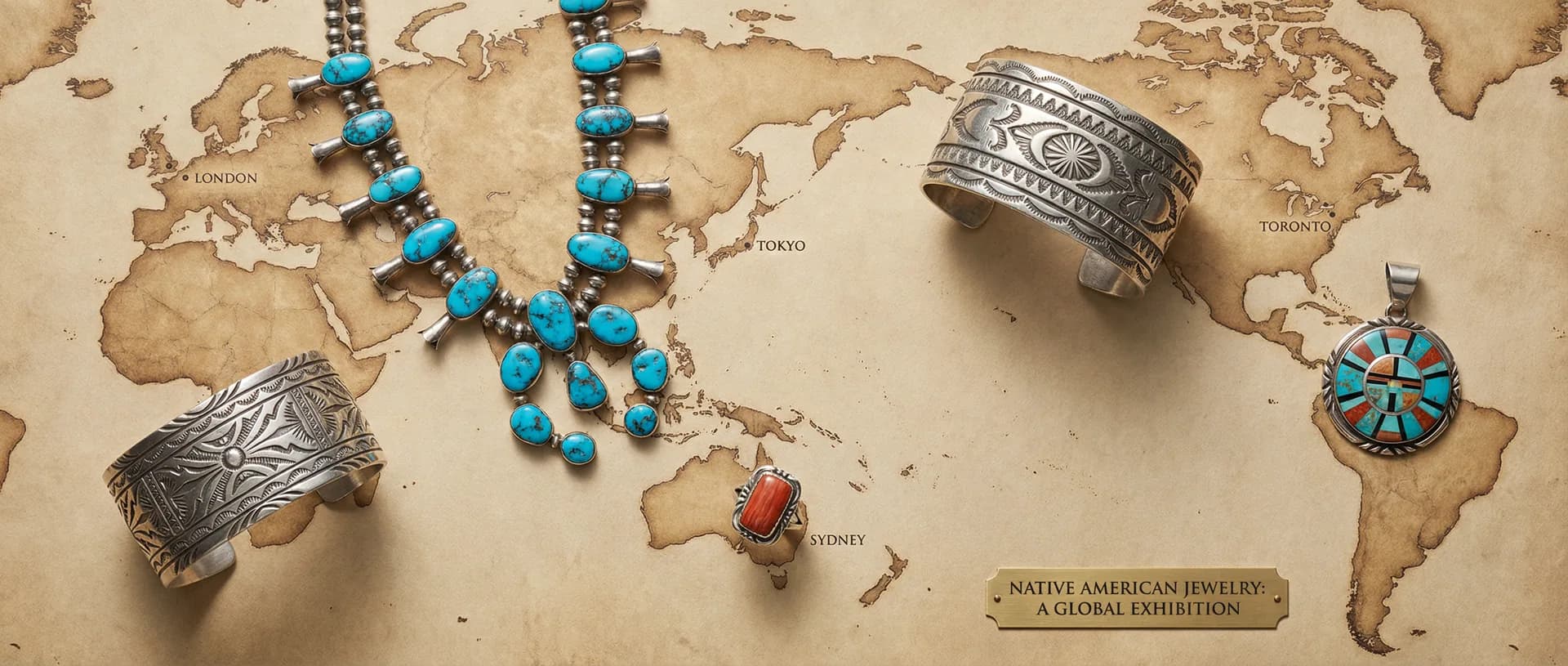
Navigating Authenticity, Import Regulations, and Cultural Stewardship from Abroad
A comprehensive resource for international collectors seeking authentic Native American jewelry — covering the Indian Arts and Crafts Act, cross-border considerations, trusted institutions, and building a collection with integrity from anywhere in the world.
Read Article