The Native American–made pieces at The Humiovi come to it through direct relationships with Native American silversmiths and lapidaries, their families and the traders it knows. Browse them by the making tradition behind each piece — the techniques, materials, and heritage that distinguish one nation's work from another's.
The Native American jewelry at The Humiovi comes to us through direct relationships with silversmiths and lapidaries, their families and the traders we know, representing distinct traditions across tribal nations — Navajo (Diné) silverwork and stamping, Hopi overlay, Zuni inlay and needlepoint, and Santo Domingo (Kewa) Pueblo heishi and shell work. Browse the collection by maker below to explore the artisans and heritage behind each handcrafted piece.
Acoma
9 pieces
Acoma Pueblo, called Sky City, sits atop a sheer sandstone mesa and is among the oldest continuously inhabited settlements in North America. Acoma is celebrated above all for its pottery — thin-walled vessels painted in fine geometric line — alongside beadwork and silver adornment. In adornment, Acoma makers work the wider Western Pueblo vocabulary: strung shell and turquoise heishi, bezel-set cabochons, and silverwork carried out with the same disciplined geometry that defines the pueblo's painted vessels. Where a piece's Acoma origin is documented, that restraint — clean line, balanced proportion, nothing superfluous — is its signature. Acoma pieces appear here when available and verifiably sourced.
Navajo
2 pieces
Navajo
20 pieces
Navajo
3 pieces
Navajo
5 pieces
Hopi
8 pieces
Hopi
2 pieces
Navajo
2 pieces
Zuni
1 piece
Navajo
1 piece
Navajo
1 piece
Zuni
1 piece
Navajo
1 piece
Navajo
1 piece
Navajo
5 pieces
Navajo
3 pieces
Zuni
1 piece
Hopi
2 pieces
Zuni
2 pieces
Cochiti
1 piece
Cochiti is a Keresan-speaking Rio Grande pueblo best known for its pottery and storyteller figures, with a parallel tradition of beadwork and silver adornment. Its makers share the Rio Grande vocabulary of heishi and inlay with neighbouring Kewa, working shell, turquoise, and silver into strung and set pieces. That Rio Grande lineage runs deep. Heishi — among the oldest forms of adornment in the Southwest — is hand-rolled from shell and stone and ground smooth strand by strand, while bezel-set turquoise and stone-on-shell inlay carry the warm, earthen palette shared with neighbouring Kewa and Santo Domingo work. A Cochiti piece, where its provenance is clear, rewards the same close looking as the pueblo's celebrated pottery: restraint, balance, nothing superfluous. We list Cochiti work here when its provenance is clear. The selection is small and chosen for quality over volume.
Navajo
1 piece
Zuni
1 piece
Navajo
2 pieces
Navajo
5 pieces
Hopi
23 pieces
Darren Seweyestewa is a Hopi silversmith who began working silver in the late 1980s.
Hopi
4 pieces
Navajo
2 pieces
Navajo
3 pieces
Hopi
3 pieces
Navajo
6 pieces
Navajo
5 pieces
Navajo
2 pieces
Zuni
1 piece
Effie Calavaza is known as a Zuni silversmith whose designs incorporate a snake. Her hallmark reads EFFIE C., often with ZUNI.
Navajo
4 pieces
Navajo
2 pieces
Zuni
2 pieces
Navajo
2 pieces
Navajo
1 piece
Navajo
16 pieces
Zuni
1 piece
Hopi
5 pieces
Fernando Puhuhefvaya is a Hopi silversmith from Shungopavi who works in overlay. His hallmark is a snow cloud symbol.
Zuni
1 piece
Navajo
2 pieces
Zuni
2 pieces
Zuni
4 pieces
Navajo
7 pieces
Navajo
1 piece
Navajo
2 pieces
Navajo
1 piece
Navajo
3 pieces
Zuni
4 pieces
Zuni
5 pieces
Zuni
2 pieces
Hopi
2 pieces
Navajo
2 pieces
Navajo
1 piece
Navajo
3 pieces
Hopi
140 pieces
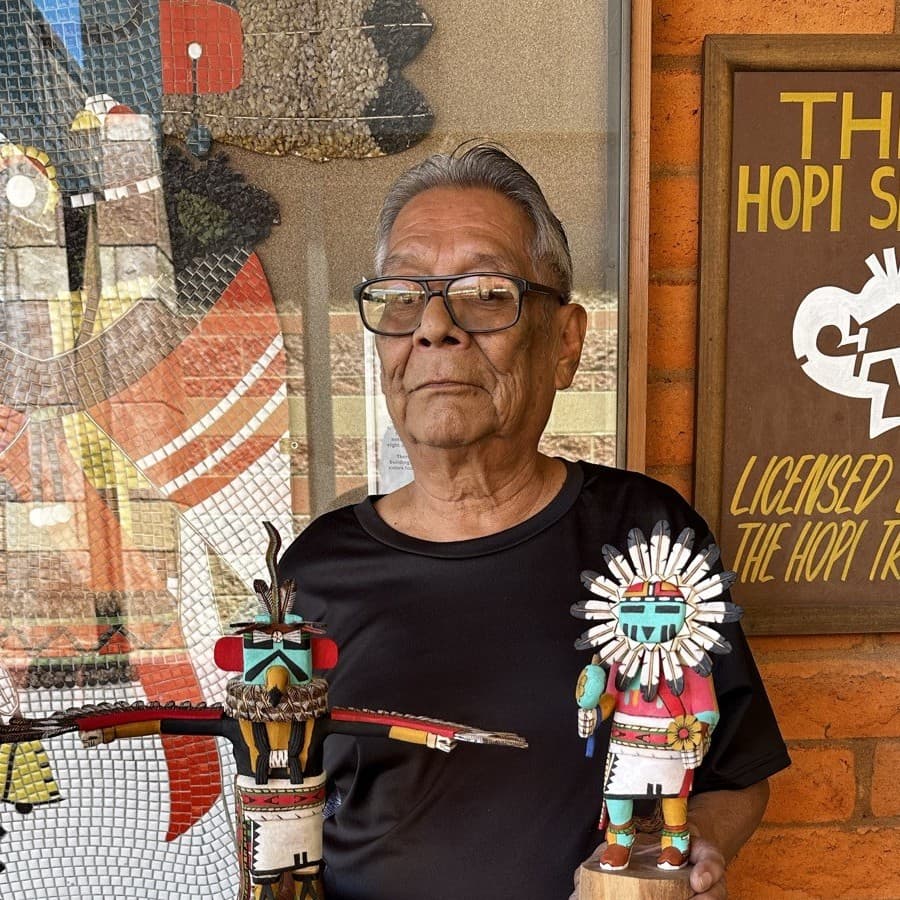
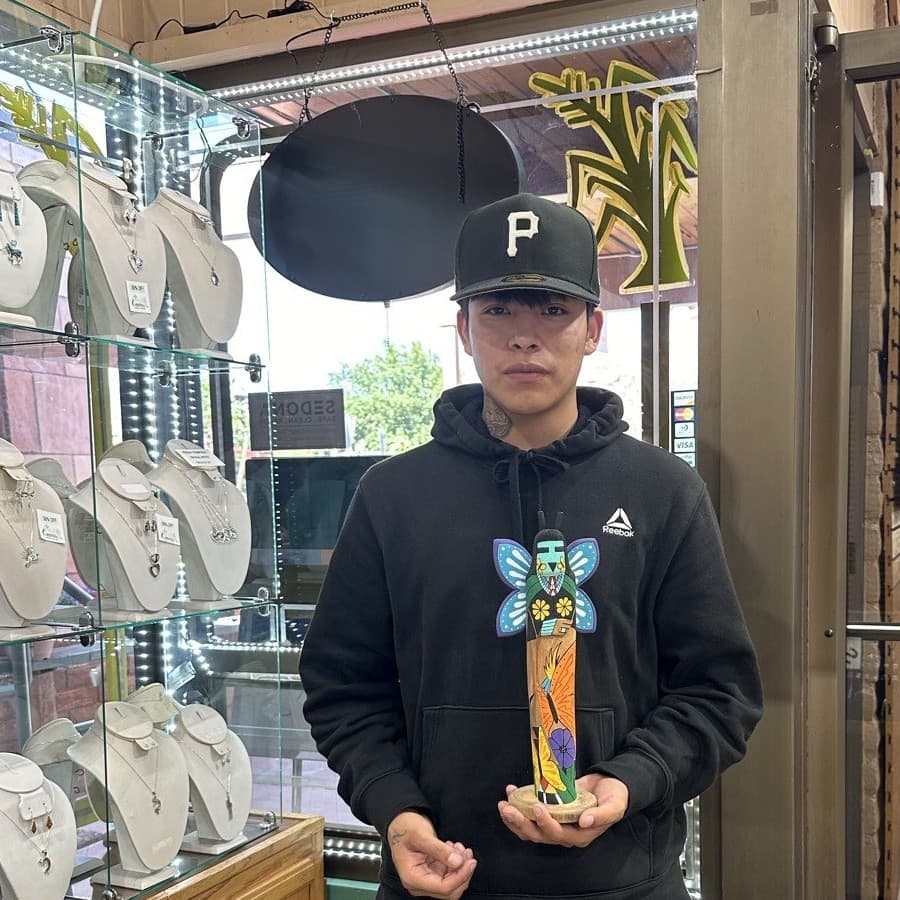
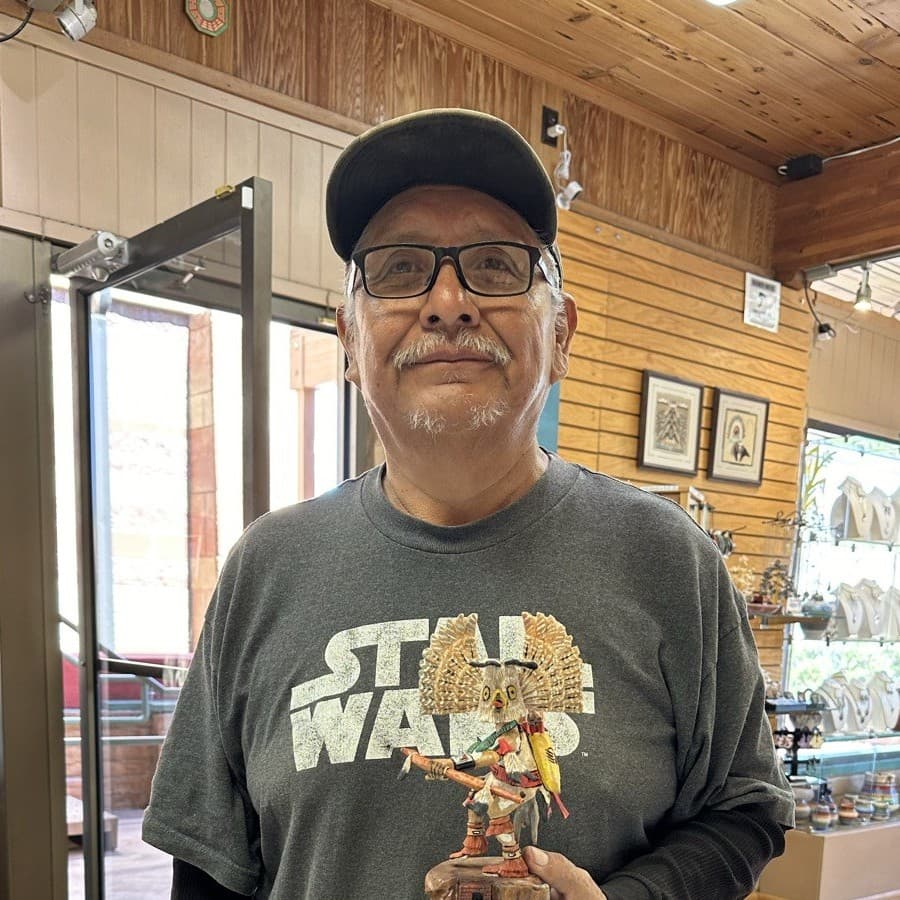
Hopi silverwork is defined by the overlay technique: two layers of sterling silver, the upper sheet pierced with a design and soldered over a lower layer that is oxidised dark and often textured, so the motif reads as bright silver against shadow. The style was refined into its modern form after the Second World War, when a silvercraft training programme on the Hopi mesas encouraged smiths to draw on distinctly Hopi iconography. Clouds, rain, migration spirals, bear paws, katsina figures, and water-serpent forms recur — each carrying meaning within Hopi life. Stones are rare in Hopi work; the artistry lives in the line, the contrast, and the precision of the cut.
Navajo
1 piece
Navajo
6 pieces
Navajo
1 piece
Navajo
7 pieces
Navajo
2 pieces
Navajo
7 pieces
Zuni
1 piece
Navajo
18 pieces
Hopi
5 pieces
Navajo
2 pieces
Navajo
1 piece
Navajo
1 piece
Navajo
1 piece
Navajo
7 pieces
Navajo
8 pieces
Navajo
6 pieces
Navajo
1 piece
Navajo
1 piece
Navajo
1 piece
Navajo
5 pieces
Navajo
1 piece
Navajo
1 piece
Hopi
1 piece
Navajo
1 piece
Kirk Smith, a Diné (Navajo) silversmith, made stamped silver concha belts set with stones.
Laguna
4 pieces
Laguna is a Keresan pueblo west of Albuquerque, one of the larger Rio Grande communities. Its jewelers work within the shared Pueblo idiom of silver, turquoise, and inlay, and Laguna is known more broadly for fine beadwork. That beadwork sits within the centuries-old Rio Grande heishi tradition — shell and stone drilled, strung, and ground against sandstone until each strand falls with uniform weight and a soft, even sheen. Laguna silver, when it appears, favours clean bezel-set turquoise and wearable scale over heavy ornament; the Pueblo eye is trained on proportion and material rather than display. As with the smaller pueblos, our Laguna selection is modest and curated for authenticity rather than breadth.
Navajo
5 pieces
Zuni
1 piece
Navajo
6 pieces
Navajo
7 pieces
Navajo
4 pieces
Zuni
3 pieces
Navajo
2 pieces
Navajo
4 pieces
Hopi
34 pieces
Navajo
3 pieces
Zuni
1 piece
Navajo
4 pieces
Navajo
2 pieces
Zuni
1 piece
Navajo
2 pieces
Hopi
4 pieces
Hopi
5 pieces
Zuni
2 pieces
Hopi
1 piece
Navajo
2 pieces
Navajo
1142 pieces
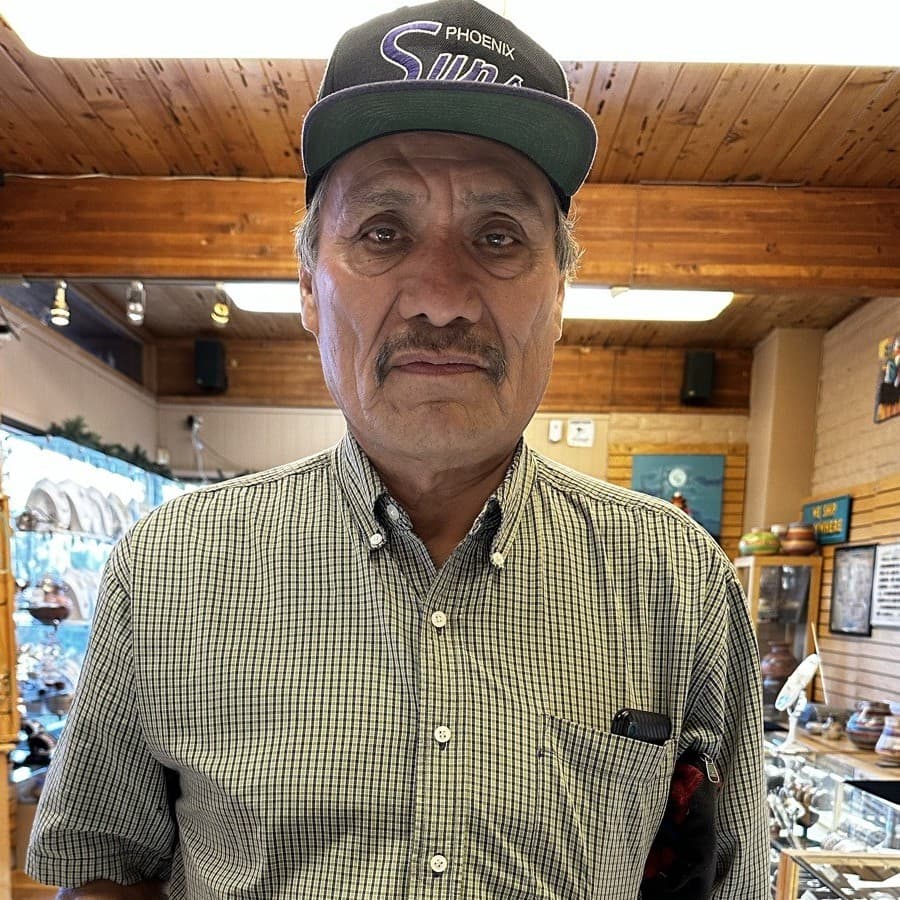
Navajo silversmithing began in the mid-nineteenth century, when Diné smiths first worked silver into adornment. Within a generation the craft matured into the forms still recognised today — the squash blossom necklace, the concho belt, the broad stamped cuff. Tufa and sandcasting, in which molten silver is poured into hand-carved stone moulds, give Navajo work its weight and sculptural presence; stamping and repoussé add the rhythmic, hand-struck patterning. Turquoise — set as a single commanding cabochon or in radiant clusters — is the stone most bound to the tradition. Navajo makers account for the largest share of the work in this gallery. Each piece carries that lineage of silver and stone forward.
Navajo
2 pieces
Navajo
52 pieces
Navajo
43 pieces
76 pieces
Navajo
1 piece
Navajo
1 piece
Navajo
5 pieces
Navajo
1 piece
Navajo
1 piece
Navajo
3 pieces
Navajo
14 pieces
Navajo
1 piece
Santo Domingo
40 pieces
Zuni
2 pieces
Santo Domingo
6 pieces
Navajo
12 pieces
Navajo
41 pieces
Rick Tolino is a Navajo (Diné) jeweler who works in mosaic inlay.
Zuni
2 pieces
Rickell and Glendora Booqua are Zuni silversmiths who make channel inlay jewelry together. They share one hallmark, R G B.
Zuni
1 piece
Zuni
2 pieces
Robert and Bernice Leekya, Zuni silversmiths, made jewelry together, including nugget-style turquoise work.
Zuni
2 pieces
Navajo
2 pieces
Navajo
4 pieces
Navajo
3 pieces
Navajo
42 pieces
Zuni
2 pieces
Sanford Edaakie is a Zuni silversmith who works in inlay.
Santo Domingo
49 pieces
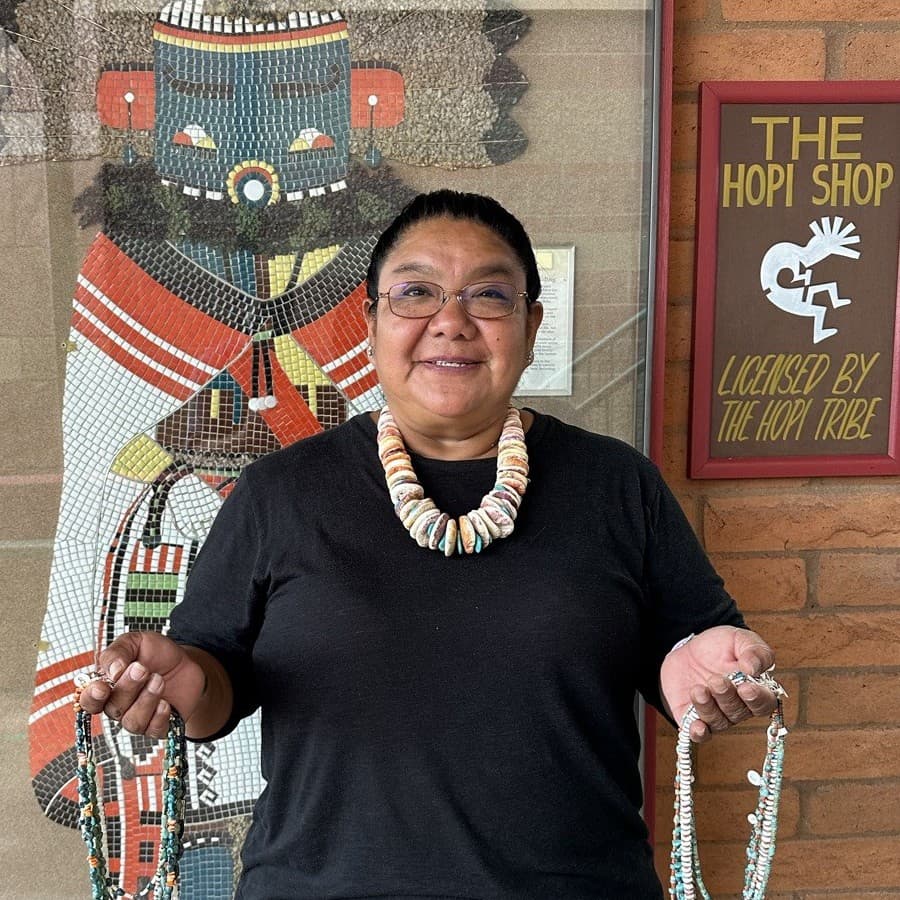
Kewa Pueblo — long known by its Spanish name, Santo Domingo — is the heartland of heishi, the hand-rolled shell and stone beads that are among the oldest forms of adornment in the Southwest. Strands of fine heishi, graduated and polished by hand, remain the signature of the pueblo's makers. During the lean years of the Great Depression, Kewa artists became known for mosaic inlay laid over shell and reclaimed materials — the tab and "thunderbird" necklaces. Turquoise, spiny oyster, and jet supply the warm, earthen palette.
Navajo
3 pieces
Navajo
1 piece
Zuni
10 pieces
Navajo
19 pieces
Navajo
1 piece
Navajo
2 pieces
Steve Yellowhorse is a Navajo (Diné) silversmith who began working silver in 1975. His work includes stamped silver and gold jewelry.
Hopi
1 piece
Steven Sockyma is a Hopi silversmith who works in overlay and began working silver in 1969. His hallmark is his initials, S S.
Zuni
2 pieces
Navajo
102 pieces
Navajo
1 piece
Navajo
23 pieces
Navajo
1 piece
Hopi
4 pieces
Hopi
1 piece
Navajo
23 pieces
Navajo
2 pieces
Navajo
7 pieces
Zuni
1 piece
Navajo
4 pieces
Zuni
2 pieces
Navajo
19 pieces
Navajo
1 piece
Navajo
15 pieces
Zuni
127 pieces
Zuni jewelry is first a story of stone. Needlepoint and petit point set dozens — sometimes hundreds — of small, hand-cut turquoise stones in slender silver bezels; channel and mosaic inlay fit precisely cut turquoise, coral, jet, and shell edge to edge into flush, painterly compositions. Cluster work arranges cabochons in radiant rosettes, and the Zuni fetish-carving tradition shapes stone and shell into small animal forms. Where Navajo work leads with silver, Zuni work leads with the lapidary's patience and precision.