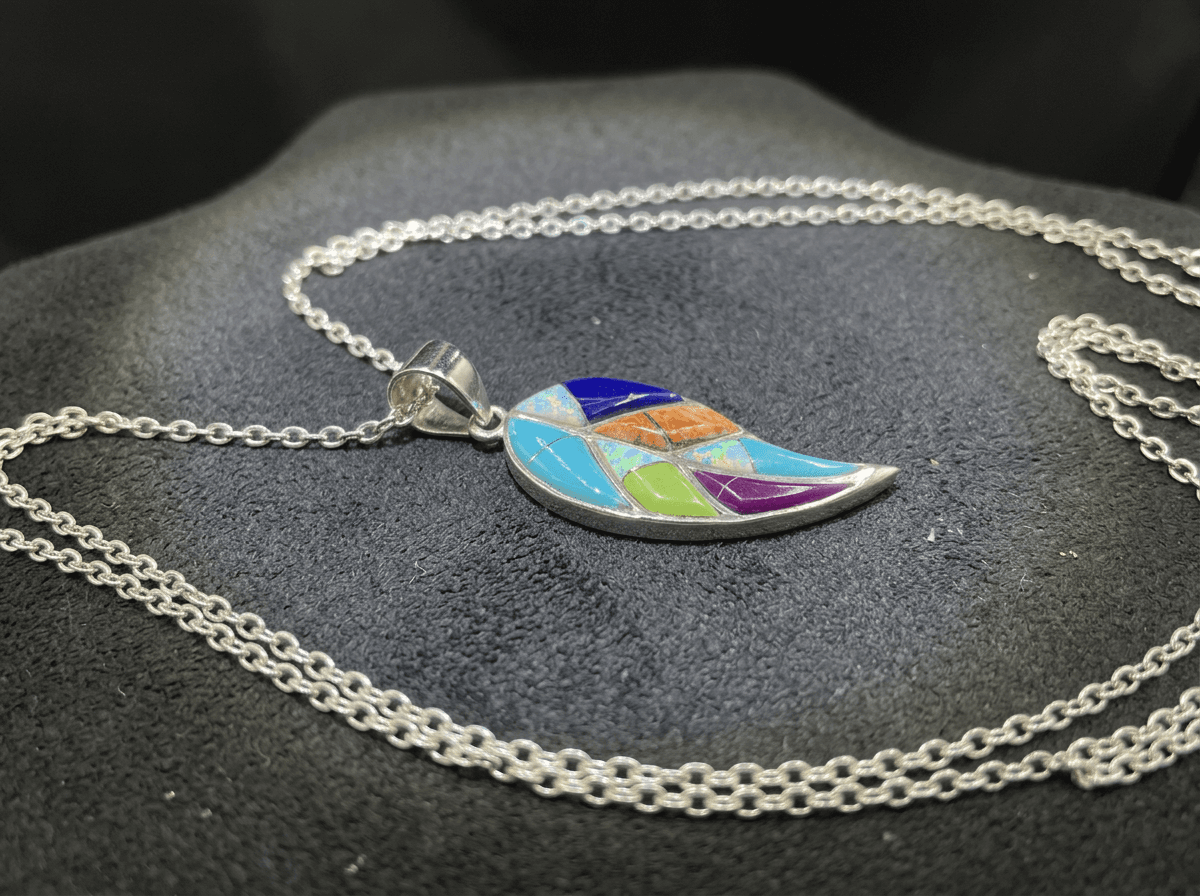
Only 1 available
WARNING: This product can expose you to lead and cadmium, which are known to the State of California to cause cancer and reproductive harm. For more information go to P65Warnings.ca.gov.
Secure checkout
Insured in transit · Discreetly packaged
30-Day Returns · Free ExchangesRefund returns: 20% restocking fee and customer-paid return shipping. Exchanges for an item of equal or greater value carry no restocking fee.
Women's Southwestern-style Turquoise, Lapis Lazuli and Spiny Oyster pendant in Sterling Silver. Measures 0.5 x 1.5 inches. Turquoise is a copper-bearing phosphate mineral rated 5 to 6 on the Mohs hardness scale. Its color ranges from sky blue to green, depending on how much copper and iron the deposit holds. Lapis lazuli is a deep blue rock made mostly of the mineral lazurite, often flecked with gold-colored pyrite. It has been mined in the Badakhshan region of Afghanistan for more than 6,000 years and is also found in Chile. Spiny oyster is a shell, not a stone: the thick, colorful shell of the Spondylus mollusk from the Gulf of California, also called the Sea of Cortez. It comes in purple, orange, red and yellow. Sterling silver is 92.5% pure silver, often stamped .925, alloyed with copper for strength. It develops a soft patina over time that a silver polishing cloth removes. Store it apart from other pieces to avoid scratches, and wipe it with a soft cloth; keep chemical silver dips away from stones and shell. Turquoise is the birthstone for December. Much turquoise on the market is stabilized to improve hardness and color stability; treatment of this stone is not documented.
SKU: V423043
Treatment
Not documented
Cared for thoughtfully, a handcrafted piece is meant to last generations. A few essentials for this one:
Coral & spiny oyster
Organic and soft — wipe with a dry cloth only, and avoid water, heat, and chemicals.
Sterling silver
Buff with a soft polishing cloth — leaving intentional oxidation intact — and store airtight to slow tarnish.
Last on, first off
Put your piece on after fragrance, lotion, and hairspray — and take it off before water, sleep, and sport.
Store with care
Keep each piece in its own soft pouch, away from direct sun and damp, so softer stones never meet harder ones.
Complimentary US shipping on all jewelry
Returns & Exchanges
Return within 30 days of delivery. Exchanges for an item of equal or greater value carry no restocking fee; refund returns are subject to a 20% restocking fee, with return shipping paid by you. Items must be in new, unworn, and unused condition with all original packaging — a Certificate of Authenticity issued with the piece is yours to keep. Custom and personalized pieces are not eligible.
Share
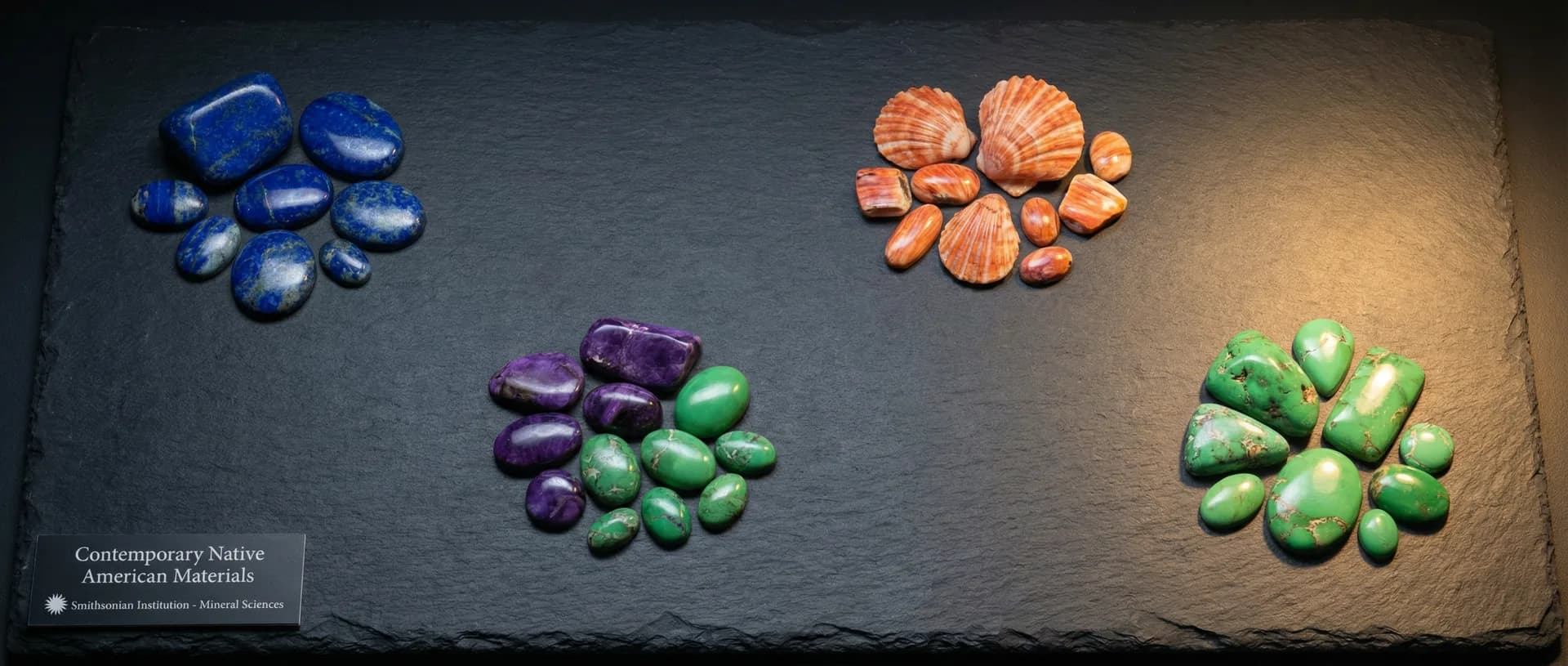
Beyond turquoise and coral, Native American jewelers draw upon a remarkable palette of secondary stones — Afghan lapis lazuli traded across 6,000 years of human commerce, spiny oyster shell graded from fiery orange to royal purple, gaspeite, sugilite, charoite, and other rare materials that expand the chromatic possibilities of indigenous jewelry to extraordinary effect.
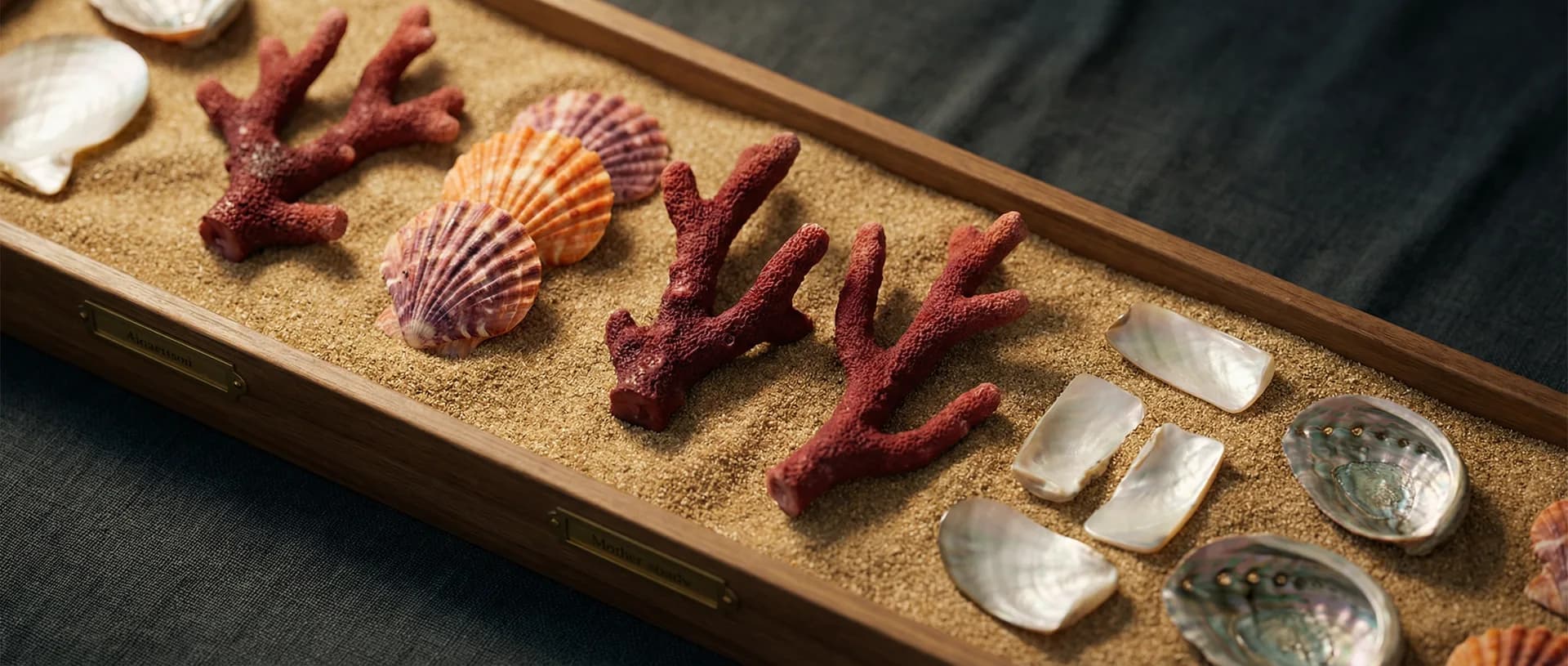
The ocean has supplied Native American jewelers with some of their most culturally significant materials. Mediterranean red coral, harvested from depths of 30 to 300 meters in the Tyrrhenian and Adriatic seas, arrived in the Southwest through Spanish colonial trade routes. Spiny oyster shell from the Sea of Cortez has been traded northward for over a thousand years. Mother of pearl, abalone, and other marine shells complete a palette of organic materials whose cultural importance rivals turquoise itself.