Generational Knowledge in Every Piece
By The Humiovi Editorial Desk — Sedona, Arizona · est. 1972
·
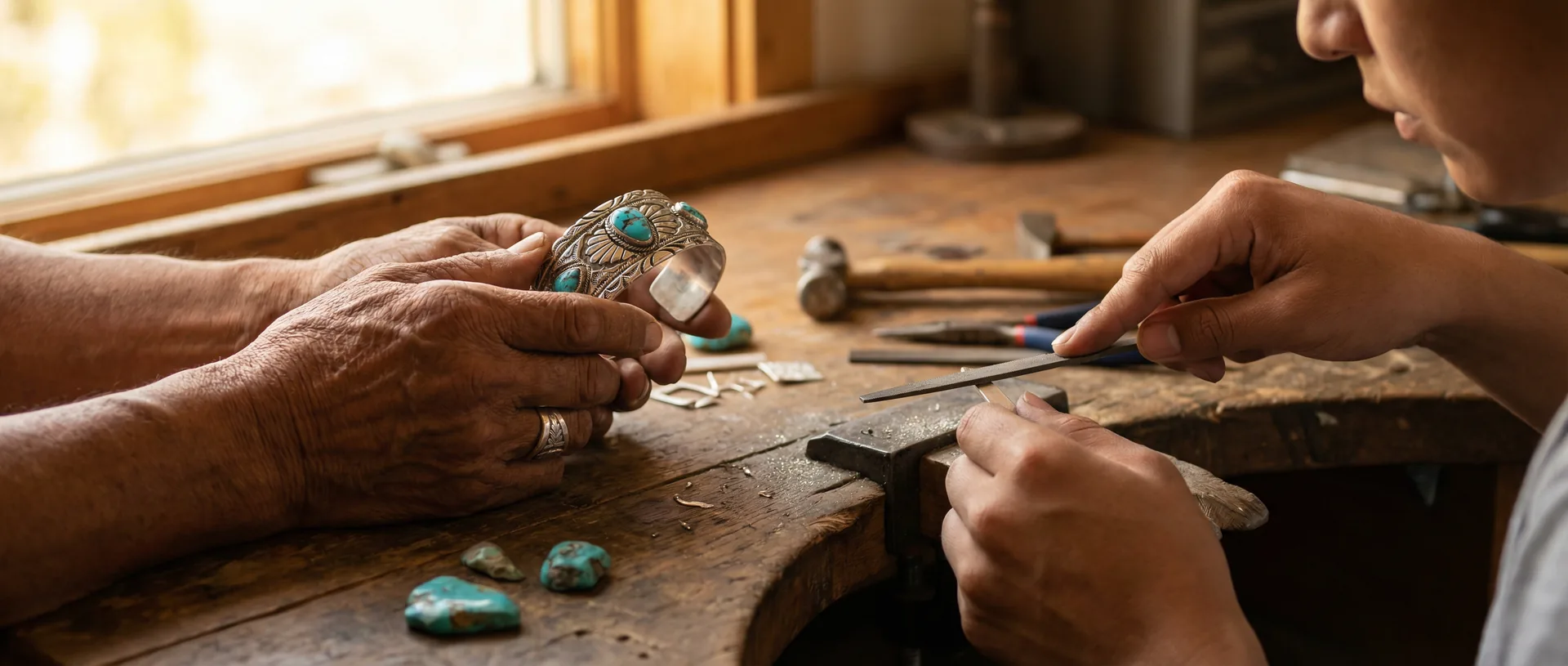
In many Native American communities, jewelry making is a family affair, with children absorbing techniques and design sensibilities by watching parents and grandparents long before they handle tools. This immersive apprenticeship produces an intuitive understanding of materials, and respected families across Navajo, Zuni, Hopi, and Santo Domingo traditions span multiple generations of recognized artists.
In many Native American communities, jewelry making is a family affair. Children grow up watching parents and grandparents work, absorbing techniques and design sensibilities long before they pick up tools themselves. This immersive apprenticeship model produces artisans with an intuitive understanding of their materials that formal education alone cannot replicate.
Many of the most respected jewelry families — spanning Navajo, Zuni, Hopi, and Santo Domingo Pueblo traditions — have produced multiple generations of recognized artists, each building upon and advancing the family's artistic legacy.
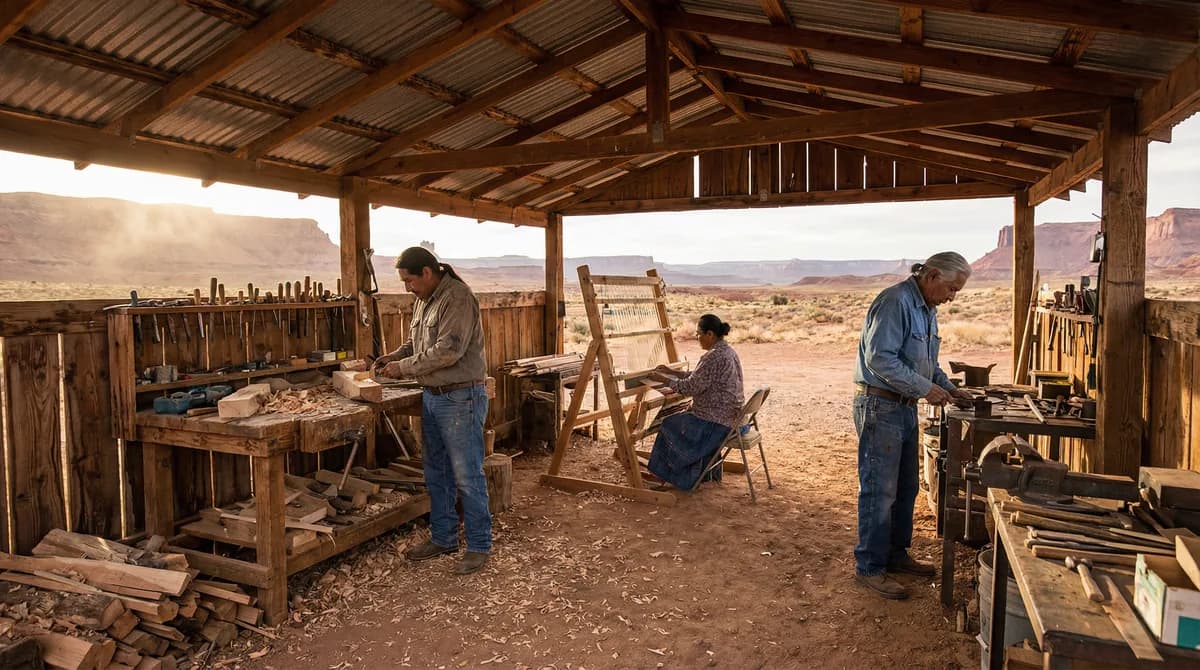
Traditional silversmiths use deceptively simple tools, hammers, files, saws, mandrels, and soldering torches, that take years of disciplined practice to master. Each becomes an extension of the hand and reflects a mentor's specific teachings. Many families keep tools used for generations, their handles worn smooth, carrying both practical and symbolic value across the lineage of makers.
The tools of a traditional silversmith are deceptively simple — hammers, files, saws, mandrels, and soldering torches — yet mastering them requires years of disciplined practice. Each tool becomes an extension of the artisan's hand, and the way a smith holds a hammer or angles a file often reflects the specific teachings of their mentor.
Many families maintain tools that have been in use for generations, their handles worn smooth by decades of grip. These inherited instruments carry both practical and symbolic value, connecting the living artisan to the lineage of makers who came before.
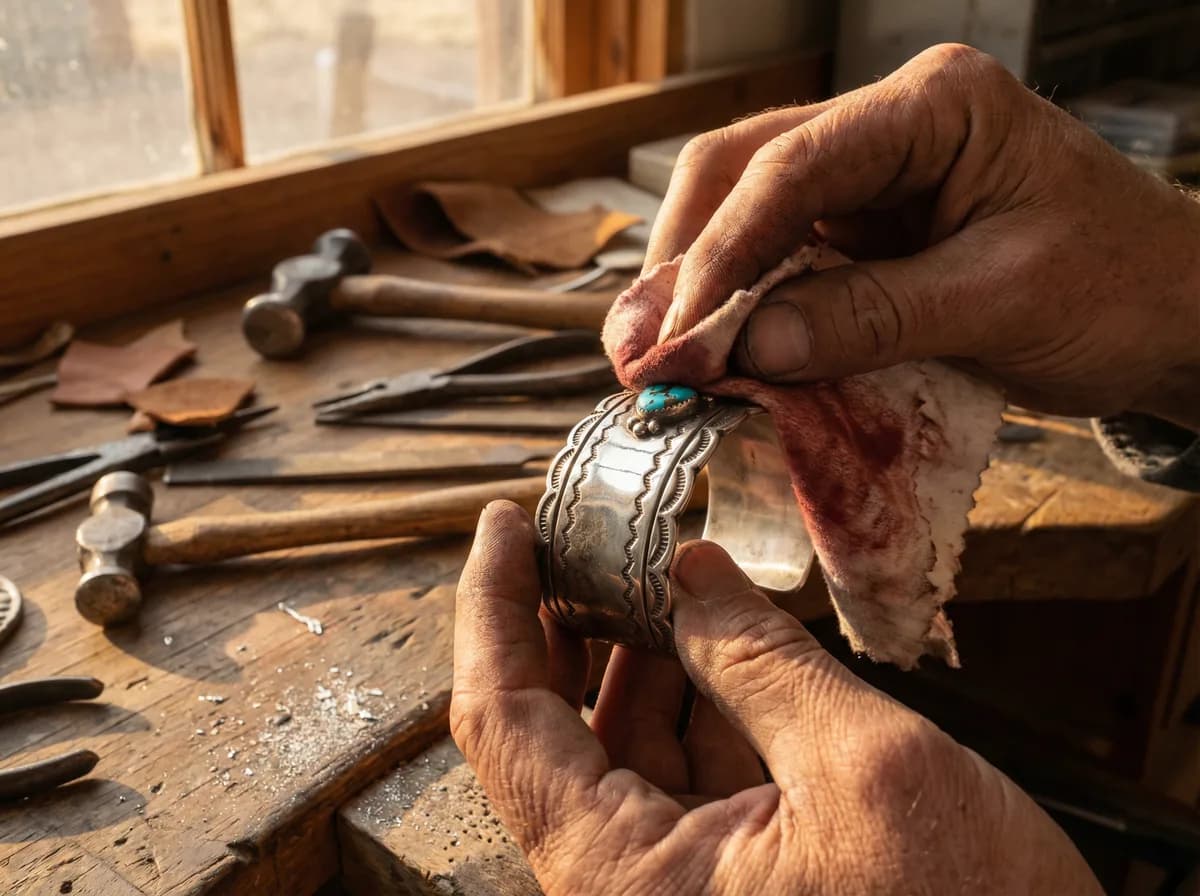
“The finest pieces are not merely crafted — they are the culmination of generations of accumulated wisdom.”
The most celebrated artisans innovate within inherited forms, a Zuni artist pushing needlepoint to impossibly fine scale or a Navajo silversmith introducing contemporary elements while preserving ancestral techniques like tufa casting. This balance of reverence and reinvention keeps Native American jewelry a living art form, with each generation adding its own chapter to a centuries-old story.
While tradition provides the foundation, the most celebrated artisans are those who find ways to innovate within inherited forms. A Zuni artist may push the boundaries of needlepoint scale, setting stones so fine they seem impossible. A Navajo silversmith may introduce contemporary design elements while preserving ancestral techniques like tufa casting.
This balance between reverence and reinvention is what keeps Native American jewelry a living art form rather than a static reproduction of historical patterns. Each generation adds its own chapter to a story that stretches back centuries, ensuring that the tradition remains vital and relevant.

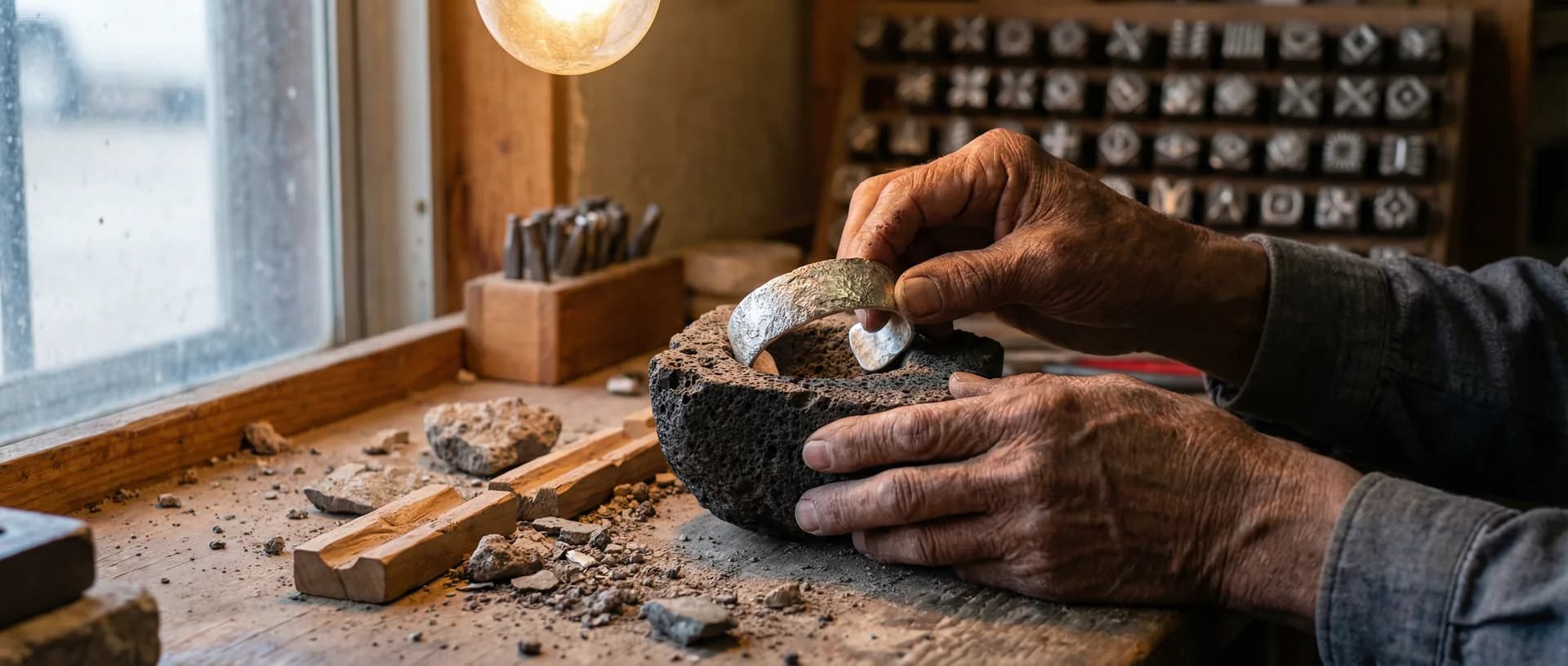
A lifetime devoted to the ancient art of Diné silverwork
Thomas Begay has spent five decades refining the techniques first brought to the Diné by Atsidi Sani generations ago. His sand-cast and tufa-cast creations represent a living bridge between ancestral metalworking traditions and contemporary artistic expression, each piece carrying the weight of cultural memory forged in sterling silver.
Read Article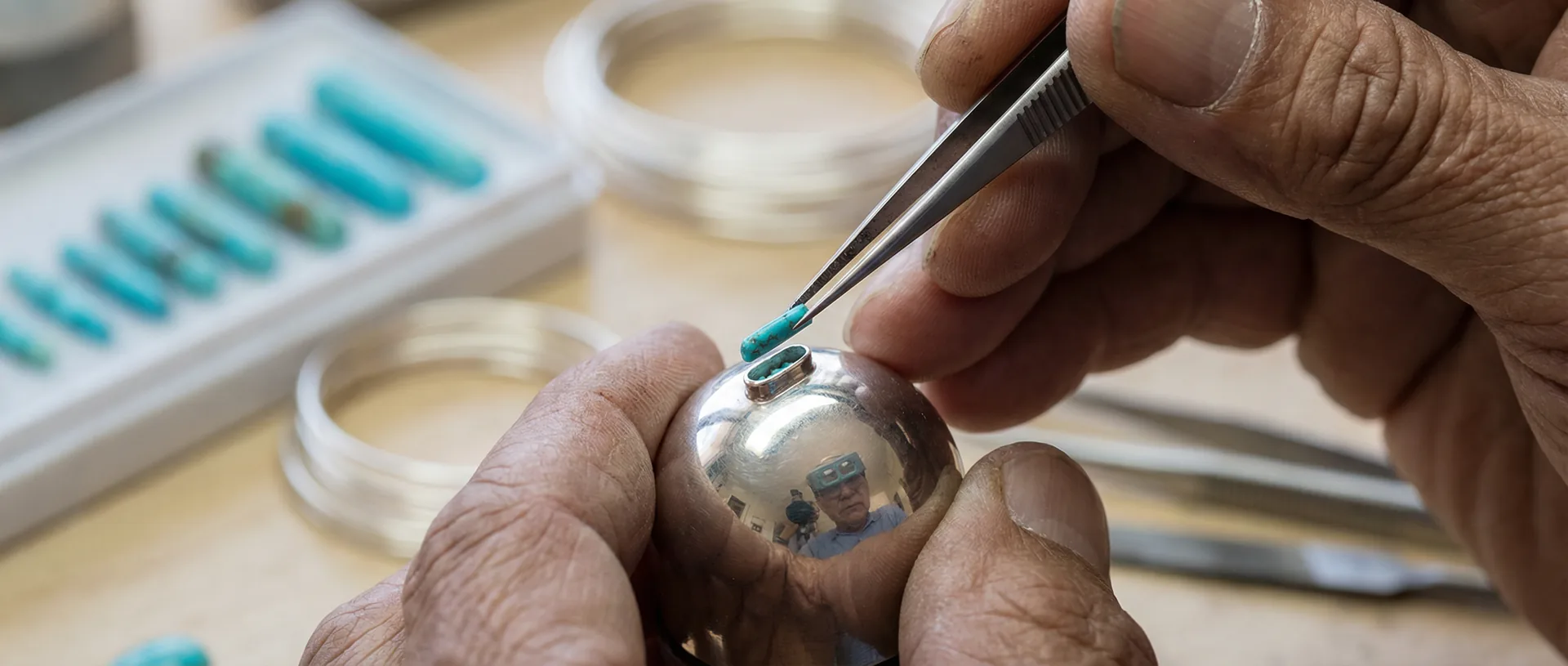
Where patience becomes beauty in the A:shiwi tradition of stone cutting
In the quiet precision of her Zuni Pueblo workshop, Lorraine Waatsa transforms raw turquoise, coral, and shell into the intricate needlepoint, petit point, and mosaic inlay patterns that have defined Zuni lapidary artistry for over a century. Her work carries forward the Zuni lapidary tradition while pushing the boundaries of what stone-on-silver composition can achieve.
Read Article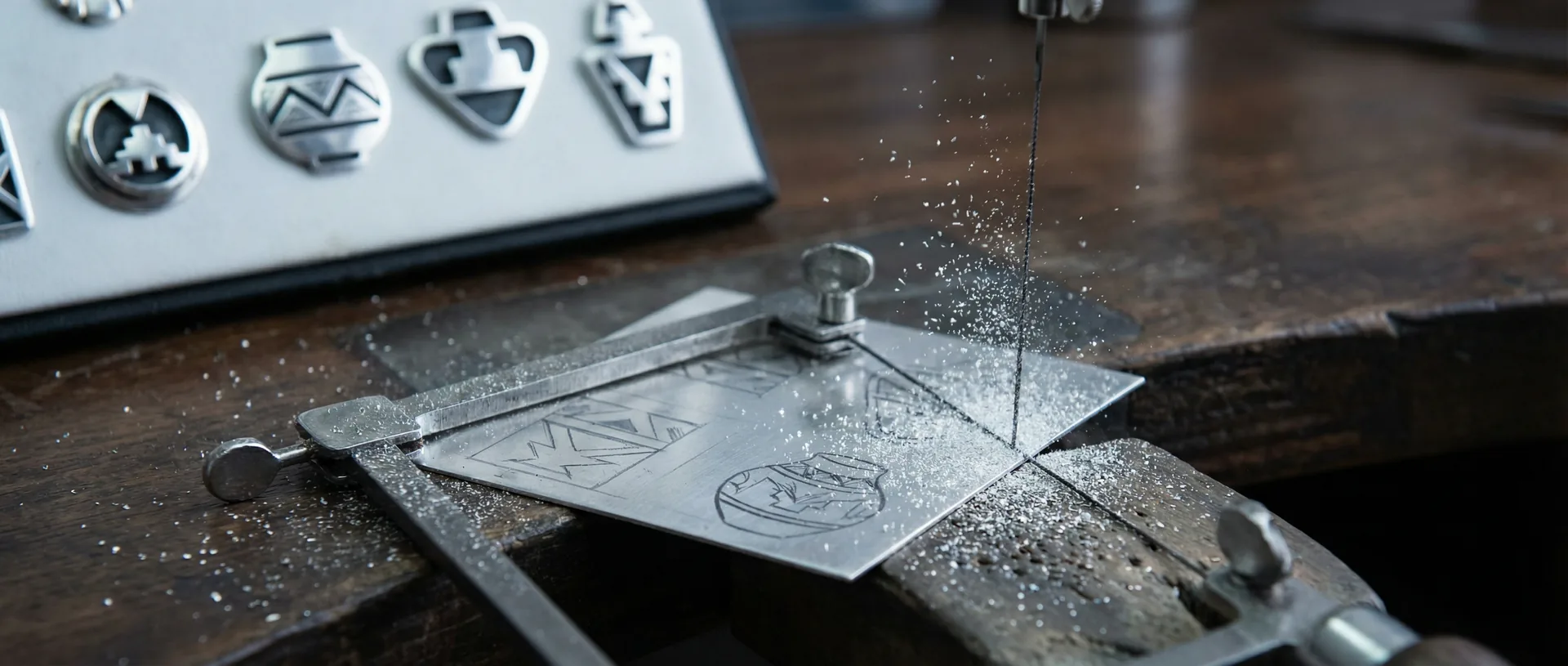
The Hopi overlay tradition as a language of prayer and cultural memory
Working from his studio on Second Mesa, Duane Tawahongva practices the distinctive Hopi overlay technique — a method in which two layers of sterling silver are fused together, with designs cut from the top layer to reveal the oxidized surface beneath. Clan symbols, water motifs, and migration patterns translate centuries of Hopituh Shi-nu-mu spiritual knowledge into wearable silver narratives that carry prayers across the secular world.
Read Article