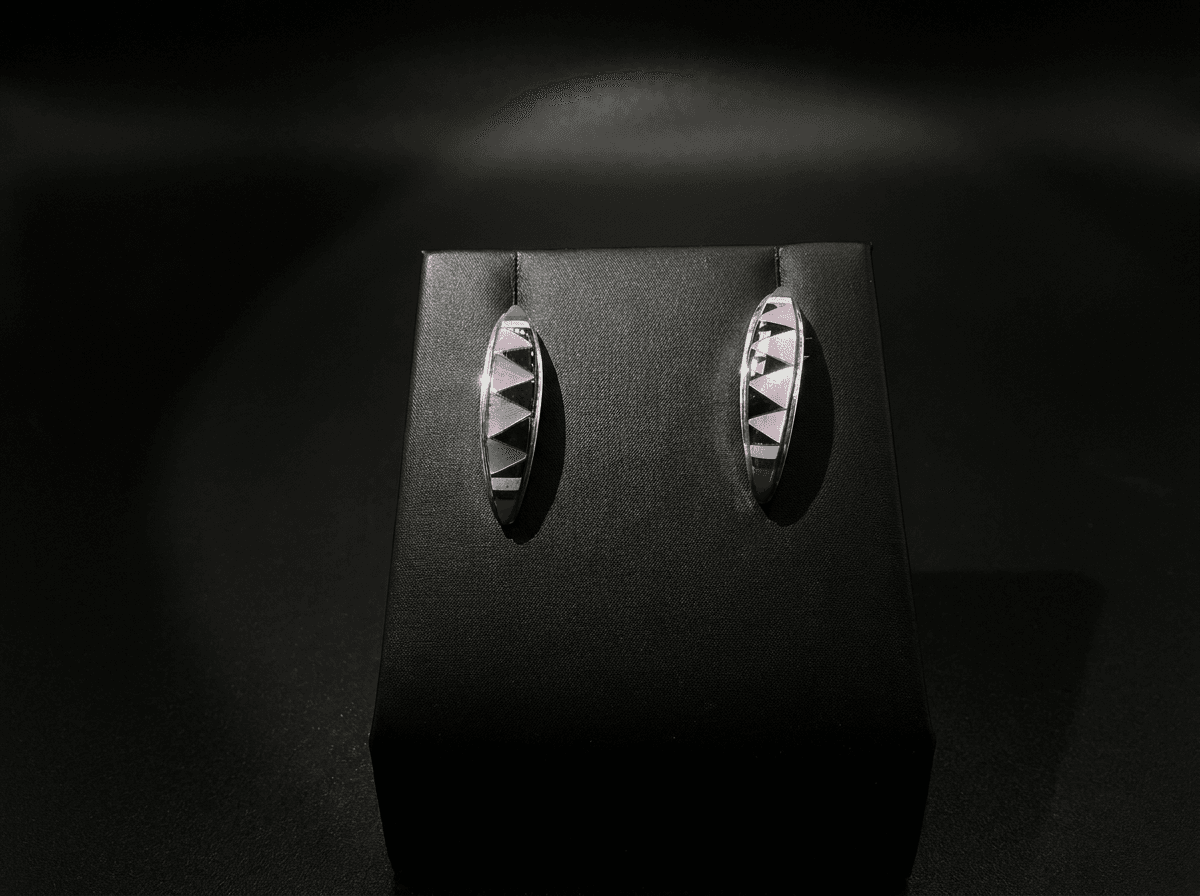
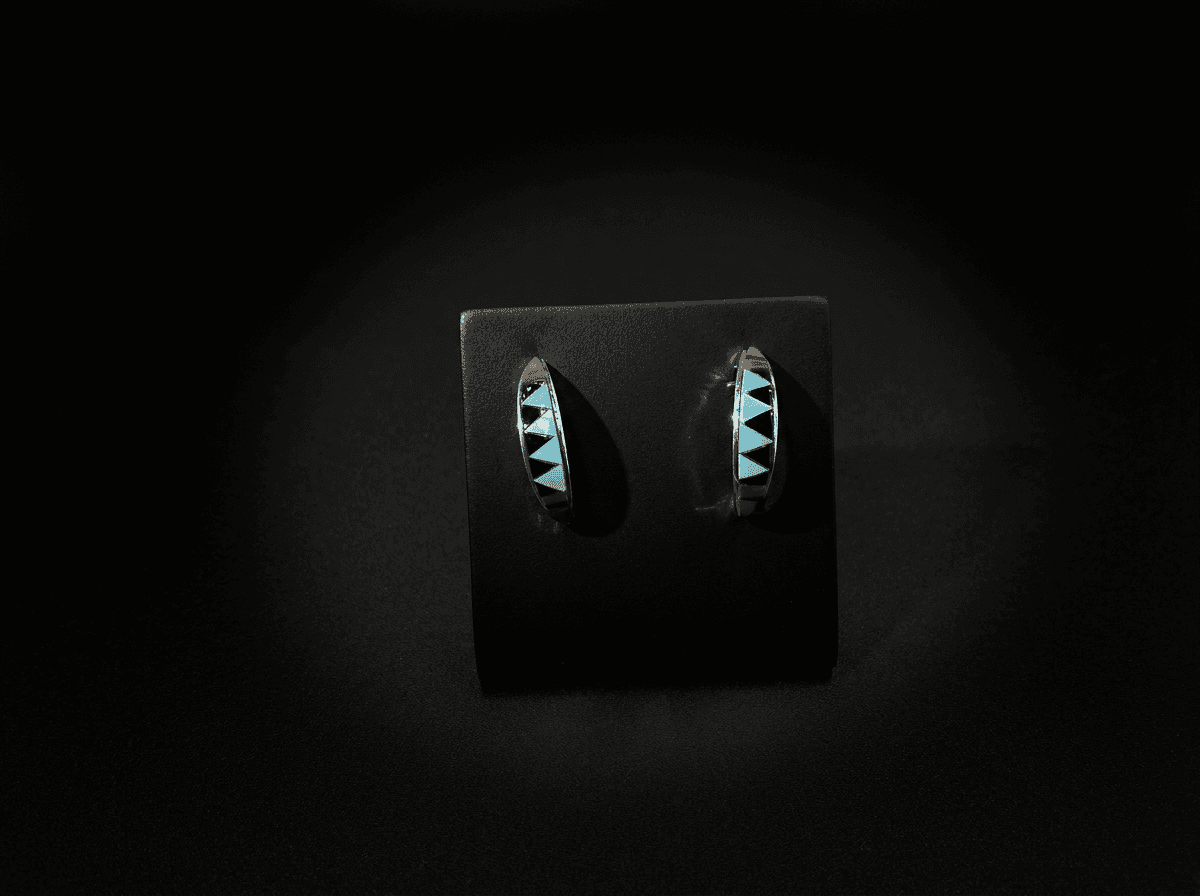
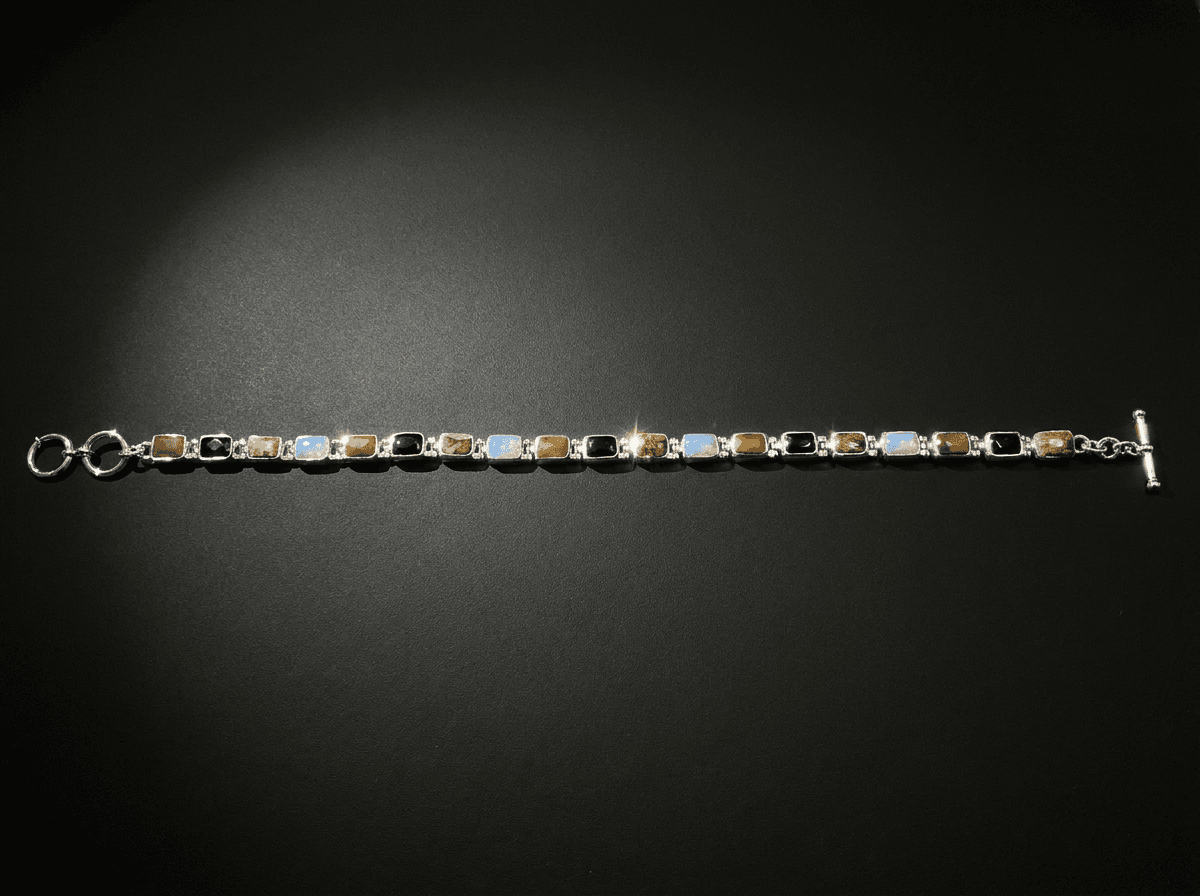
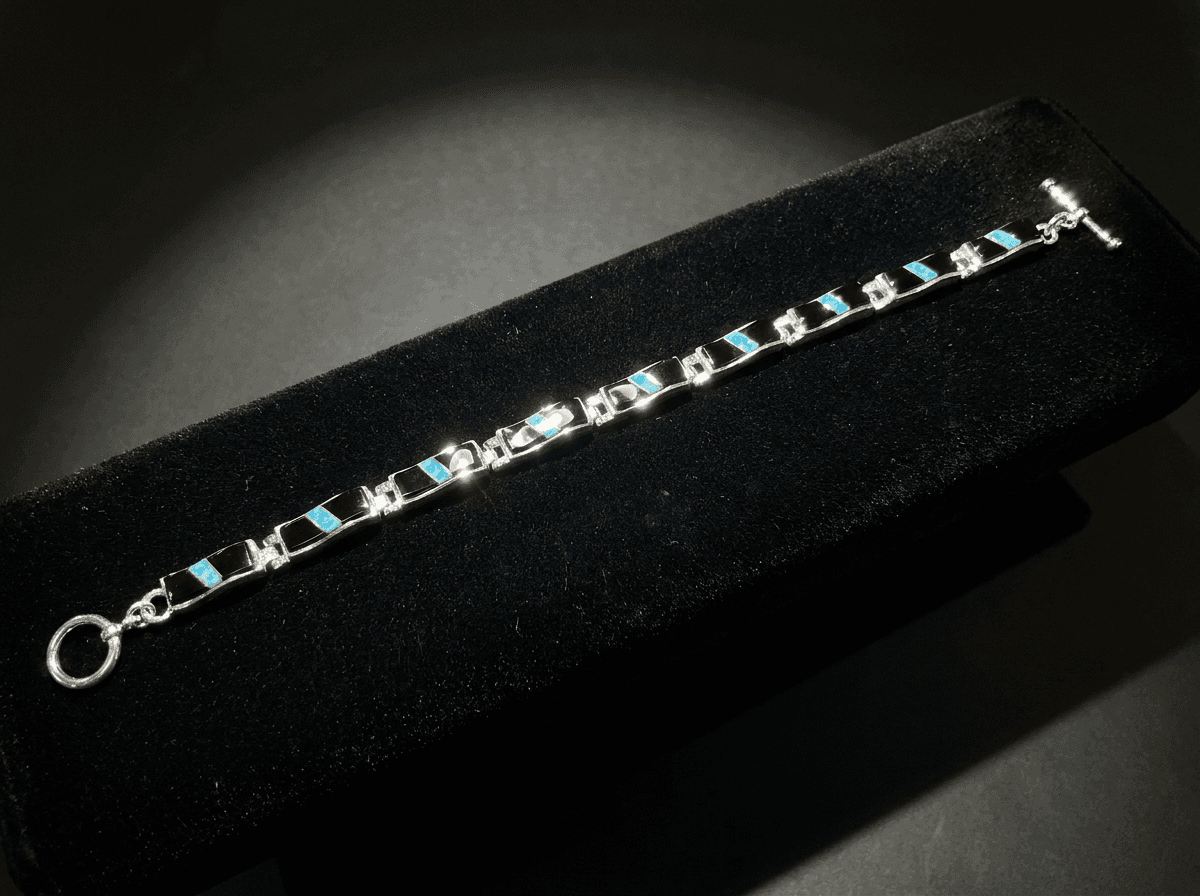
Deep, even black onyx is the anchor of Southwestern inlay — the dark field and crisp outline that gives a mosaic its structure and lets brighter stones flash. A hard, glassy-polished member of the quartz family, it also stands on its own in clean, contemporary silverwork for a bold, graphic look.

This collection includes Native American–made and Southwestern-style pieces; each piece's own page states its origin where it is known.
HistoryBlack stone has long had a place in Southwestern jewelry — historically jet, the fossilized wood-coal worked since ancestral times, and today most often onyx, which offers a similar darkness with greater hardness and availability. As inlay grew more refined, onyx's even color and durability made it a natural choice for the dark passages that frame turquoise, coral, and shell.
Chalcedony of this kind is found worldwide, and the steady supply of consistent black material helped it become a workshop staple in modern Zuni and Navajo inlay.
In Zuni and Navajo inlay, black onyx supplies the dark field, borders, and outlines that give a mosaic its snap, intensifying every color set against it. It is also used on its own in sleek, minimal settings — a single black cabochon in silver — for a contemporary, almost architectural effect. Its hardness lets lapidaries cut precise, sharp-edged pieces that hold a clean line in channel work.
Onyx is a banded variety of chalcedony, the cryptocrystalline form of quartz, and the solid black material used in jewelry takes a deep, glassy polish that wears well in daily use. Most jewelry onyx is color-enhanced to achieve its uniform darkness — a long-standing, stable, and openly accepted practice in the trade rather than a modern shortcut.
At Mohs 6.5 to 7 it is genuinely hard, resisting scratches far better than the softer organic and carbonate stones it is often set beside.
Onyx is durable but still benefits from gentle care: avoid harsh chemicals and chemical jewelry dips, which can affect the color enhancement, clean it with a soft cloth, and store it separately to protect both its polish and the surrounding silver.
This collection includes Native American–made and Southwestern-style pieces; each piece's own page states its origin where it is known.
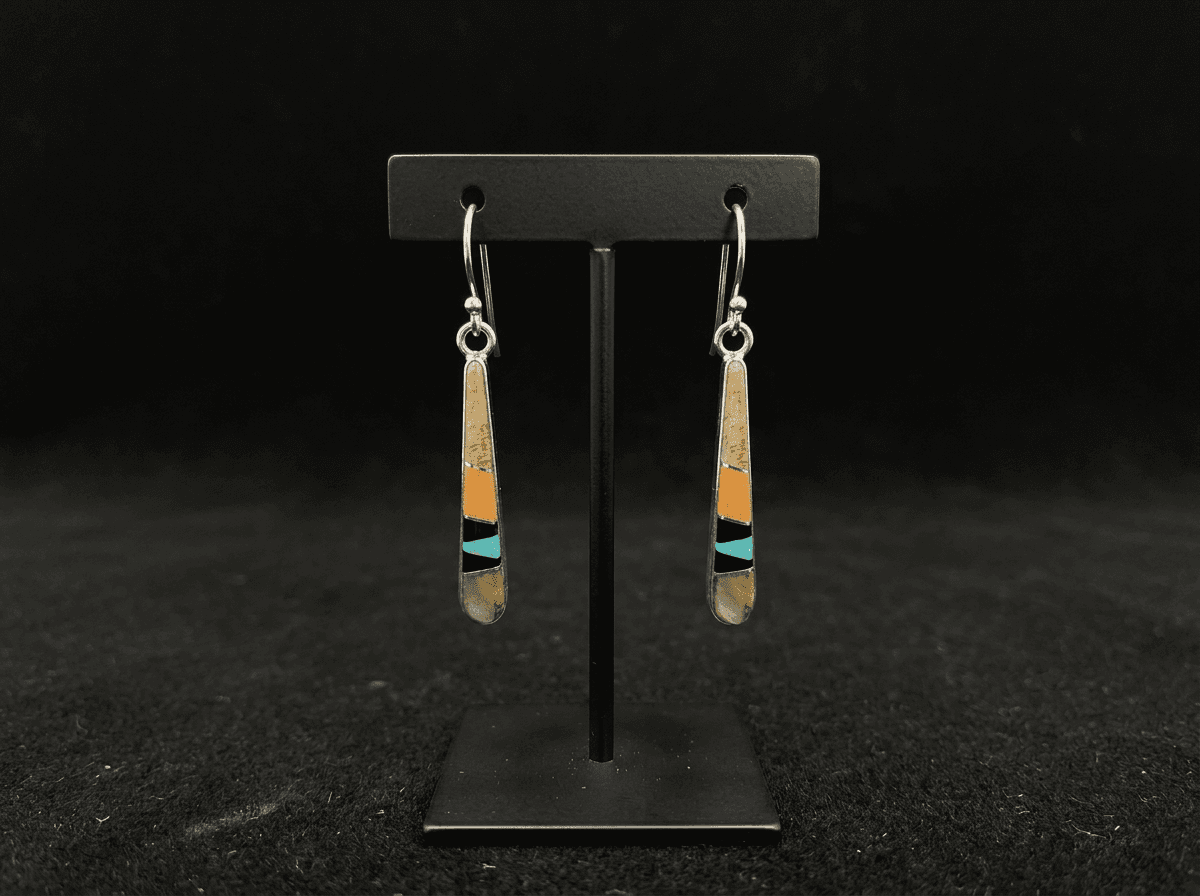
$275.00
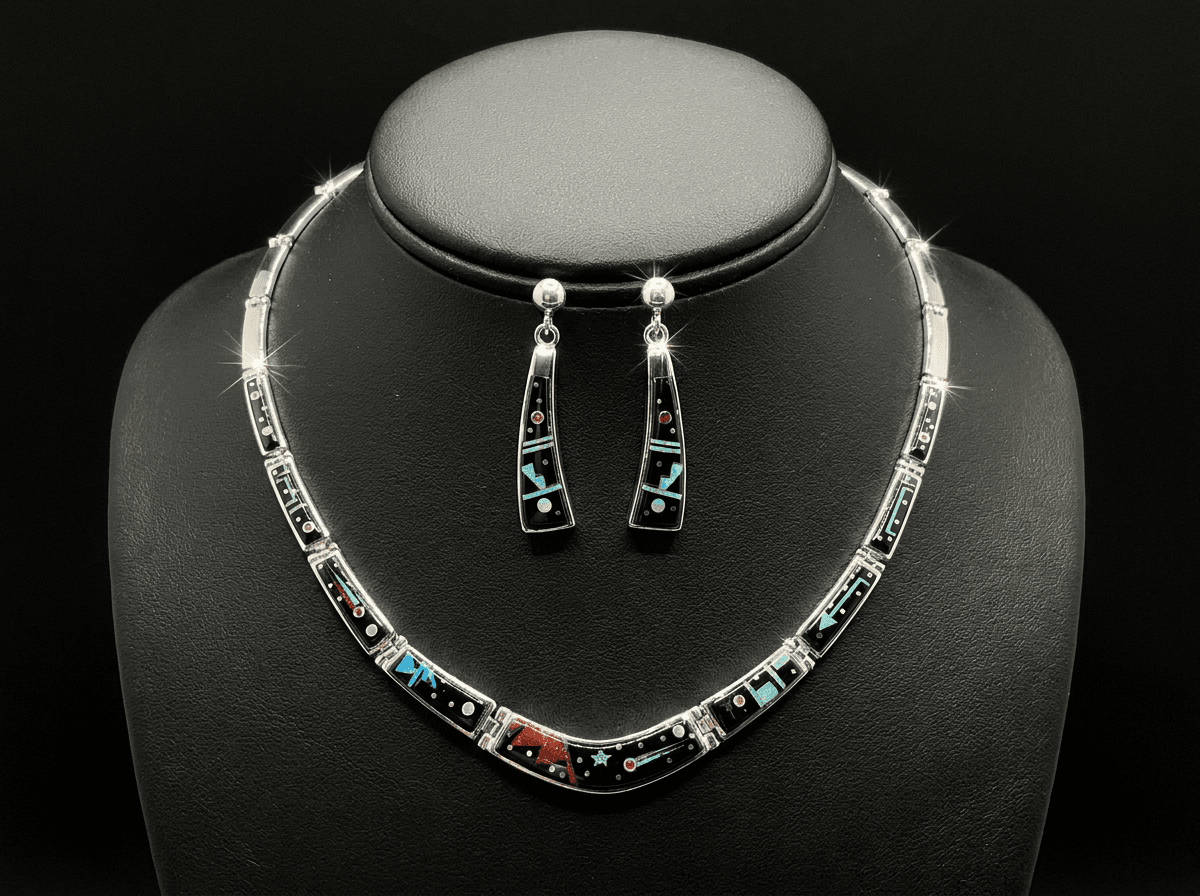
$2,900.00
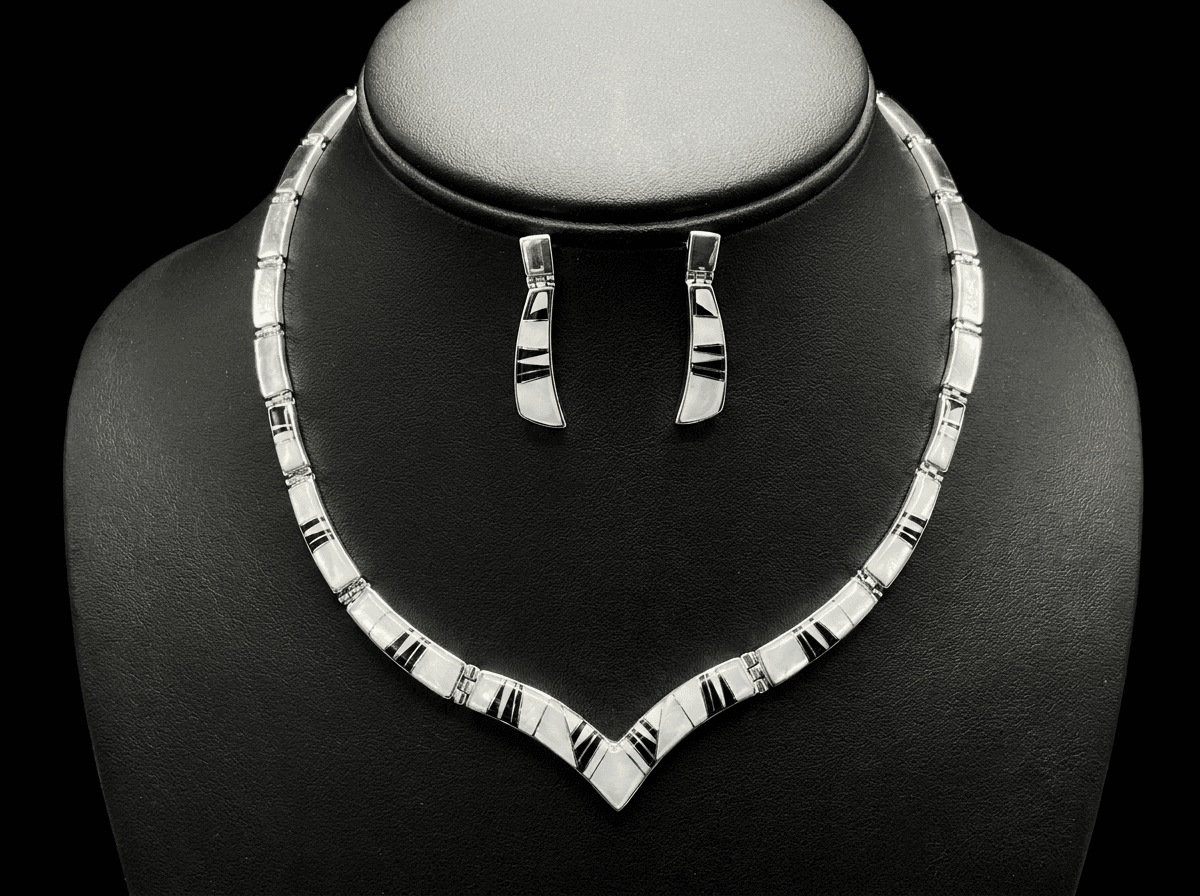
$3,500.00
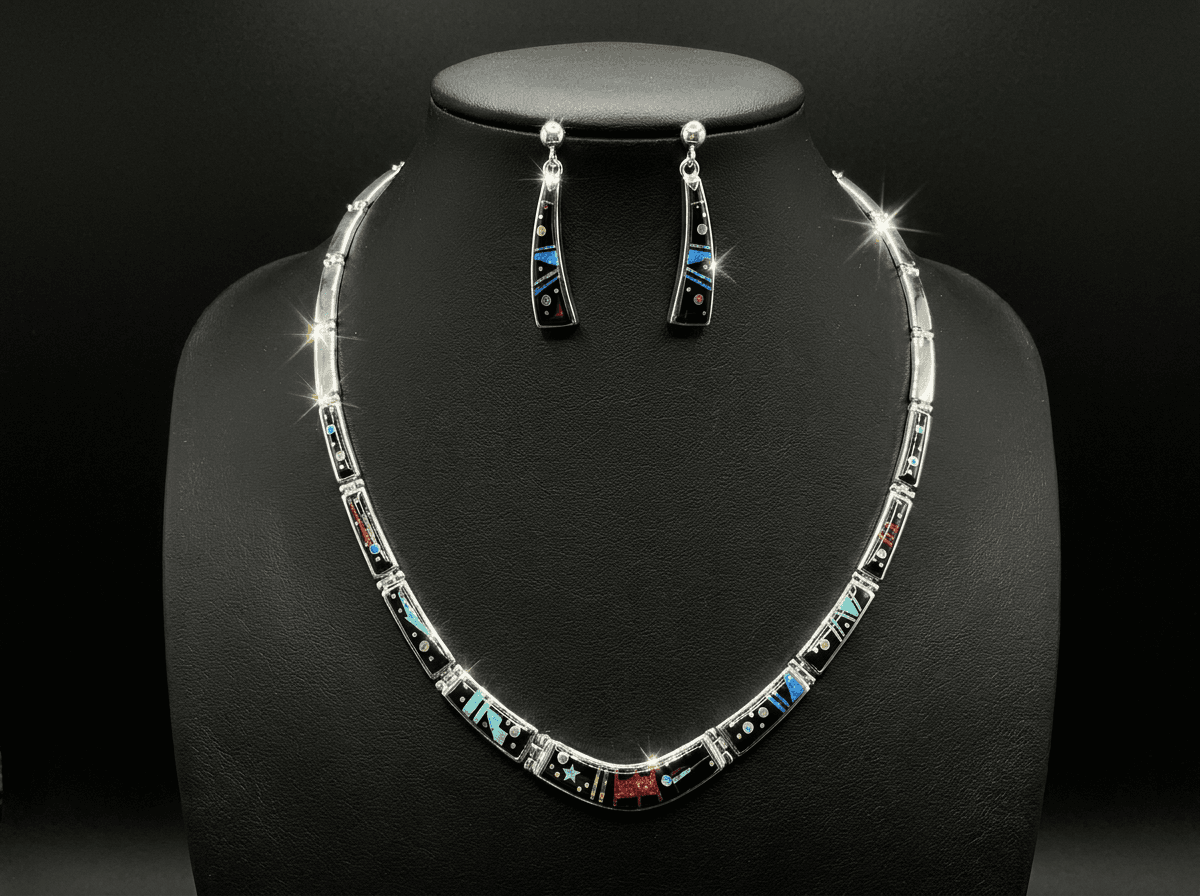
$2,900.00
$255.00
$255.00
$359.00
$499.00