Learn about Gaspeite in Native American–made and Southwestern-style jewelry: its history, geology, and care.
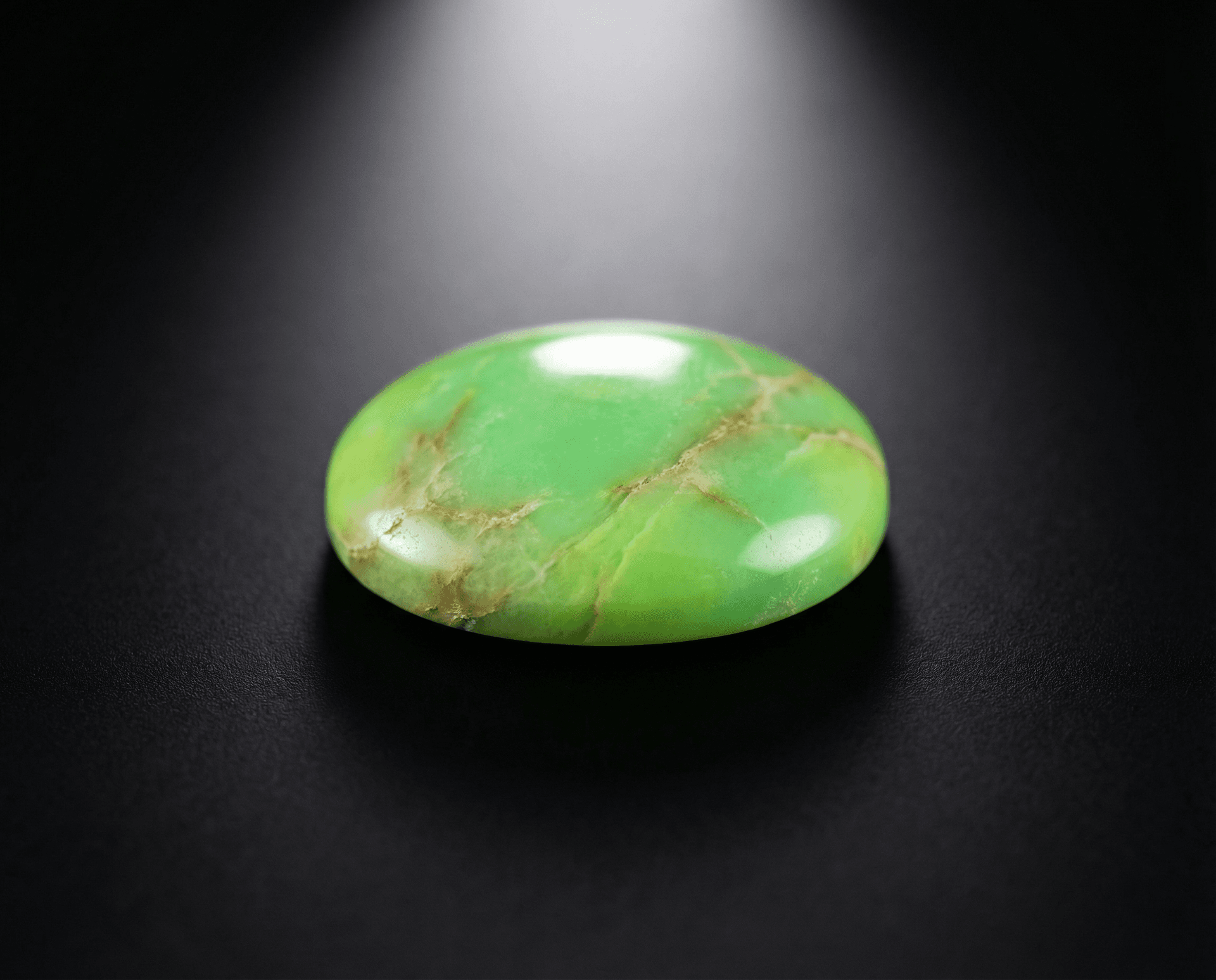
This collection includes Native American–made and Southwestern-style pieces; each piece's own page states its origin where it is known.
HistoryGaspeite takes its name from the Gaspé Peninsula of Quebec, where it was first identified and described in the 1960s. Jewelry-grade material, however, comes almost entirely from the nickel country of Western Australia — the Widgiemooltha and 3 Mile Hill areas near Kalgoorlie — where it is recovered in small quantities from nickel deposits.
Its scarcity kept it out of the trade until recent decades. Southwestern artisans embraced it as a vivid green alternative to turquoise, and because supply has always been limited, fine gaspeite is treated as a premium accent rather than a staple.
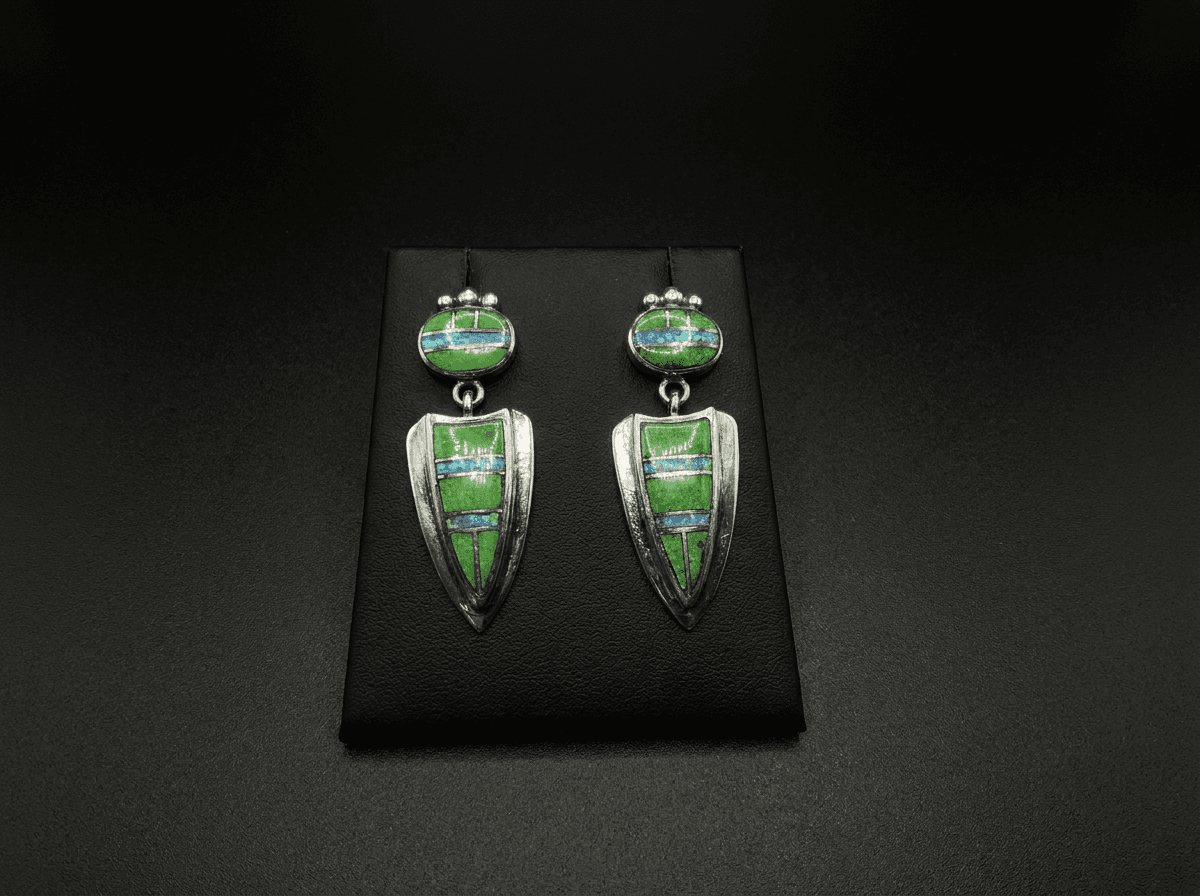
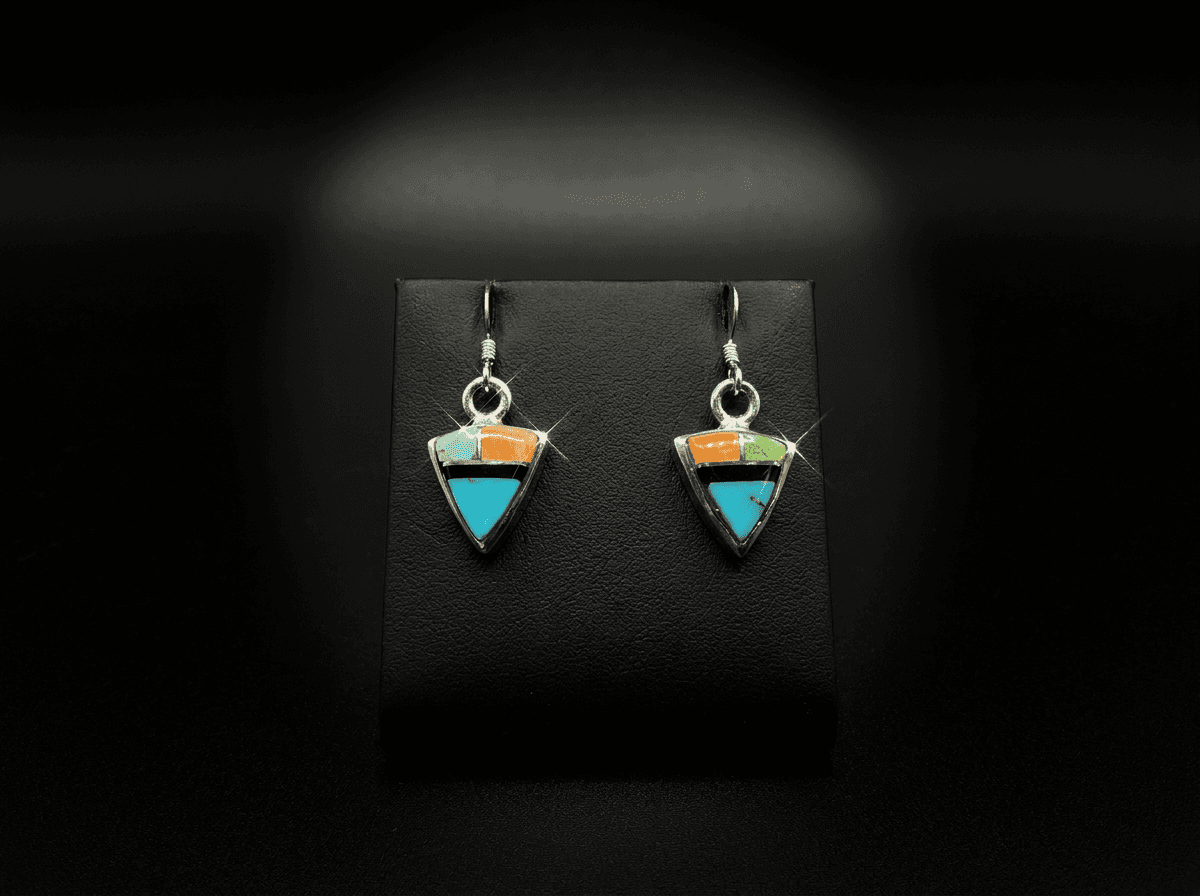
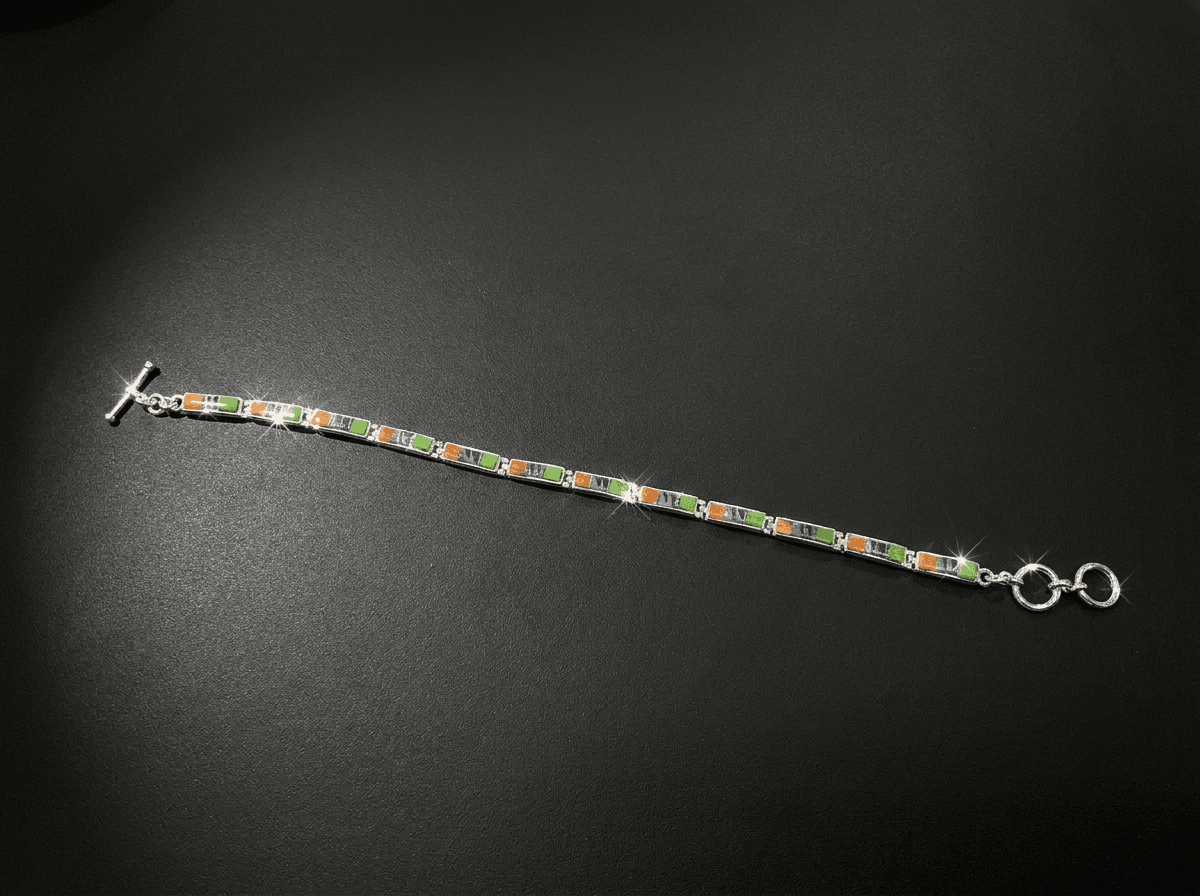
In contemporary Navajo and Zuni work, gaspeite is set as a feature stone or cut into inlay where its yellow-green flares against turquoise, coral, and sterling. Artists use it sparingly and deliberately — a single bright stone in a cluster, or a band of green in a channel-inlay composition — precisely because its color is so uncommon. Its arrival is a clear example of how Southwestern silversmiths continually adopt new materials into established forms.
Gaspeite is a nickel carbonate, and it is that nickel content — not dye or treatment — that produces its characteristic bright apple- to yellow-green. It forms in the weathered, oxidized zones above nickel sulfide deposits, usually carrying a brown or tan host-rock matrix that frames the green.
At Mohs 4.5 to 5 it is moderately soft, and genuinely fine, hard material is scarce, which is why good gaspeite commands attention. Softer pieces are sometimes stabilized so they can be cut and worn reliably.
Gaspeite is a carbonate and reacts to acids, so keep it away from cleaners, cosmetics, perfume, and moisture. Wipe it with a soft, dry cloth rather than any chemical solution, put jewelry on after lotion and fragrance, and store each piece separately to protect both the stone and the surrounding silver.
This collection includes Native American–made and Southwestern-style pieces; each piece's own page states its origin where it is known.
$225.00
$225.00
$359.00

$155.00

$255.00

$325.00

$615.00

$205.00