Learn about Tiger Eye in Native American–made and Southwestern-style jewelry: its history, geology, and care.
This collection includes Native American–made and Southwestern-style pieces; each piece's own page states its origin where it is known.
HistoryTiger eye has been cut and admired since antiquity, once believed to carry the watchful protection its name suggests. Nearly all jewelry material comes from the Northern Cape of South Africa, where it is mined in quantity, with smaller sources in Western Australia.
Southwestern silversmiths adopted it for its rich color and shifting shimmer — a warm, golden complement to silver in both classic and contemporary pieces. Durable and affordable, it became a dependable choice for jewelry meant to be worn daily rather than reserved for ceremony.
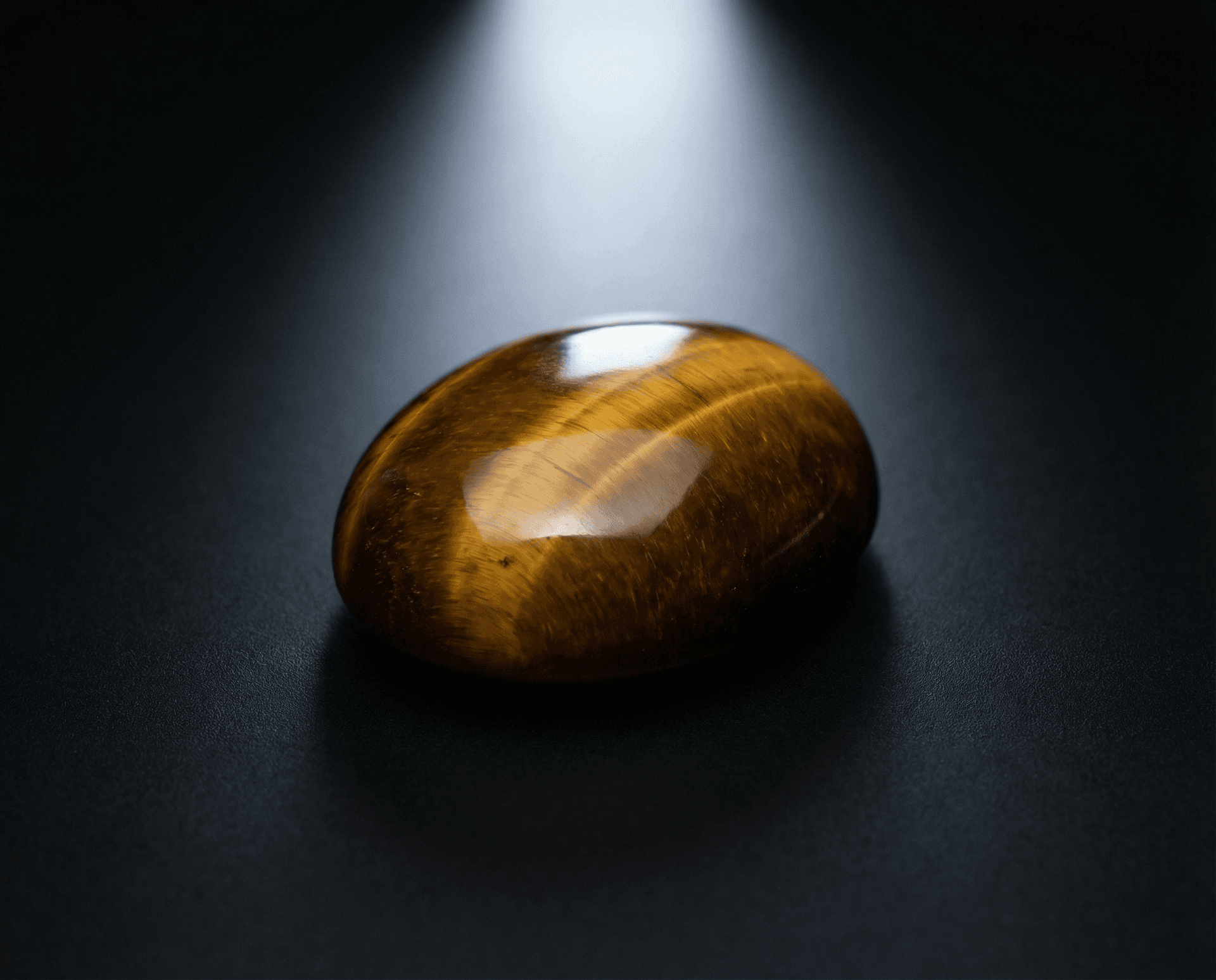
Tiger eye's warm glow makes it a favorite for rings, cuffs, and pendants, where its moving band of light becomes the focal point of the setting. Its earthy gold reads beautifully against sterling and pairs naturally with warmer materials like spiny oyster and coral. Cut as cabochons and oriented so the chatoyant streak runs true, it gives a piece quiet, living movement.
Tiger eye forms when fibrous crocidolite is gradually replaced by silica, a process that preserves the parallel fiber structure of the original mineral inside solid quartz. Light reflecting off those aligned fibers produces chatoyancy — the moving cat's-eye band — in golden, amber, and brown tones, with bluish hawk's-eye and reddish ox-eye as related varieties.
At Mohs 7 it is as hard as quartz, takes a bright glassy polish, and resists the scratches of daily wear better than most softer Southwestern stones.
Tiger eye is durable and low-maintenance, but it still rewards basic care: keep it from harsh chemicals, wipe it clean with a soft cloth, and store it separately so it does not scratch softer stones or the silver around it.
This collection includes Native American–made and Southwestern-style pieces; each piece's own page states its origin where it is known.
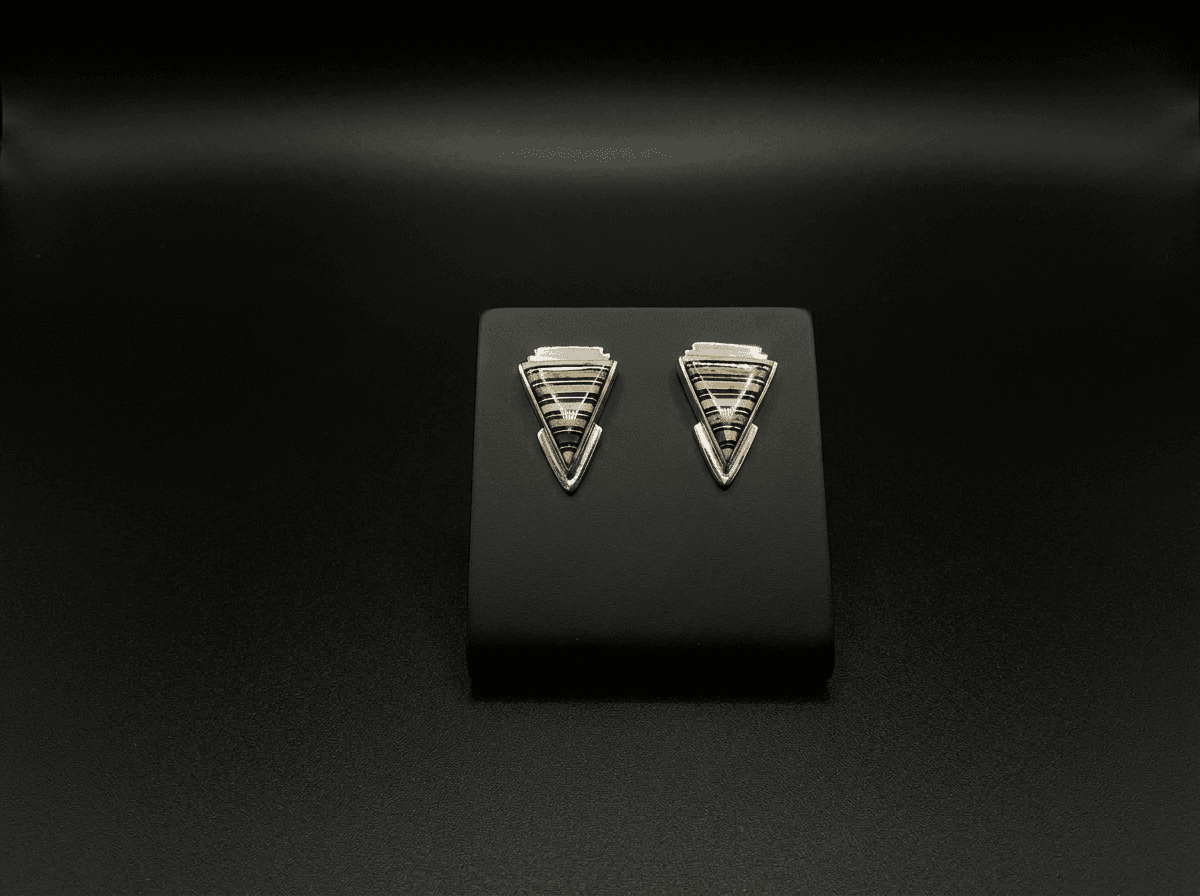
$225.00
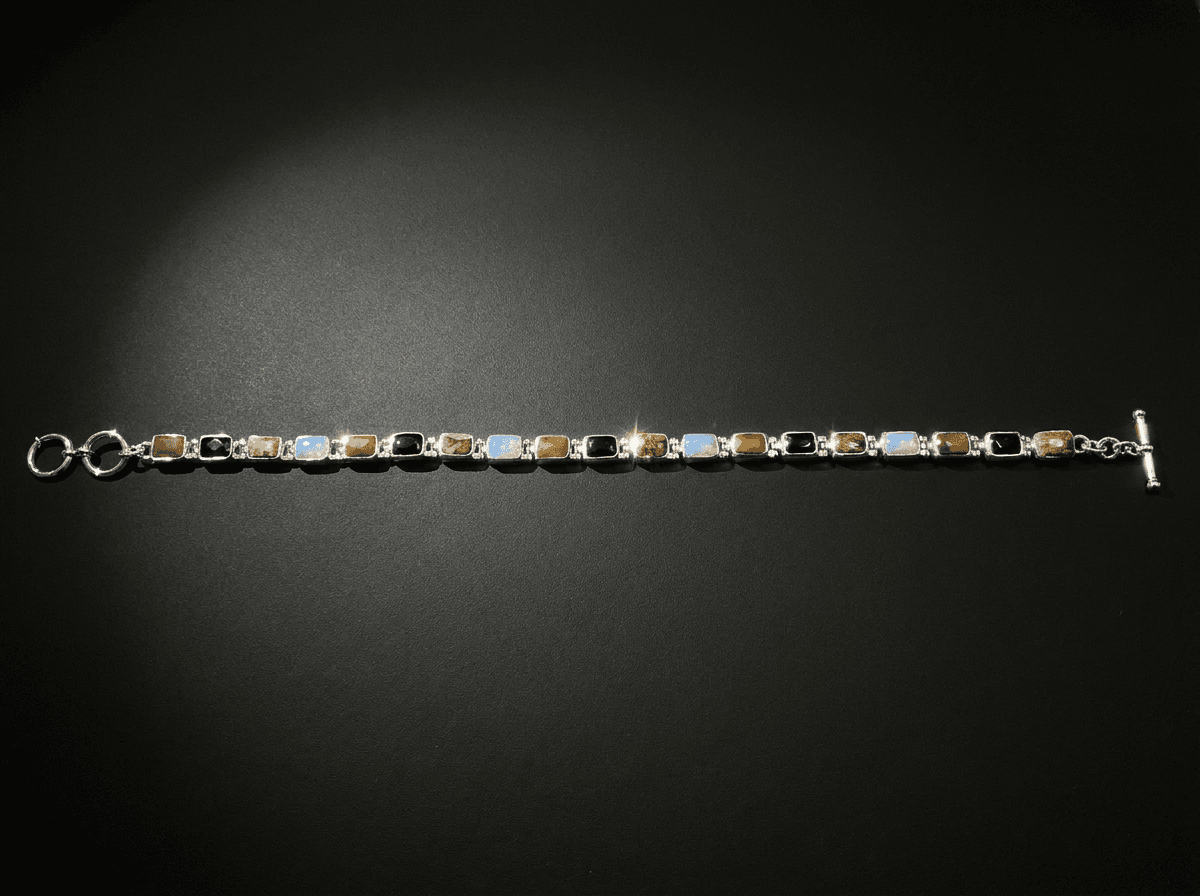
$359.00

$499.00

$465.00

$179.00

$315.00

$415.00

$510.00