Learn about Kingman Turquoise in Native American–made and Southwestern-style jewelry: its history, geology, and care.
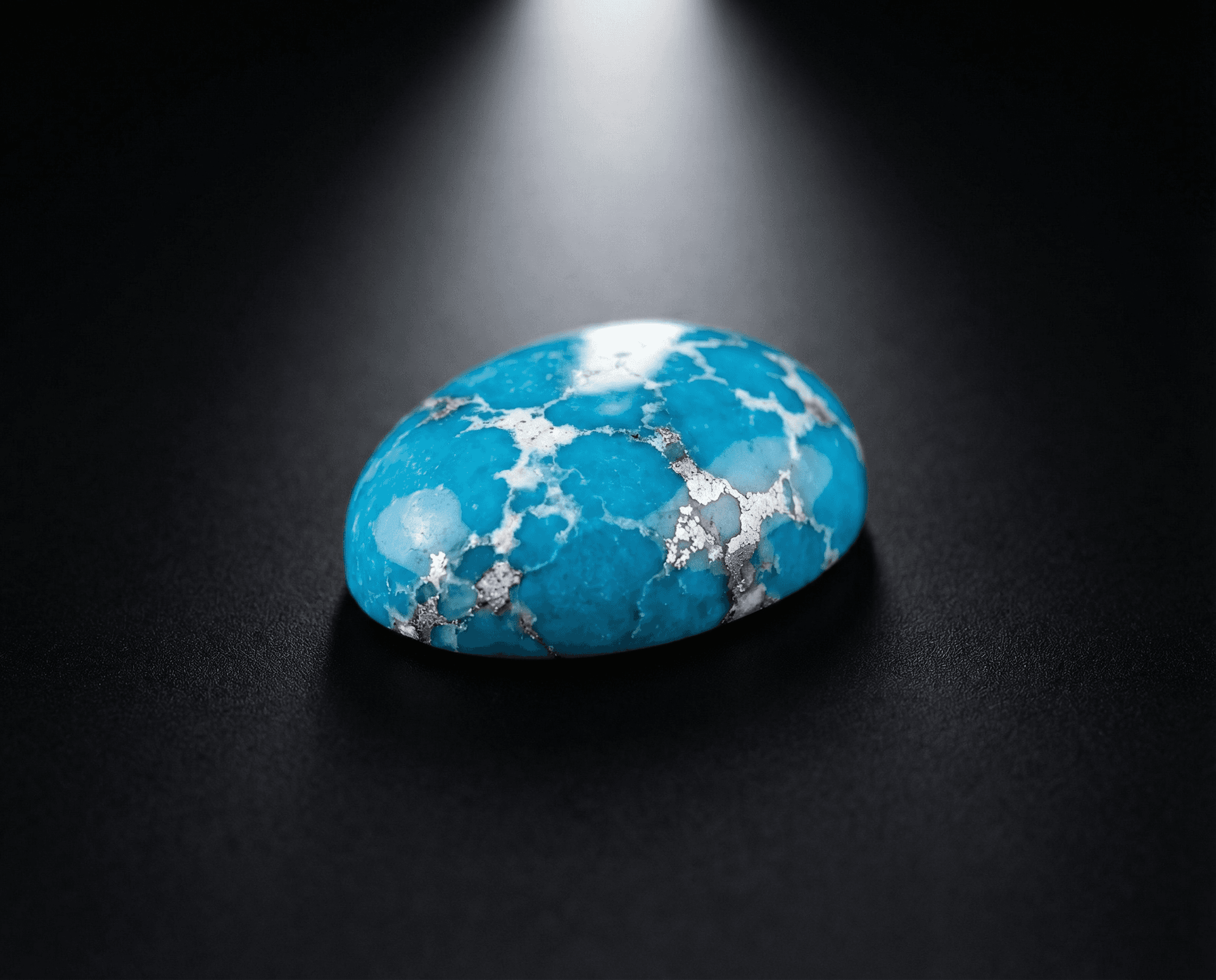
This collection includes Native American–made and Southwestern-style pieces; each piece's own page states its origin where it is known.
HistoryTurquoise has been worked in the Kingman area since pre-Columbian times, when Hohokam and Ancestral Puebloan peoples mined and traded it across the region. The modern Mineral Park mine, on Ithaca Peak near Kingman, grew into one of the largest turquoise producers in North America during the twentieth century.
Unlike many famous mines that have closed, Kingman still produces. The Colbaugh family has worked the deposit for generations, which means high-quality Kingman remains available to today's artists in a way that rarer mines do not.
For Navajo, Zuni, and Hopi silversmiths, that steady supply made Kingman a stone of choice — consistent in color, beautiful in both gem-grade and natural-matrix forms, and abundant enough to build matched sets and large statement pieces.
Like all Southwestern turquoise, Kingman is regarded as a sacred, protective stone, and its abundance placed it at the center of the silver-and-turquoise tradition that flourished after the late 1800s.
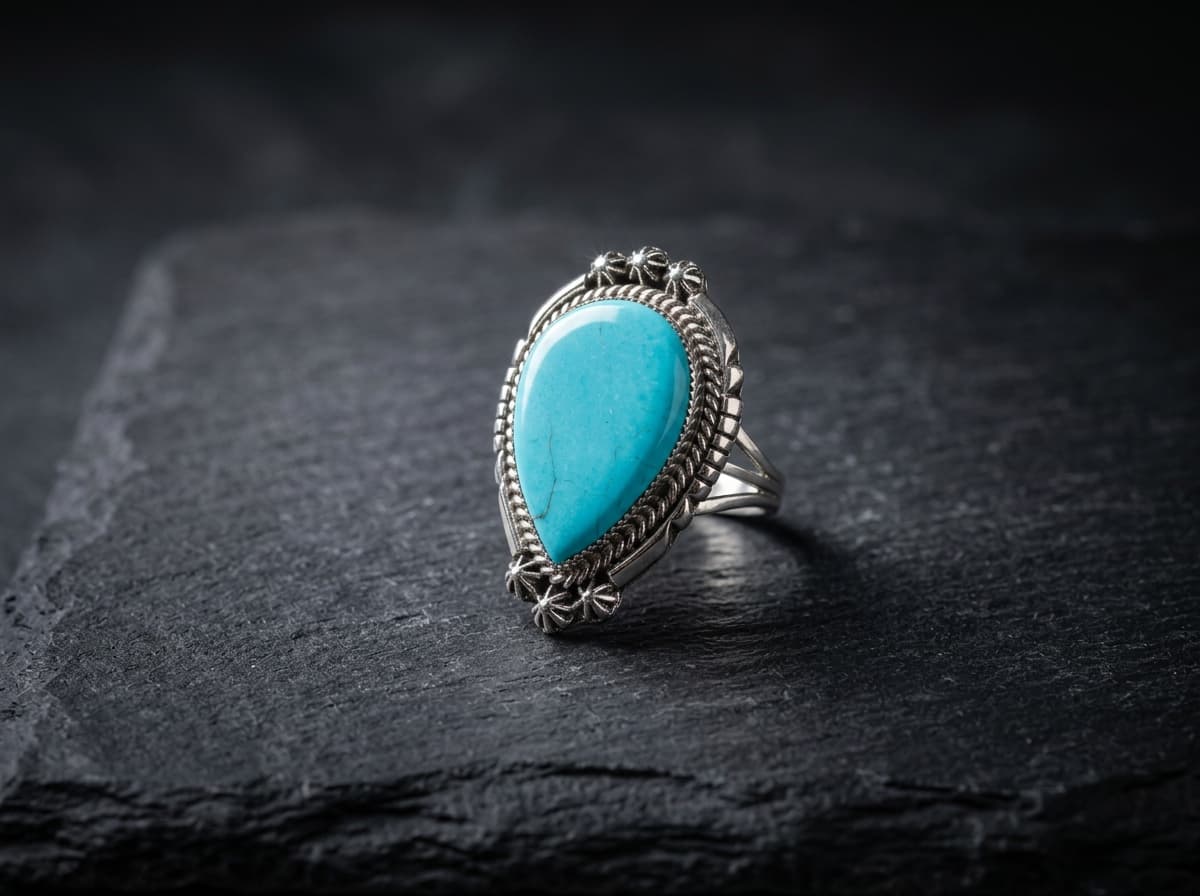
Because it could be had in quantity and in reliable color, Kingman appears in every major form of Native jewelry — cluster and row bracelets, squash blossom necklaces, naja pendants, rings, and bolo ties. Its dependability let smiths develop the matched cluster work and bold settings many people picture when they think of classic Southwestern jewelry.
Kingman turquoise is recovered as a by-product of copper mining in the Mineral Park district, where it formed as hydrated copper-aluminum phosphate in the same mineralized rock that hosts the copper.
Value follows color and hardness: the most prized Kingman shows a vivid, even blue, while its matrix — webbed black, warm brown, or glittering pyrite "fool's gold" — gives each stone its character. High-grade natural Kingman is hard enough to take a fine polish untreated; softer material is stabilized so it can be cut and worn dependably.
Treat Kingman gently, as you would any turquoise. Keep it away from water, perfume, lotion, sunscreen, and household chemicals, and avoid long exposure to direct sun, all of which can dull or discolor the stone over time.
Remove turquoise jewelry before swimming, bathing, or strenuous activity. Wipe with a soft, dry cloth and store each piece on its own so harder gems and silver do not scratch the surface.
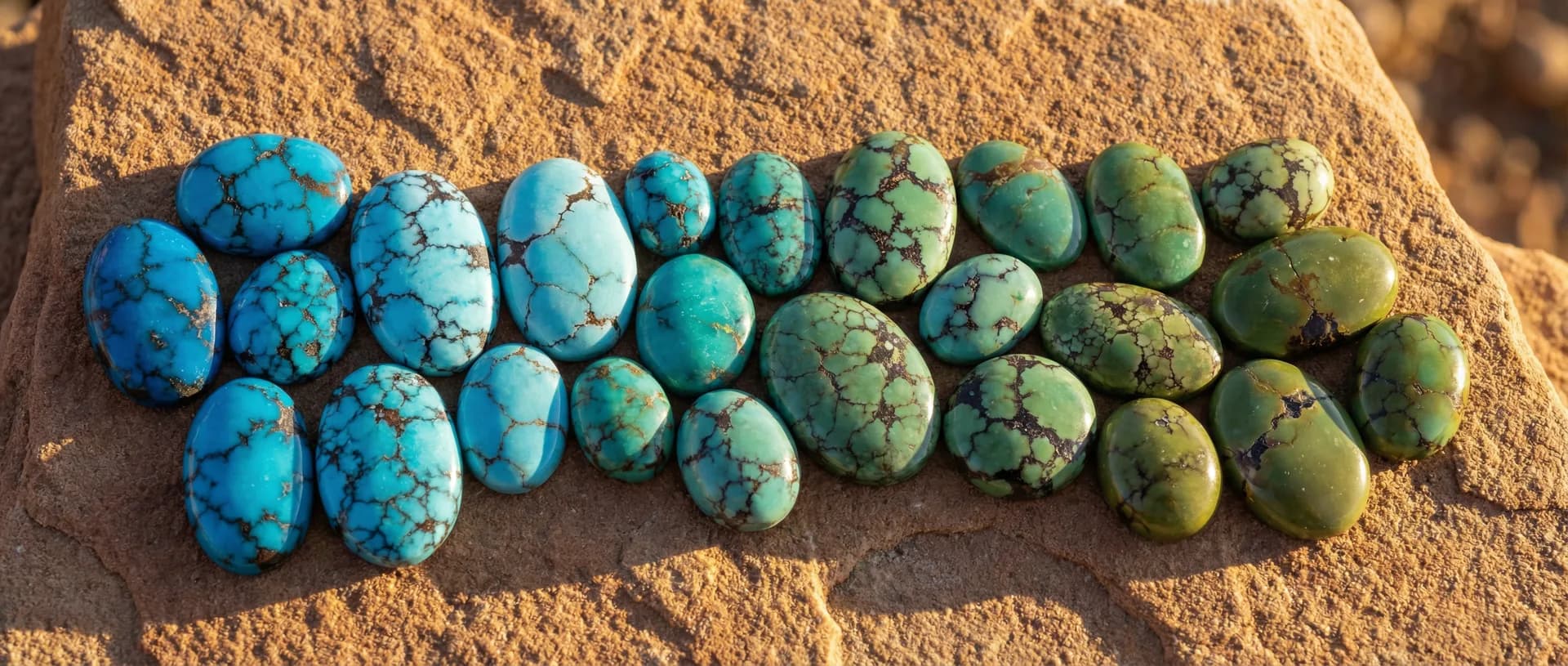
The Kingman mine in Mohave County, Arizona has operated continuously since the late nineteenth century, producing turquoise in a remarkable color range from sky blue to deep blue-green, with its spider-web matrix specimens ranking among the most valued turquoise in the world.
Read Article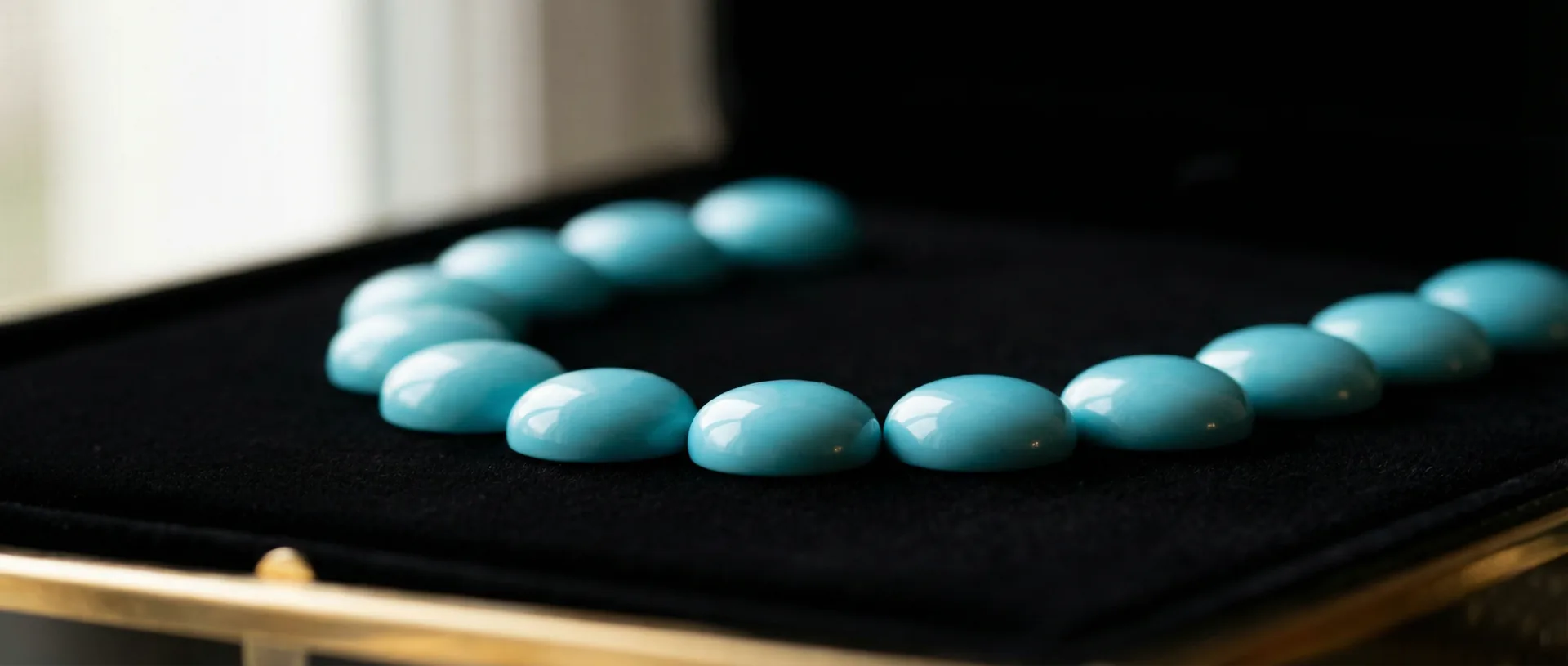
From its discovery in the copper-rich hills near Globe, Arizona in the 1920s to the mine's permanent closure in 2012, Sleeping Beauty turquoise has undergone a transformation from abundant commercial stone to one of the most coveted minerals in the gemological world, with no new material produced since the final extraction.
Read ArticleThis collection includes Native American–made and Southwestern-style pieces; each piece's own page states its origin where it is known.
$395.00
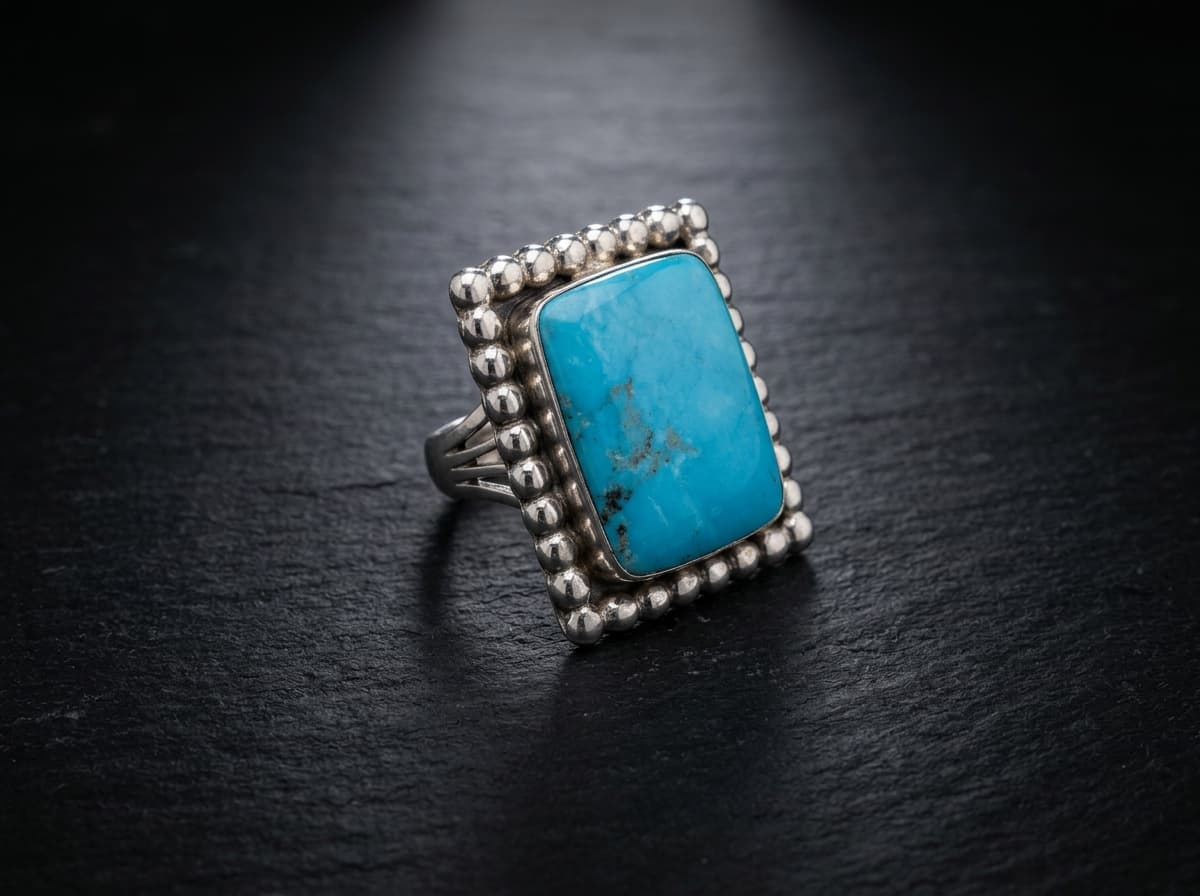
$450.00
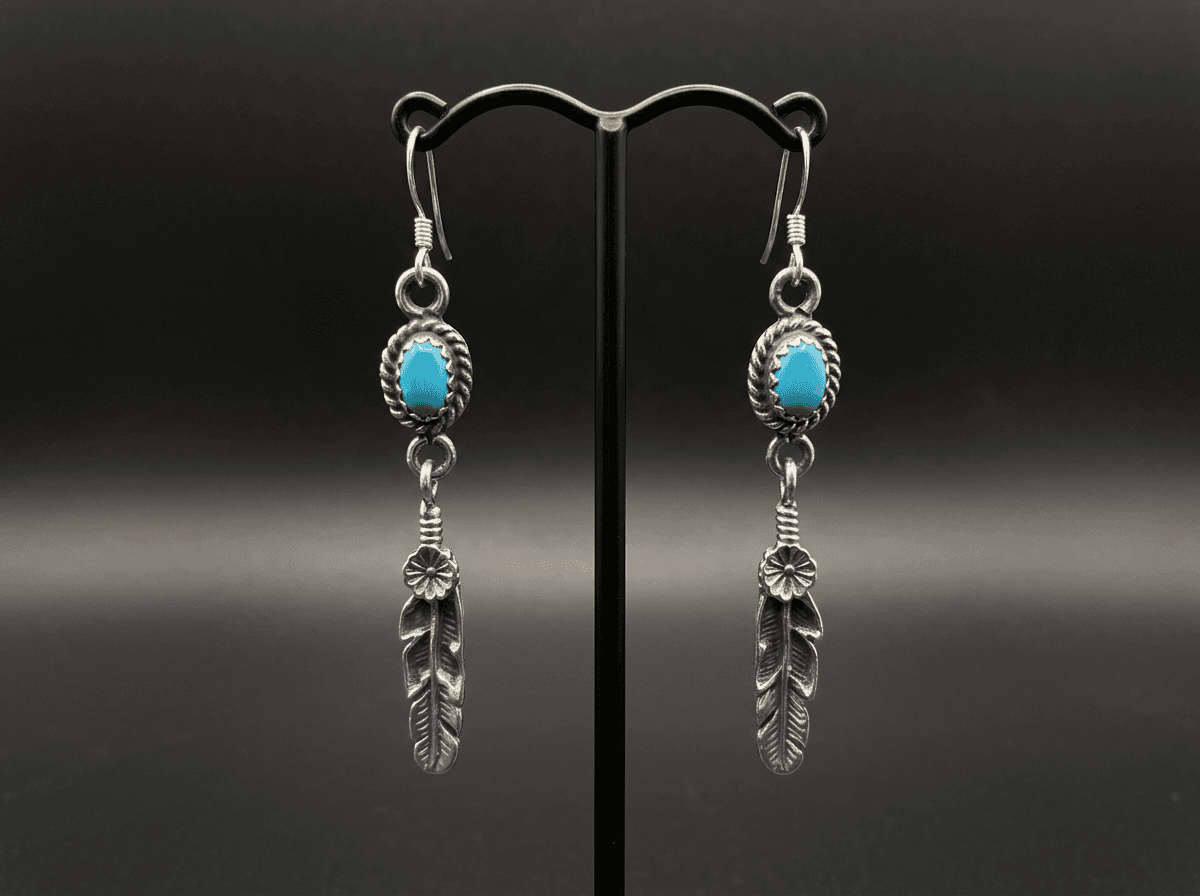
$180.00
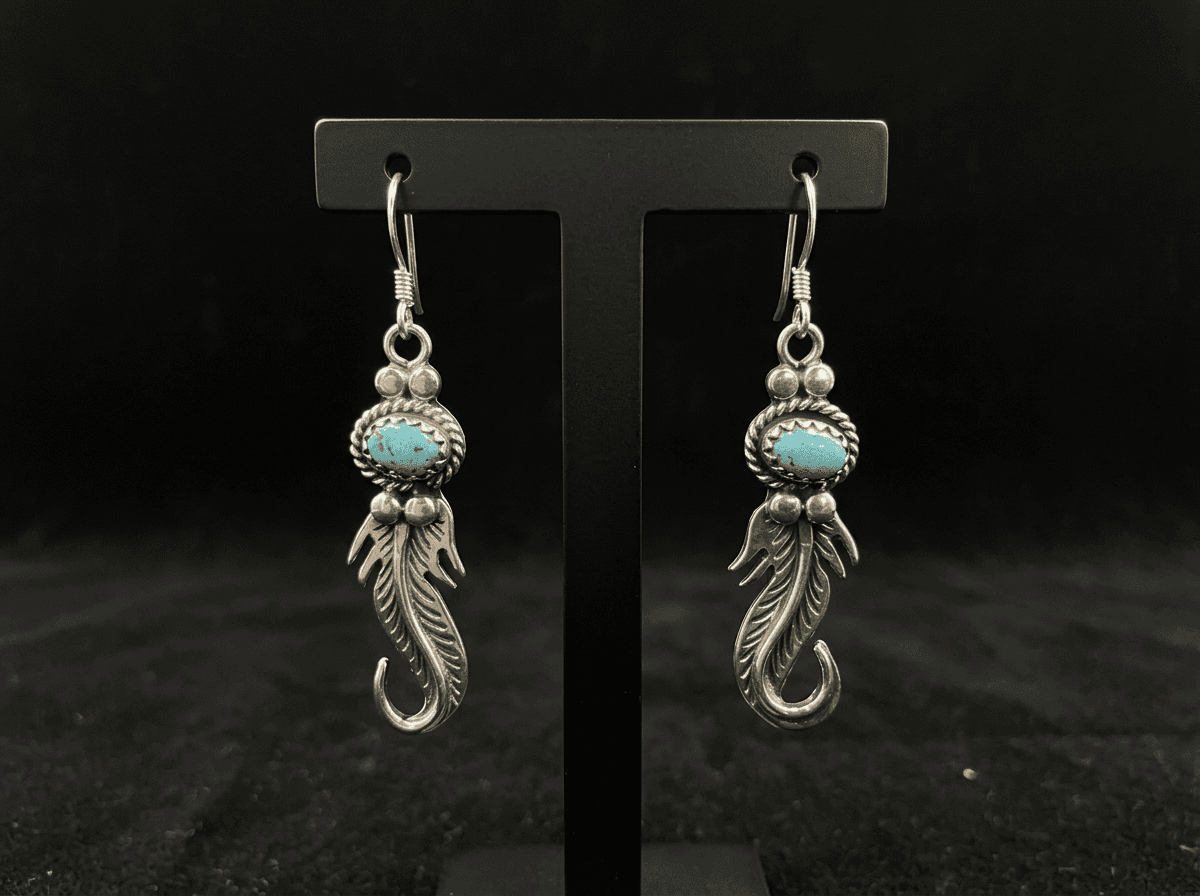
$139.00
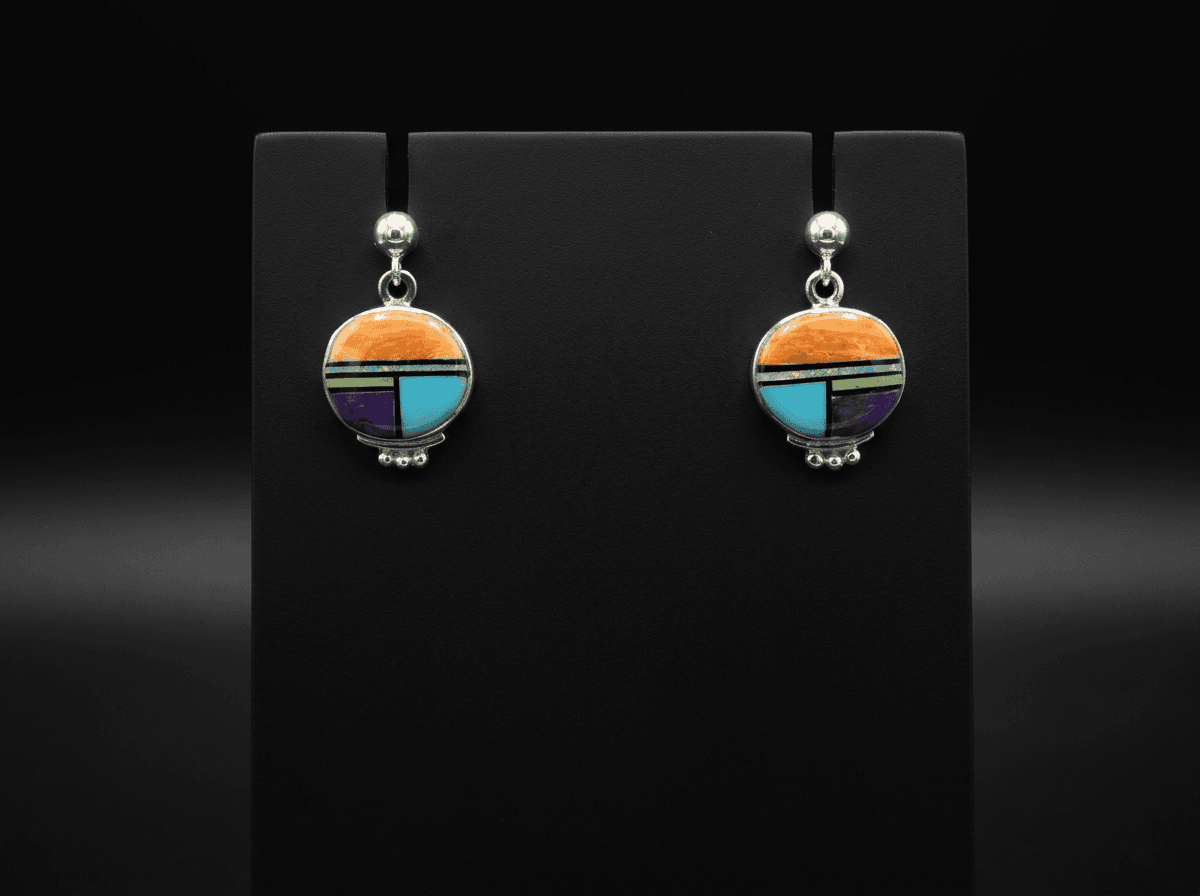
$295.00
$245.00
$125.00
$165.00