Learn about Opal in Native American–made and Southwestern-style jewelry: its history, geology, and care.
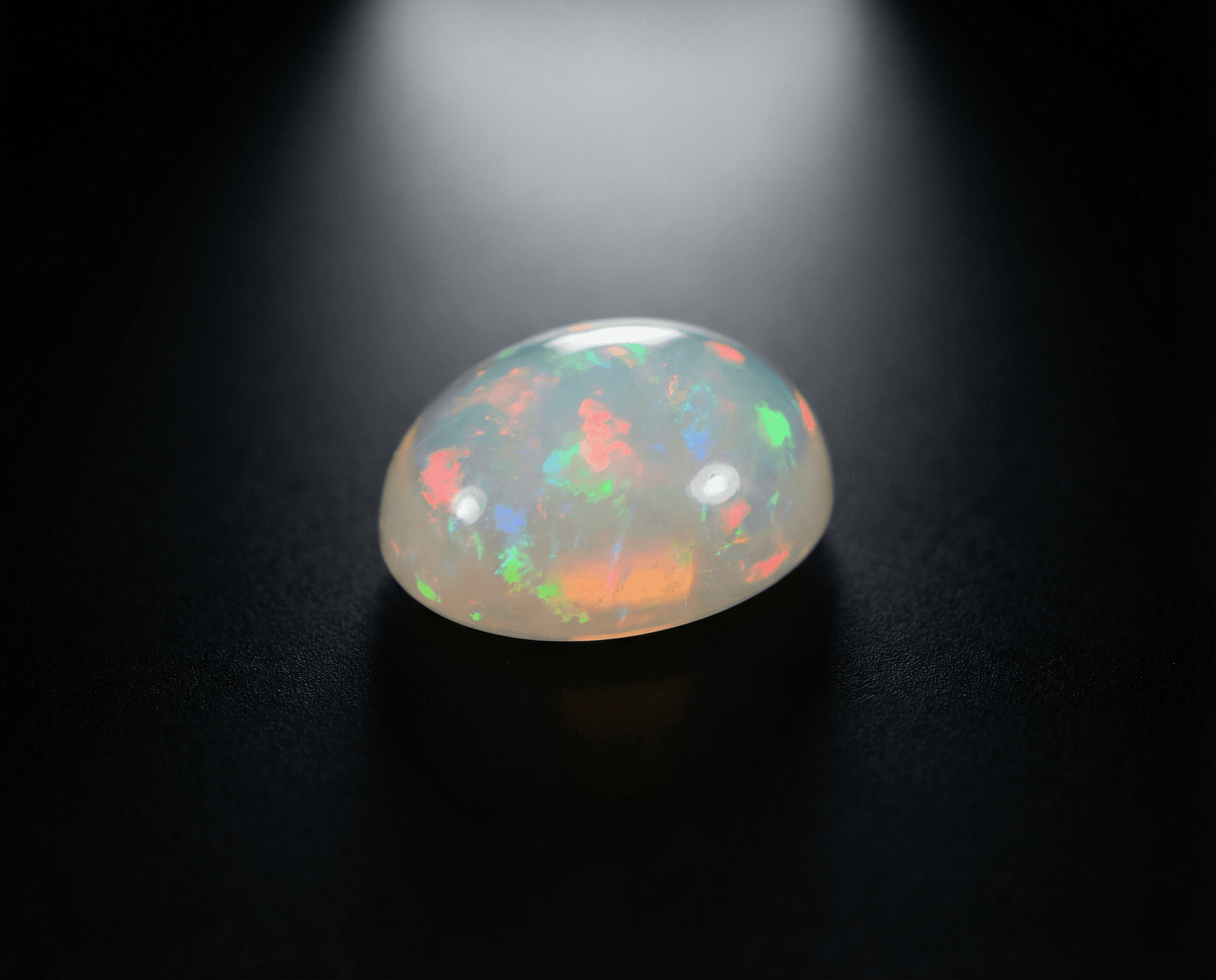
This collection includes Native American–made and Southwestern-style pieces; each piece's own page states its origin where it is known.
HistoryOpal is not a traditional Southwestern stone, but modern Native silversmiths — particularly in inlay and Hopi-influenced overlay — have embraced it for the vivid, ever-changing color it adds. Australia has been the world's primary source since the late nineteenth century, with the fields of Coober Pedy and Lightning Ridge supplying most fine material.
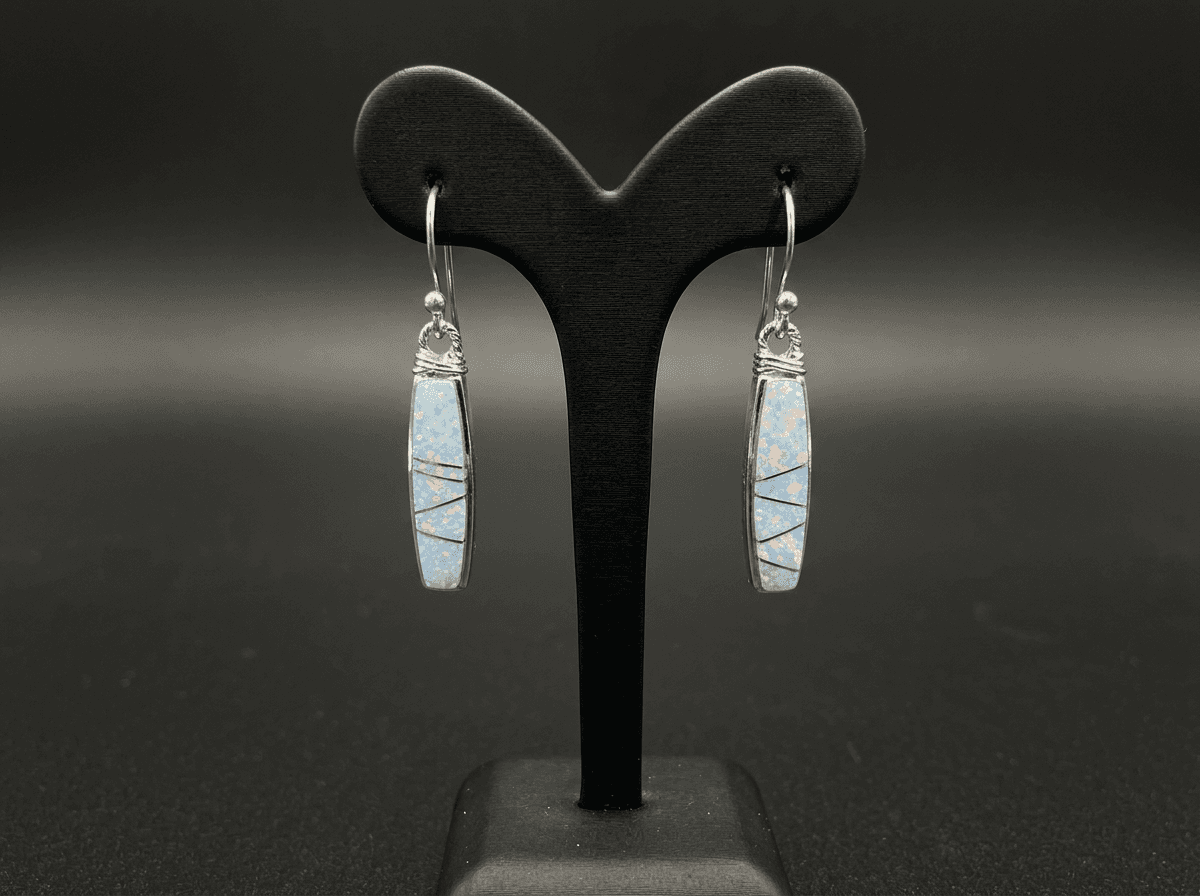
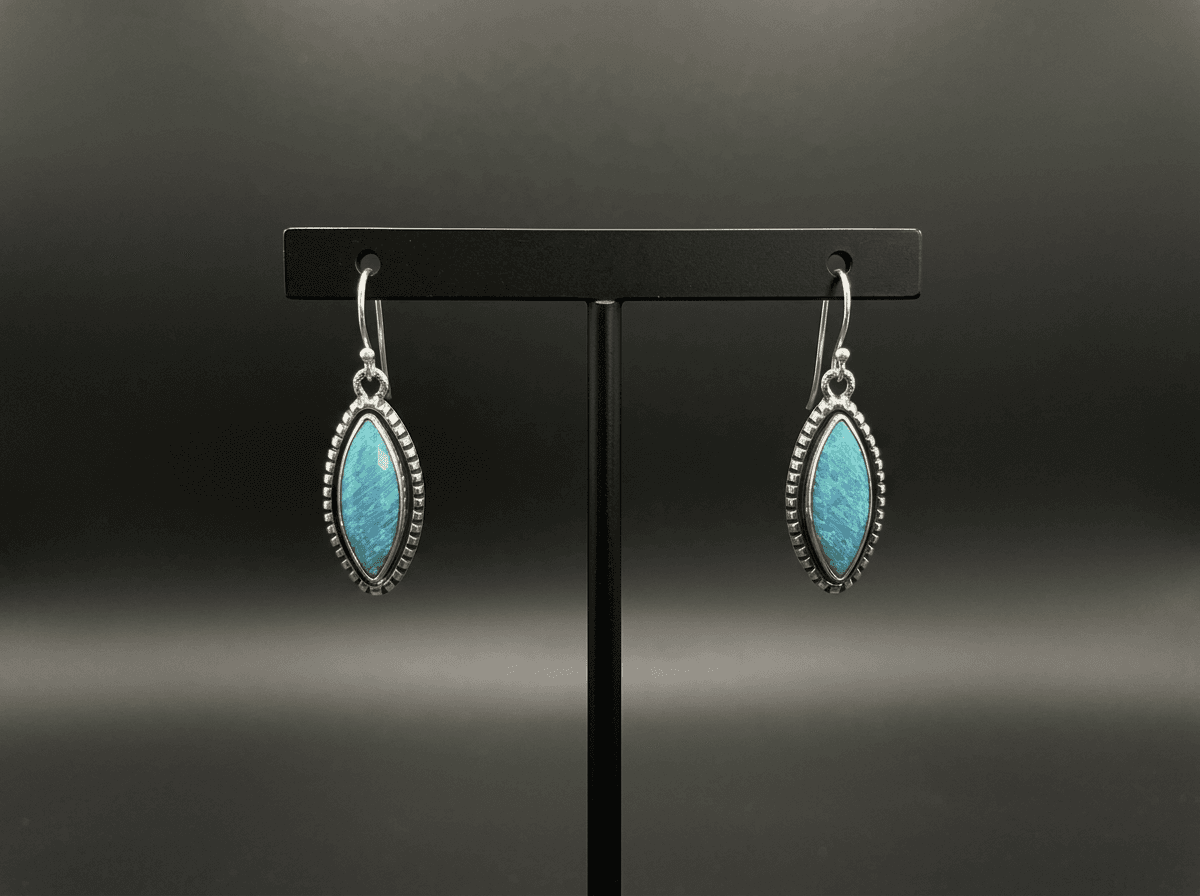
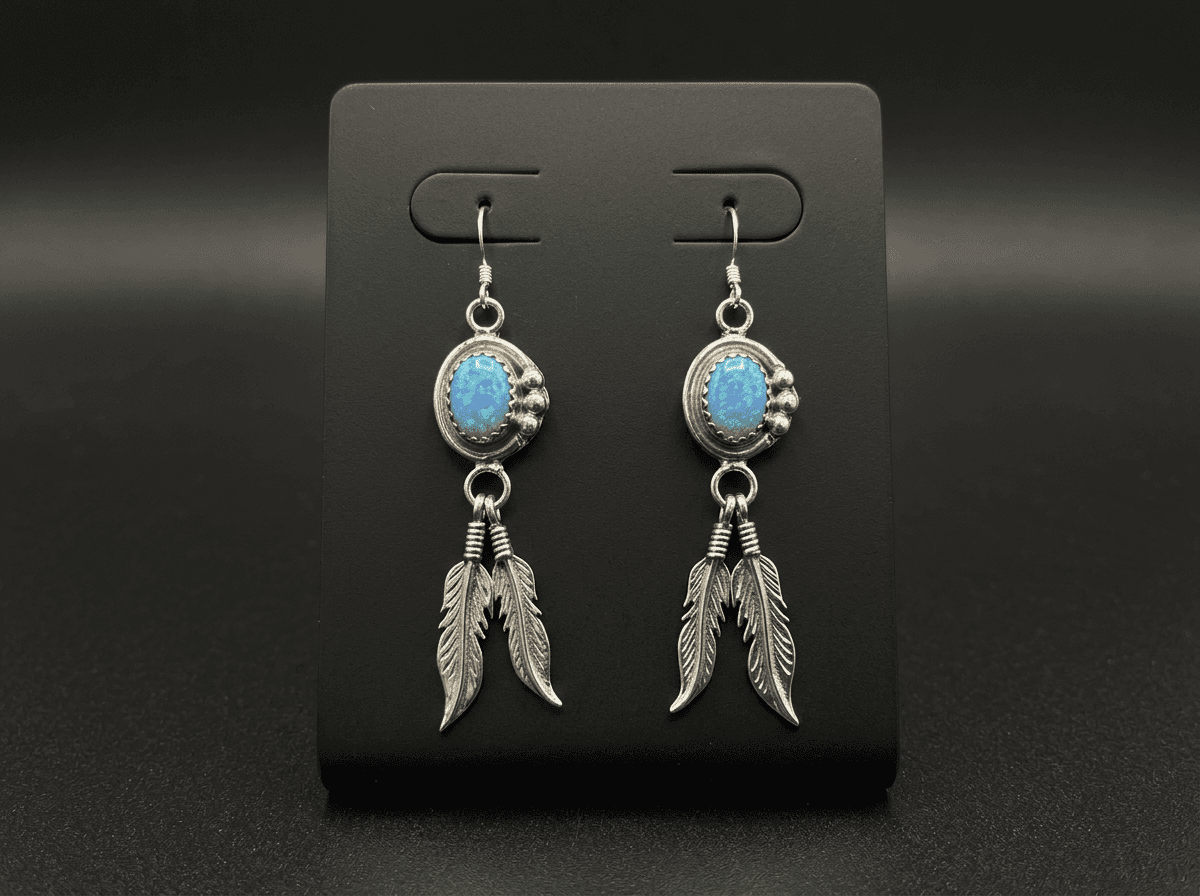
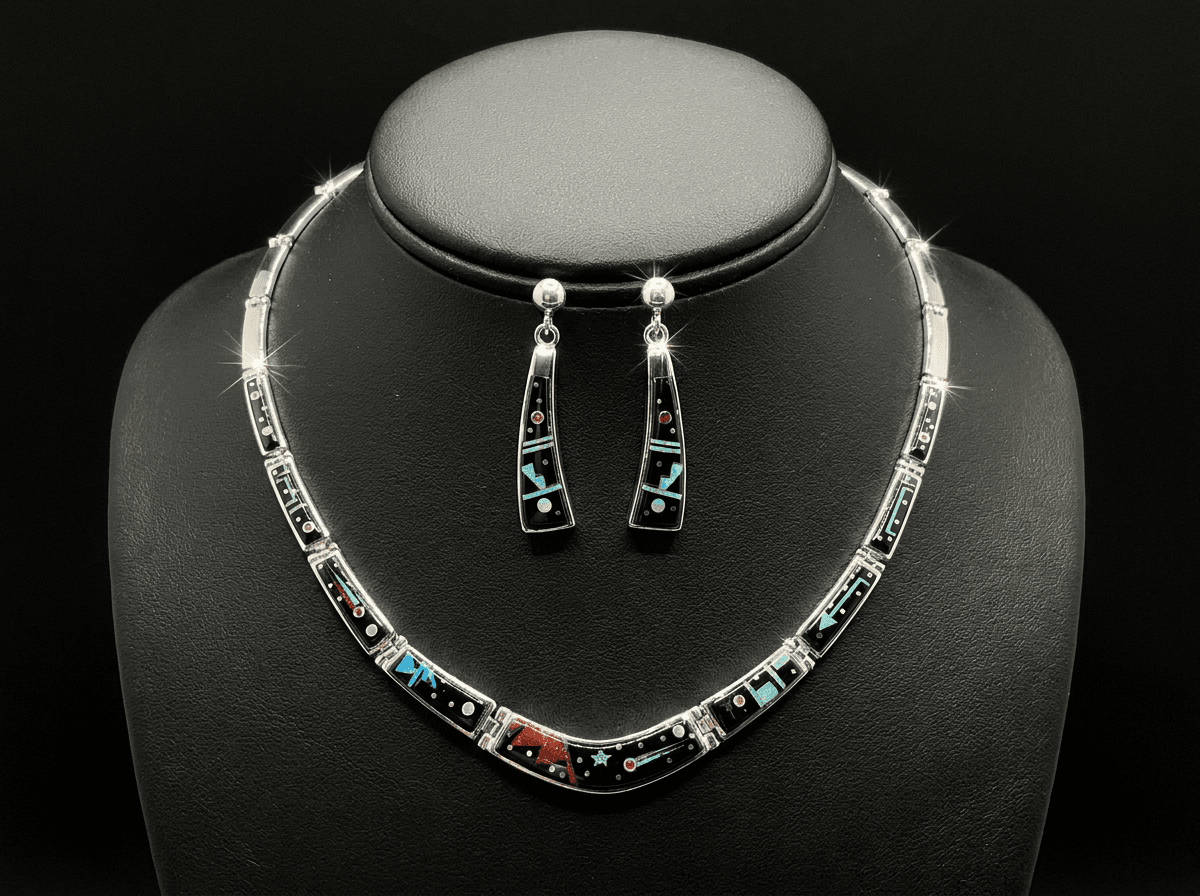
In exacting channel inlay, consistent lab-created opal is often used because matched color and durability matter when many small pieces must align, while natural opal appears in finer, one-of-a-kind pieces.
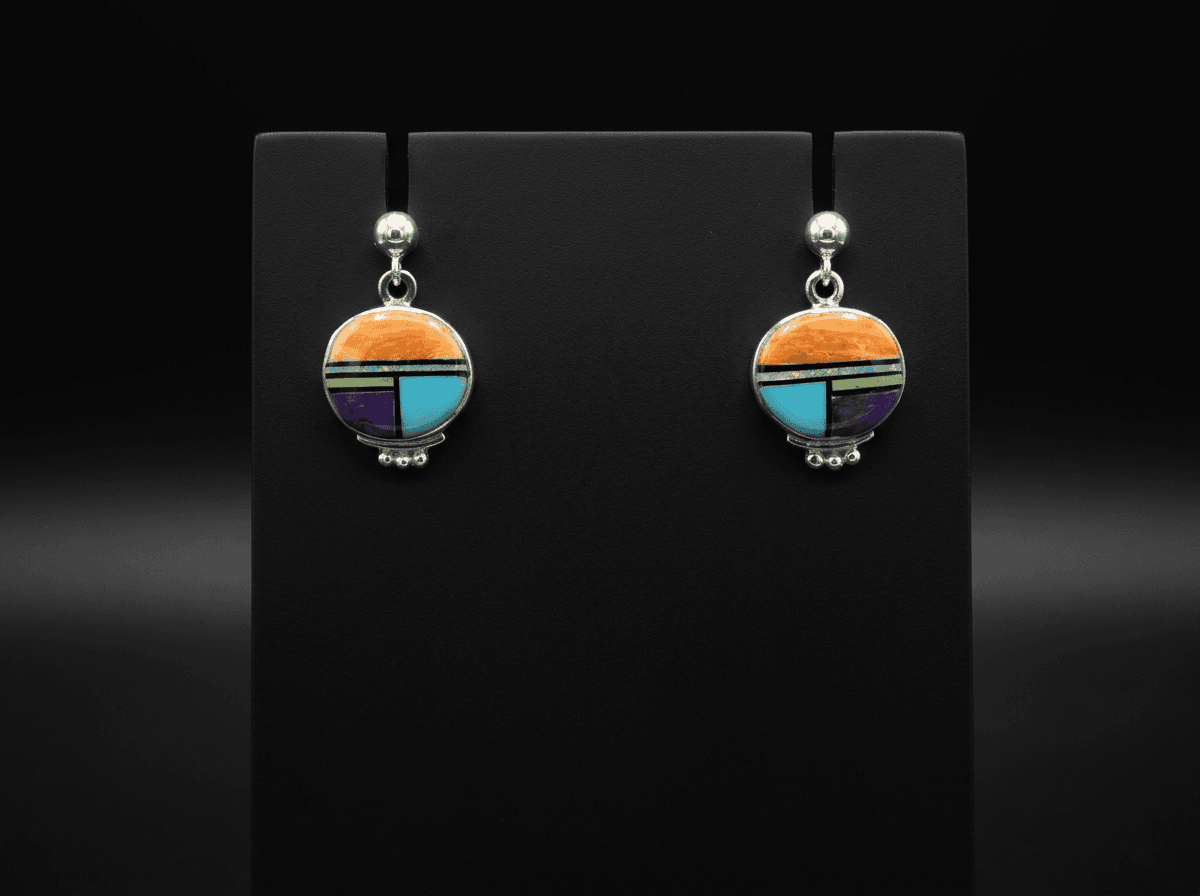
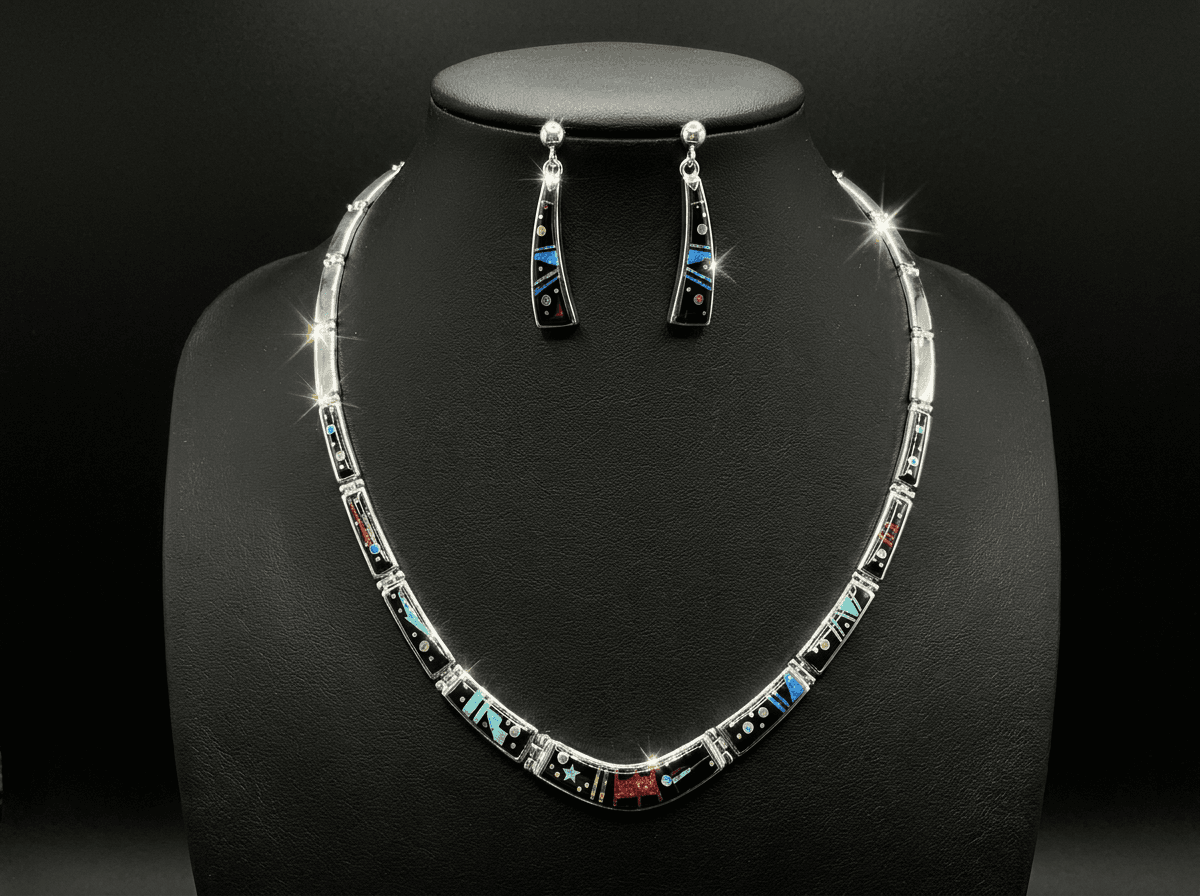
In contemporary inlay, opal supplies the flashes of green, blue, and fire that animate a composition, frequently set among turquoise and shell. Its modern adoption reflects the ongoing innovation of Native artists who work new materials into traditional techniques, using opal's restless color where they want a piece to catch and hold the light. It is most often reserved for accents and focal stones rather than broad fields of color.
Opal is a hydrated silica — silica spheres packed with a small amount of water rather than a crystalline mineral. Its famous play of color is caused by light diffracting through an orderly array of those microscopic spheres; the size and regularity of the array determine which colors flash and how vividly.
Because it holds water within its structure, natural opal can be sensitive to heat and rapid drying. At Mohs 5.5 to 6.5 it is moderately durable, and it is valued by the intensity, range, and pattern of its color play.
Opal dislikes heat, dryness, and sudden temperature change, any of which can cause fine cracking known as crazing. Keep it from chemicals and hard knocks, avoid ultrasonic cleaners, clean gently with a soft, slightly damp cloth, and store it separately — ideally where it will not dry out completely.
This collection includes Native American–made and Southwestern-style pieces; each piece's own page states its origin where it is known.
$295.00
$119.00
$199.00
$195.00
$149.00
$149.00
$2,900.00
$2,900.00