Sleeping Beauty turquoise from Arizona is prized for its pure, even sky-blue color with little or no matrix — the clean, solid blue most people picture when they imagine turquoise. The mine has closed to turquoise.

This collection includes Native American–made and Southwestern-style pieces; each piece's own page states its origin where it is known.
HistoryThe Sleeping Beauty mine sits near Globe, in Gila County, Arizona, on a mountain whose silhouette is said to resemble a sleeping woman. For decades it produced clean, robin's-egg-blue turquoise before the operation refocused on copper and gold and turquoise mining ended.
Its matrix-free stone became especially beloved in Zuni needlepoint and petit-point work and in fine channel inlay, where consistent, calibrated color is essential and even the smallest stones must match. With the source now closed, authentic Sleeping Beauty has become one of the most sought-after American turquoises.
Sleeping Beauty's clean blue made it the go-to stone for the most exacting Zuni lapidary work — the dozens or hundreds of tiny, perfectly matched stones set in a single needlepoint or petit-point piece. It is equally at home in Navajo silverwork, where its pure color sits quietly against bold sterling.
As a protective sky stone, it carries the same significance as other Southwestern turquoise, with the added prestige of a closed mine.
Sleeping Beauty is defined by its uniform, light-to-medium blue and its near-total absence of matrix — the result of unusually clean deposition in the host rock. That purity is exactly what made it ideal for calibrated cabochons and the matched stones of needlepoint and petit-point jewelry.
Most Sleeping Beauty was naturally fairly hard; like nearly all turquoise sold today, some was stabilized for durability. Because supply has ended, even modest stones now command a premium.
Care for Sleeping Beauty as the collectible stone it has become. Keep it away from water, perfume, lotion, sunscreen, and chemicals, and store it apart from harder gems.
Put jewelry on after fragrance, take it off before swimming or bathing, and clean only with a soft, dry cloth.
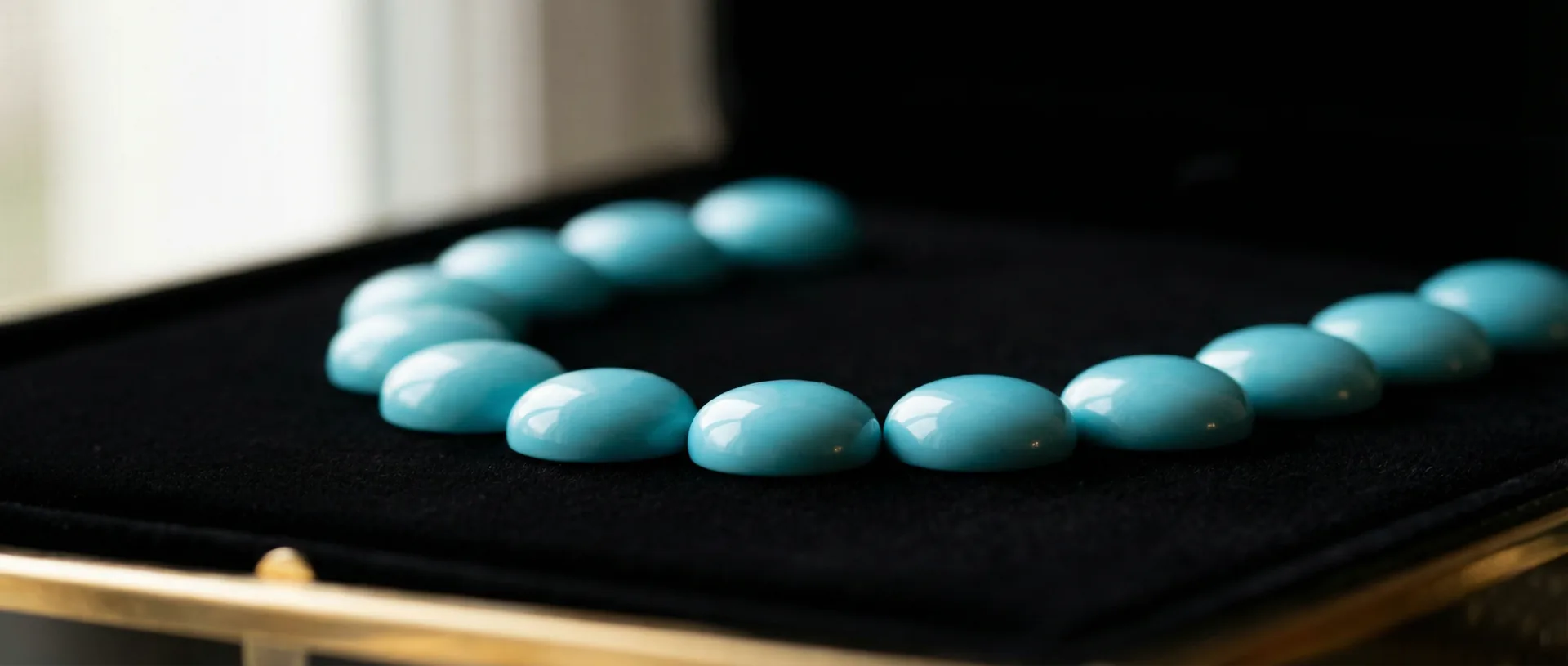
From its discovery in the copper-rich hills near Globe, Arizona in the 1920s to the mine's permanent closure in 2012, Sleeping Beauty turquoise has undergone a transformation from abundant commercial stone to one of the most coveted minerals in the gemological world, with no new material produced since the final extraction.
Read Article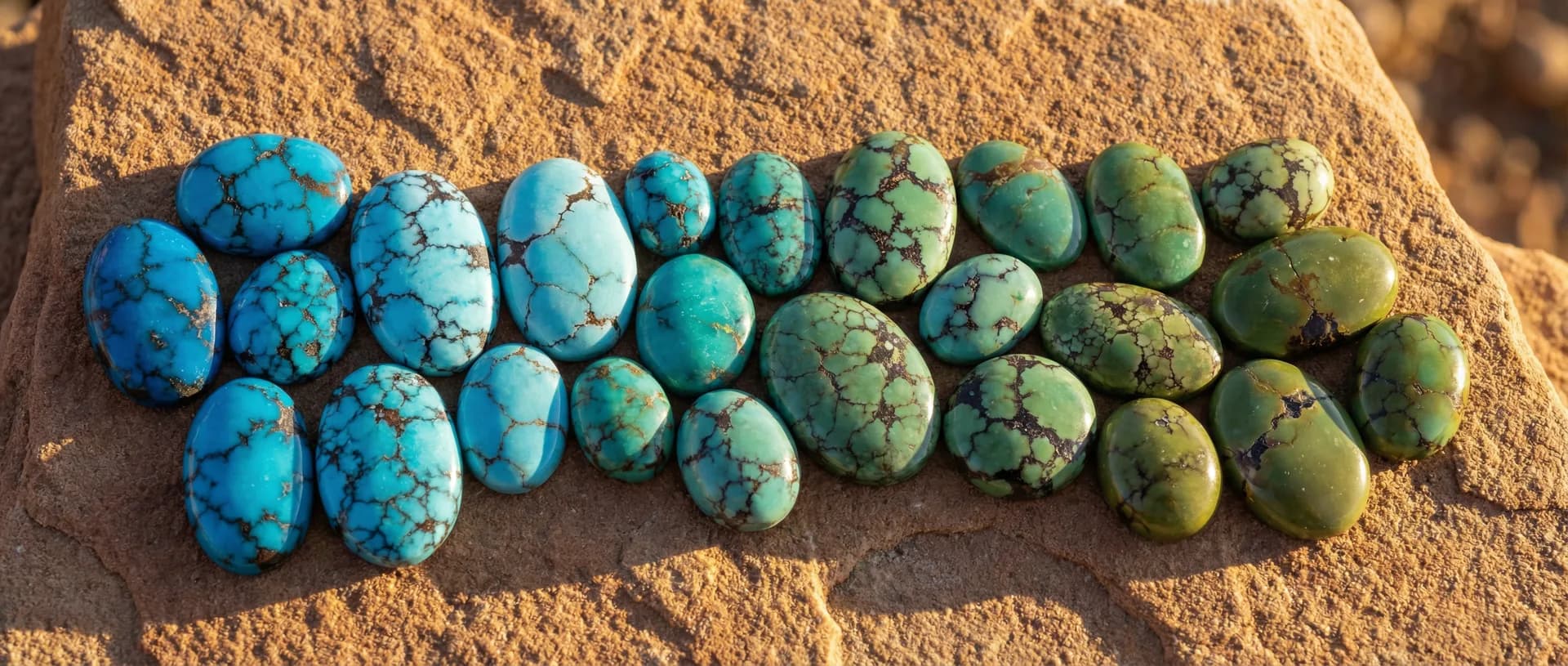
The Kingman mine in Mohave County, Arizona has operated continuously since the late nineteenth century, producing turquoise in a remarkable color range from sky blue to deep blue-green, with its spider-web matrix specimens ranking among the most valued turquoise in the world.
Read ArticleThis collection includes Native American–made and Southwestern-style pieces; each piece's own page states its origin where it is known.

$255.00

$660.00

$585.00

$2,595.00