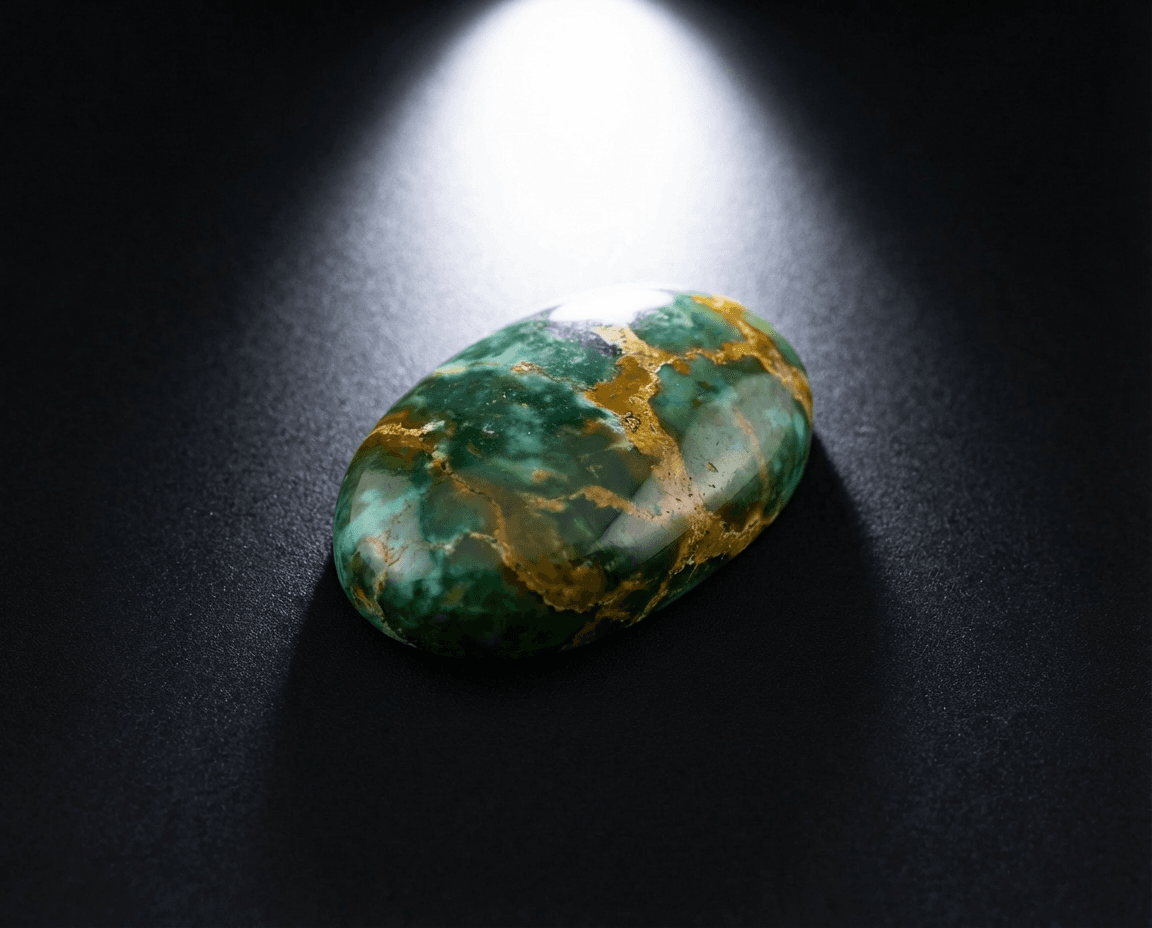
From the historic Royston district of central Nevada, Royston turquoise is celebrated for its extraordinary range of color — deep forest green flowing into rich blue, frequently within a single stone — set against a heavy golden-brown to chocolate matrix. That blue-to-green gradient is its signature.
This collection includes Native American–made and Southwestern-style pieces; each piece's own page states its origin where it is known.
HistoryThe Royston mining district, near Tonopah, Nevada, has produced turquoise since the early twentieth century and is one of the few American mines still actively worked today, long operated by the Otteson family. Its stones have been favored by Southwestern silversmiths for generations.
Because Royston is still producing, artists can find it in quantity and in a wide spread of color, from gem blue to deep green, which keeps it a staple of contemporary Navajo and Zuni work.
Royston's warm matrix and green-to-blue color pair naturally with heavy sterling, making it a favorite for Navajo cuffs, rings, and statement pieces. Its character suits bold, single-stone settings where the gradient and matrix can be seen.
As Southwestern turquoise, it carries the stone's traditional associations with protection and well-being.
Royston turquoise forms in the copper-bearing rock of central Nevada. Its hallmark is the blending of green and blue within one cabochon — a result of varying iron and copper content — framed by a golden-brown to dark host matrix that is often left visible as part of the design.
Naturally hard, untreated Royston of even color commands the greatest value; softer material is stabilized for everyday wear.
Keep Royston turquoise away from moisture, perfume, lotion, sunscreen, and chemicals, and remove it before swimming or bathing. Clean with a soft, dry cloth and store each piece separately to protect the stone and its silver.
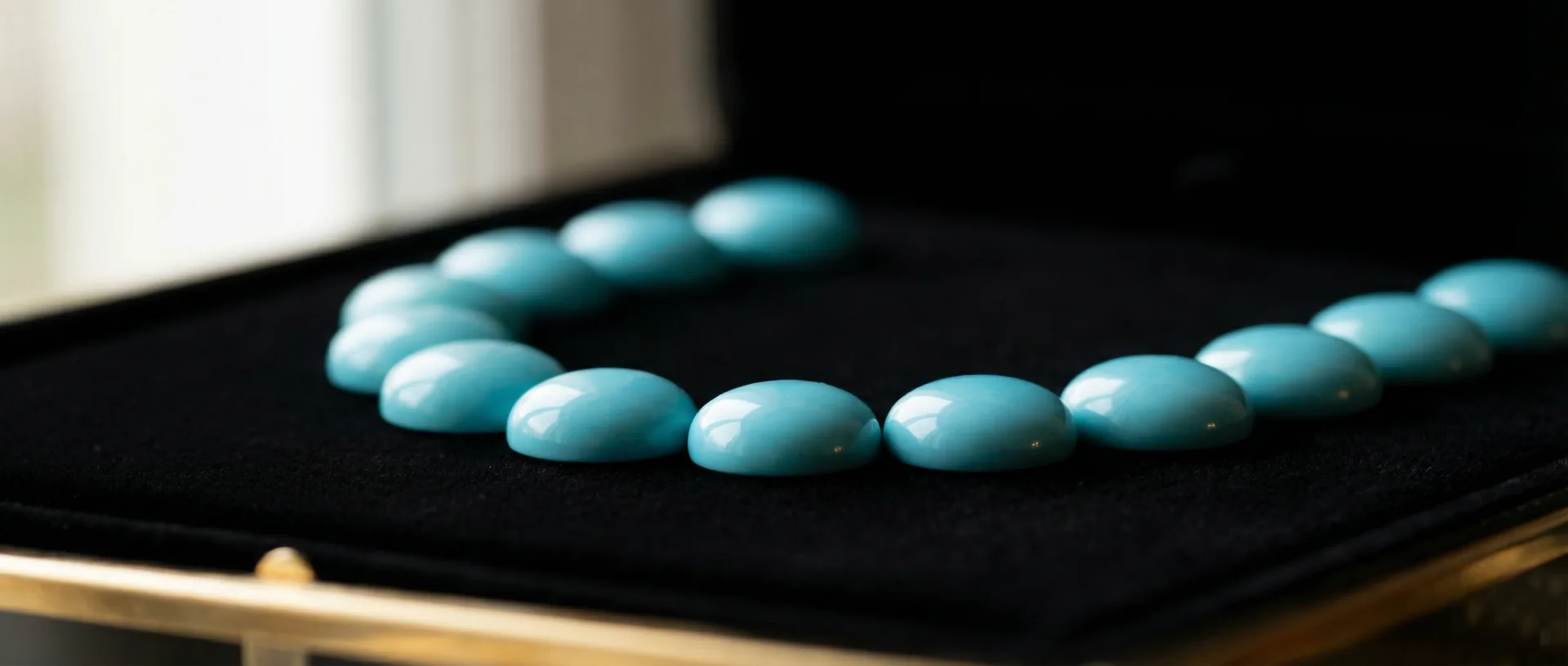
From its discovery in the copper-rich hills near Globe, Arizona in the 1920s to the mine's permanent closure in 2012, Sleeping Beauty turquoise has undergone a transformation from abundant commercial stone to one of the most coveted minerals in the gemological world, with no new material produced since the final extraction.
Read Article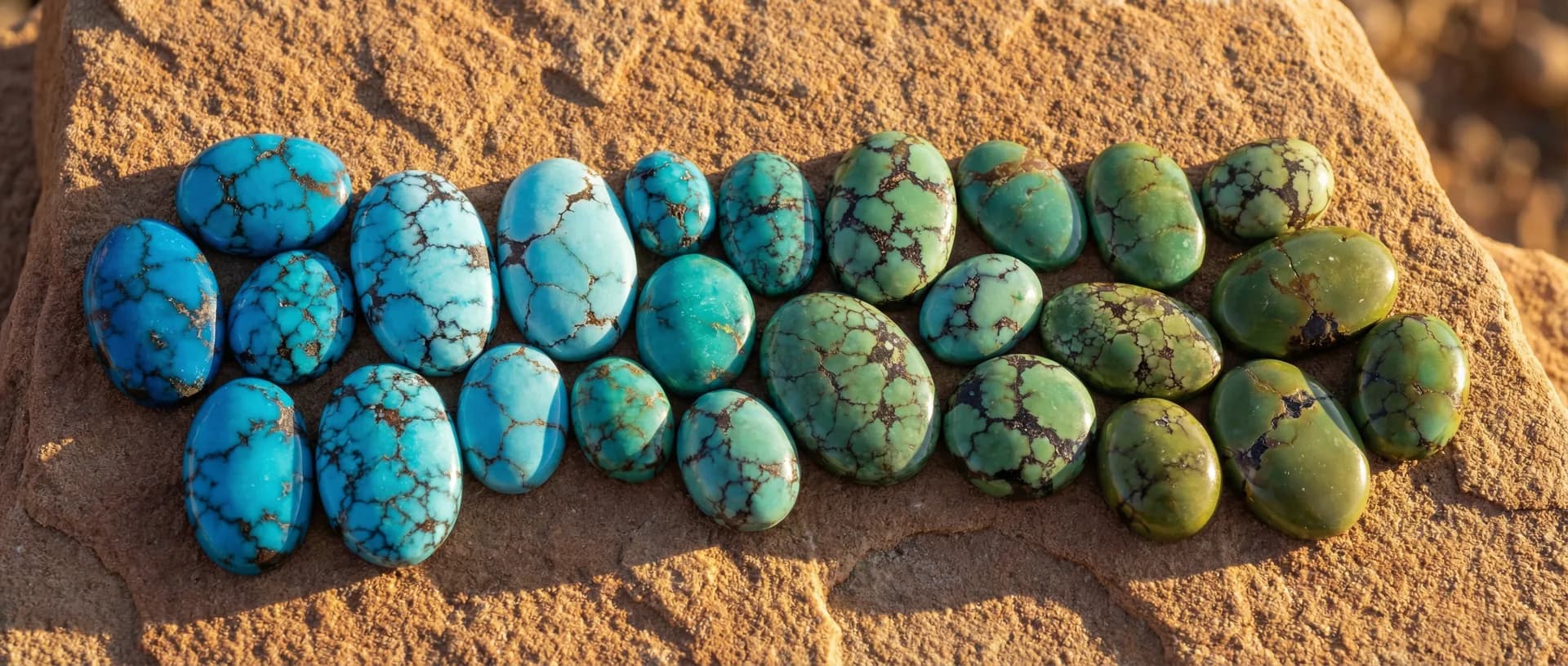
The Kingman mine in Mohave County, Arizona has operated continuously since the late nineteenth century, producing turquoise in a remarkable color range from sky blue to deep blue-green, with its spider-web matrix specimens ranking among the most valued turquoise in the world.
Read ArticleThis collection includes Native American–made and Southwestern-style pieces; each piece's own page states its origin where it is known.
$185.00

$295.00

$365.00

$225.00

$195.00

$185.00

$245.00

$285.00