Learn about Turquoise in Native American–made and Southwestern-style jewelry: its history, geology, and care.
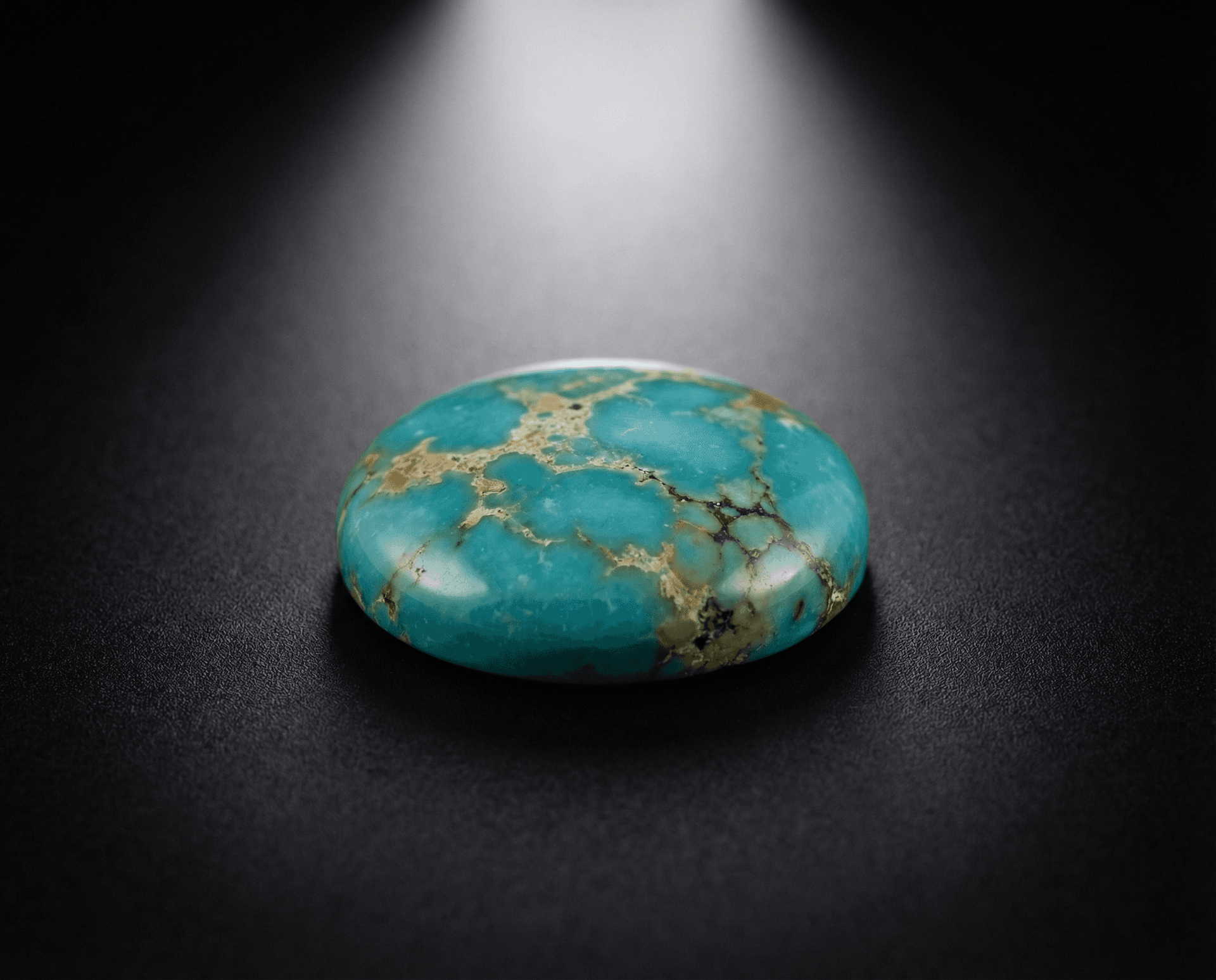
This collection includes Native American–made and Southwestern-style pieces; each piece's own page states its origin where it is known.
HistoryTurquoise has been mined, traded, and worn in the Southwest since before recorded history. Ancestral Puebloan and Hohokam peoples quarried it at sites such as Cerrillos, New Mexico, and carried it along trade routes that reached deep into Mesoamerica, where it was as treasured as jade.
The silver-and-turquoise jewelry now recognized worldwide is younger than the stone's use. It began in the late nineteenth century, when Navajo (Diné) smiths learned silverwork and began setting locally mined turquoise into sterling. Zuni and Hopi artists soon developed their own distinct idioms — Zuni lapidary inlay and needlepoint, Hopi silver overlay — and the three traditions together defined the Southwestern style.
Through the twentieth century, named mines like Kingman, Bisbee, Lone Mountain, and Number 8 each earned a following for a particular blue or matrix, and collectors learned to prize stone by source.
Across the Diné, Zuni, and Hopi worlds, turquoise is far more than ornament. It is widely regarded as a protective, life-giving stone — a fragment of sky and water — carried for health, blessing, and safe passage, and offered in prayer. It is worn for ceremony and for daily life alike, and a fine old piece is often a family heirloom.
Turquoise anchors nearly every traditional form: the squash blossom necklace with its crescent naja, the concha belt, cluster and row bracelets, naja pendants, rings, and bolo ties. Its meaning and its beauty are inseparable from the jewelry itself.
Turquoise is a hydrated copper-aluminum phosphate that forms near the surface when mineral-rich water seeps through copper-bearing rock in arid country — which is why nearly every great mine sits within the copper belts of Arizona, Nevada, and northern Mexico. It is frequently recovered as a by-product of large copper operations.
Two things drive value: color and hardness. The most prized stones show an even, saturated blue or a clean blue-green, and are naturally hard enough to cut and polish without treatment. The "matrix" — the brown, golden, or black veining of the host rock — is not a flaw but a fingerprint, and tight, even "spiderweb" matrix can make a stone more desirable, not less. Softer, chalkier material is often stabilized so it can be worn; the finest, naturally hard turquoise is left untreated.
Turquoise is relatively soft and porous, so it asks for gentle care. Keep it away from water, perfume, lotion, sunscreen, household cleaners, and prolonged sun — all of which can darken, green, or dull the color over time. The old saying that turquoise "lives" with its wearer is true: skin oils slowly change a natural stone, which many collectors cherish.
Put your jewelry on last, after fragrance and lotion, and take it off before swimming, bathing, or hard work. Wipe with a soft, dry cloth and store each piece separately so harder stones and silver edges cannot scratch it.
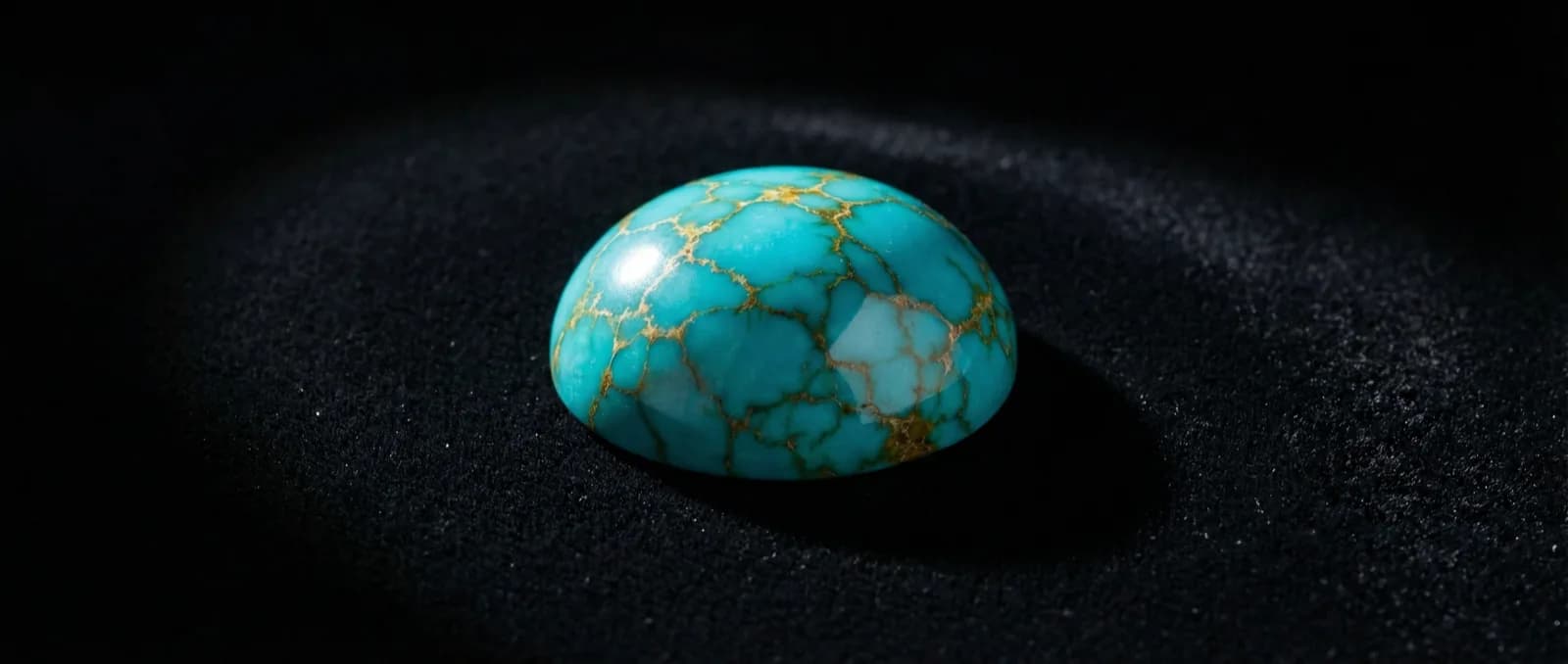
Mined from a single claim in Lander County, Nevada, Number 8 turquoise is distinguished by its striking golden-brown spider-web matrix against sky-blue to blue-green body color. With the mine closed since 1976, Number 8 commands premium collector prices and remains one of the most recognizable and sought-after American turquoise varieties in the market today.
Read Article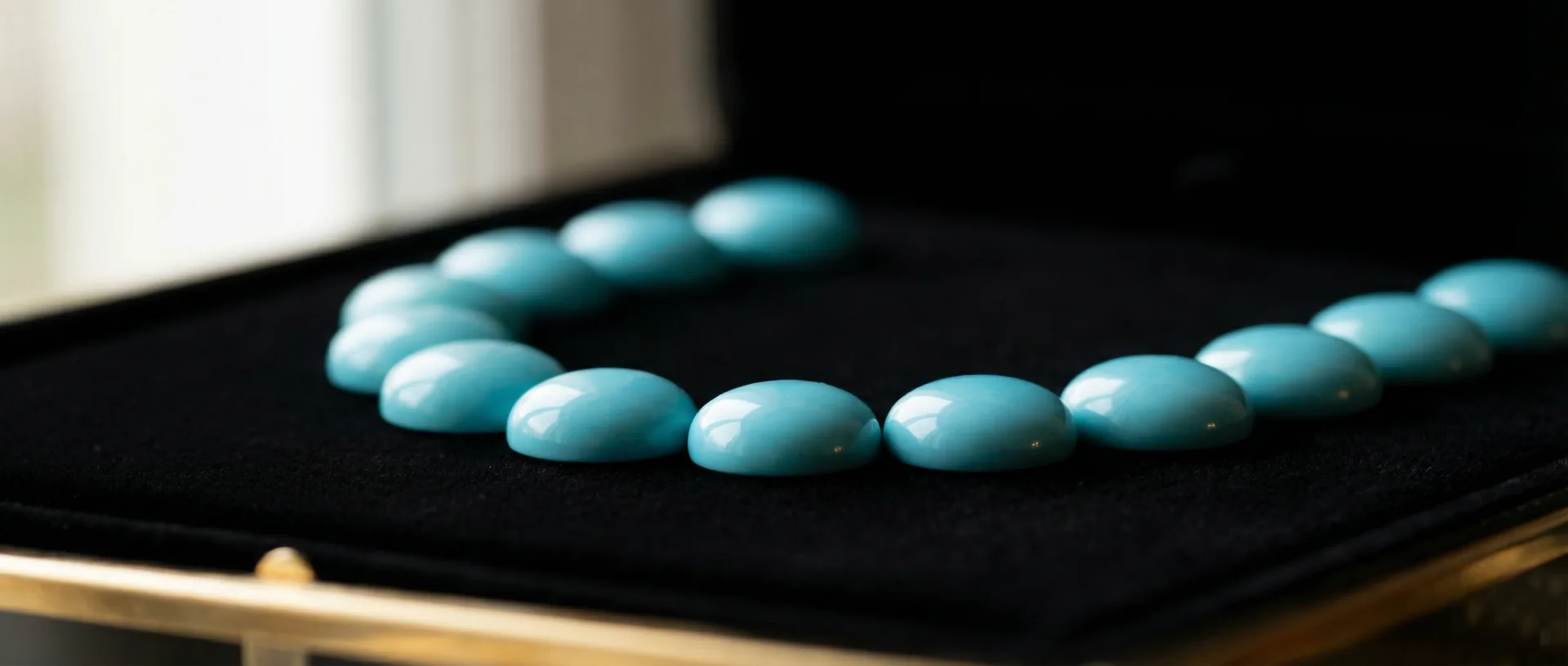
From its discovery in the copper-rich hills near Globe, Arizona in the 1920s to the mine's permanent closure in 2012, Sleeping Beauty turquoise has undergone a transformation from abundant commercial stone to one of the most coveted minerals in the gemological world, with no new material produced since the final extraction.
Read ArticleThis collection includes Native American–made and Southwestern-style pieces; each piece's own page states its origin where it is known.
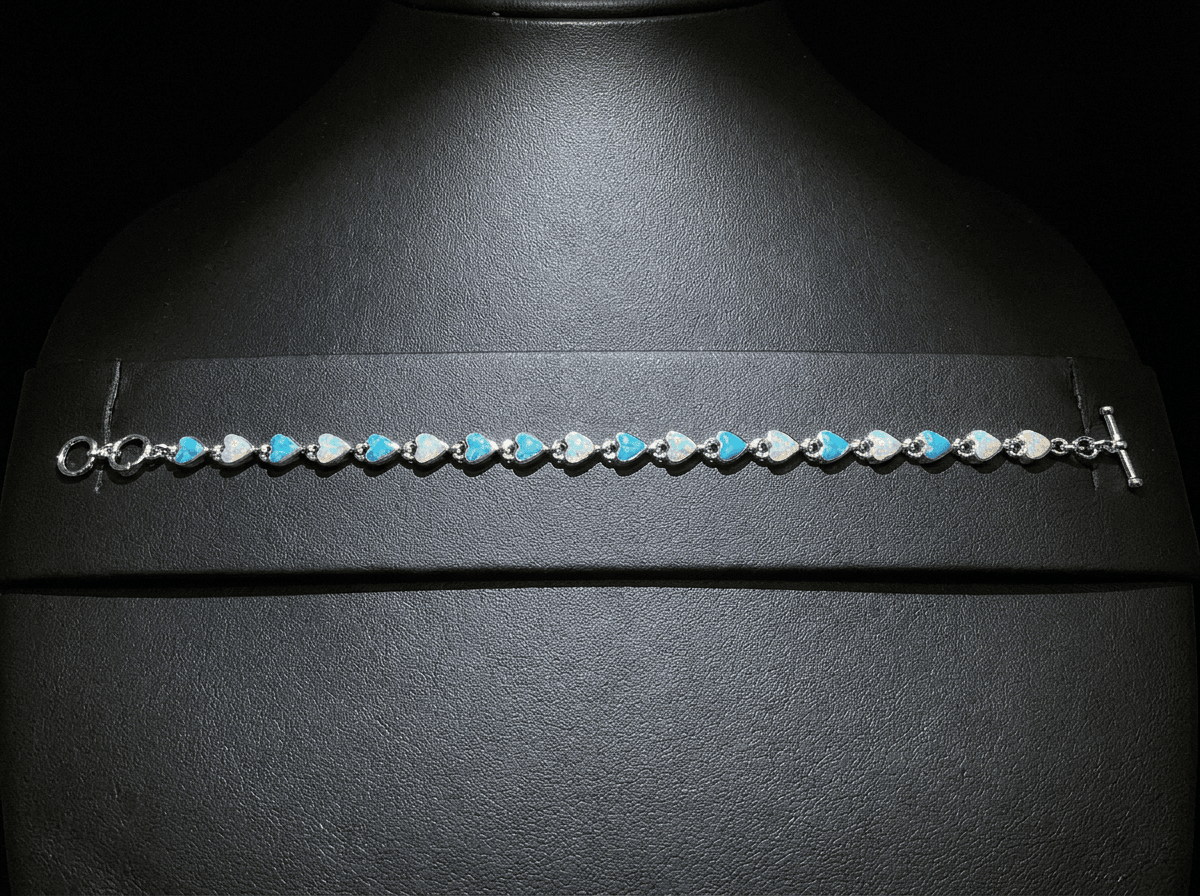
$350.00

$255.00

$115.00

$145.00

$115.00

$235.00

$145.00

$399.00