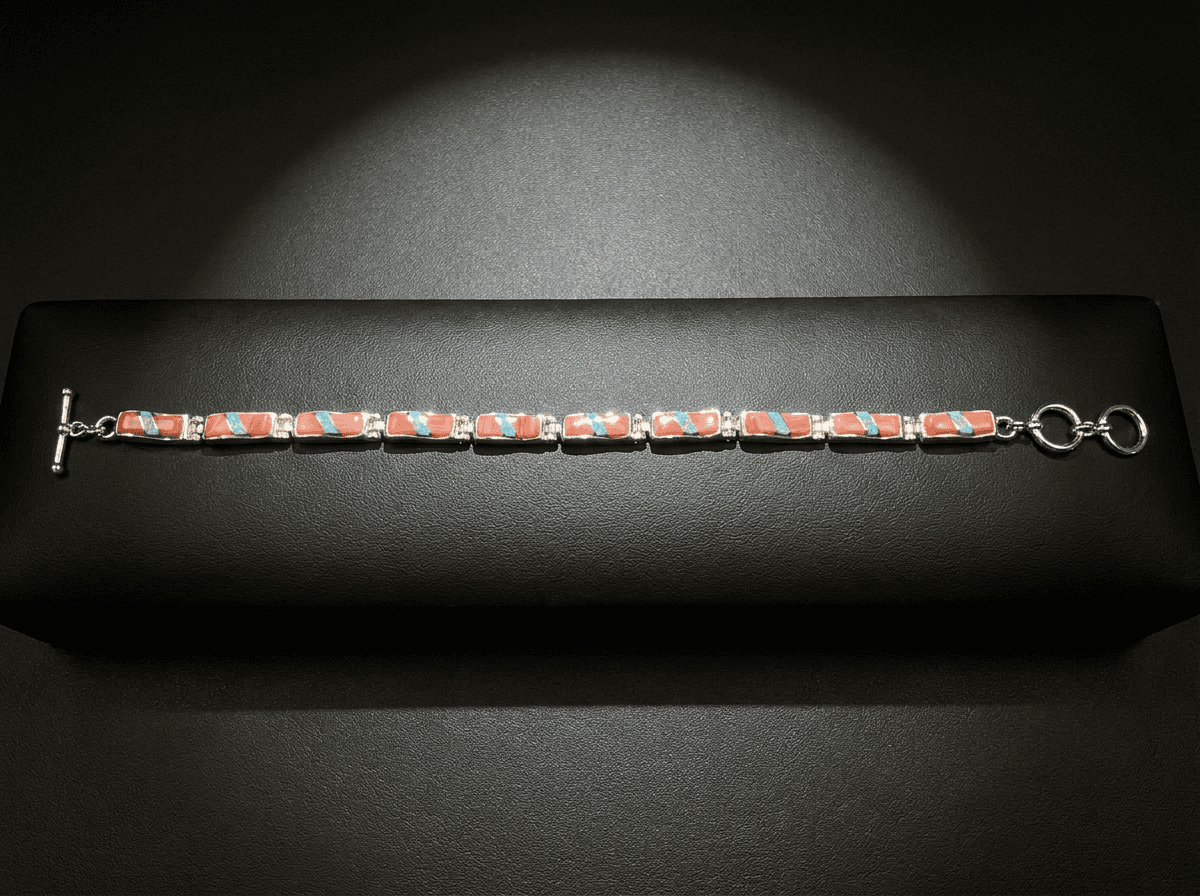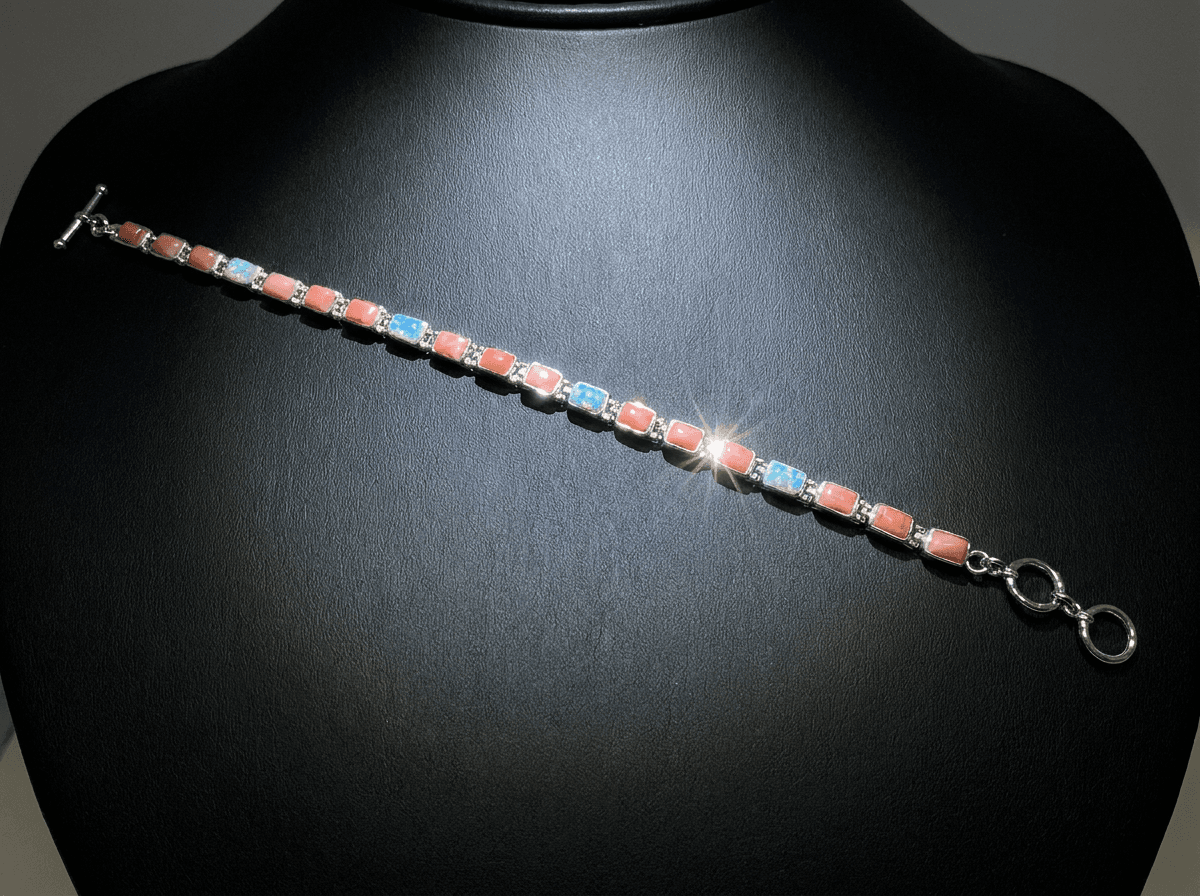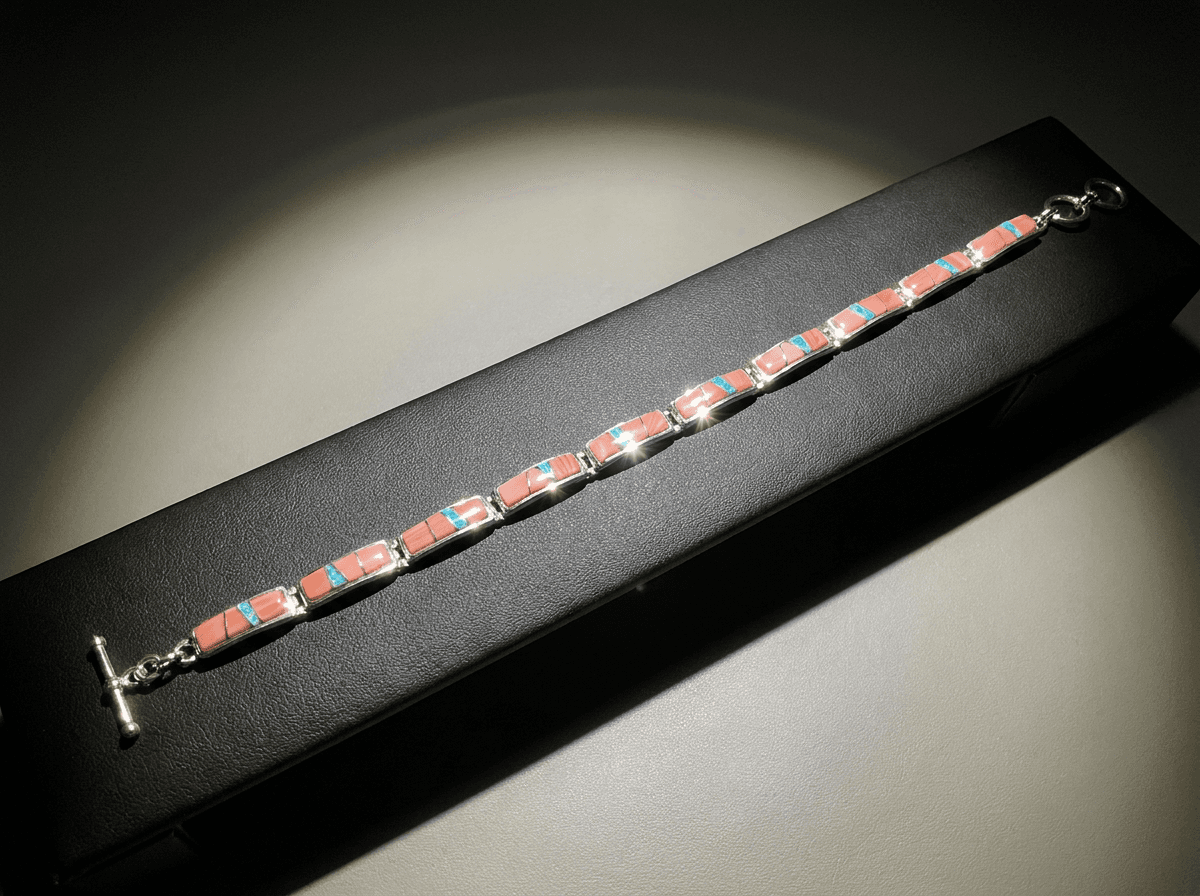
Learn about Conch Shell in Native American–made and Southwestern-style jewelry: its history, geology, and care.

This collection includes Native American–made and Southwestern-style pieces; each piece's own page states its origin where it is known.
HistoryShell has been worked in the Southwest for more than a thousand years, reaching inland communities through extensive trade networks that linked the desert to the Gulf of California, the Pacific, and the Caribbean. Long before turquoise-and-silver jewelry existed, ancestral peoples carved and strung shell into beads, pendants, and overlay.
It remains a foundational material in Zuni inlay and Santo Domingo heishi, and the pale pinks and creams of conch give lapidaries a gentle counterpoint to the brighter stones in a composition.
Shell's deep connection to water gives it lasting cultural meaning, and its soft tones are essential to the color balance of fine inlay. Conch appears in mosaic pendants, channel inlay, and strands of carefully cut heishi, frequently beside turquoise and spiny oyster, where its pale color reads as light against their saturation. Lapidaries shape each piece by hand to fit precisely within the silver.
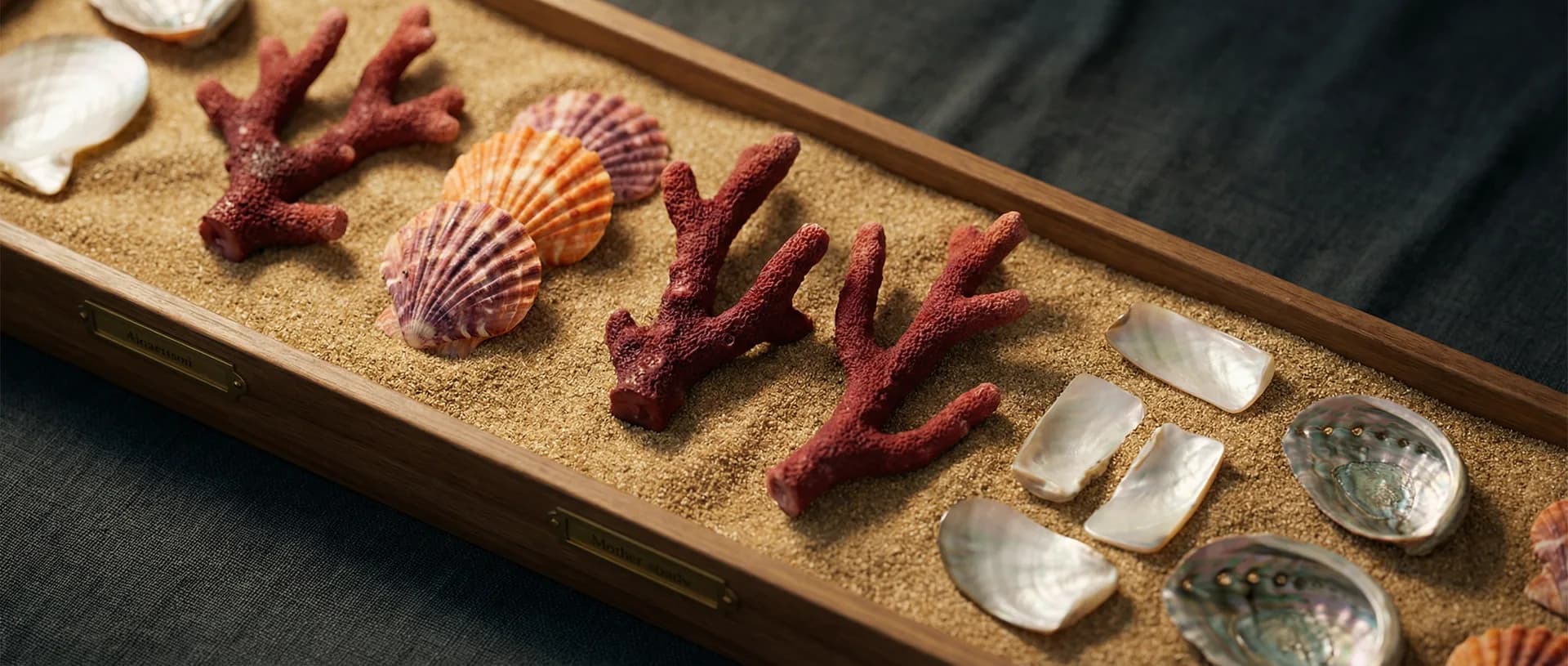
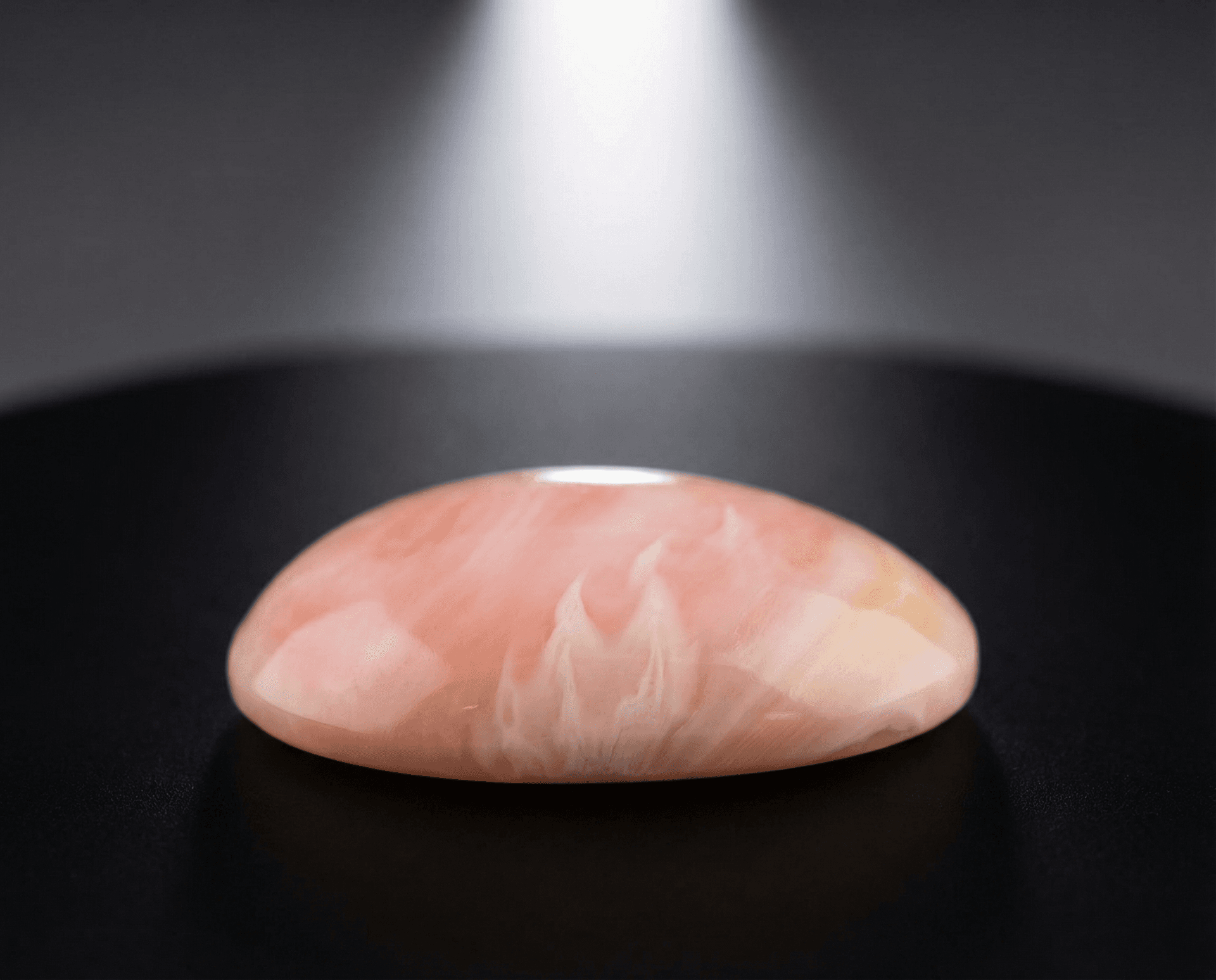
Conch is an organic shell, built — like coral and mother of pearl — from calcium carbonate laid down by a living marine animal. Its pale, faintly iridescent surface provides a quiet counterpoint to brighter stones, and lapidaries value it for an even color that cuts and shapes cleanly.
At Mohs 3 to 4 it is soft and porous, an organic material handled with the same care as other shell.
Keep shell away from acids, chemicals, perfume, cosmetics, and prolonged moisture, all of which can dull or etch its surface. Wipe it with a soft, dry cloth, put jewelry on after lotion and fragrance, and store it separately to preserve the luster.
This collection includes Native American–made and Southwestern-style pieces; each piece's own page states its origin where it is known.