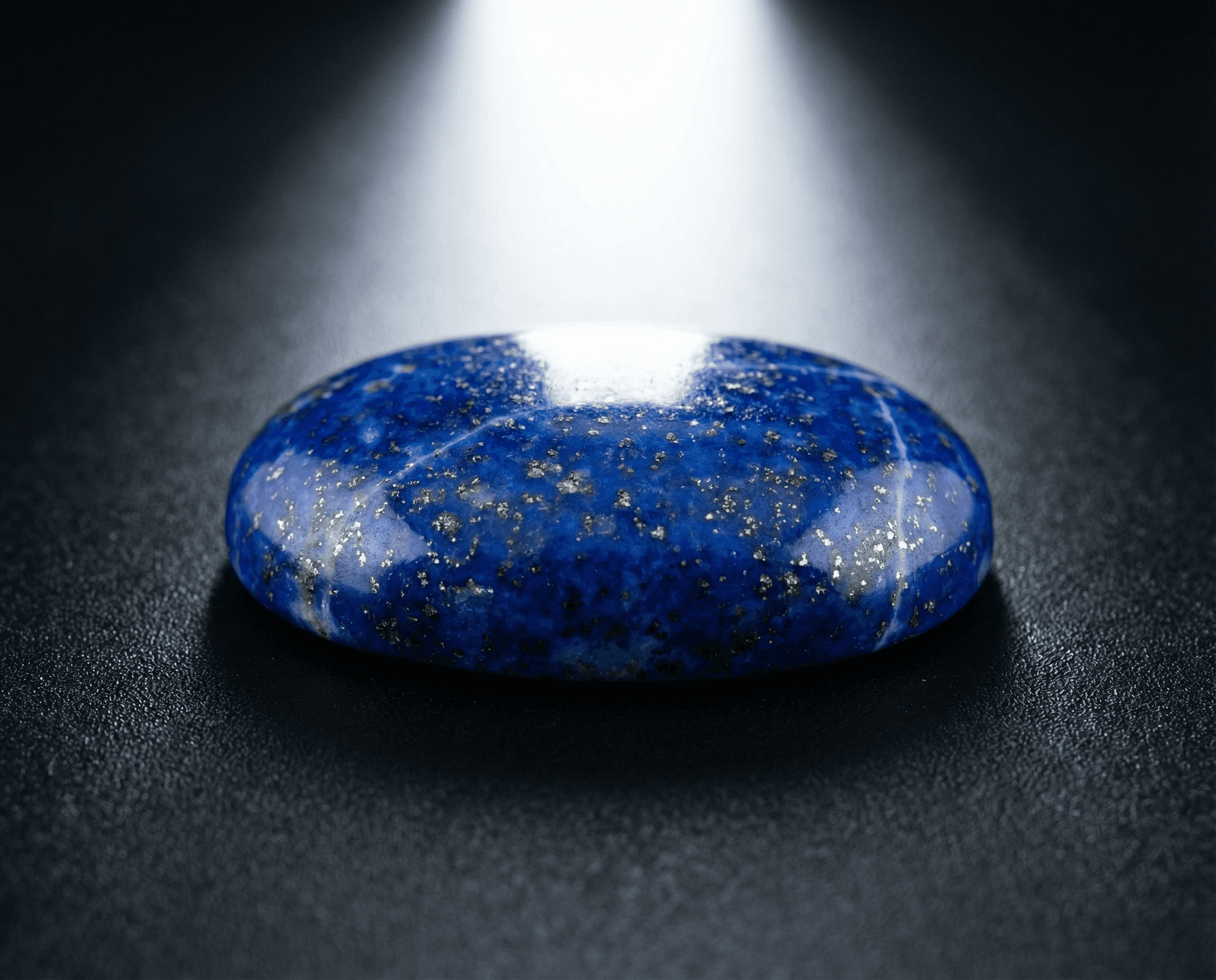
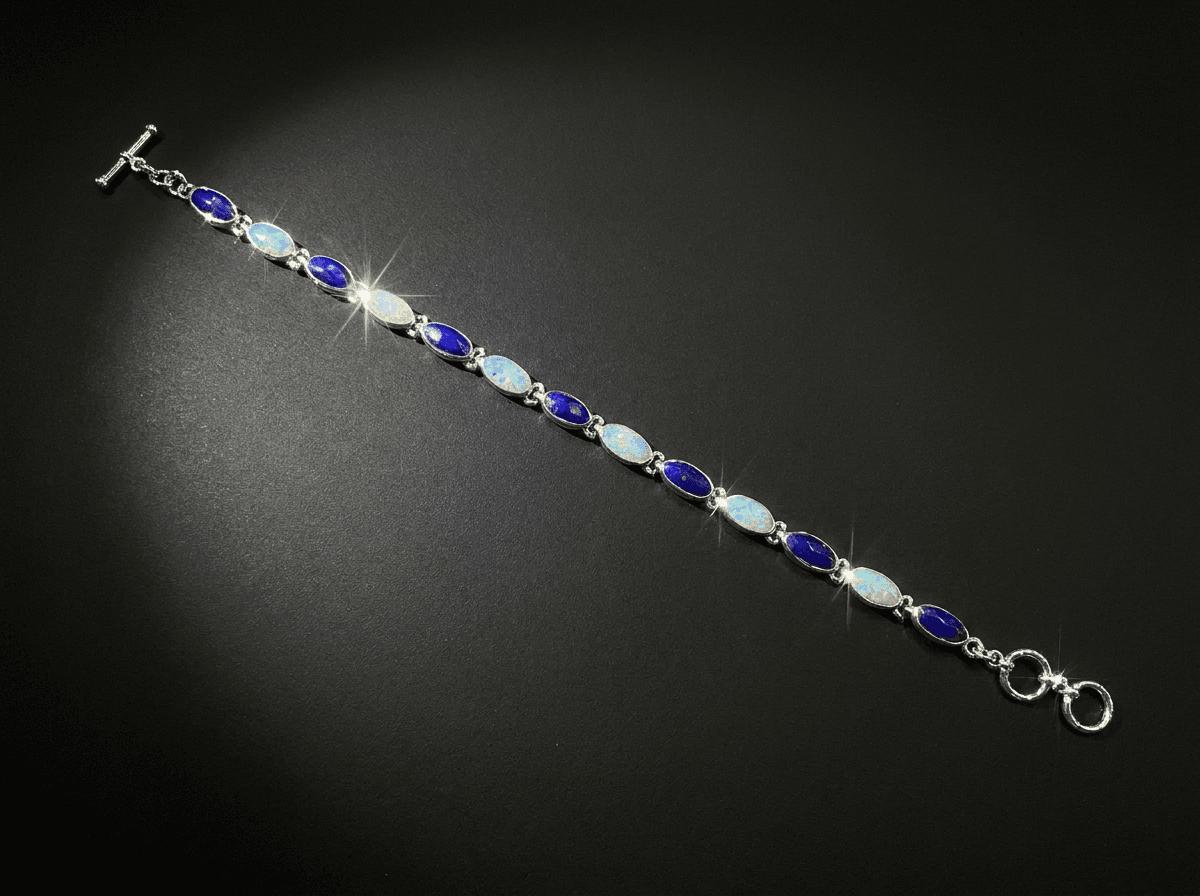
Lapis lazuli is a deep, celestial blue scattered with glints of golden pyrite — a color so prized that for centuries it was ground into ultramarine, the most expensive pigment a painter could buy. In Southwestern inlay it offers a true, saturated blue that reads quite differently from turquoise, bringing depth, contrast, and an ancient pedigree to silver.
This collection includes Native American–made and Southwestern-style pieces; each piece's own page states its origin where it is known.
HistoryLapis has been treasured for more than six thousand years, mined in the mountains of Afghanistan and traded across the ancient world — into the jewelry and burial goods of Egypt and Mesopotamia, and later into the palettes of Renaissance masters who reserved its ultramarine for the robes of the Madonna.
It entered Southwestern jewelry far more recently, as a prized blue alternative to turquoise. Native lapidaries favor it especially in fine inlay, where its intense, even color makes a deliberate statement beside the softer blues of native stone.
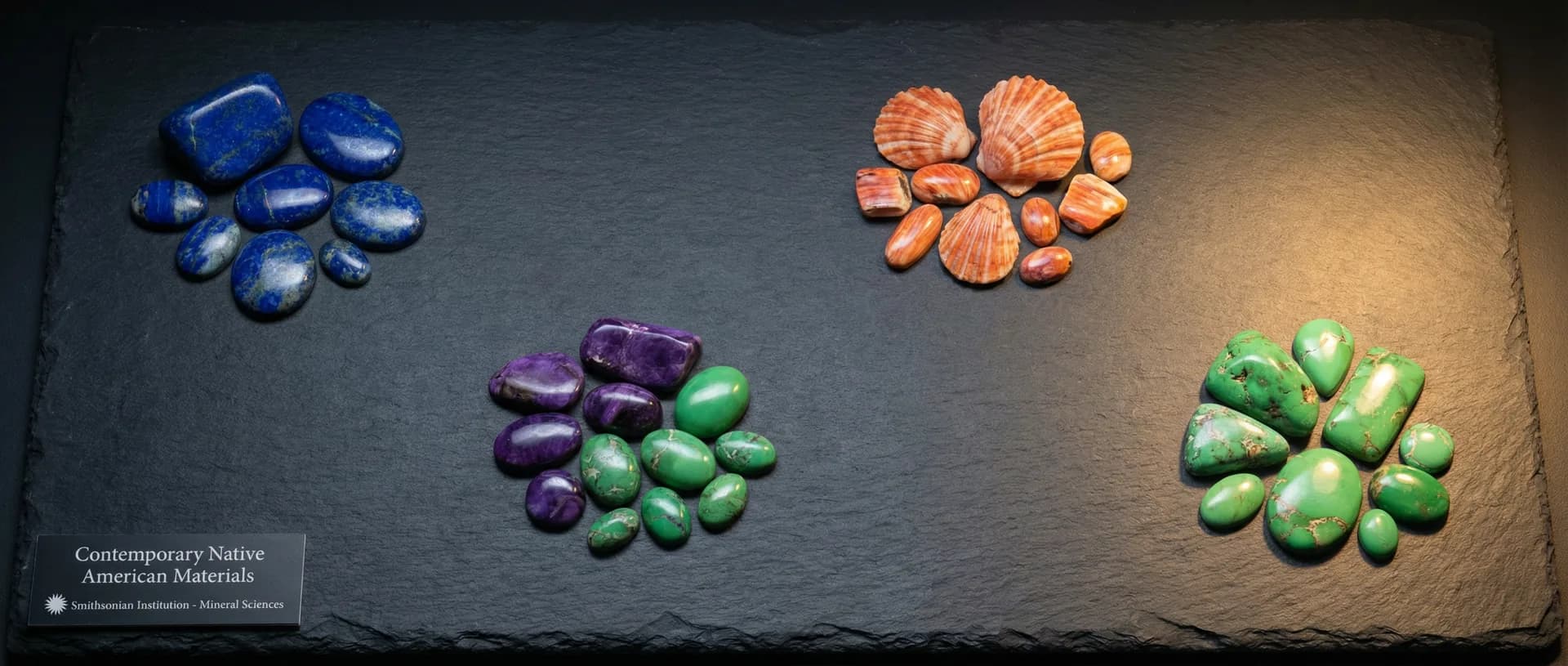
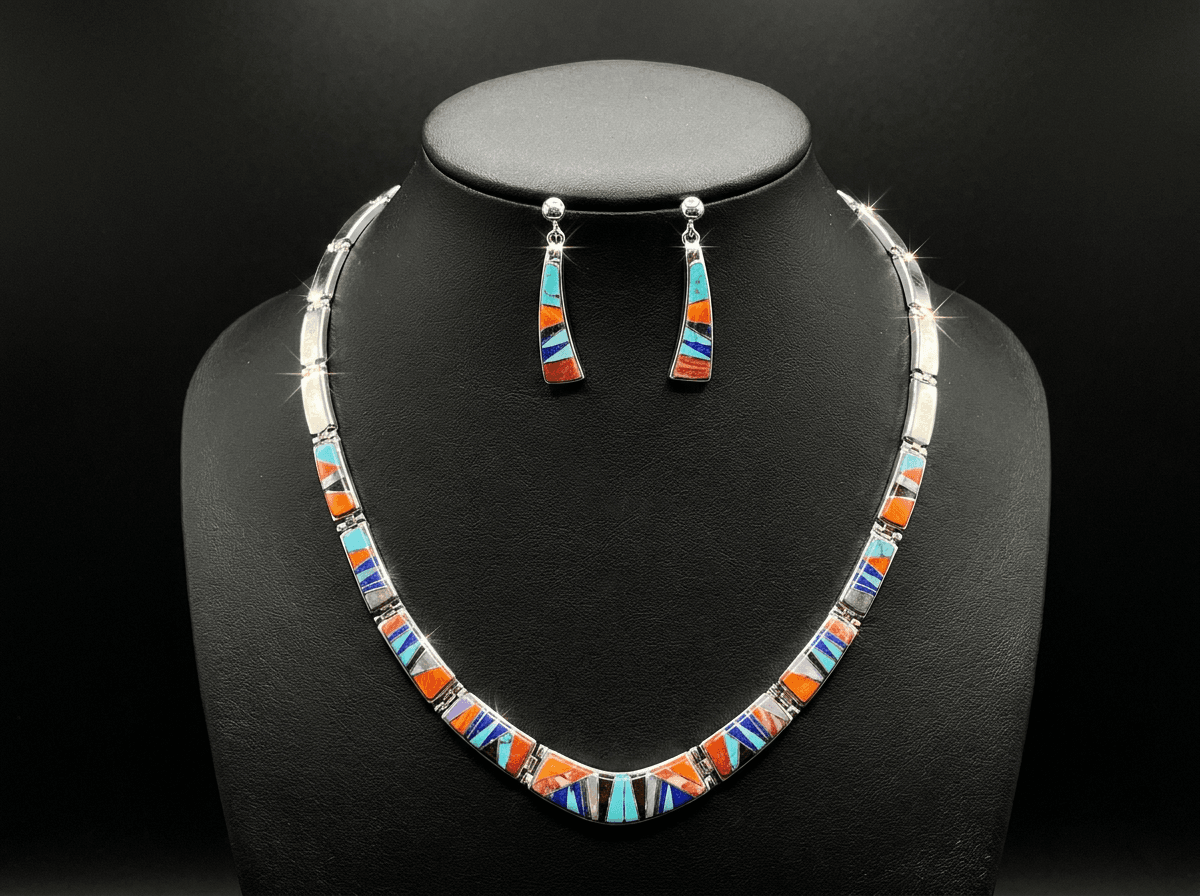
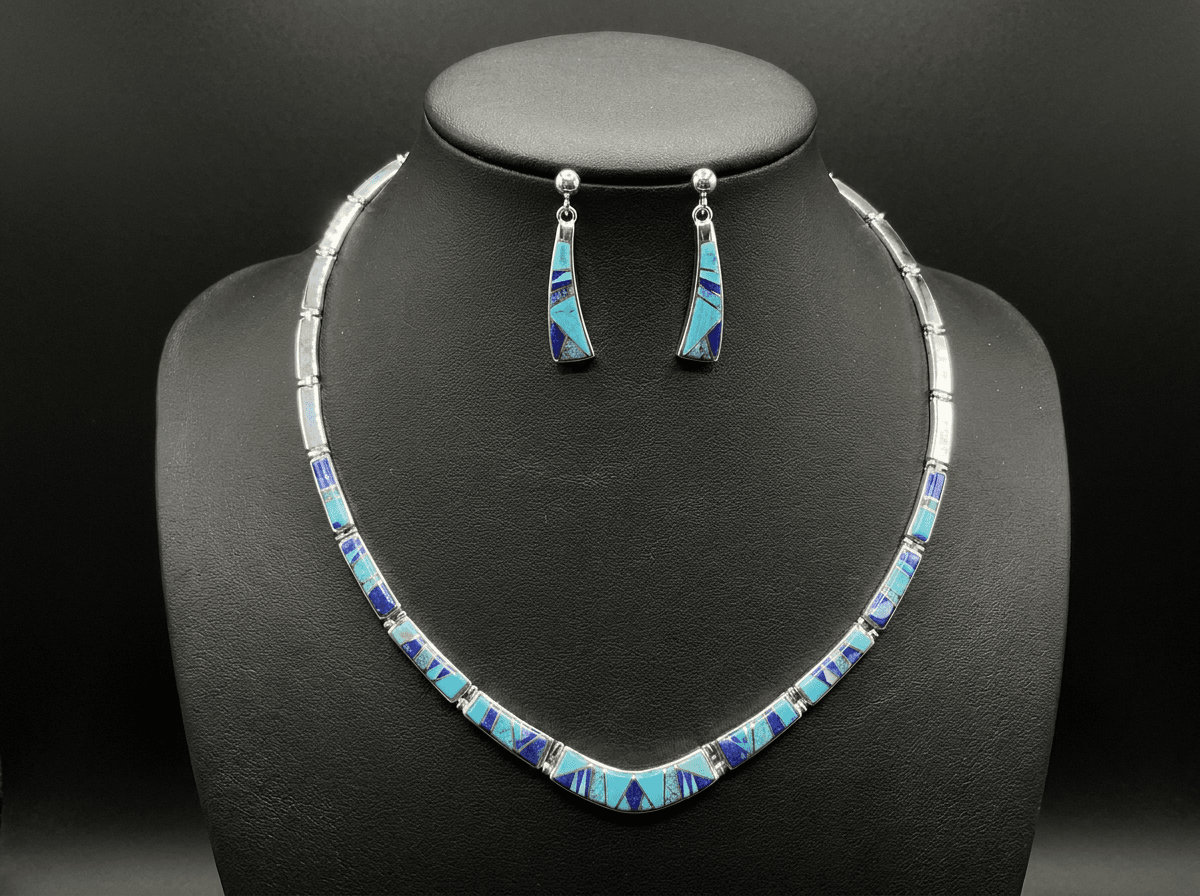
Lapis gives Native lapidaries a true, deep blue useful for contrast and depth in channel and mosaic inlay, where it can be set against turquoise to play one blue against another. Its golden pyrite flecks echo a night sky, and it is often combined with turquoise, coral, and shell in compositions that want a richer, darker note. Cut as cabochons or precise inlay pieces, it adds weight and saturation to a design.
Lapis lazuli is a rock rather than a single mineral: its blue comes from lazurite, accented by brassy specks of pyrite and veins of white calcite. The finest material — historically from the Sar-e-Sang mines of Badakhshan in Afghanistan, worked for millennia — shows a deep, even blue with an even scattering of gold and little visible calcite.
At Mohs 5 to 5.5 it is relatively soft and slightly porous, so it is cut and worn with more care than quartz, and lower grades are sometimes treated to deepen the color.
Lapis is soft and porous and sensitive to chemicals and heat. Keep it dry and away from cosmetics, perfume, and cleaners, which can dull or discolor it, never use a chemical dip, clean it with a soft cloth, and store it separately to avoid scratches.
This collection includes Native American–made and Southwestern-style pieces; each piece's own page states its origin where it is known.
$2,900.00
$2,700.00
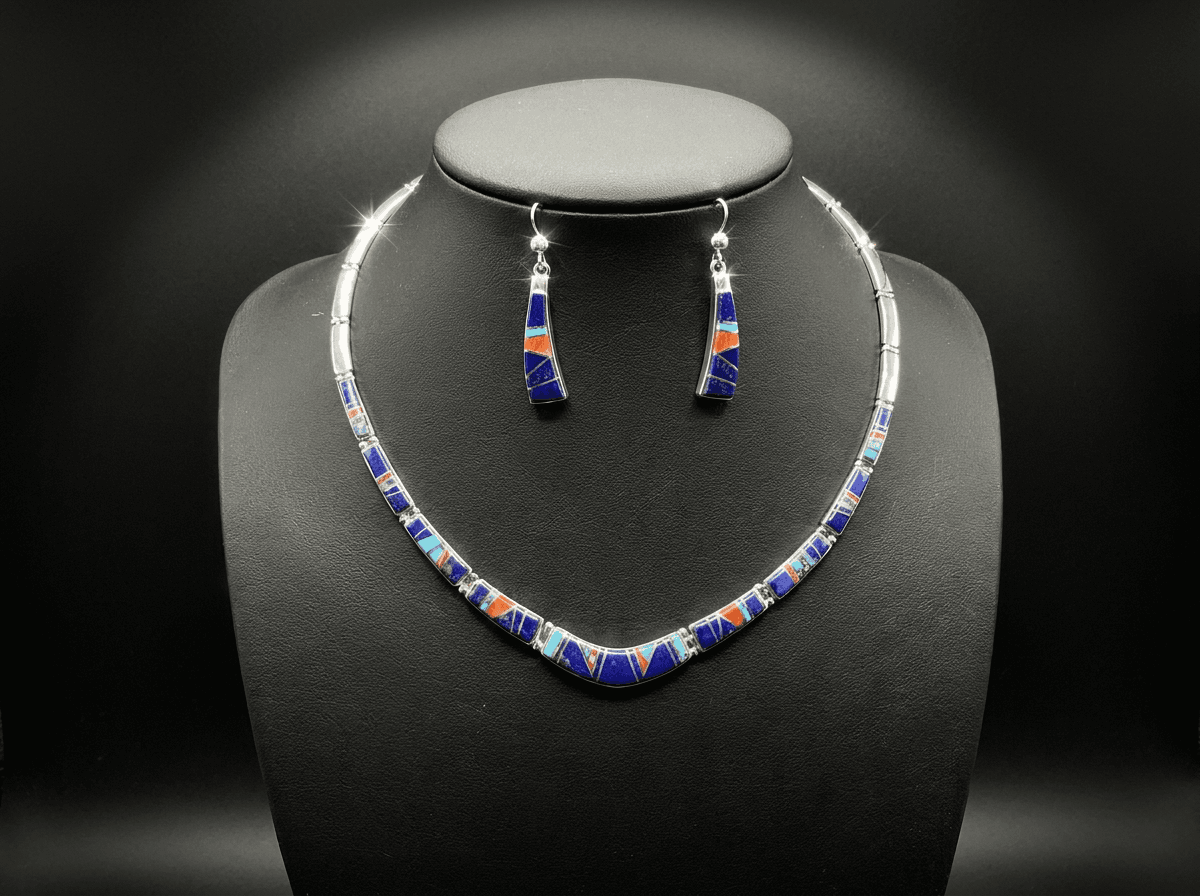
$2,900.00
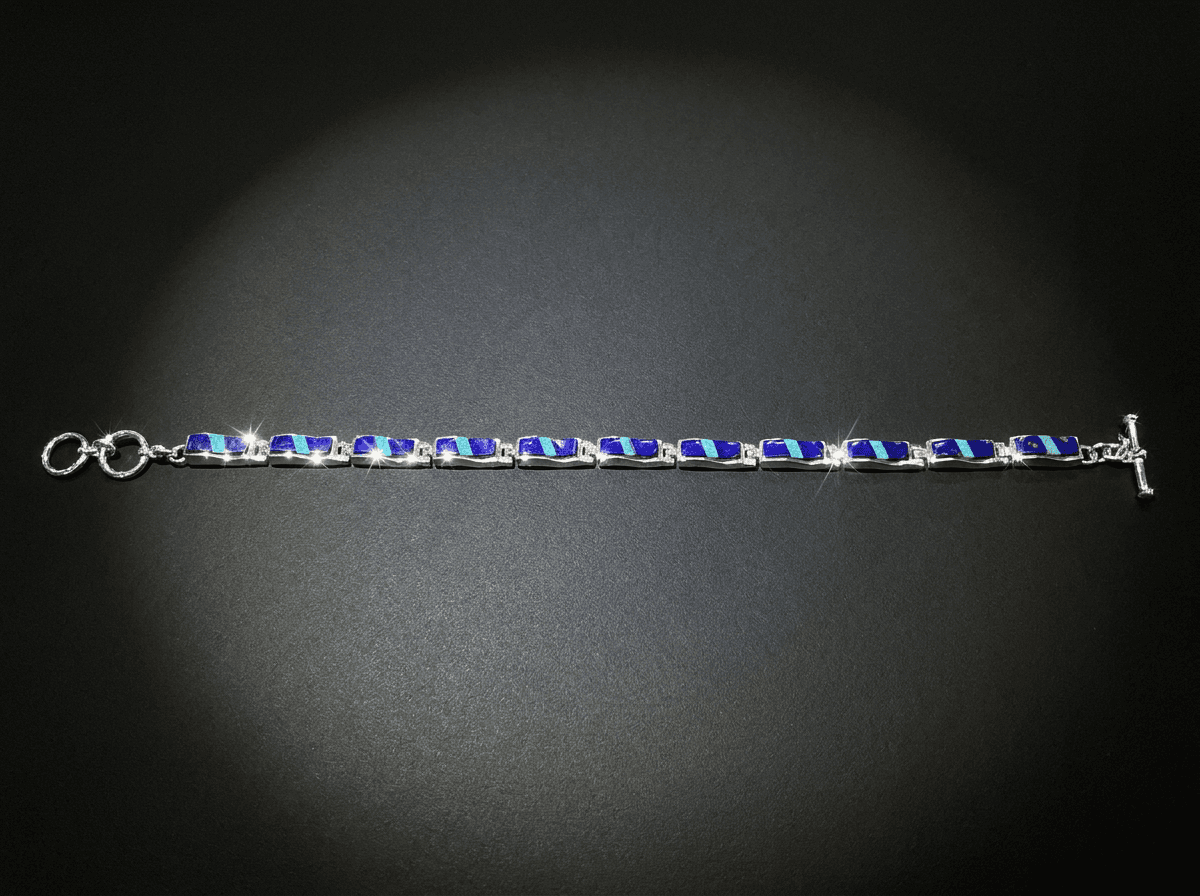
$499.00
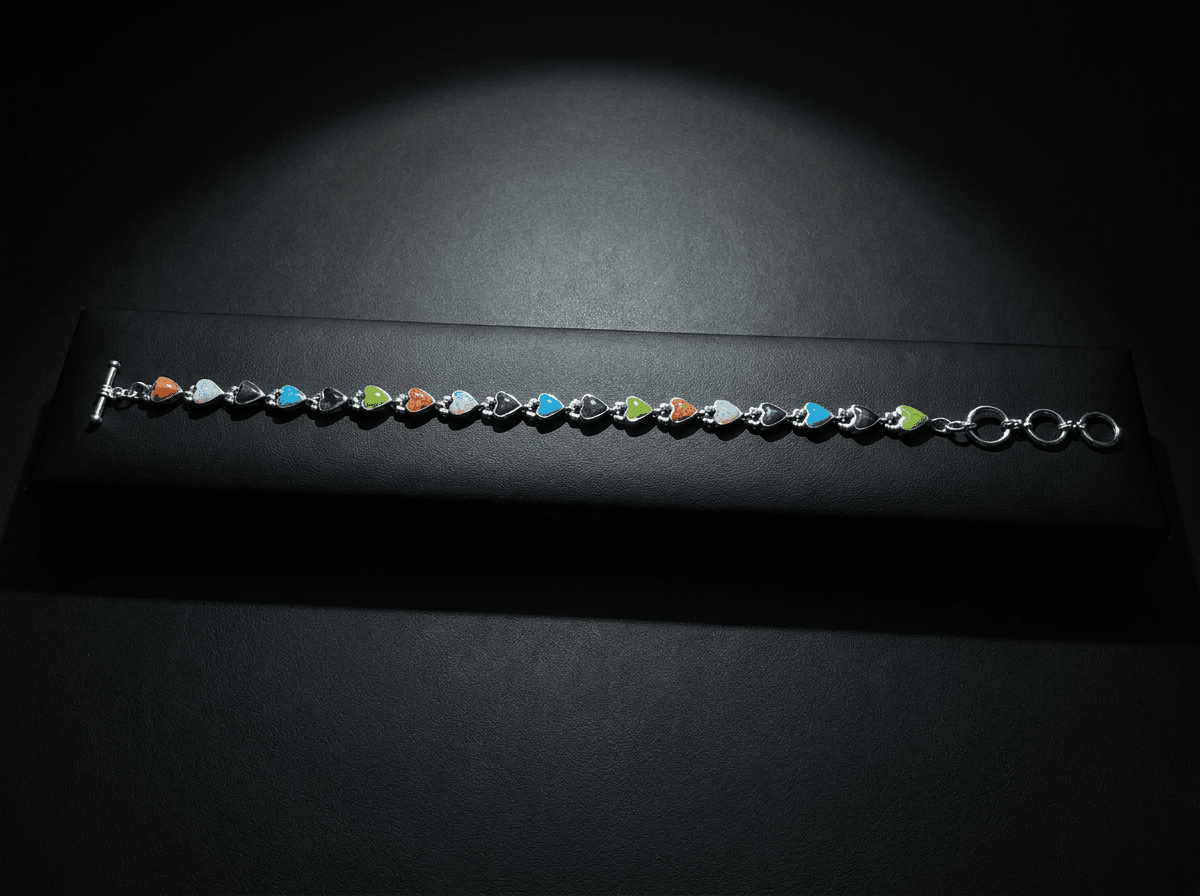
$350.00
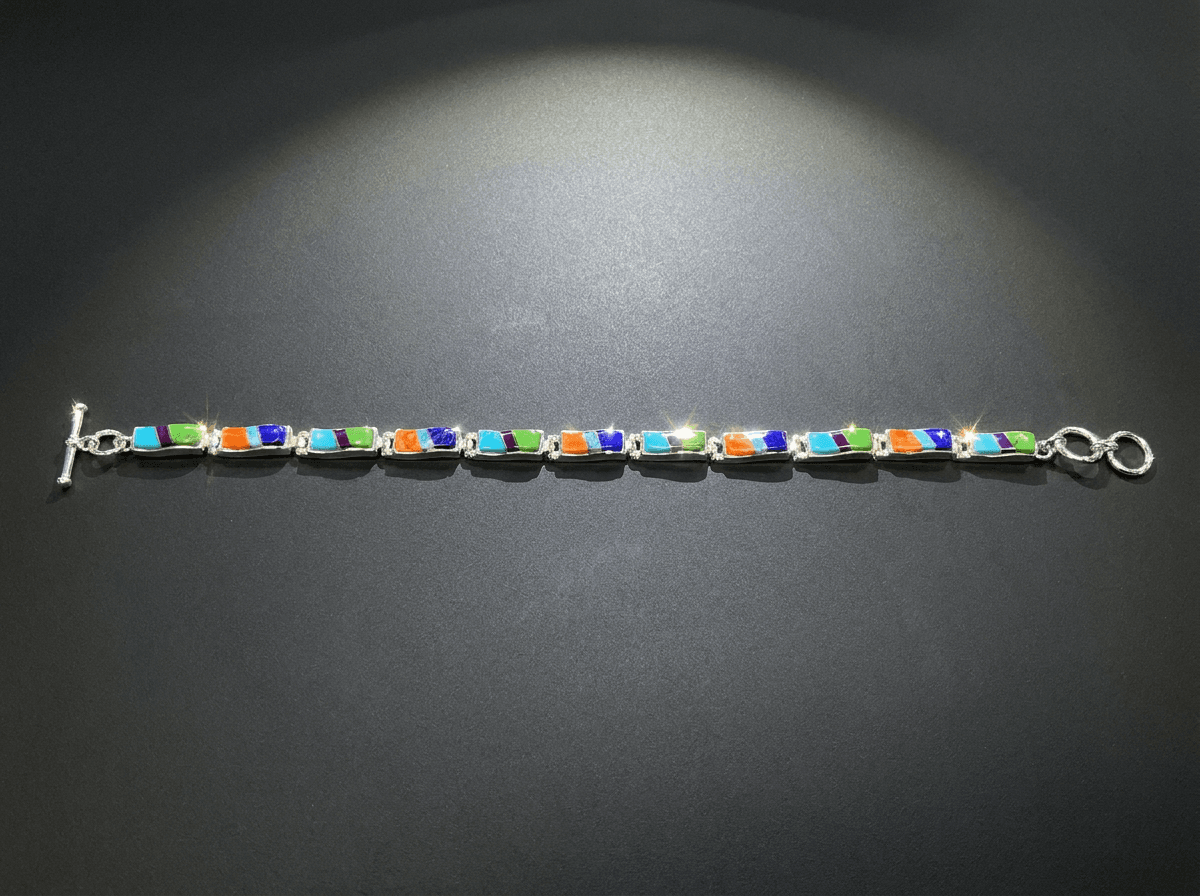
$499.00
$389.00

$225.00