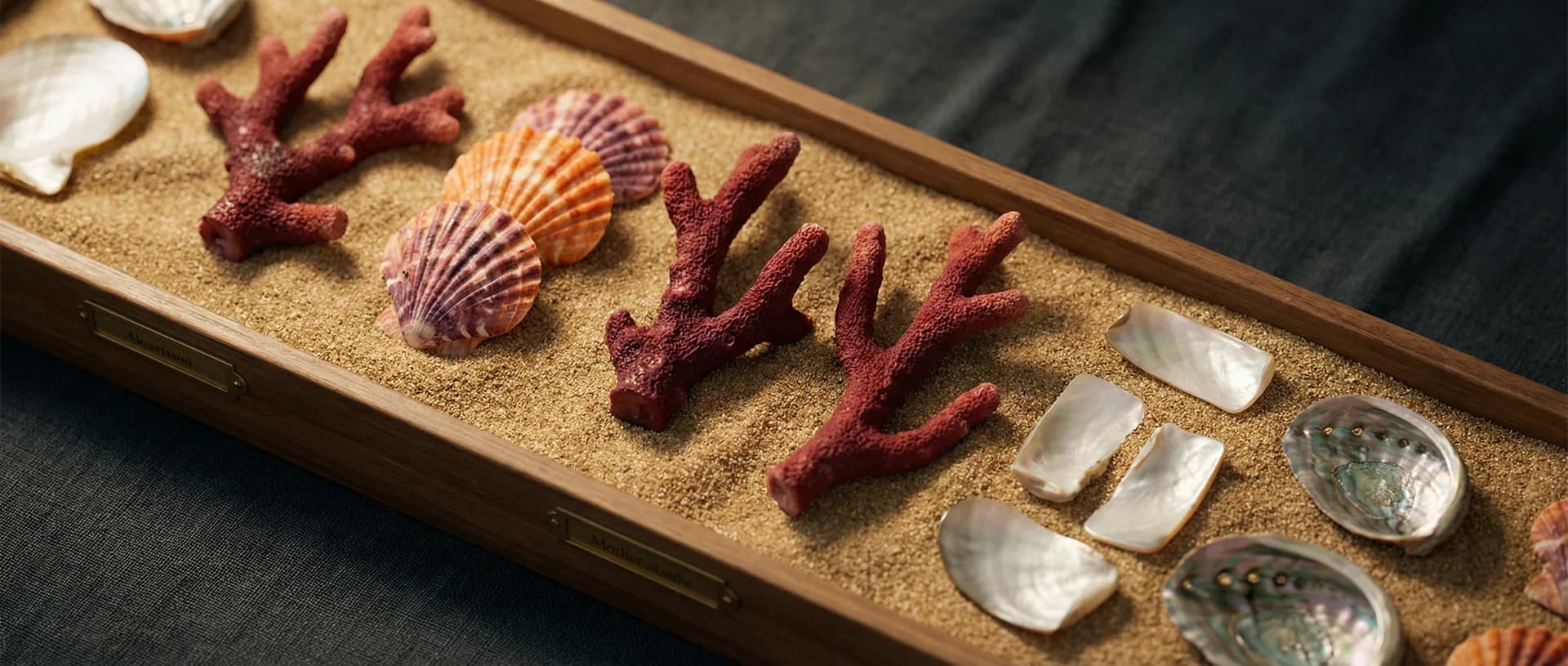
Learn about Mother of Pearl in Native American–made and Southwestern-style jewelry: its history, geology, and care.
This collection includes Native American–made and Southwestern-style pieces; each piece's own page states its origin where it is known.
HistoryThe luminous nacre of pearl oysters has been worked in Southwestern jewelry for generations, valued in inlay for the gentle shimmer it brings to a composition. Like other shell, it traveled inland along the same long-established trade routes that carried coral and conch from distant coasts to the desert.
Its quiet iridescence made it a favorite light element as channel and figural inlay grew more refined through the twentieth century, and it remains a foundational white in Zuni mosaic work.
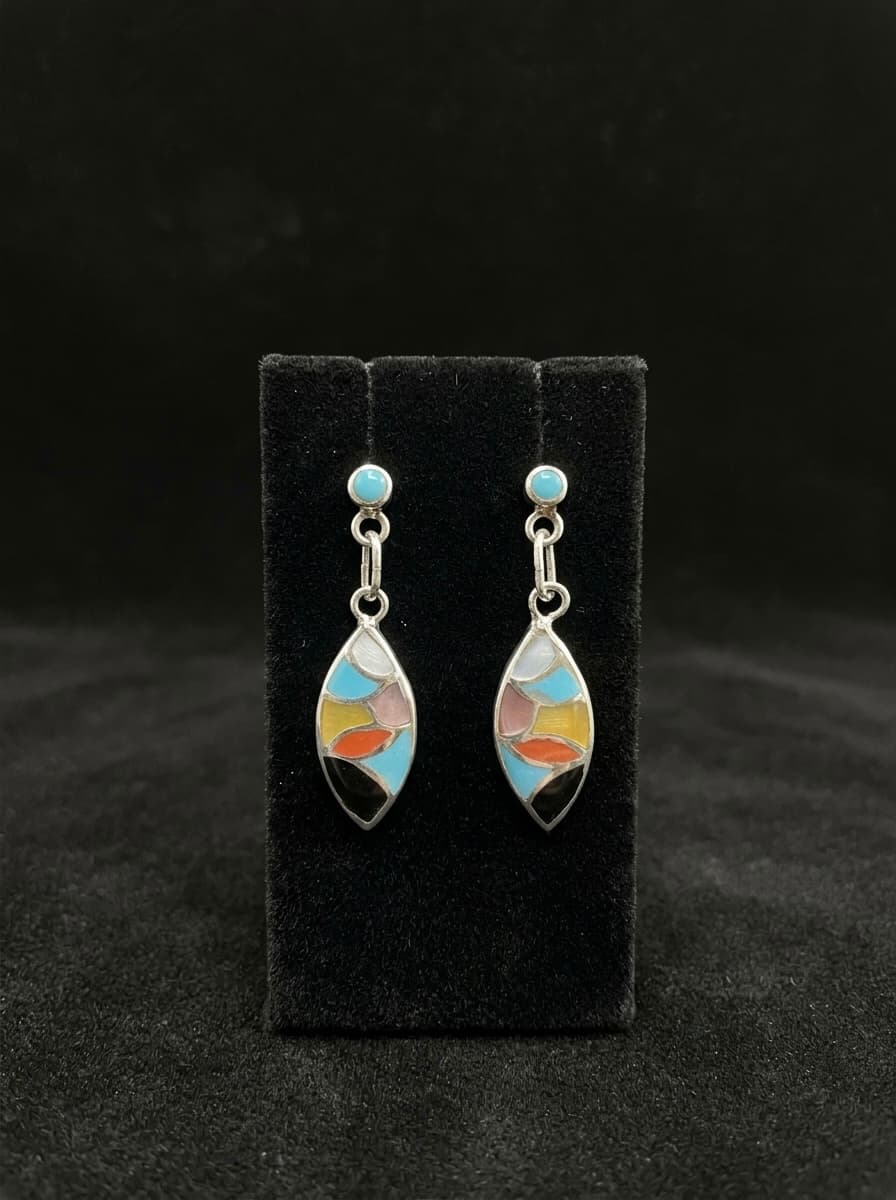
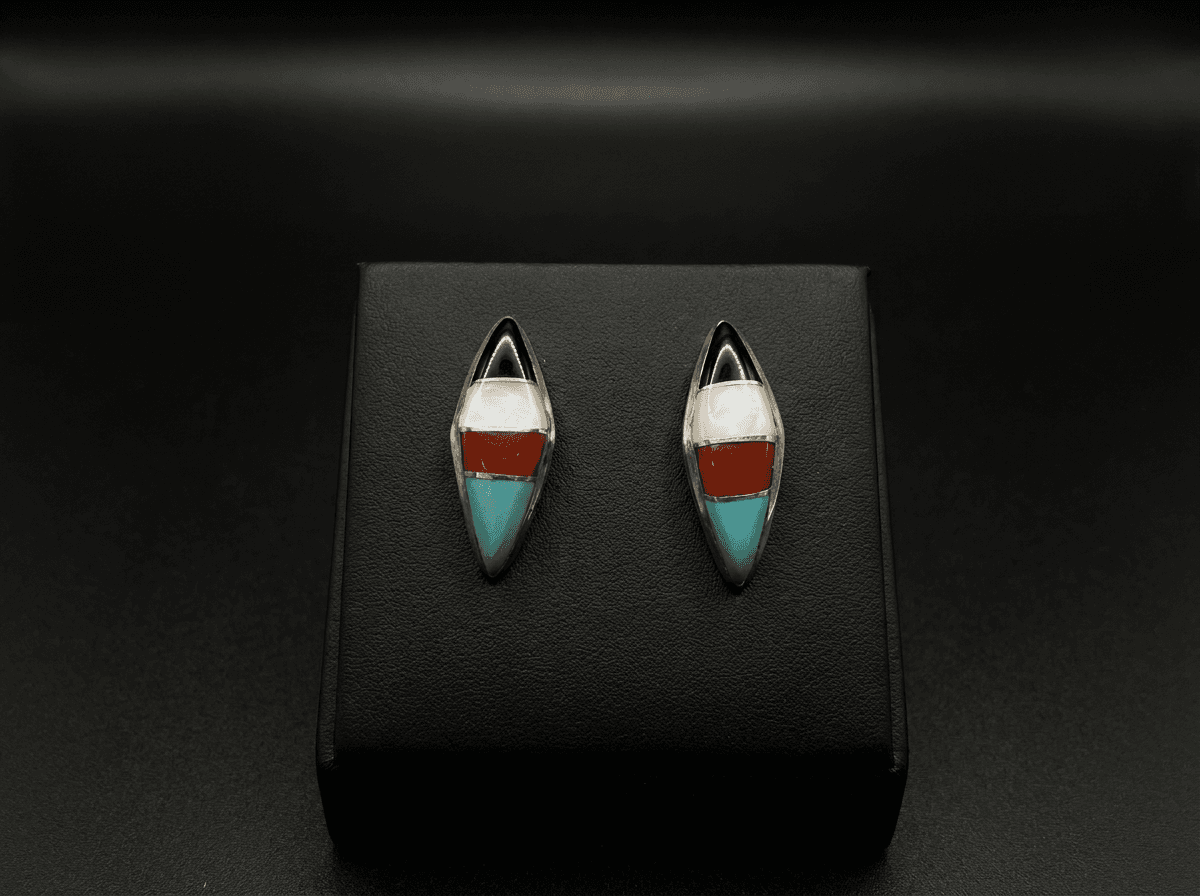
Mother of pearl provides the soft, light-reflecting passages in Zuni and Santo Domingo inlay, balancing the intensity of turquoise and coral. It is set in pendants, rings, bracelets, and mosaic figures — the wings of a bird, the body of a flower — where a touch of shimmer brings the design to life.
Lapidaries cut and grind it to fit precisely within silver channels and against neighboring stones, choosing pieces for an even, milky glow.
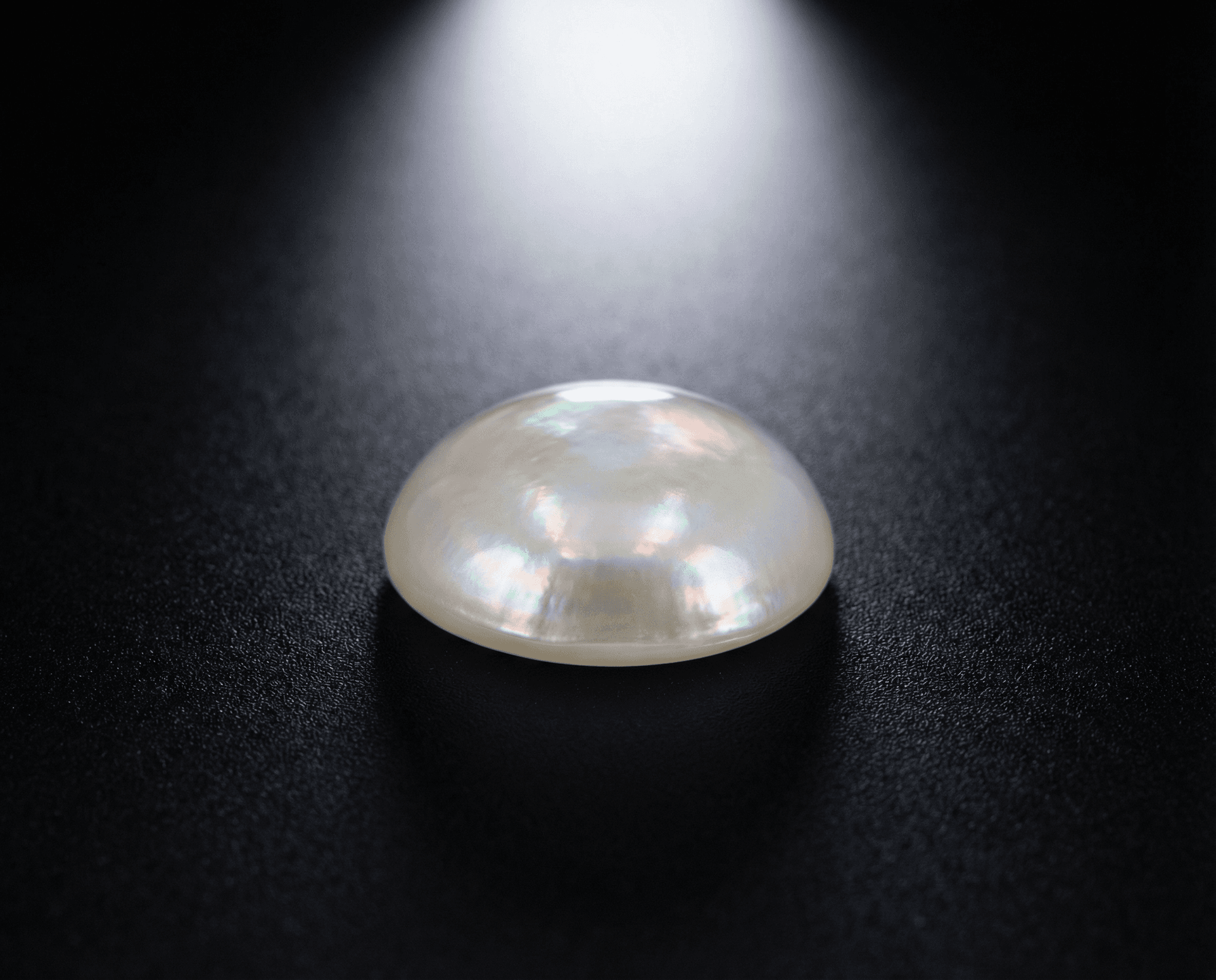
Mother of pearl is nacre, the organic-mineral lining secreted by mollusks such as pearl oysters and abalone. It is built of microscopic overlapping platelets of aragonite — a form of calcium carbonate — bonded by an organic matrix, and that layered, brick-like structure scatters light into its characteristic soft rainbow sheen.
The same structure makes it surprisingly tough against impact for its softness but vulnerable to acids and abrasion; at Mohs 3 to 4 it is an organic material to be handled gently.
As an organic shell, mother of pearl is easily damaged by acids and chemicals. Keep it from perfume, cosmetics, hairspray, household cleaners, and prolonged moisture, put jewelry on last, and avoid wearing it while washing or swimming. Wipe gently with a soft, slightly damp cloth, dry it, and store it separately to protect the nacre.
This collection includes Native American–made and Southwestern-style pieces; each piece's own page states its origin where it is known.
$220.00
$155.00
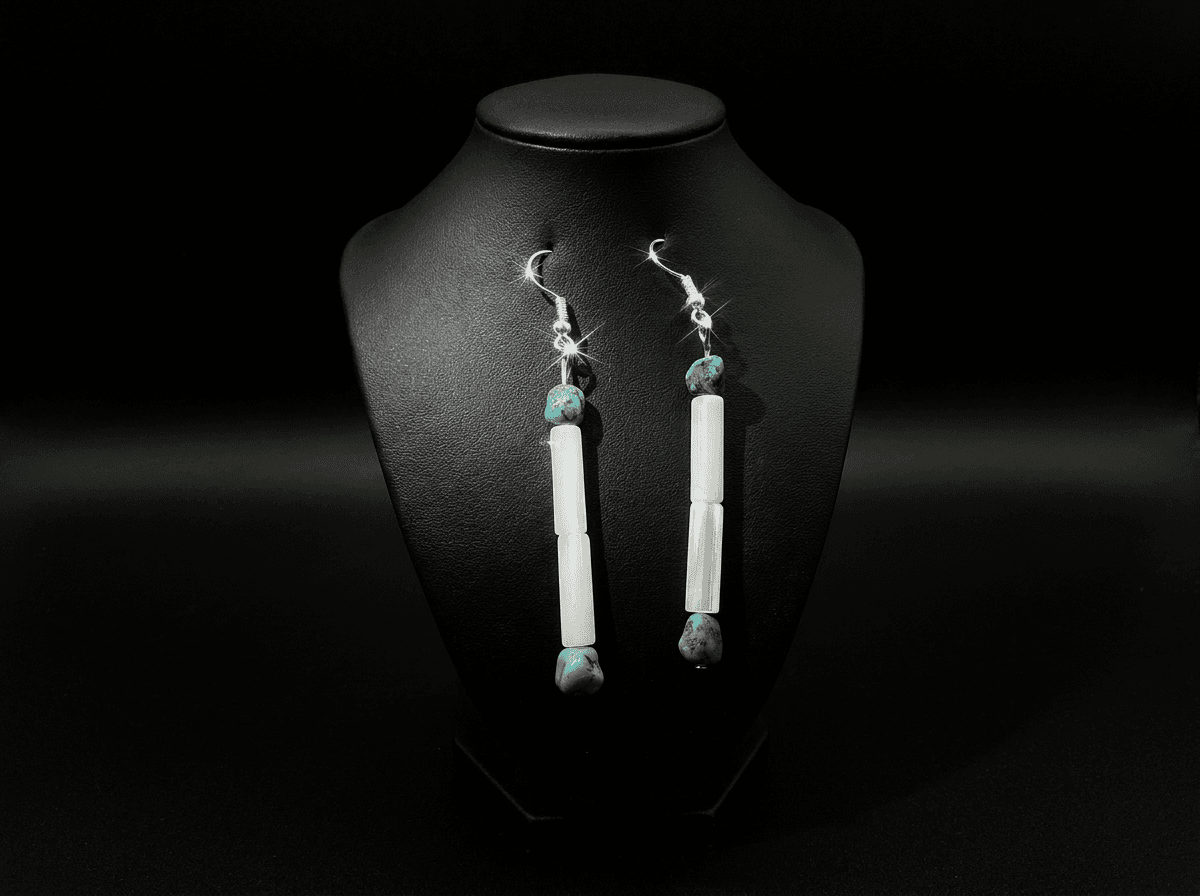
$185.00

$159.00

$255.00

$159.00

$235.00

$219.00