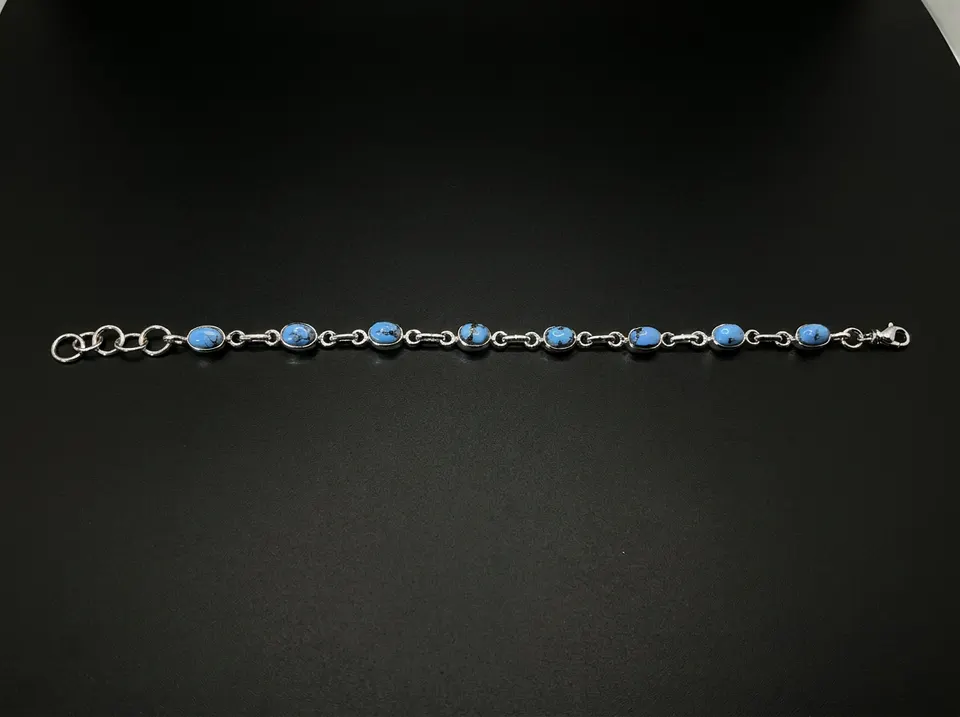
$650
Bracelet with Golden Hills turquoise
Shirley Henry · Diné (Navajo)
Golden Hills Turquoise
Adjustable · Kazakhstan
Complimentary US shipping on all jewelry
Order by Tuesday, December 15 for Christmas.Shipping
Gift cards arrive by email, in minutes.Send one
Christmas Eve: gift cards arrive in minutes.Send one
Merry Christmas from the gallery in Sedona.Gift cards
Holiday sale: 20% to 30% off every piece.See the pieces
Open daily, 10 am to 6 pmOpen daily, 10 am to 6 pm
Est. 1977 · 89A & Jordan Rd, Uptown Sedona


The gallery is just over the hill.
Cathedral Rock, Bell Rock, Courthouse Butte, Coffee Pot Rock and Thunder Mountain
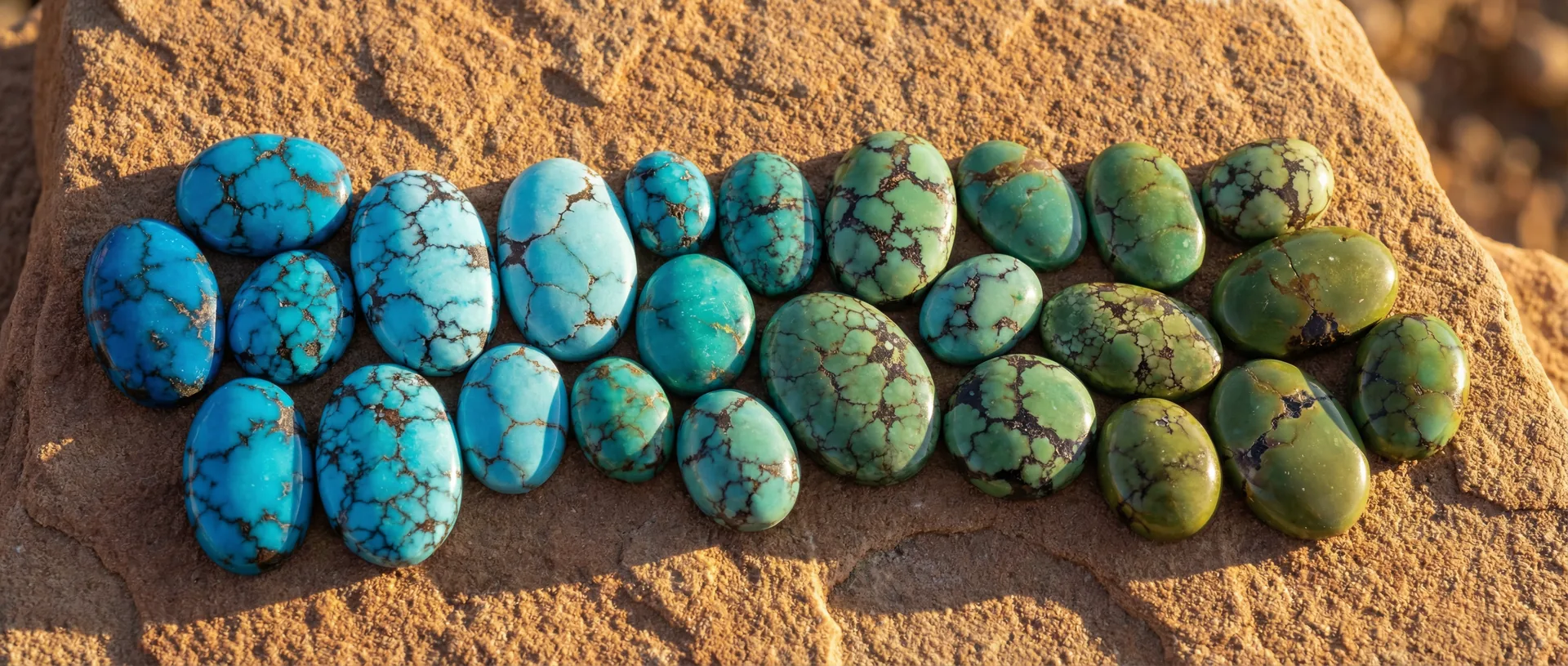
Turquoise · by mine
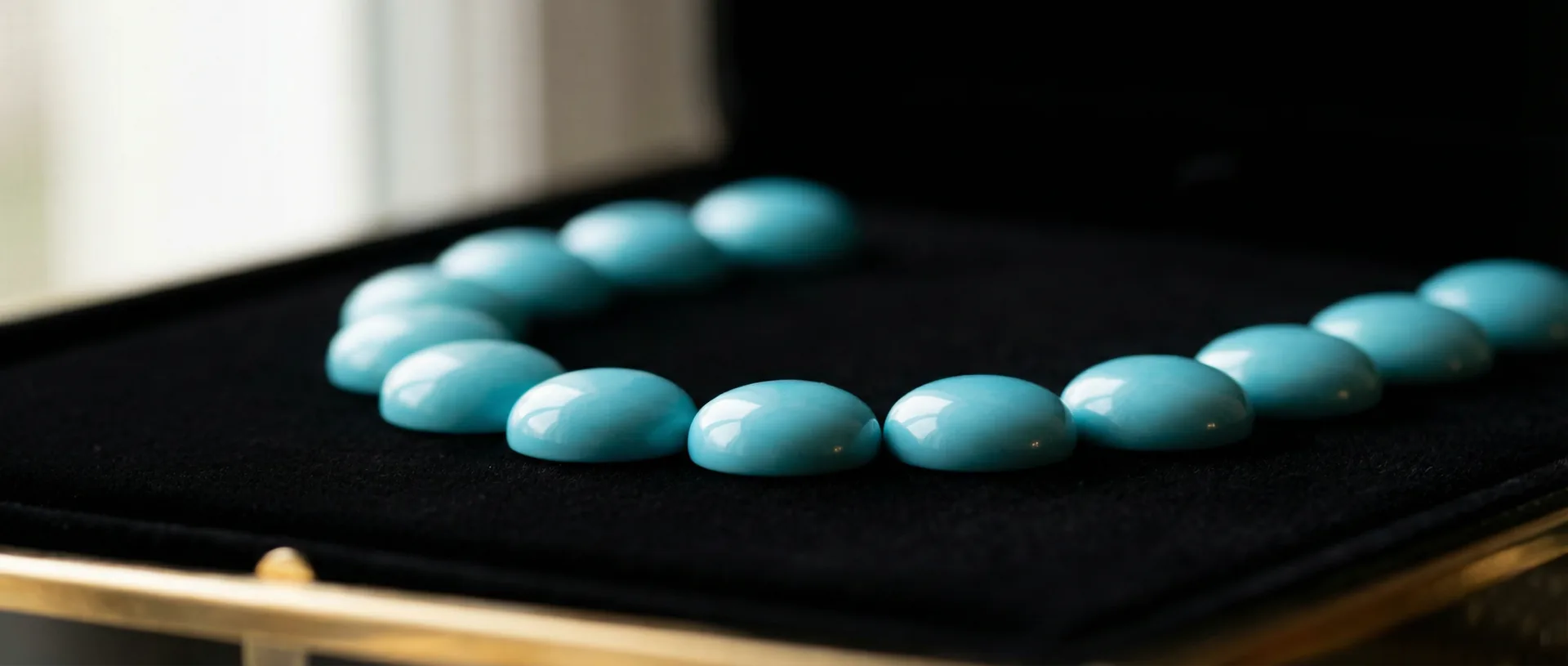
From Kazakhstan. Pale powder blue with a fine lavender to brown matrix. Usually natural, naturally hard stone.

Reference specimen, for comparison only: not the stone or metal in a given piece. We do not sell loose stones.
In the gallery
Bracelets · 11 pieces
$650
Shirley Henry · Diné (Navajo)
Golden Hills Turquoise
Adjustable · Kazakhstan
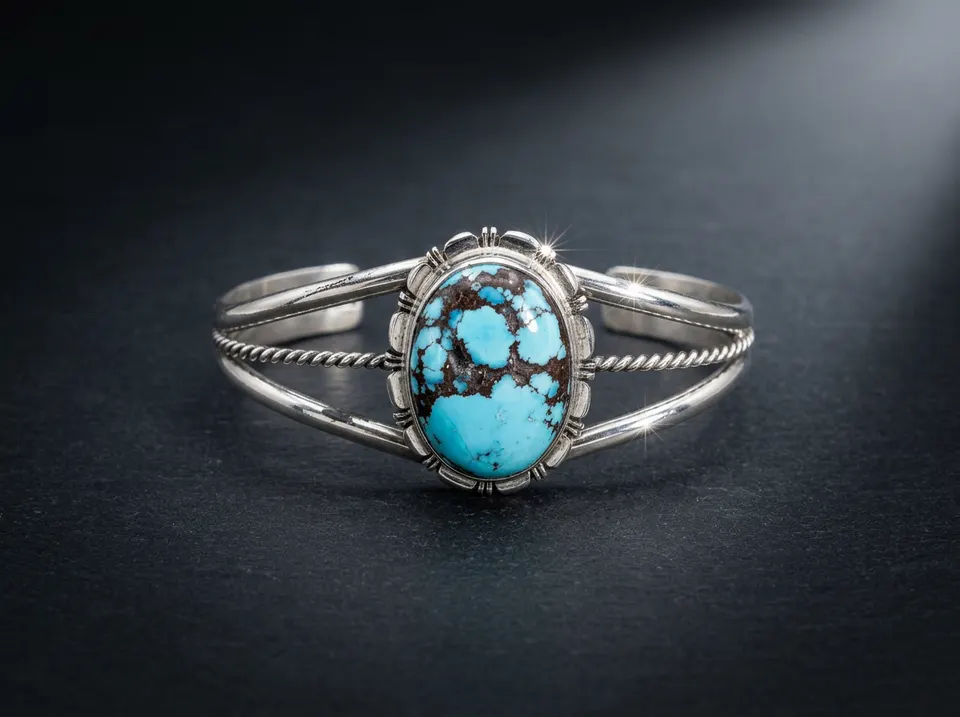
$975
Norvin Johnson · Diné (Navajo)
Golden Hills Turquoise
Size 7 · Kazakhstan

$835
Terry Wood · Diné (Navajo)
Golden Hills Turquoise
Size 7 · Kazakhstan
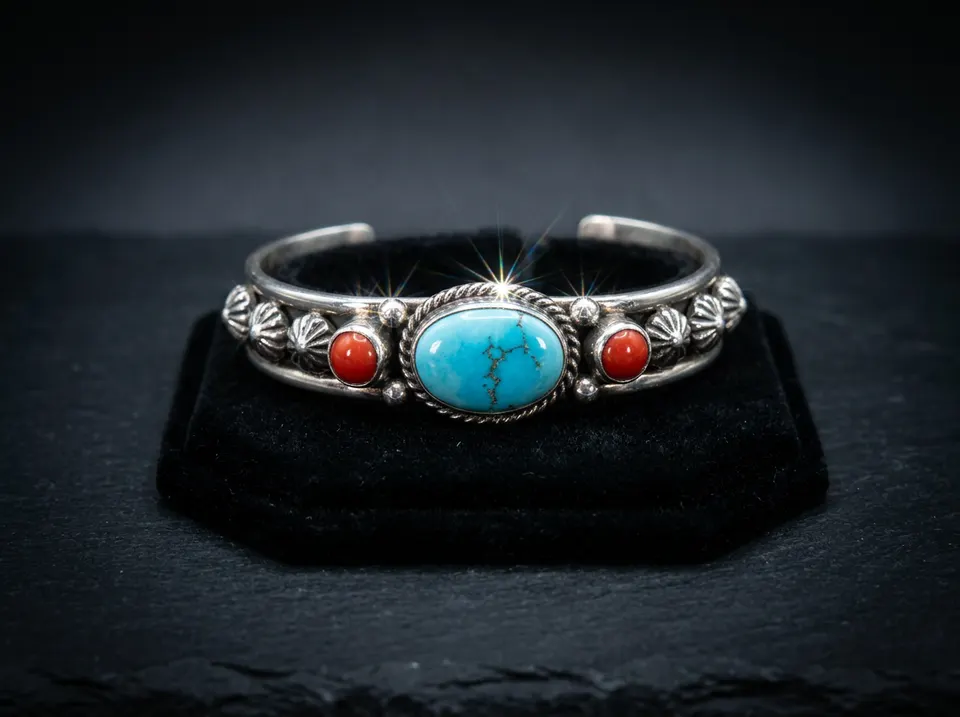
$1,115
Albert Jake · Diné (Navajo)
Golden Hills Turquoise
Size 7 · Kazakhstan
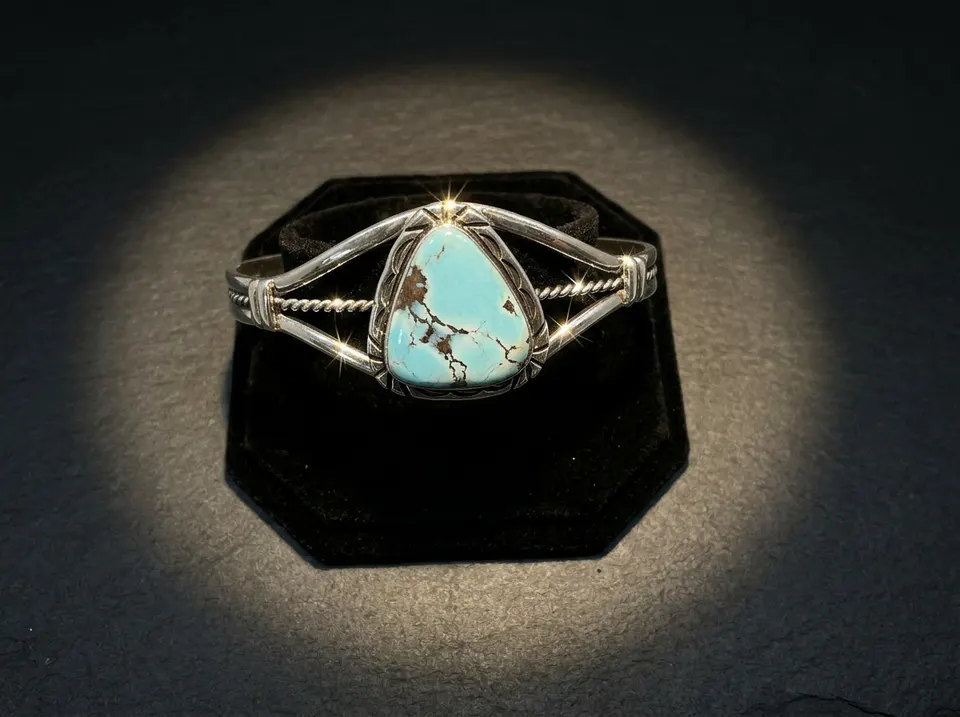
$975
Terry Wood · Diné (Navajo)
Golden Hills Turquoise
Size 7 · Kazakhstan
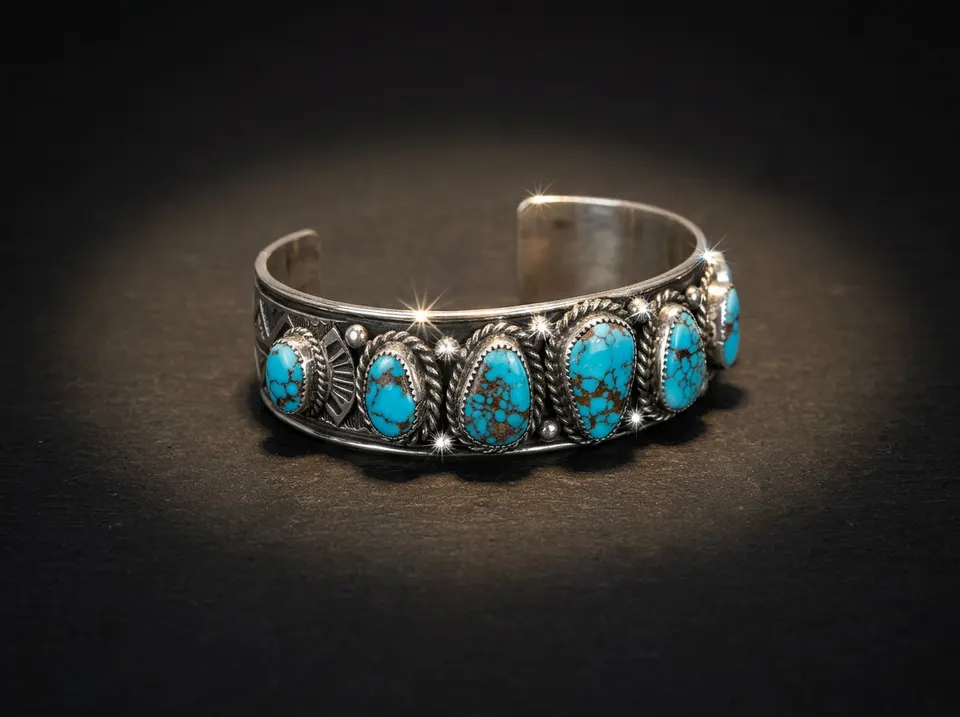
$2,295
Anderson Cadman · Diné (Navajo)
Golden Hills Turquoise
Size 7 · Kazakhstan
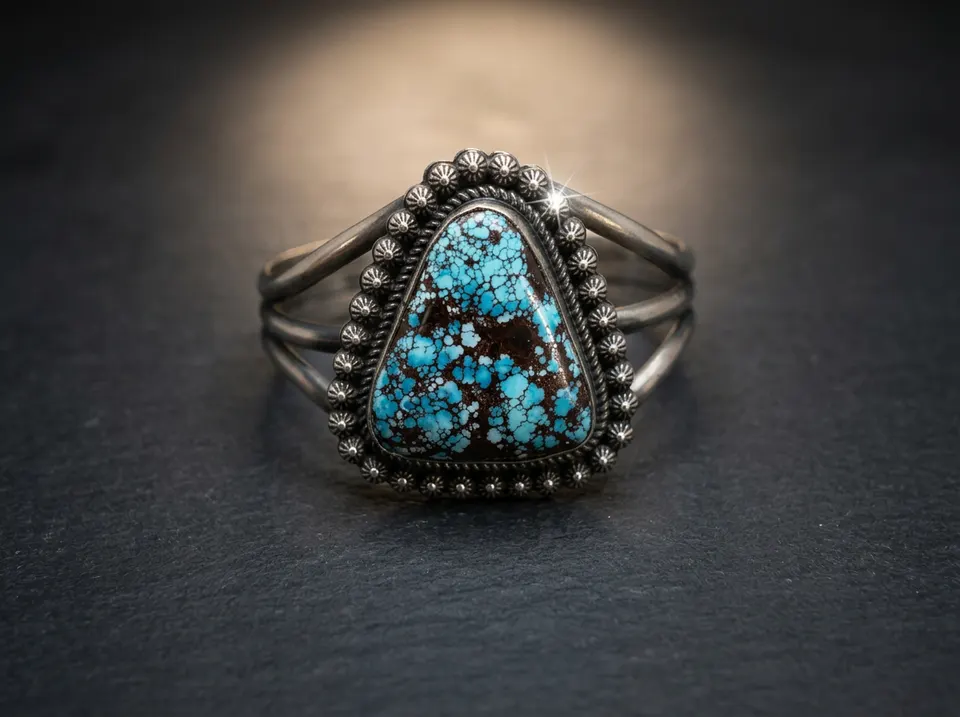
$2,095
Ray Jones · Diné (Navajo)
Golden Hills Turquoise
Size 7 · Kazakhstan
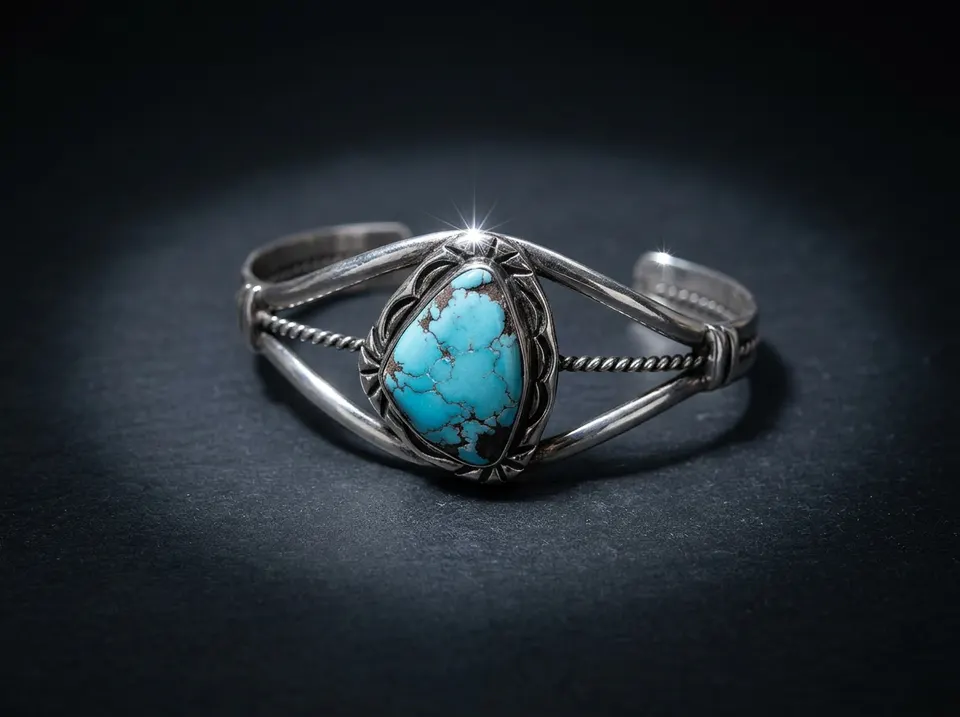
$835
Terry Wood · Diné (Navajo)
Golden Hills Turquoise
Size 7 · Kazakhstan
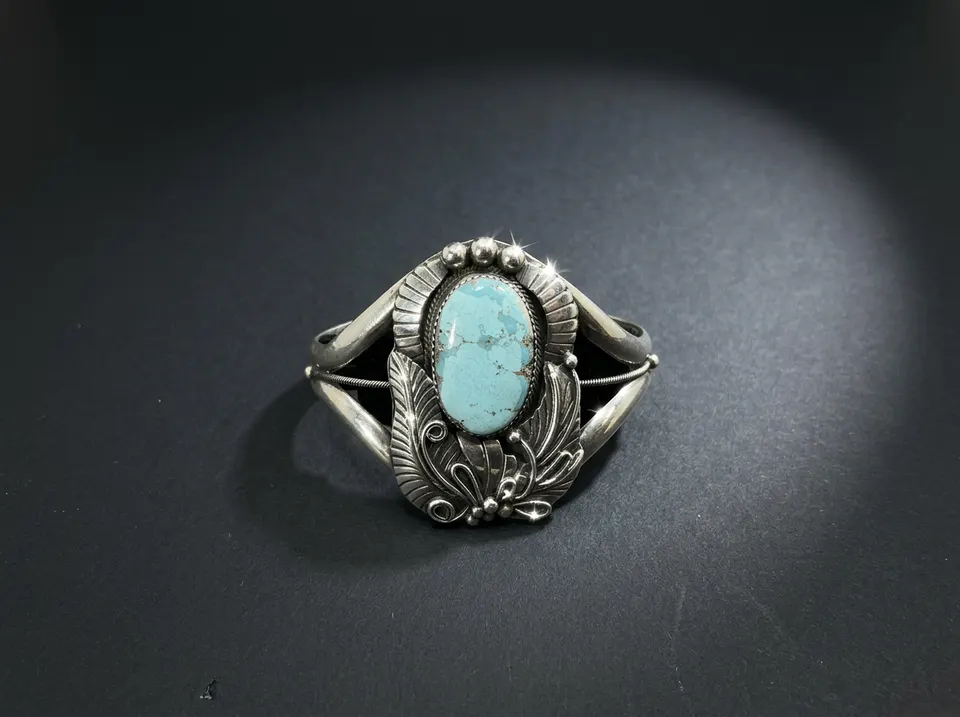
$1,535
Ben Boyd · Diné (Navajo)
Golden Hills Turquoise
Size 7 · Kazakhstan
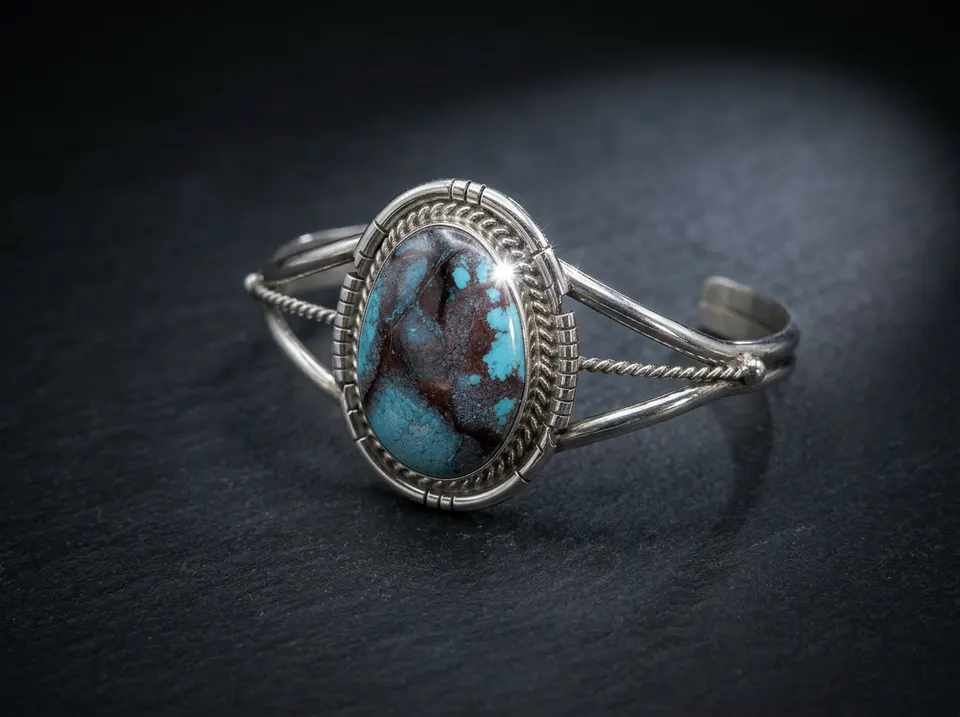
$975
Donovan Skeets · Diné (Navajo)
Golden Hills Turquoise
Size 7 · Kazakhstan
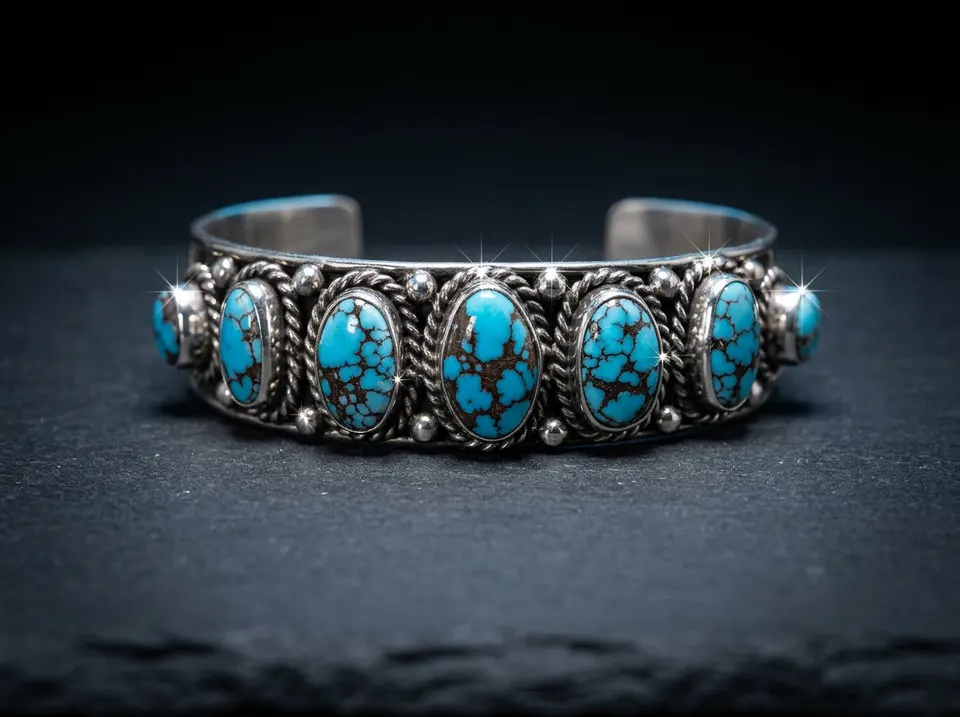
$2,295
Anderson Cadman · Diné (Navajo)
Golden Hills Turquoise
Size 7 · Kazakhstan
Golden Hills turquoise is sourced from Central Asia rather than the American Southwest, yet it has been readily adopted by Southwestern silversmiths for its uncommon light-blue body and fine lavender web. That choice reflects a long tradition of Native artists selecting the finest available stone, wherever it is found — the same impulse that brought Persian turquoise into older pieces.
Its gentle color makes it a striking choice for both contemporary and traditional inlay and cluster work, and because the deposit is limited, fine Golden Hills is treated as a premium material.
Cultural Significance
Golden Hills' soft blue and lavender matrix are favored in fine inlay and delicate cluster pieces, where its quiet color reads as refined and modern. It is often chosen by artists seeking a lighter palette than classic American turquoise — set in dainty needlepoint and petit-point clusters, or cut into calibrated stones for precise, repeating inlay. Its even color makes it especially suited to matched, multi-stone settings.
Geology
Golden Hills is a naturally hard turquoise with a characteristic even, powder-blue body and a subtle reddish-purple matrix — the lavender web rarely seen in other deposits. Like all turquoise it is a hydrated copper-aluminum phosphate formed near the surface in mineral-rich country, but its particular host rock lends the unusual matrix color.
Its natural hardness and consistency make it well suited to precise lapidary work and calibrated stones, and the best material takes a fine polish without stabilization.
Care
Treat Golden Hills as you would all turquoise. Keep it away from water, perfume, lotion, sunscreen, and household chemicals, all of which can darken or discolor the stone over time, put jewelry on last, wipe it clean with a soft, dry cloth, and store each piece separately.
Set in pieces you can buy today. We do not sell loose stones.
This collection includes Native American–made and Southwestern-style pieces; each piece's own page states its origin where it is known.
The Kingman mine in Mohave County, Arizona has operated continuously since the late nineteenth century, producing turquoise in a remarkable color range from sky blue to deep blue-green, with its spider-web matrix specimens ranking among the most valued turquoise in the world.
Read Article